
Yash seems to do the impossible: he fractures water. A single raindrop is splintered open, split apart by its texture, character, and force. These divisions tear it apart and bring it to its original source: the winds, clouds, and heat that circulate to allow an outpour to occur. The same divisions that inspired him to begin photographing the way that water falls. “As a kid growing up in Mumbai’s suburbs, we waited for the rain after hot summers,” he says, “but that also meant dealing with issues like flooding, delayed trains, and daily life becoming difficult”. This emotional seesaw experienced with the monsoon, of simultaneous joy and frustration, is a common sentiment throughout the country. We all go through this torn season feeling fragments of pain and pleasure. Both in awe at the rain, and in contempt of it; how it moves across the varied geography of the Indian subcontinent, how it leads to issues like flooding, drought, wreckage, landslides, death and destruction. Lush green fields soaking in the rain coexist with entire homes being washed out. Its beauty: a force of nature, its harsh reality: the human-made consequences of development. Here, all seen in the enclosed safety of a photograph.
Except water resists entrapment. Even in Yash’s photography, water leaks out of every frame. You can feel it on your face, in your palms, thrashing against your skin. After all, this southern coastal monsoon comes from the wind, that reckless being, carrying moisture through its southwest travellers cascading in on India’s western coastline. But in the last few years, its haphazard waltz through the Western Ghats caused more wreckage than joy. But this dichotomy is what he cleaves open through his photography; Yash’s camera quite literally “shoots” at a single raindrop, his lens ripping a bullet through it to reveal both good and bad. By itself, rain has the power to create life and nurture it. By virtue of humankind’s gluttony and greed, natural landscapes are shredded to such bareness, that the wretched, vulgar aftermath of overconstruction causes our own end. But before we sink in the floods and wade miserably through potholes, we revel in the gleaming, glistening glory of the rain.
Here, the dichotomous character of water is studied through two coastlines that receive most of it: the Malabar, and then the Konkon coasts. The first receiving a heady, speedy outburst in full-throttle, and the second absorbing the rest of its velocity, its joyous, ferocious storm, all for months on end. So we journey on upward, from the Malabar to the Konkan, from Kerala’s districts to Mumbai’s, following the southwest winds on their annual migratory duties. We journey between six years of monsoon (2020-2026). Though the first five were in Mumbai, this year marked Yash’s quest towards the rest of India, and he has dedicated the next few decades to documenting India’s multilingual monsoon. All so that our eyes see the rain’s beauty and harsh reality. Supported by the photographer’s unrelenting aim to catch its conspicuous bipolarity.
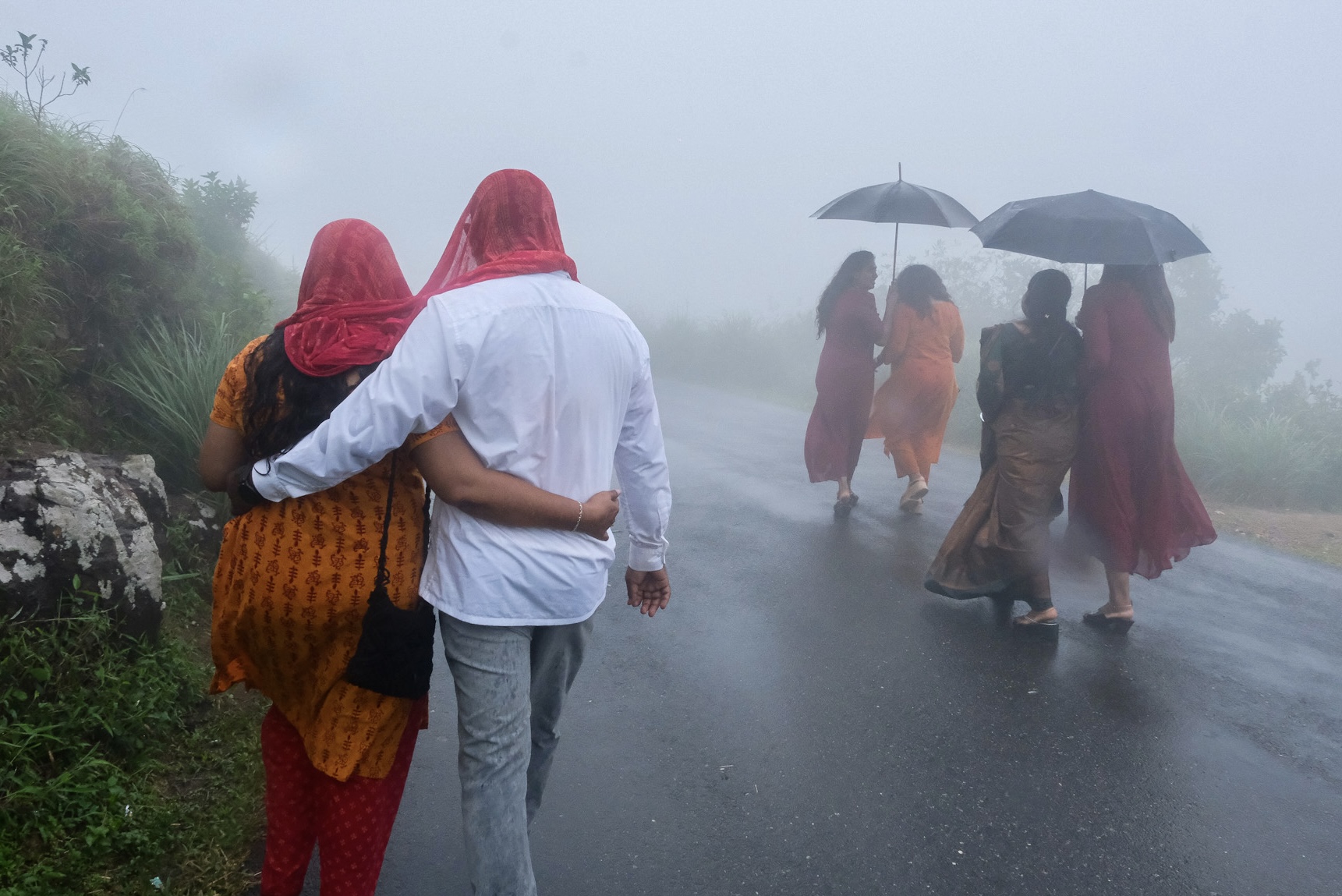
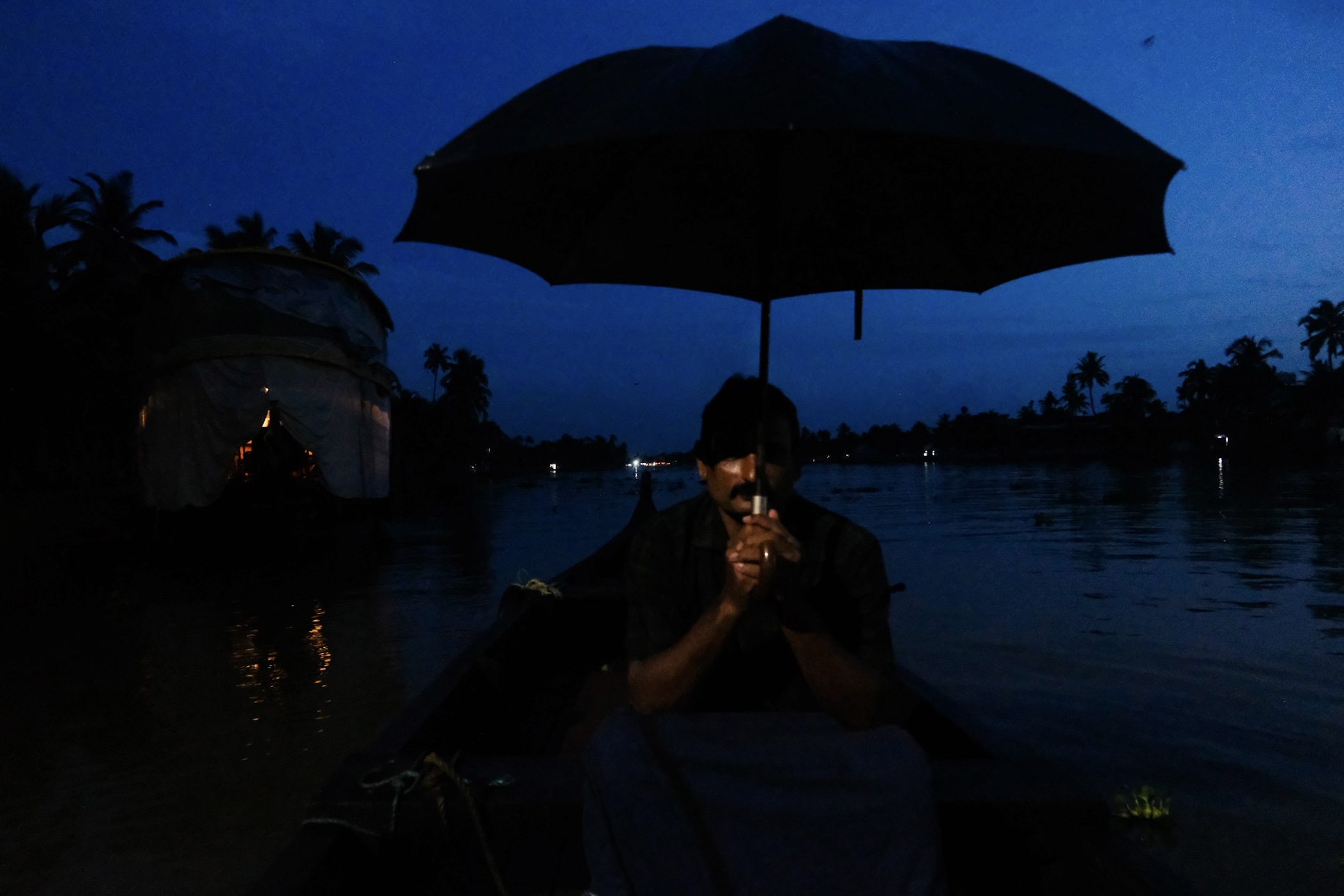
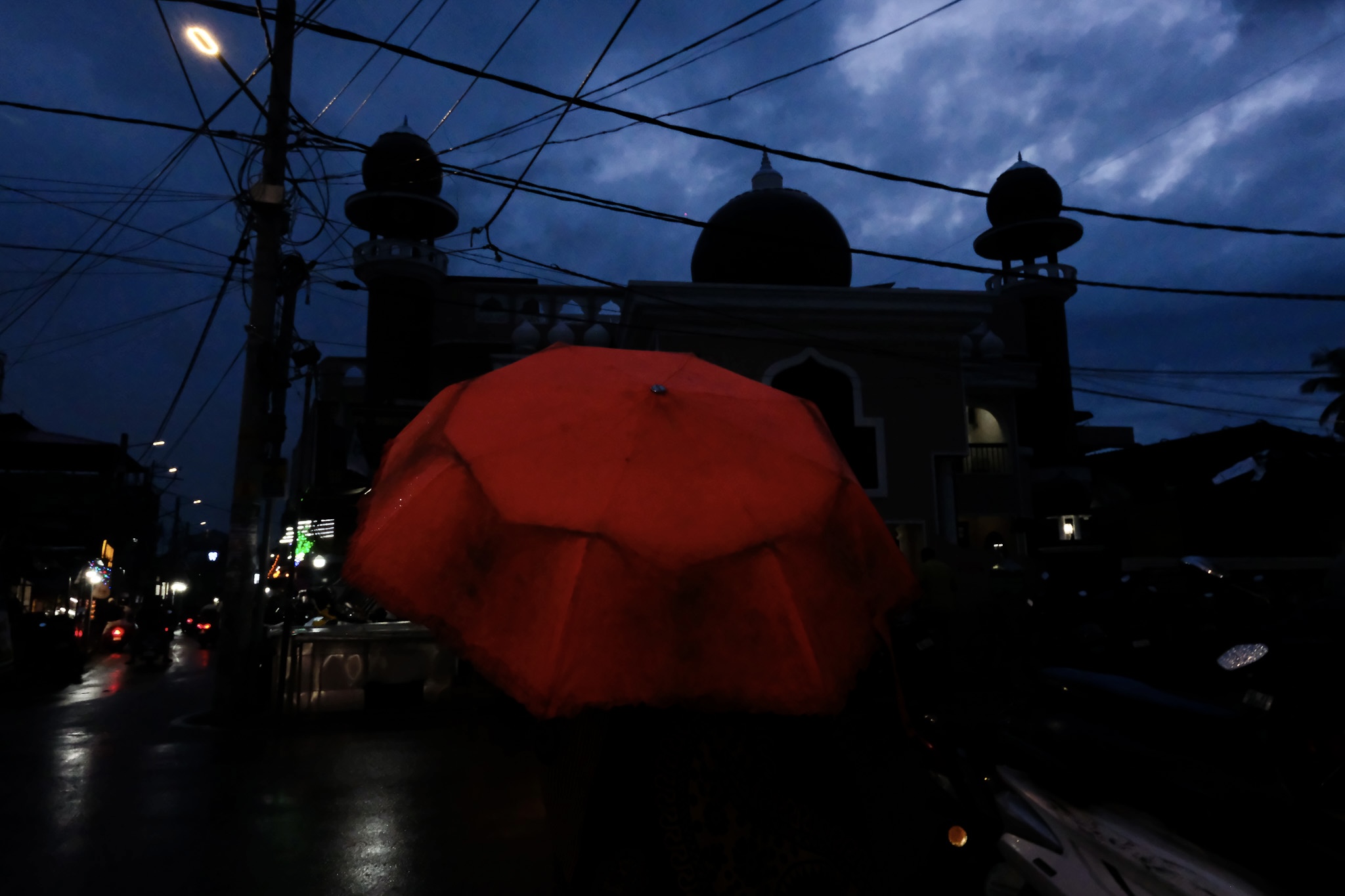
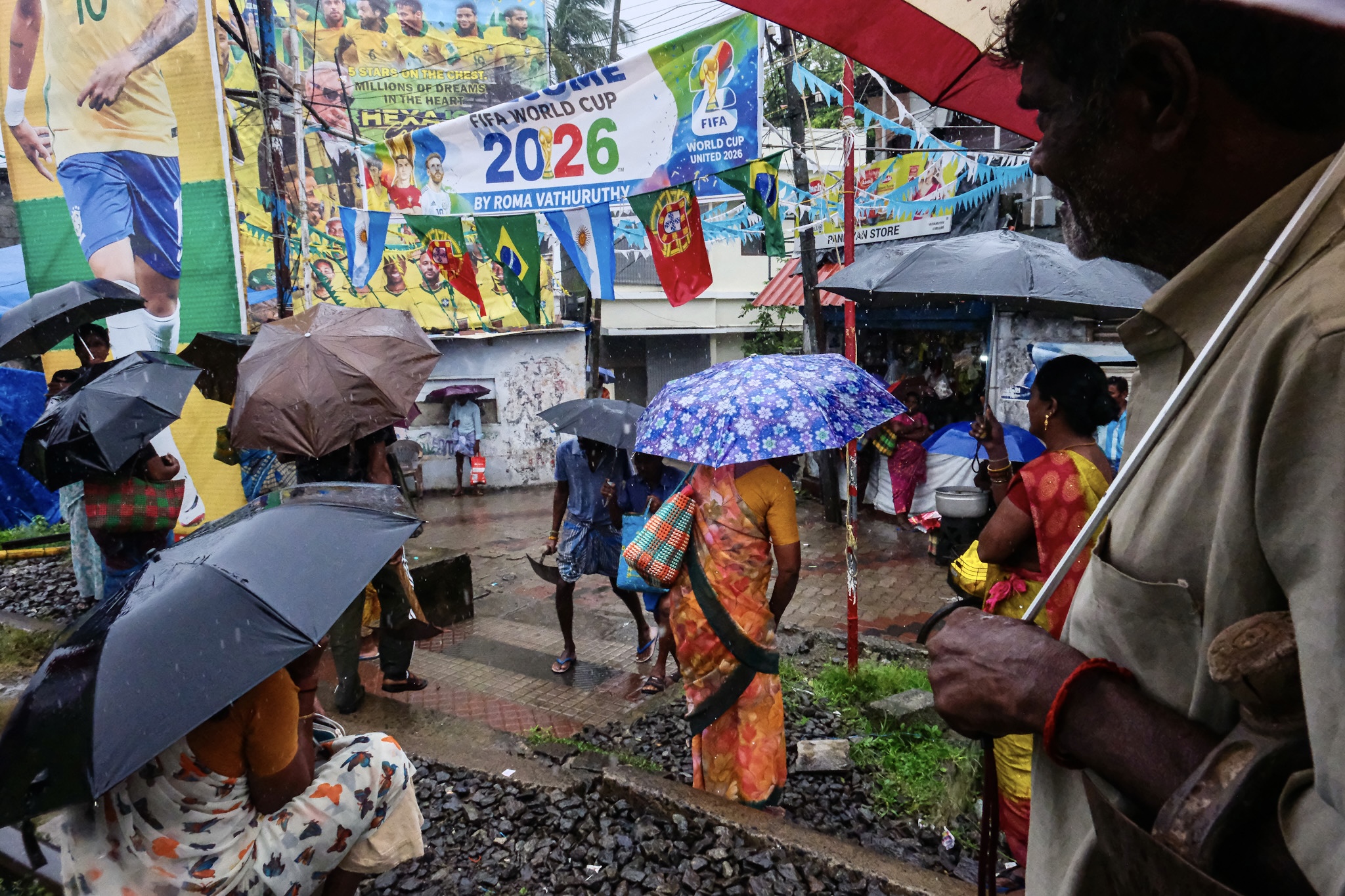
Look at these photographs long enough, and I feel buoyant. Floating with the water, before the rain, before the sun, in anticipation of both. Surrounded by water, resting on the sea. Skin wrinkling. Hot air melting down on my face, bodies splashing in puddles and rivers, night lights softening in haze. Just as Yash captures them here: neon burning through a red umbrella in Kochi, a cigarette lighting in Alleppey. In Ponmudi, that southern tip where the southwest monsoon first breaks open, rain sets the scene for a processional walk down the aisle. Lovers are safe here. Bunched up together, like peeking Aambal flowers. In Kochi’s Tamil migrant community, dark umbrellas gather to spontaneously pitch tents during the World Cup. Amidst the grey of the sky, rainfall, and concrete pavement, a colourful koodai bag, sarees in yellow and red and orange, and multicoloured football banners seem to glow even in broad daylight. What a pleasure to look through the kaleidoscope that is the photographer’s camera.

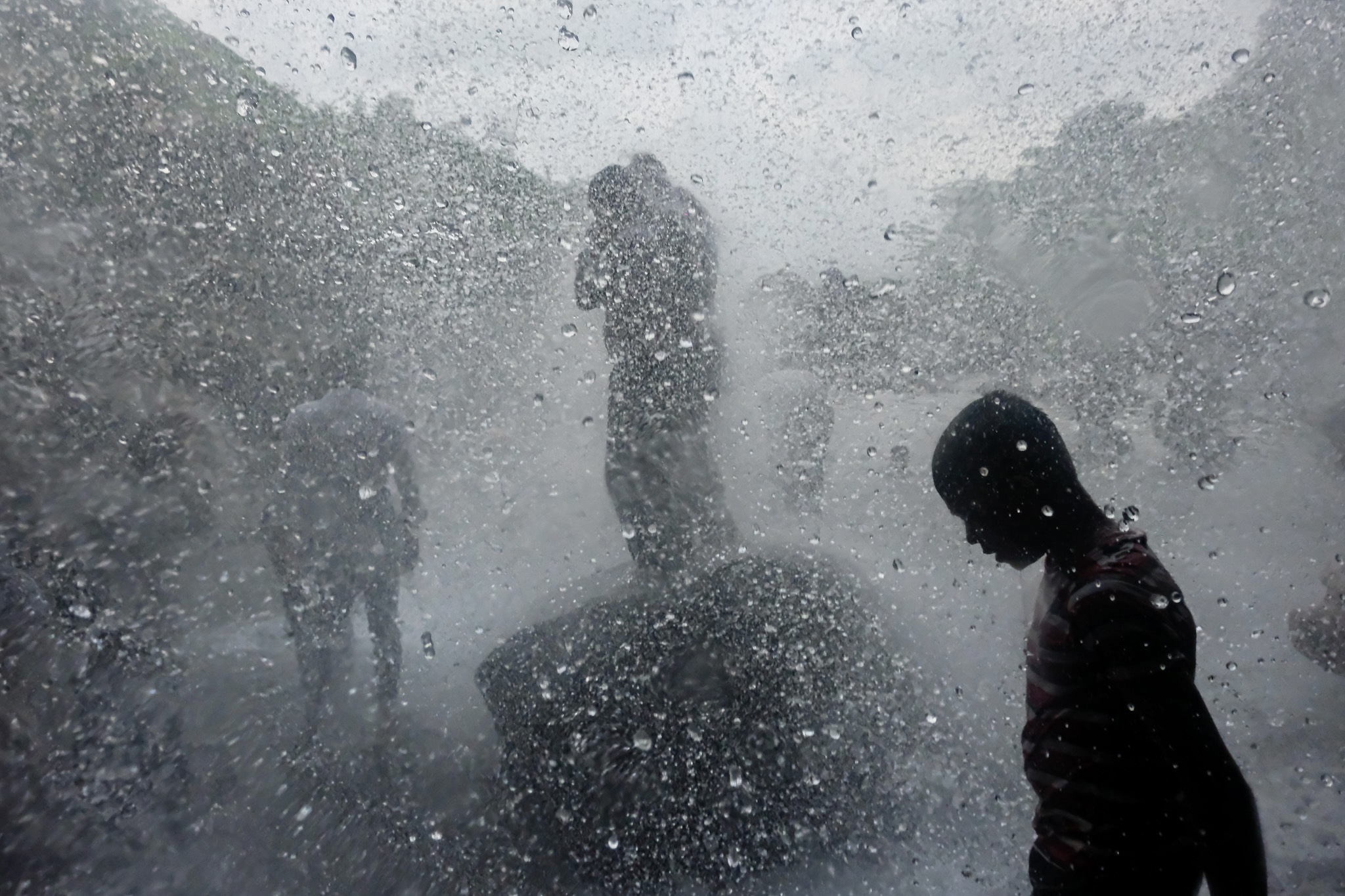
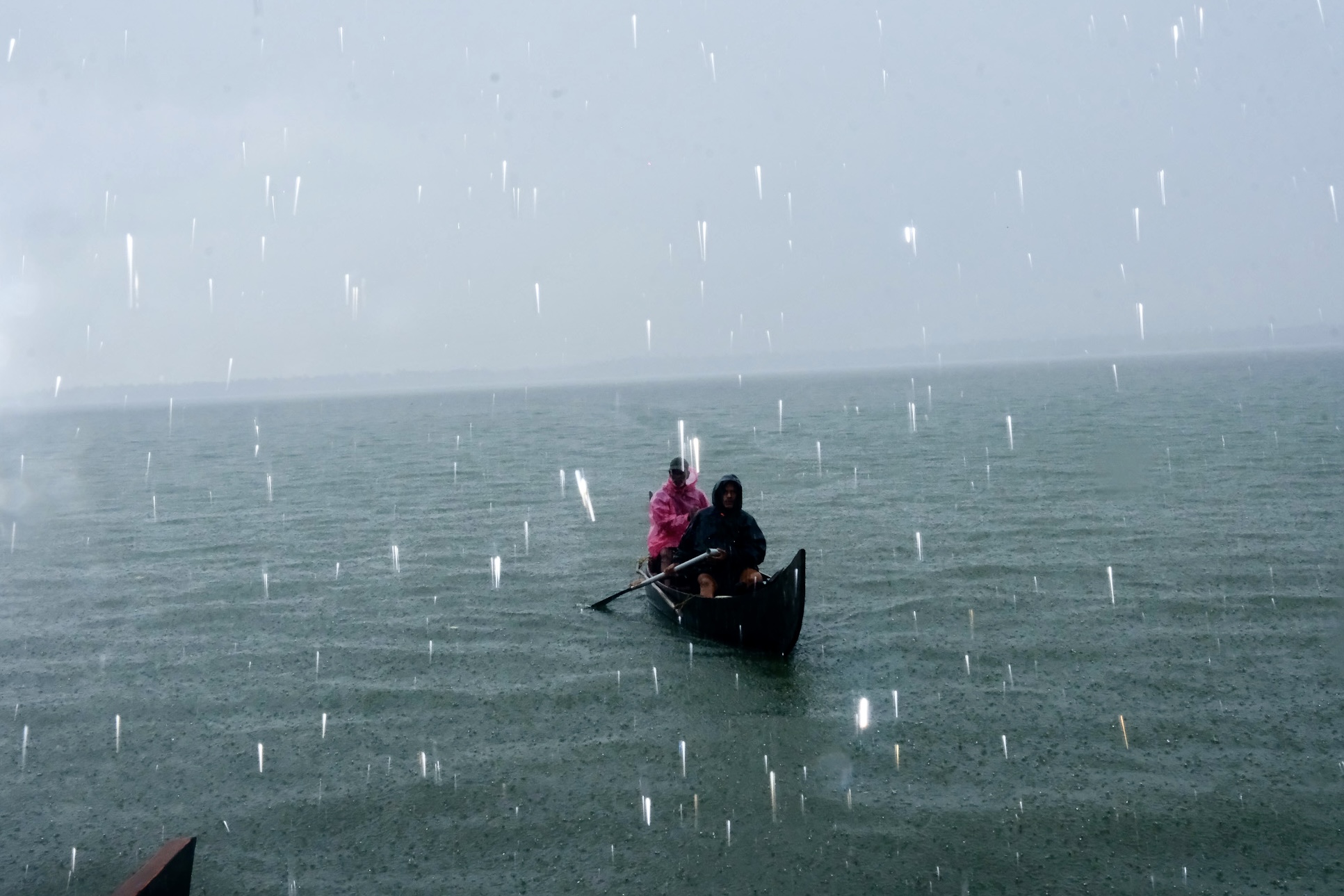
A discoball of cloudburst. A shimmering sky. Sea that bleeds upward, a horizon that folds itself in surrender to the rain. Yash photographs freshwater fishing in Kochi, a time-honoured traditional occupation that structures its practice around fundamental respect for water. In 2015, the Kadar and Malayan communities of Kerala’s Vazhachal-Athirappilly region banned their own folk from fishing during the monsoon—all to ensure that endangered native fish species can grow in number. Wisdom passed down is as ancient as the monsoon itself. After all, it rained for two million years on Earth during the Carnian Pluvian Episode. Around 252 million to 201 million years ago. A reminder of our own mortality, of the timeless marvel that is monsoon.
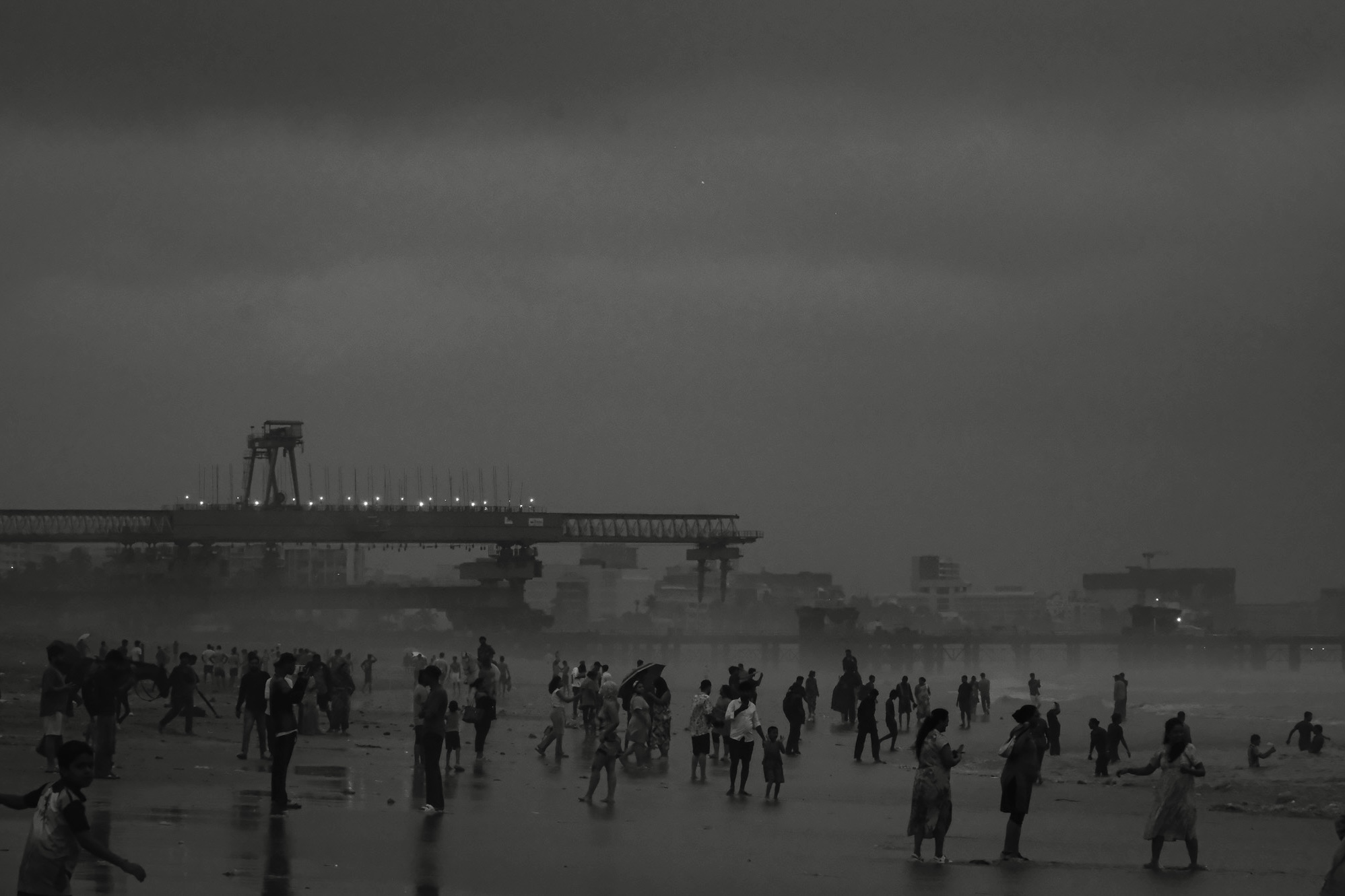

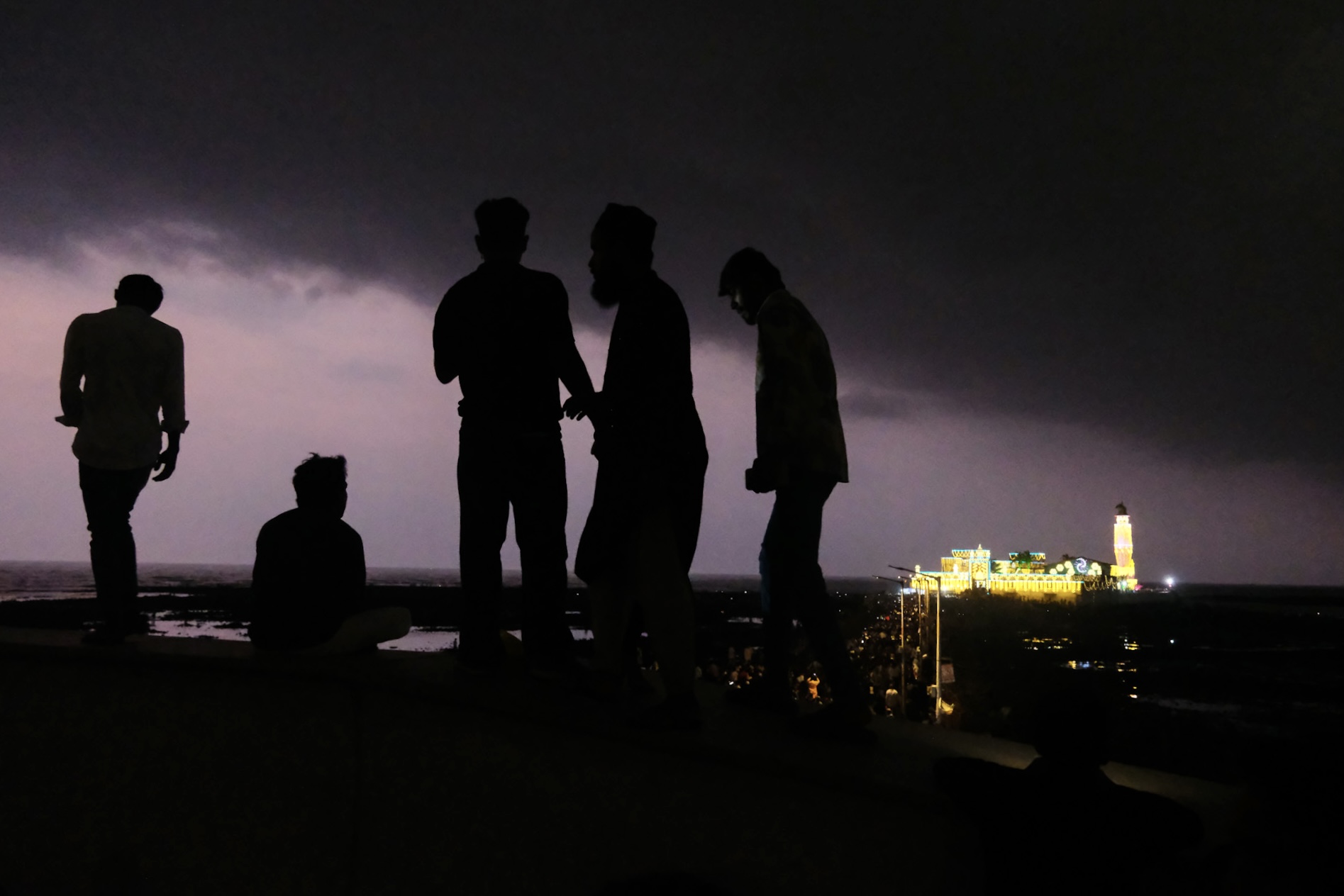
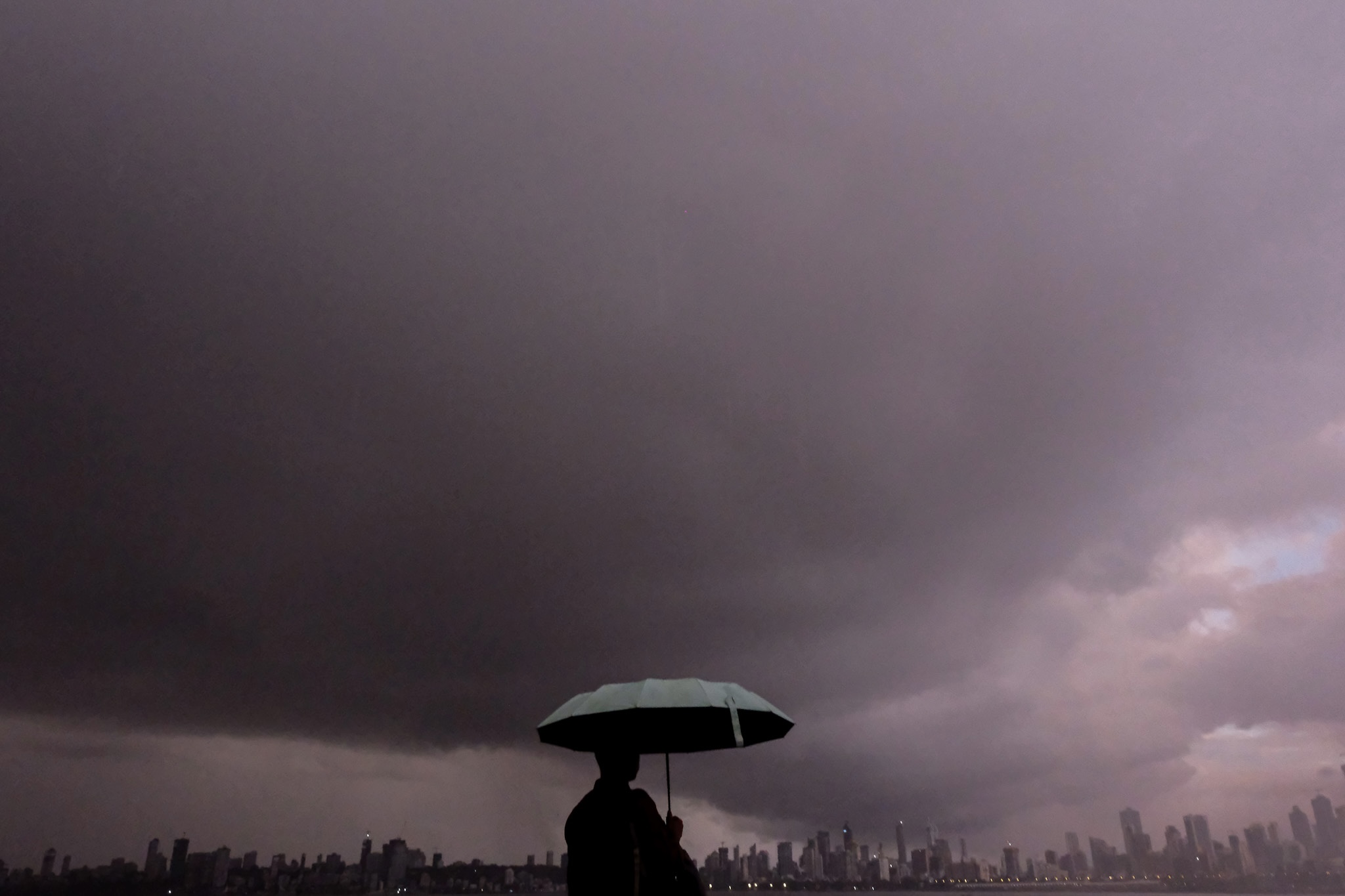
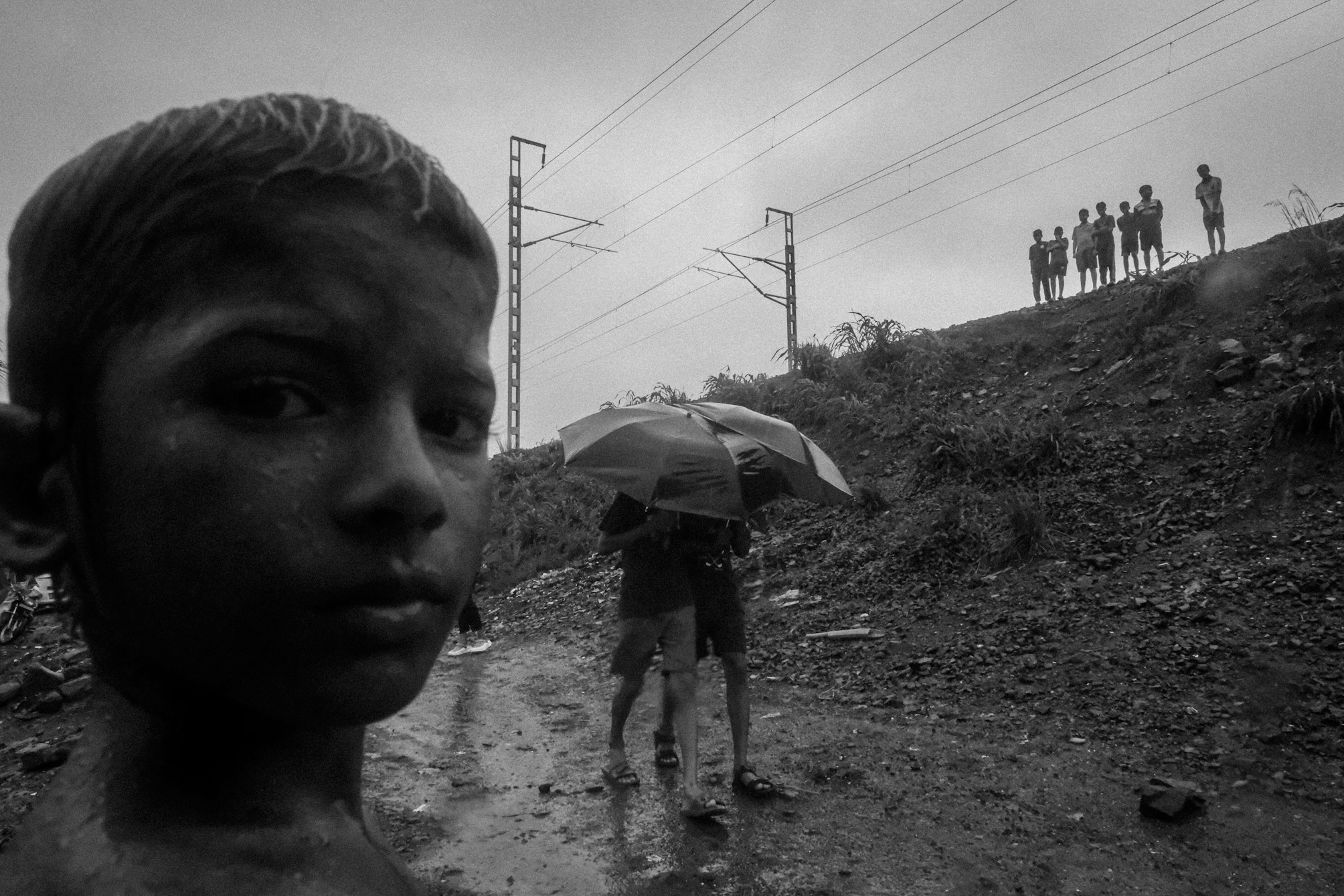
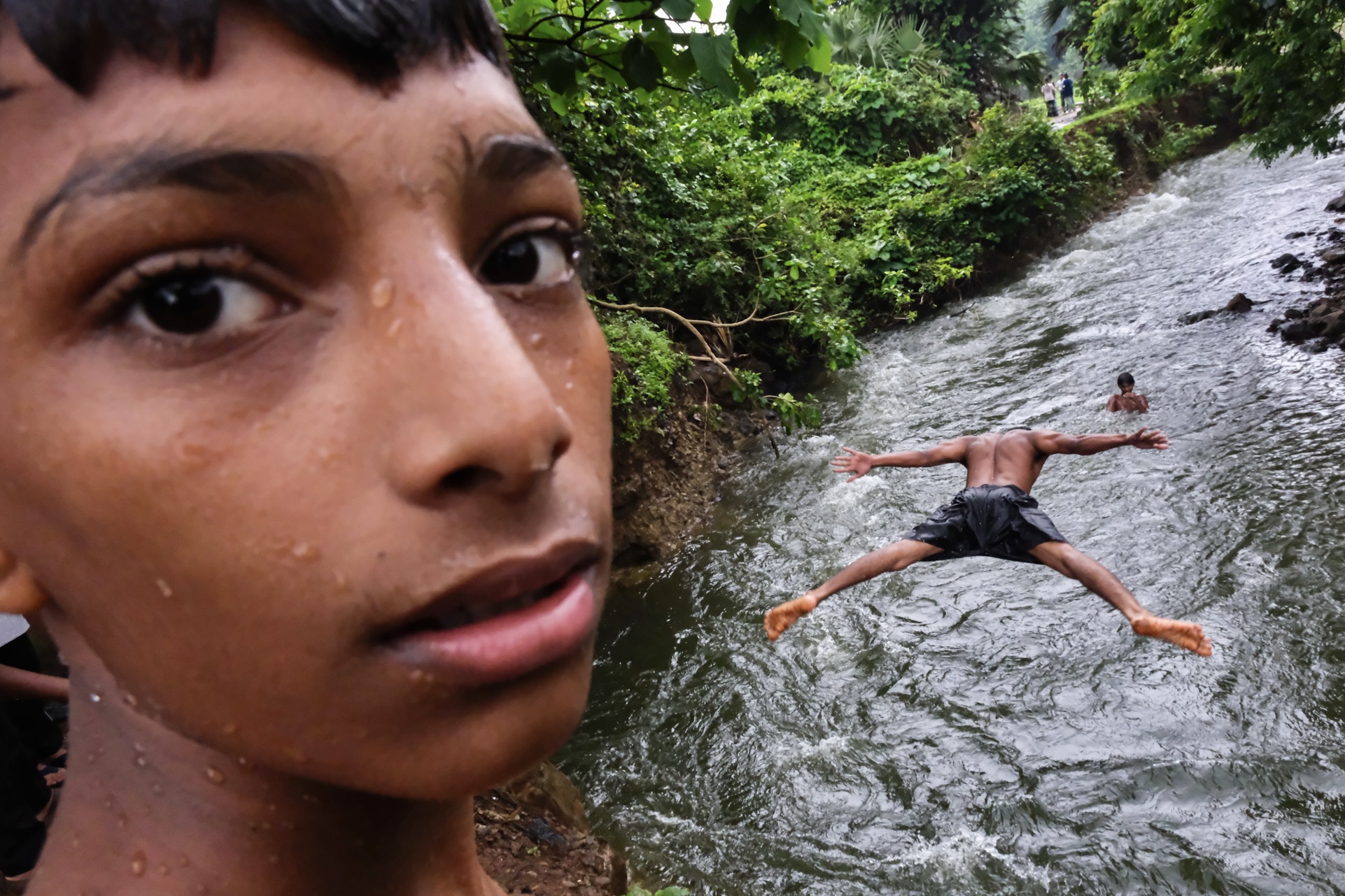
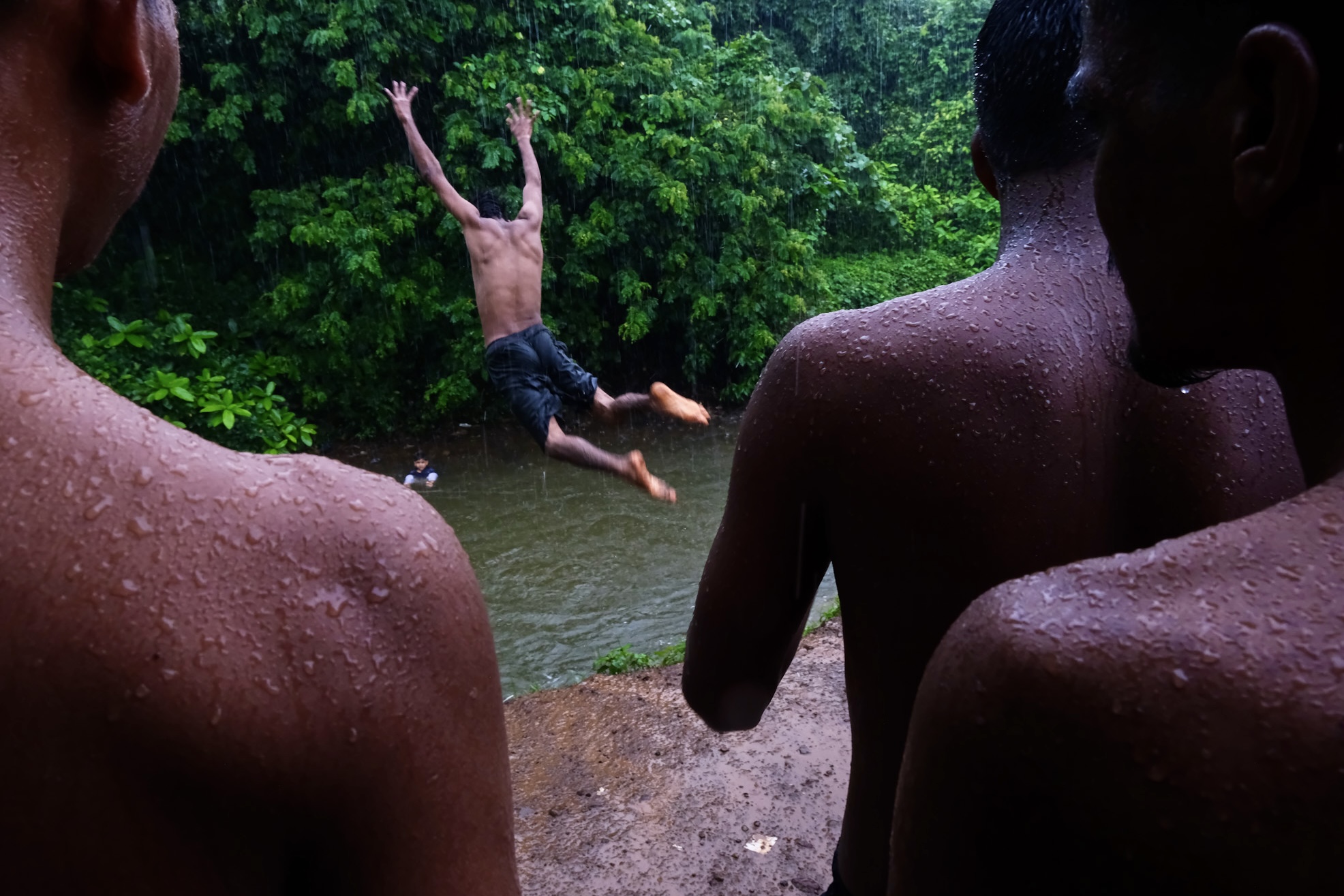
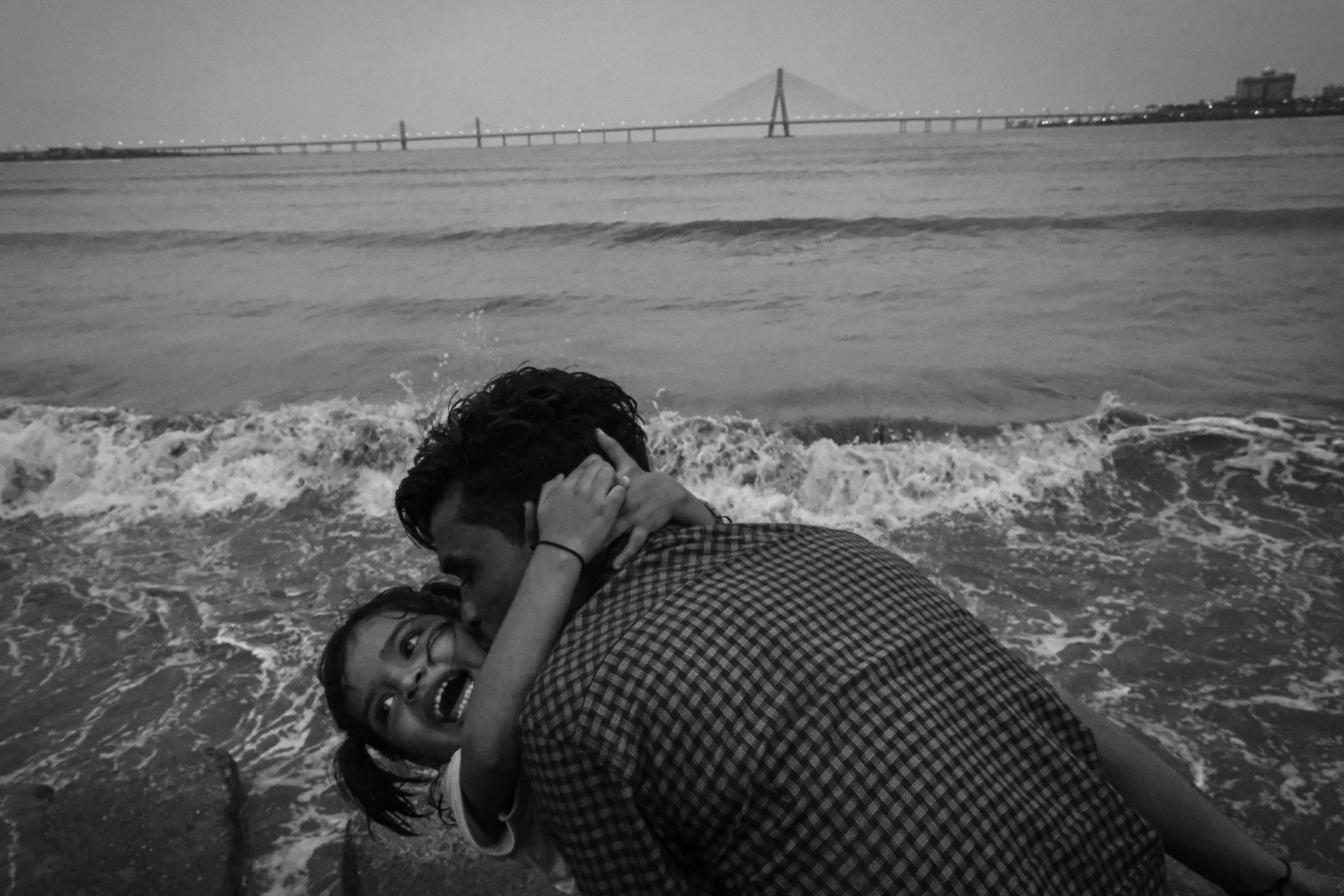
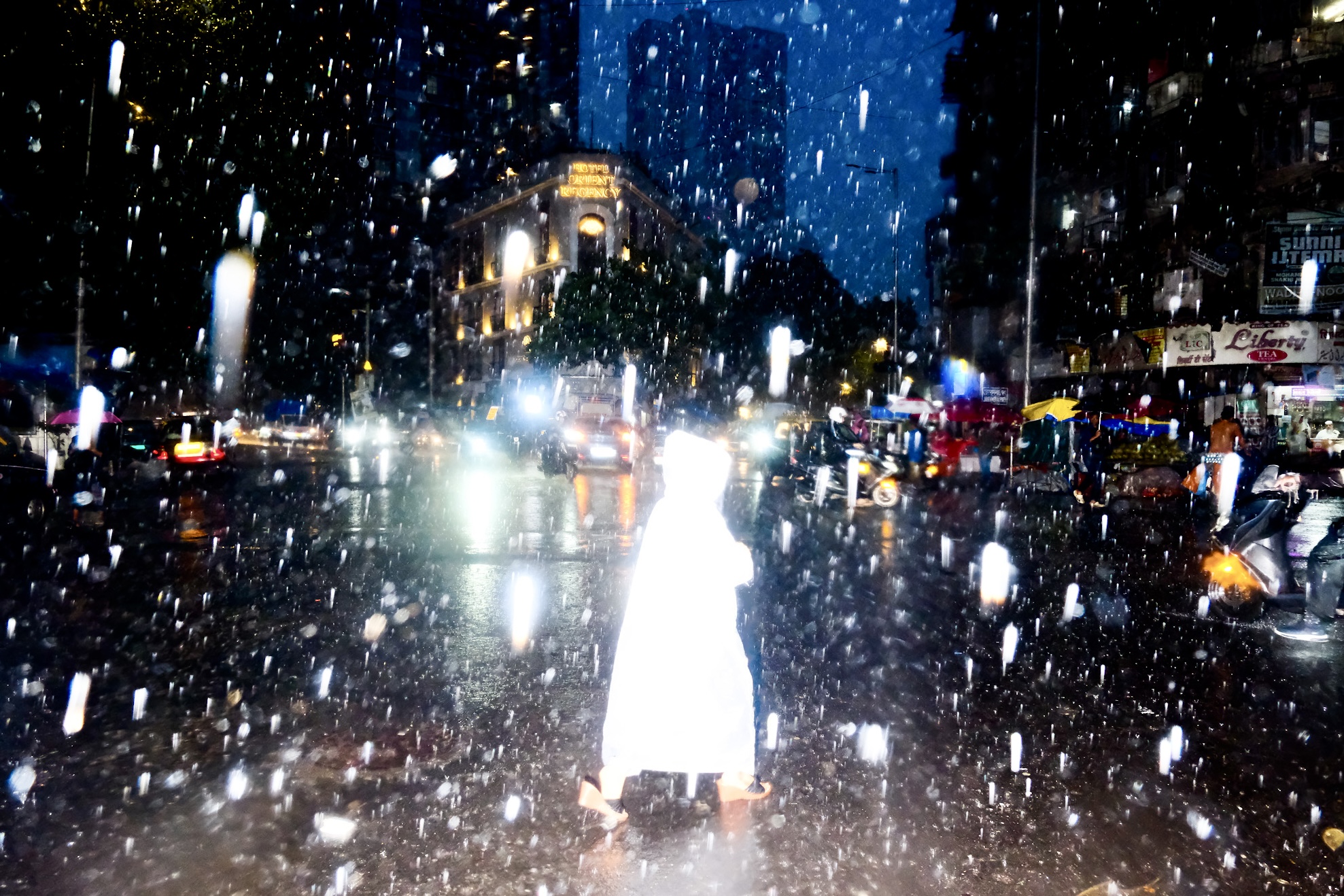
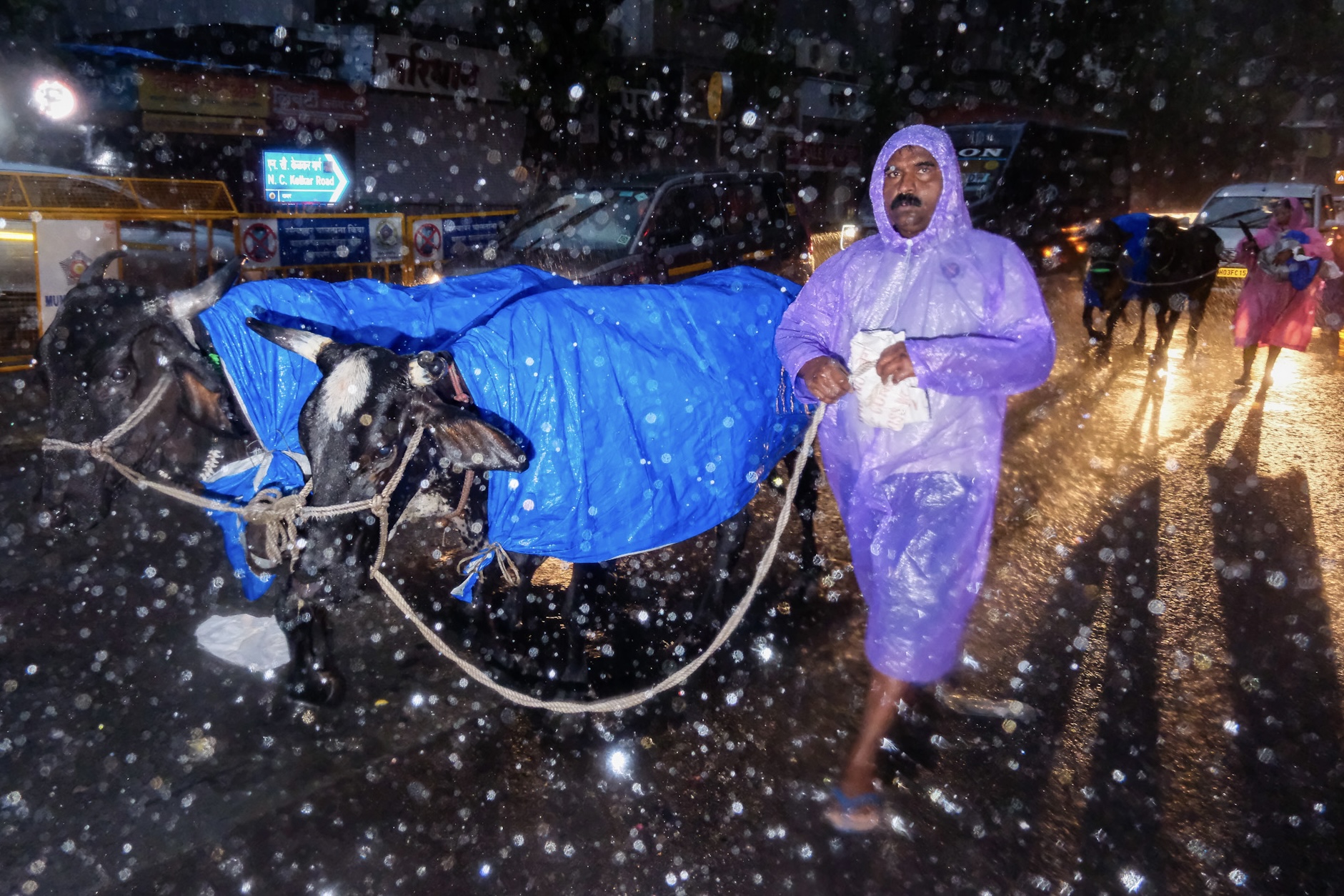
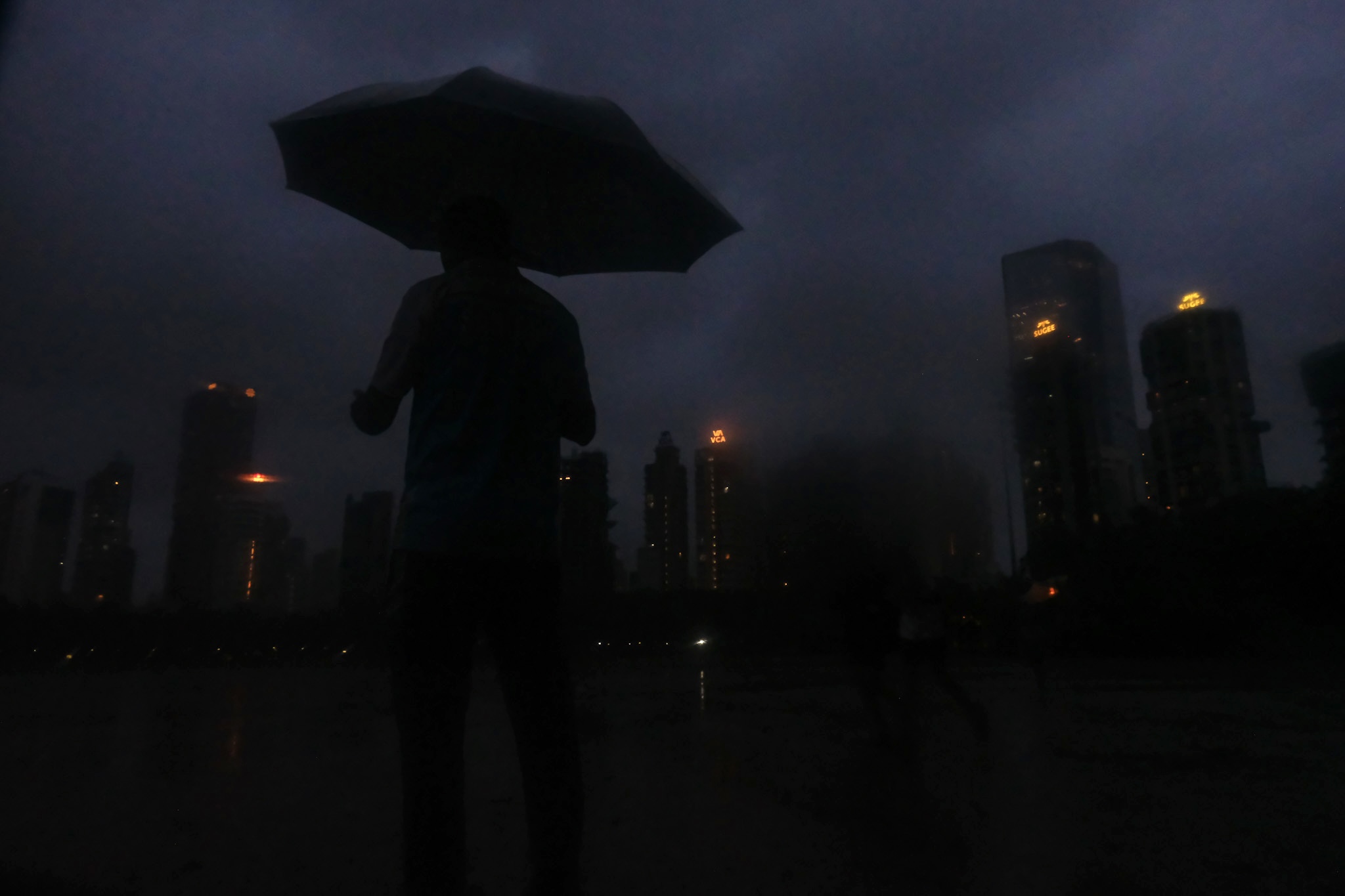
Back in Mumbai, the city that owns me, I find myself in these cloudburst photographs. Where I spent most of the year waiting for the rain; this bastardised monsoon that barges in without asking. It booms and bellows while the sea brings us boomla and bombil; it burps and stutters before crashlanding onto this cosmopolis. The city’s palette yawns across an entire colour wheel. Move through the rain, and you see how colour varies from Haji Ali to Aarey: grey to green. The photographer causes a chasm in water, and we are called in to experience its uninhibited wonder. The rest of the year seems to be largely spent in anticipation of the rain. Menacing clouds perform like theatrical backdrops, cinematic and magnanimous in their presence. The charade of everyday life is enacted upon this urban stage. We glide on land, floating like the Arabian Sea. Such audacity. Such unapologetic liberation, only felt in the monsoon.

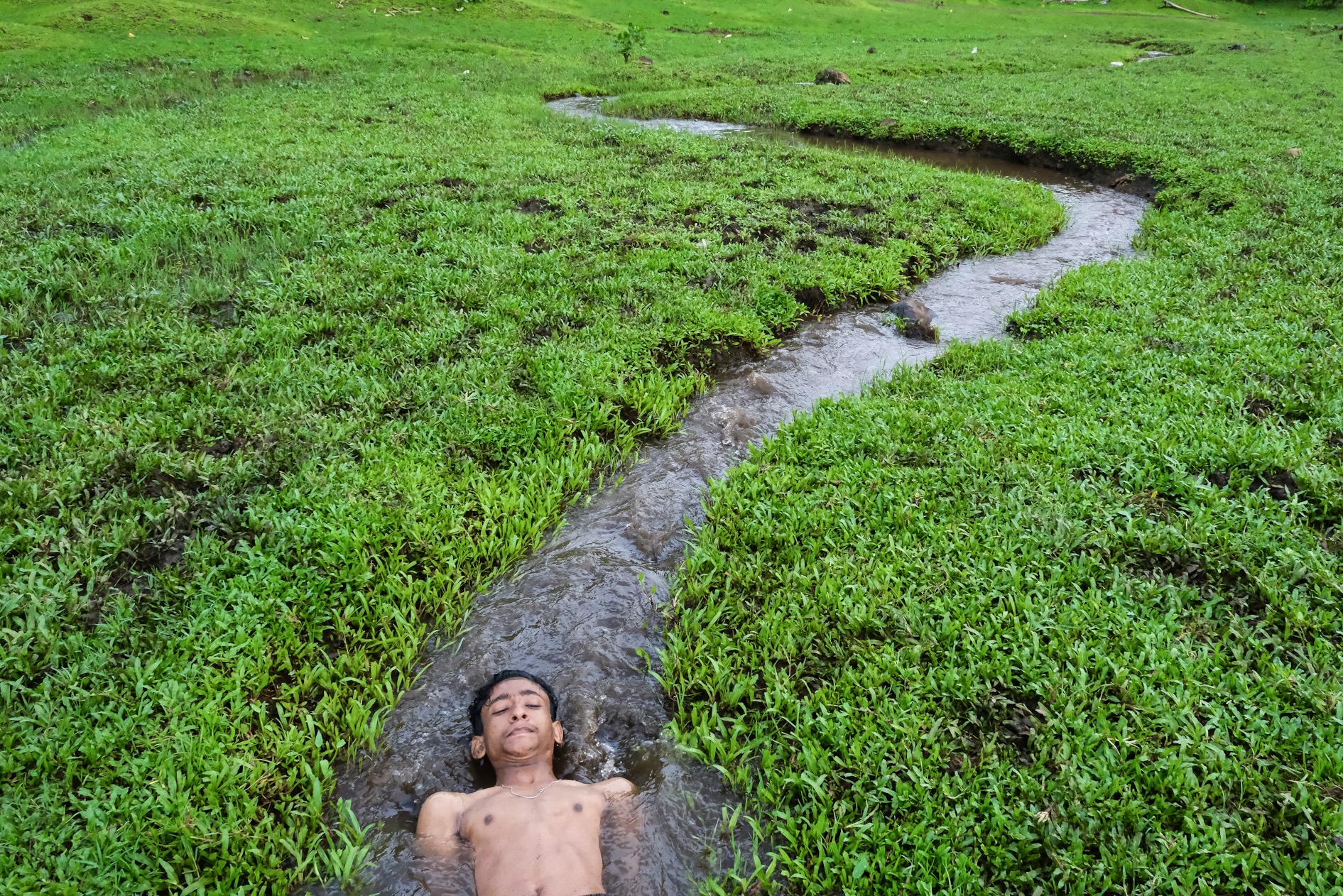
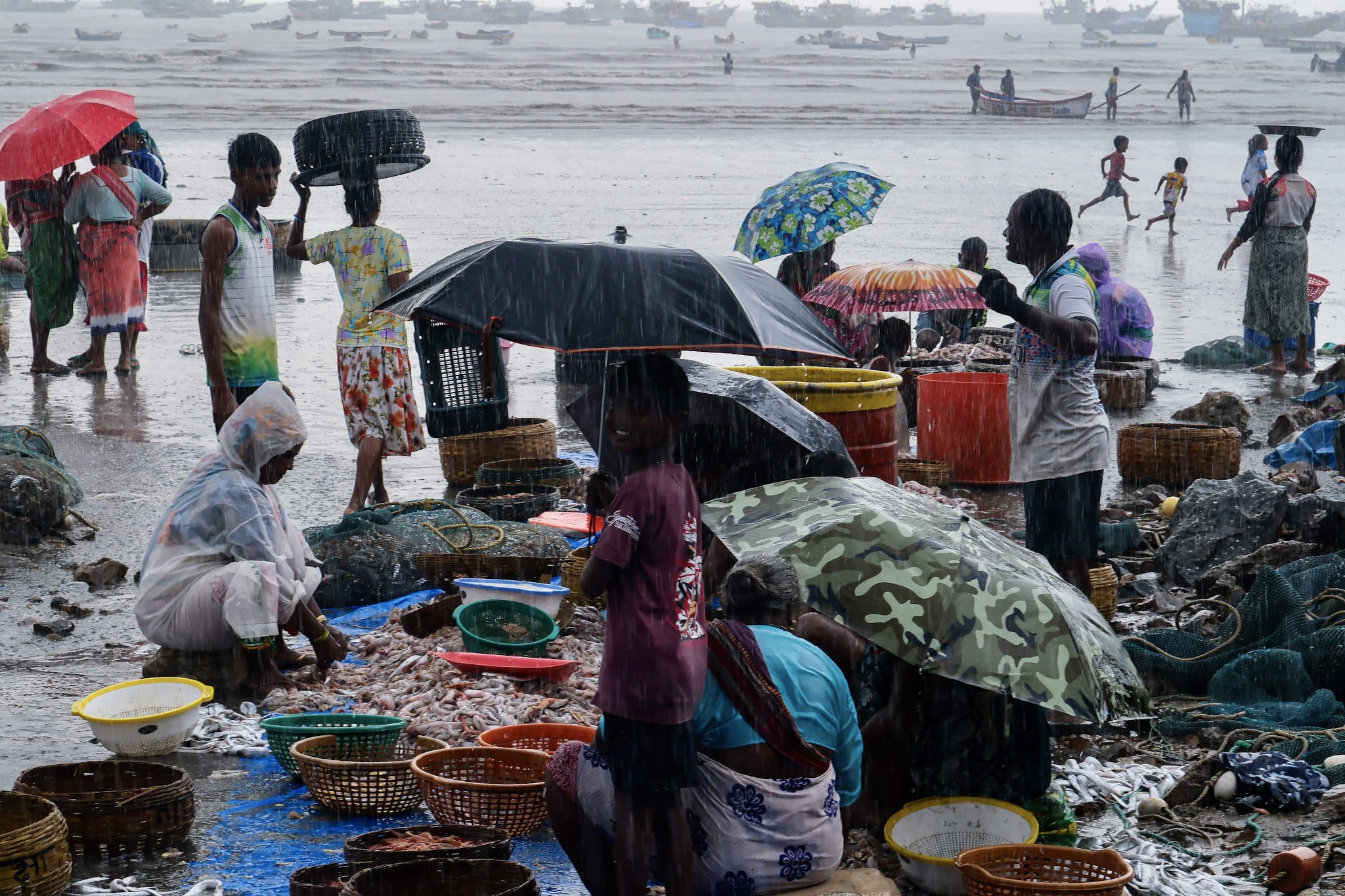
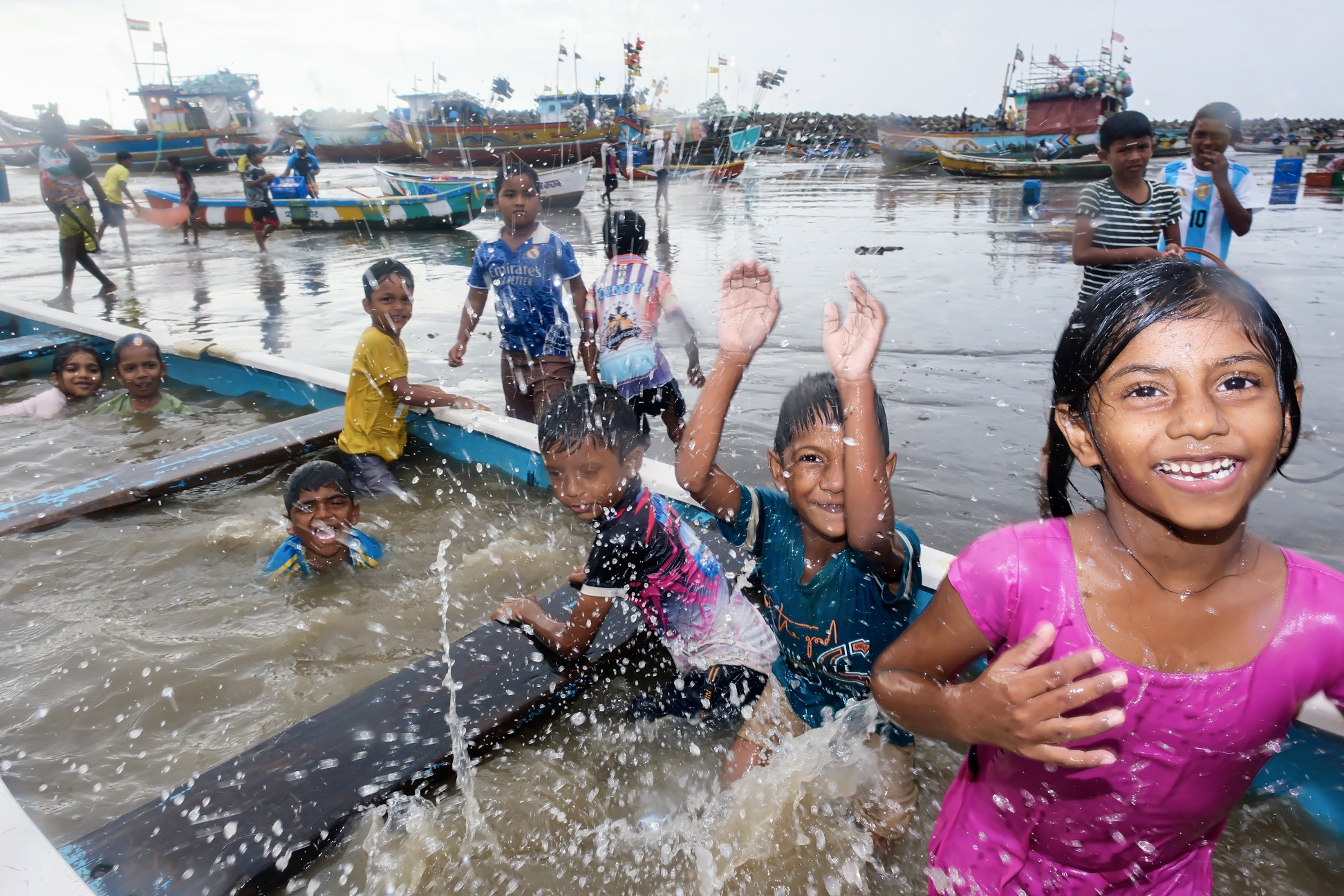
And then the rain falls. Water is everywhere. Shorelines become football arenas. Koli boats in Uttan, hibernating through their monsoon sabbatical, become makeshift water parks for children. An audacious green pasture of grass glows in Aarey forest. Water snakes towards no grandiose horizon, nowhere but deeper into the earth. Bodies river through its blades. Water soaks up the grass, the mud, the ponds and puddles, inviting us to boomerang straight in, jump back up to the sky. The utter lightness of life is felt only when water is all around. Beat your hands down and the rain springs back up. What joy it is to be anti-gravitational, to be weightless.

A dazzling, diamond-
studded curtain of rainfall.
New, glistening slate.
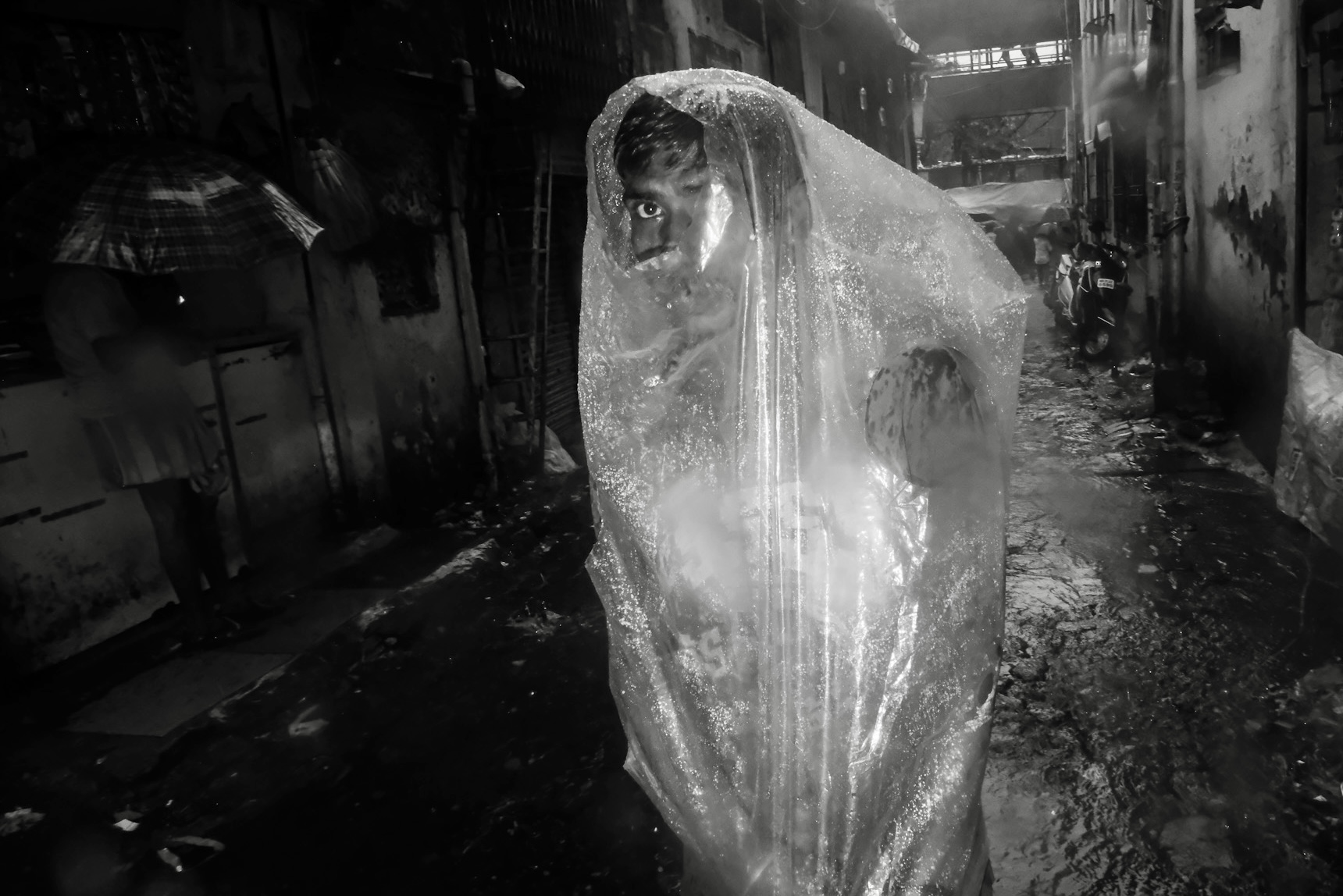
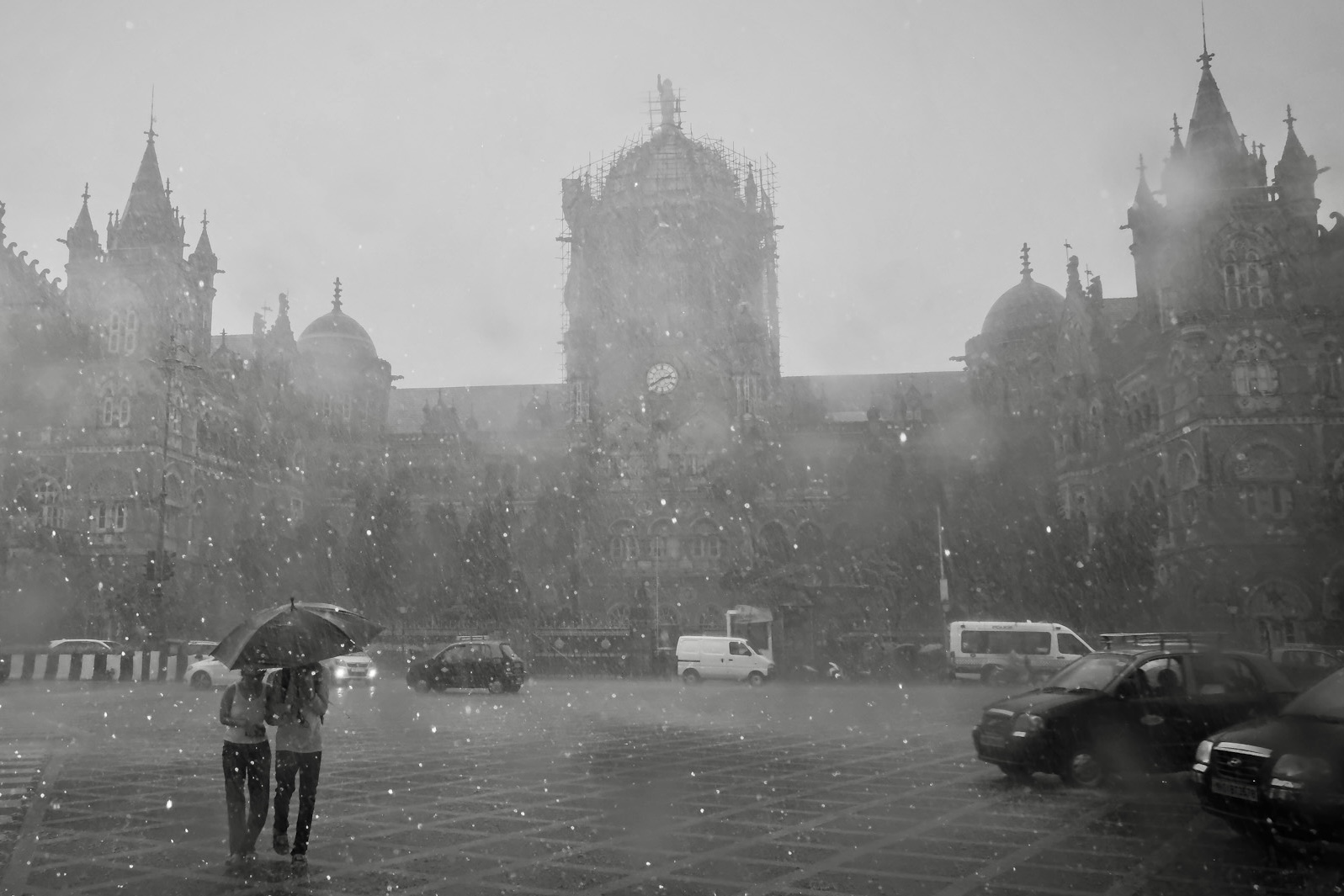
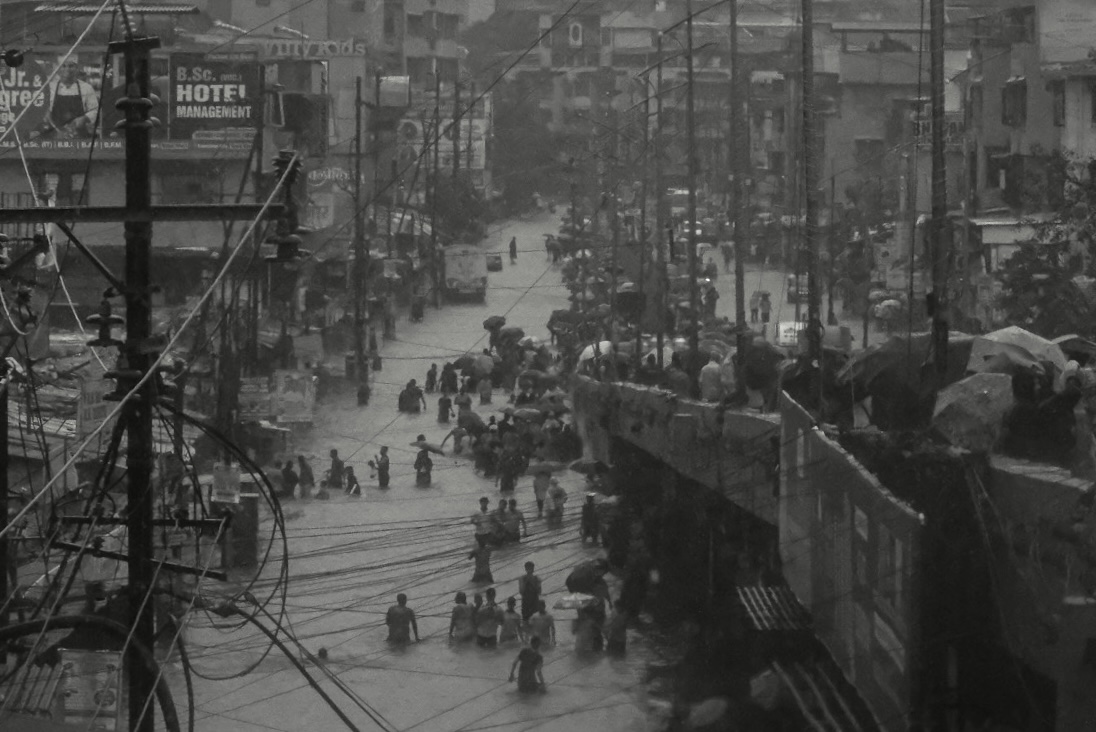
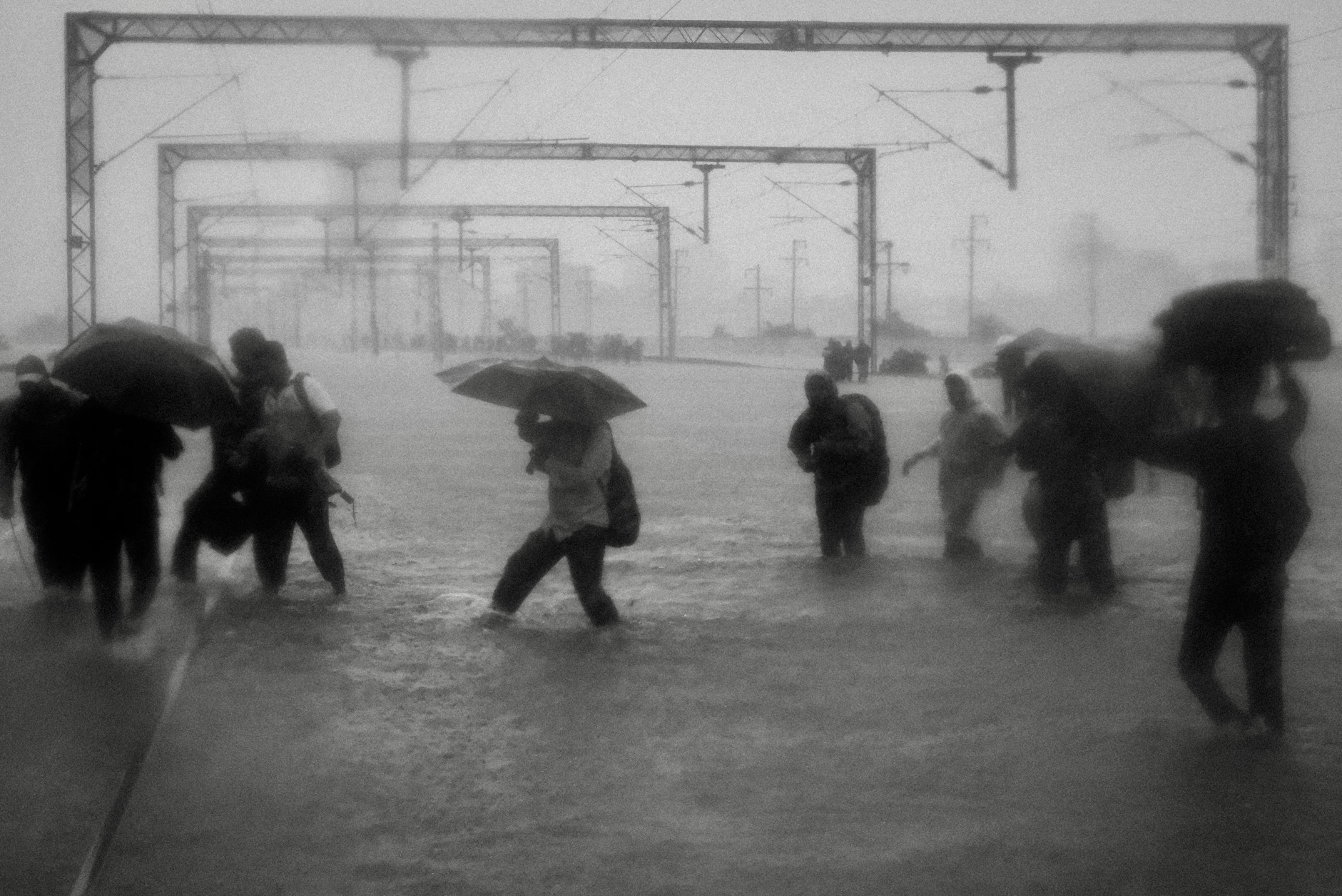
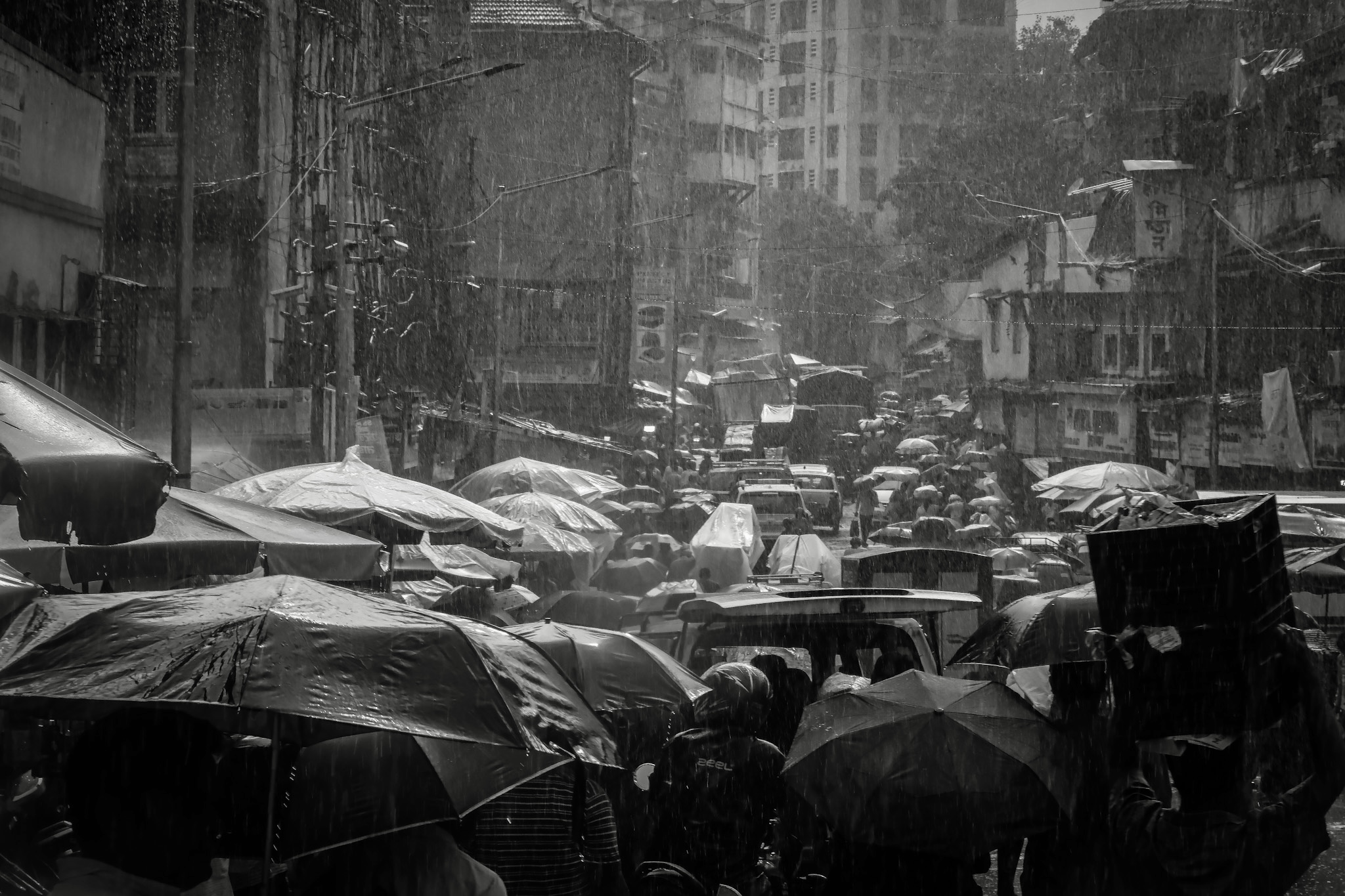
And then I crashland back into reality, I shudder at the sights I endure year after year. The photographer does not sentimentalise. He refuses any kind of fetishising of the rain. Rainwater is webbed apart by his pointed camera—it aims, it shoots, its bullet pierces through water’s gossamer-like raindrop—it forces us to see what we turn a blind eye to. Water logged in jam-packed streets, bringing mud, dirt, garbage, stray wires, machinery and people to its surface, ridding land of all importance, spreading disease, cholera, malaria, and other illnesses in its murky waters. Torturous daily commutes, life on standstill, daily deaths and falling trees, are all consequences of active afforestation practices in urban areas. Mangroves are cut and green patches of land are replaced with towers (or now data centres). Drainage systems are unchanged from colonial times and as much as the city floods, the lakes seem to be emptier. Mumbai is annually faced with the same problems. And annually, citizens are told to get the fuck on with it.
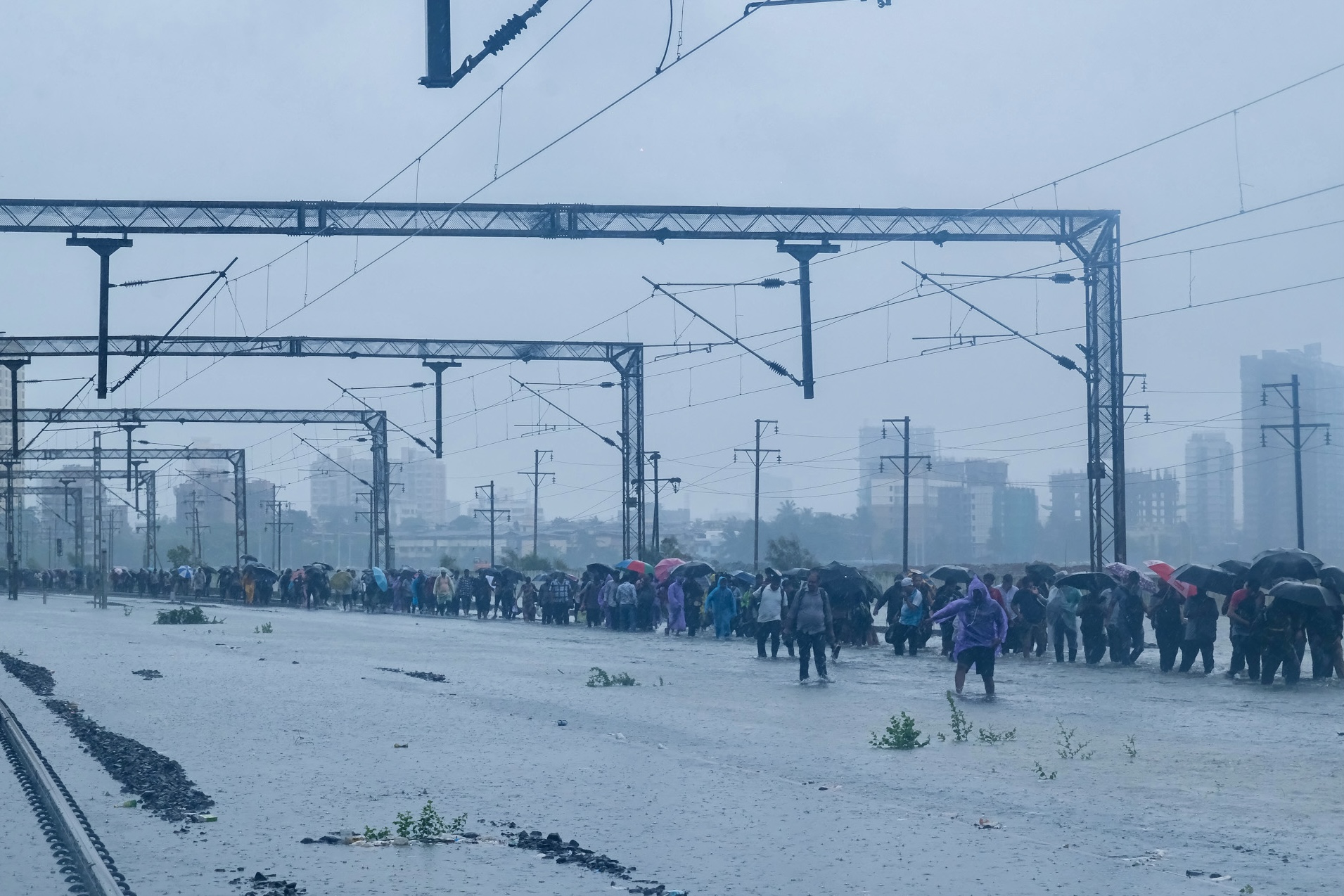
This very year, Mumbai and New Bombay’s rains crawled in lazily, almost a month delayed, and packed up their southwest winds almost a month before predicted. Water that fell was sporadic, temperamental, unwilling to console our desperation for it. Almost vengefully, the rain decided to reclaim what we stole from the sea, and filled up the streets to uncover systemic incompetence, yet again. Floods, yet again. Drought in rural Maharashtra, yet again. Landslides in Kerala, yet again. In the midst of all this, Yash’s camera continues to document human-made disasters. How can the camera stay upright when water threatens to swallow it whole?
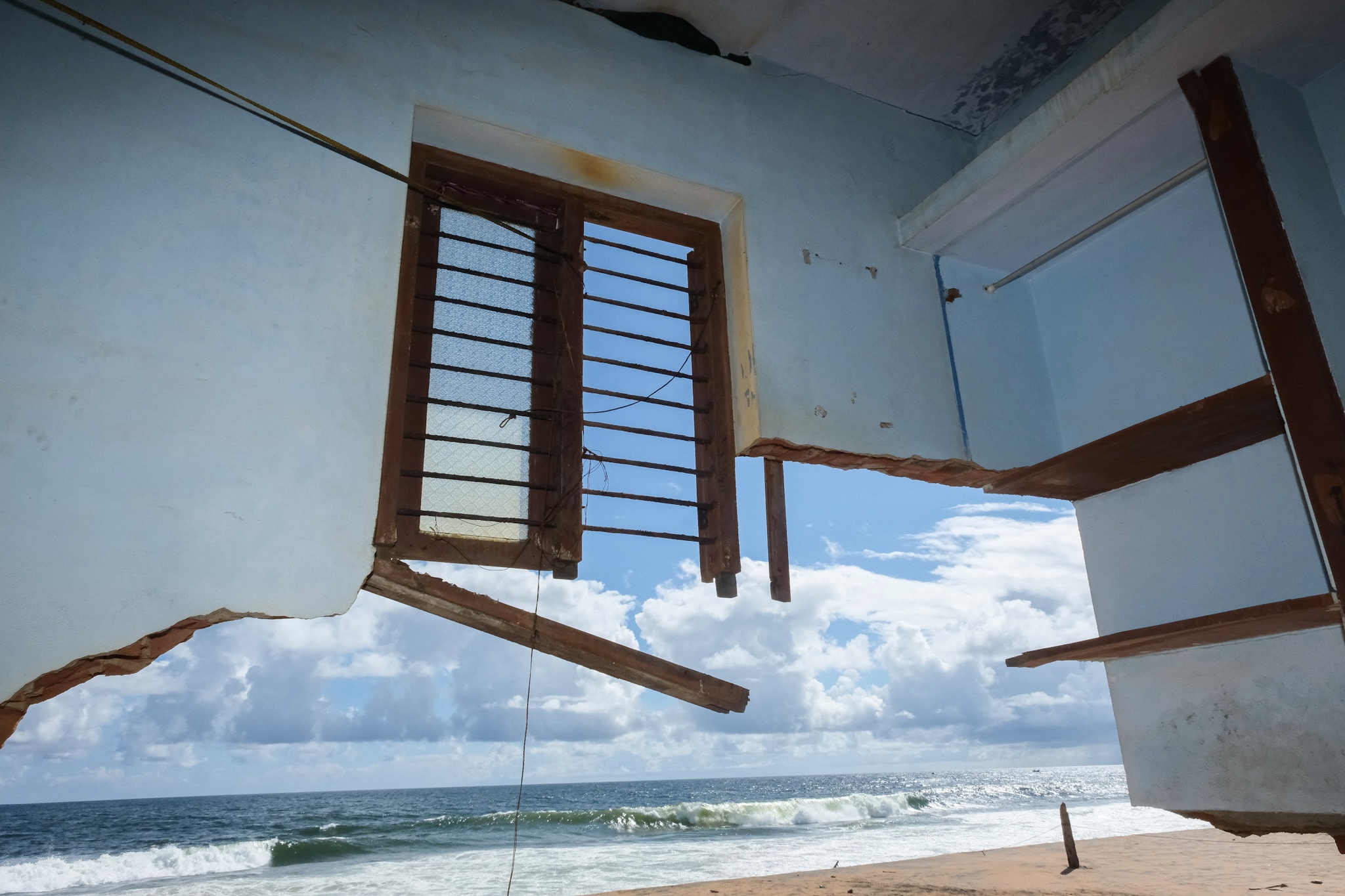
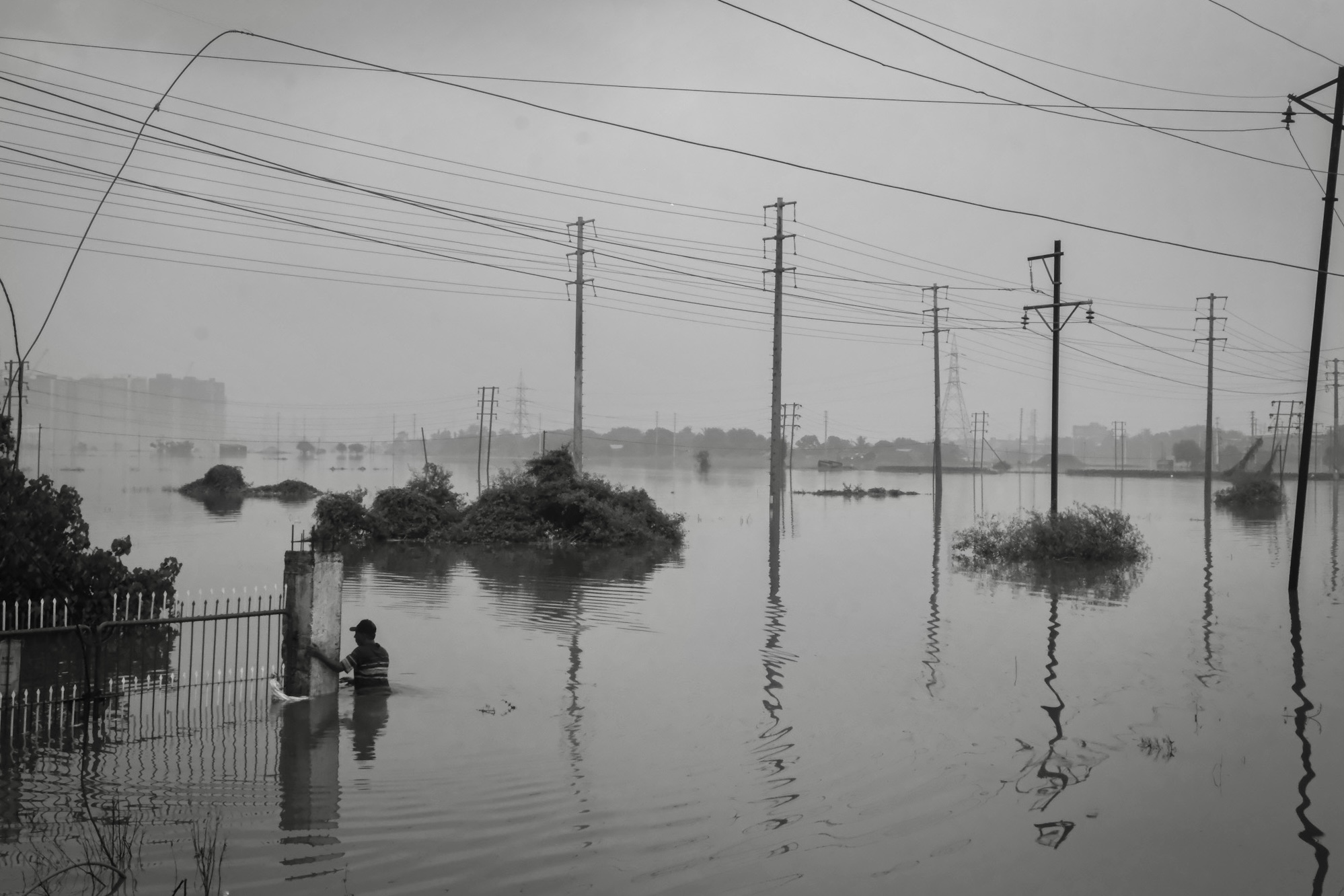
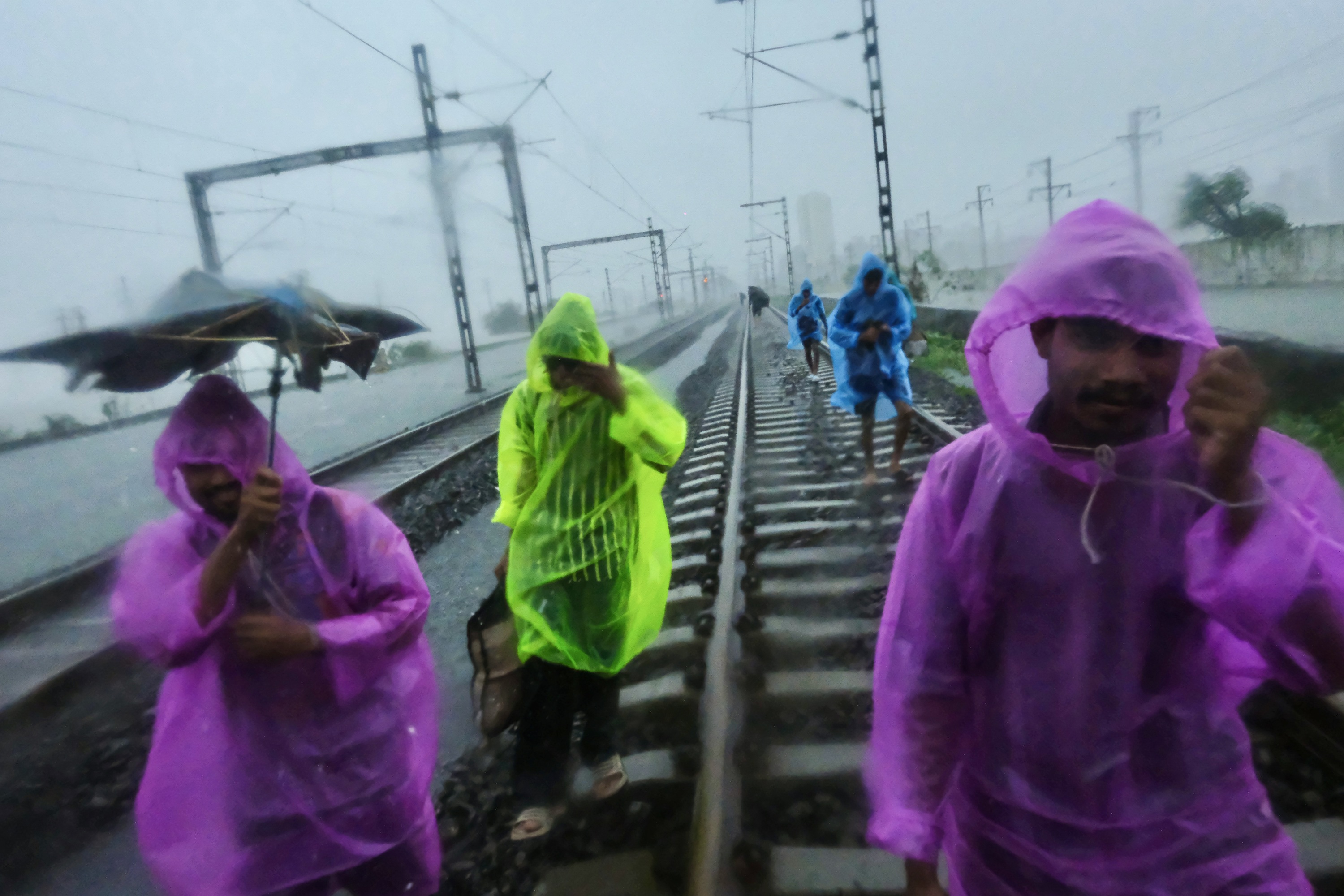
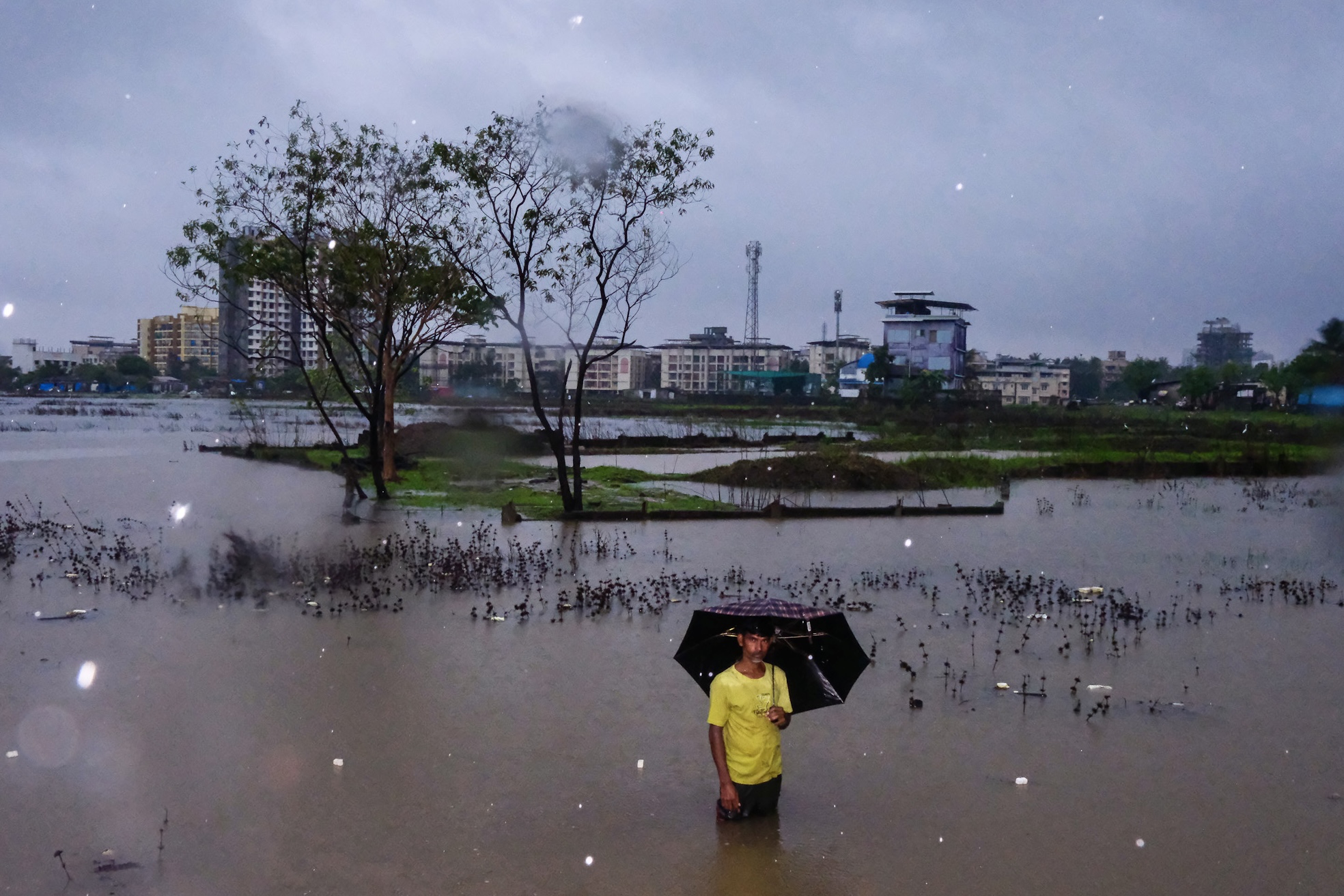
In 2026, global warming somersaulted its way to the Indian Subcontinent, hand in hand with El Nino, creating deadly summers and monsoons. The municipal corporation aggravated things by multiplying construction projects on sensitive land. In Vasai, entire saltpans were flooded with rainwater, caused by poor drainage systems and rabid hyperdevelopment. The Agri community that historically works these salt pans are regularly displaced due to corrupt authorities and tragic disasters. But we all know this. And our powerlessness does not abdicate us from bearing witness. The photographer holds us responsible. We are complicit towards our own destruction.
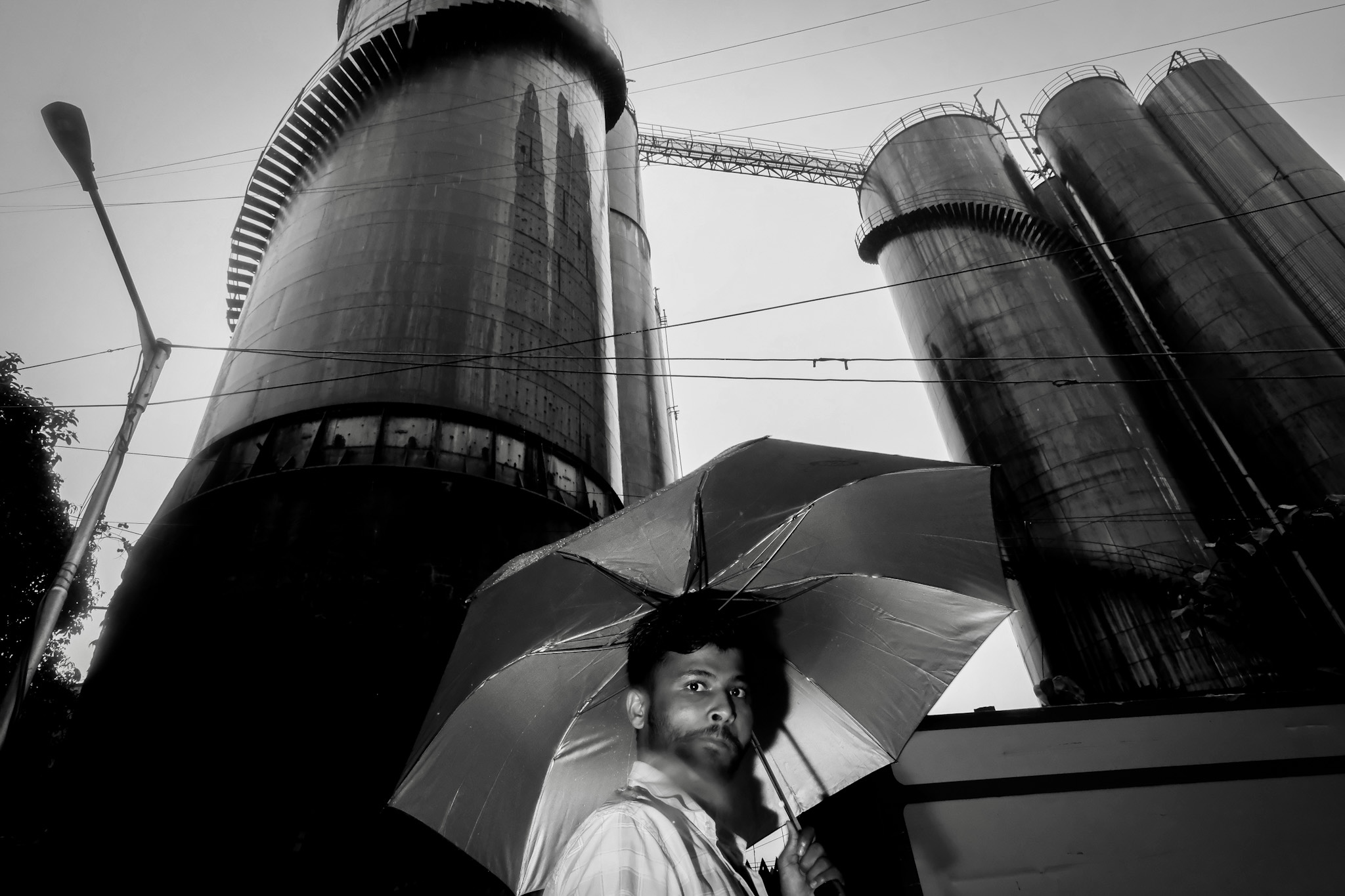
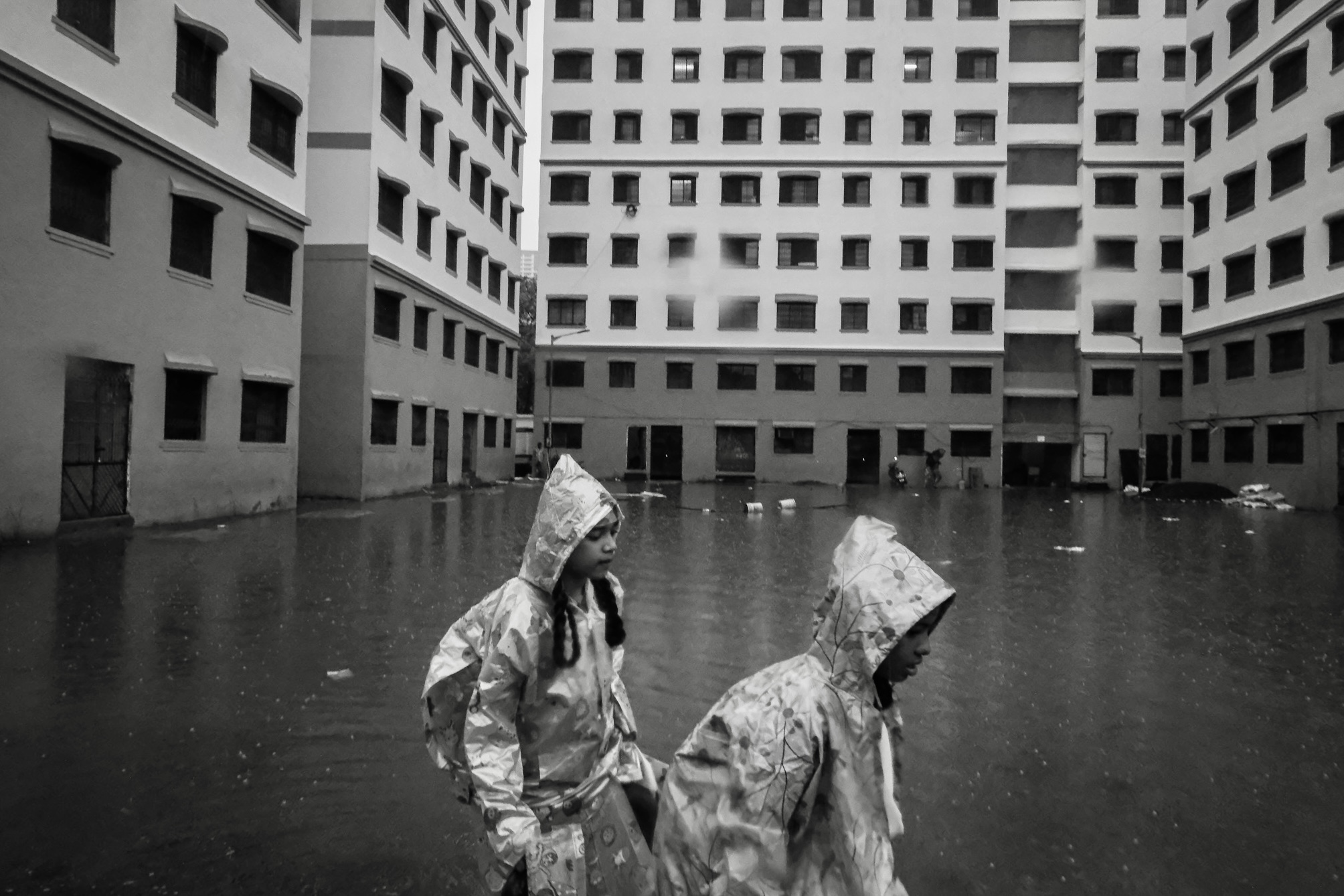
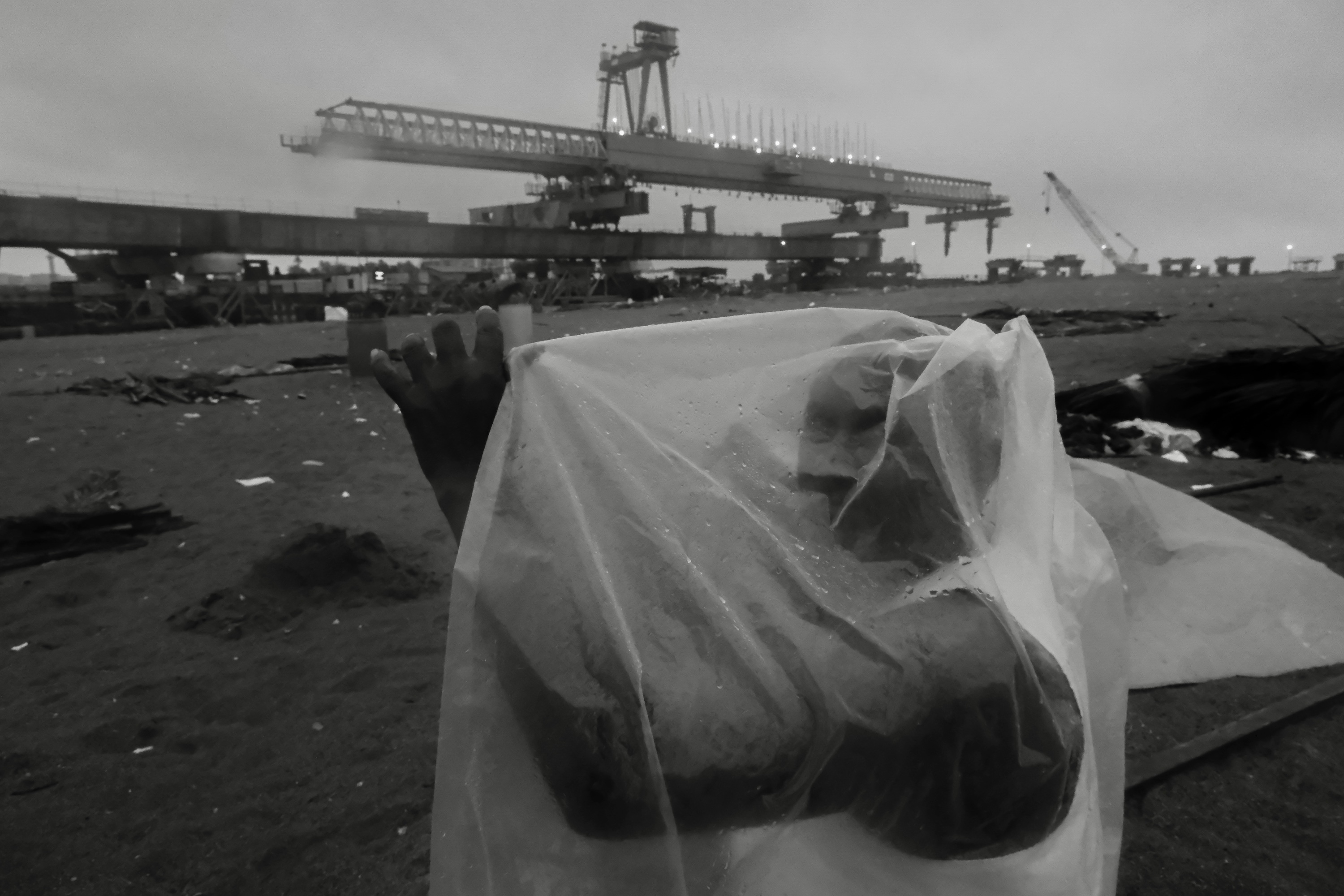
Yash makes the choice to hush these photographs into black and white frames, which in turn drowns out the noise in each still. But I can hear it all. People’s cries and crises, vehicular honks and falling structures, all that goes complimentary with these drenched visuals. I can hear the heavy weight of every moving body wading through rising waters. Through the frame, we can smell the hydrogen sulfide from reeking gutters, pungent and scorching the eyes with its scalding stench. Its cobra-like savagery gulps every living being along the way.
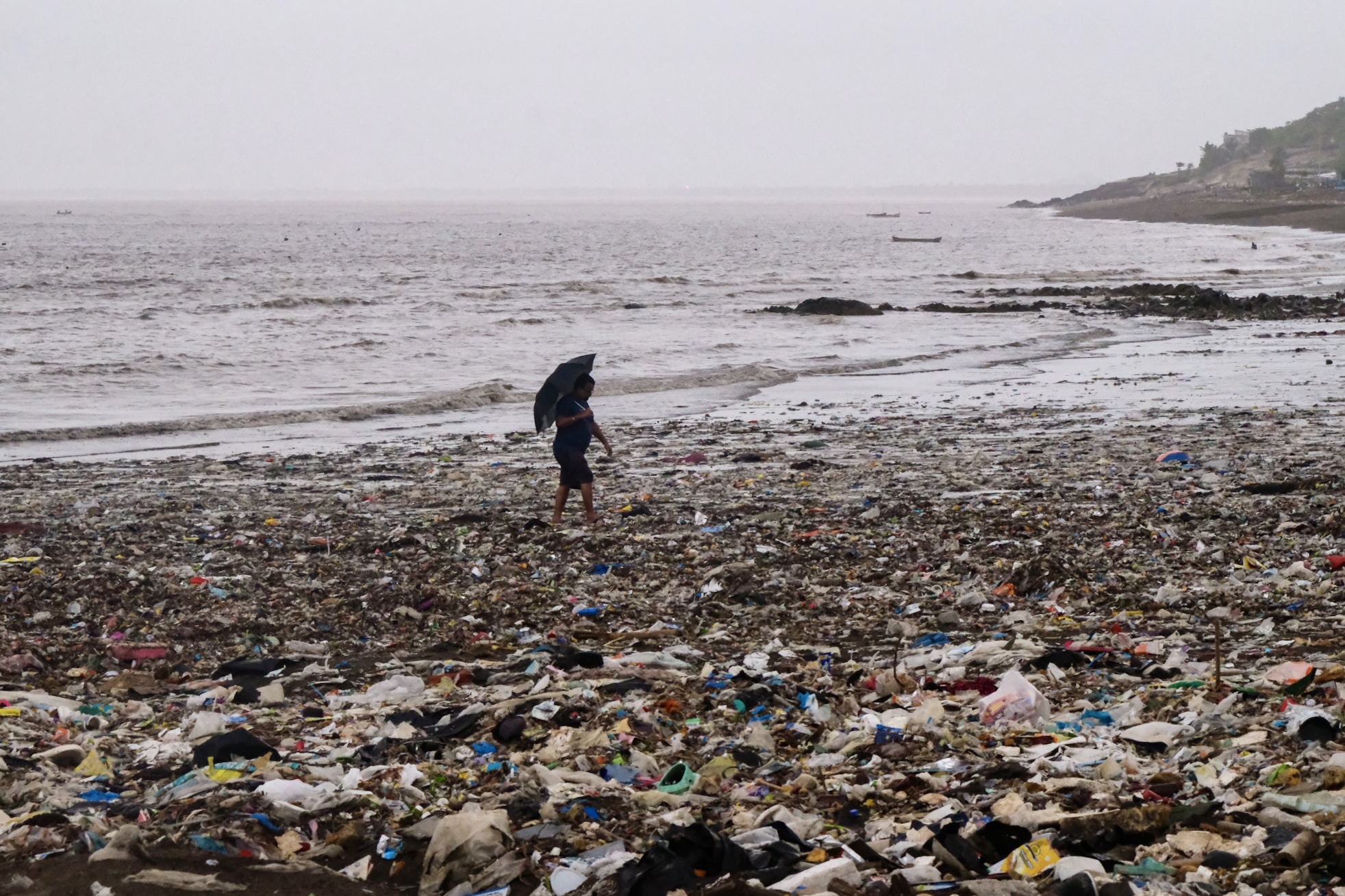
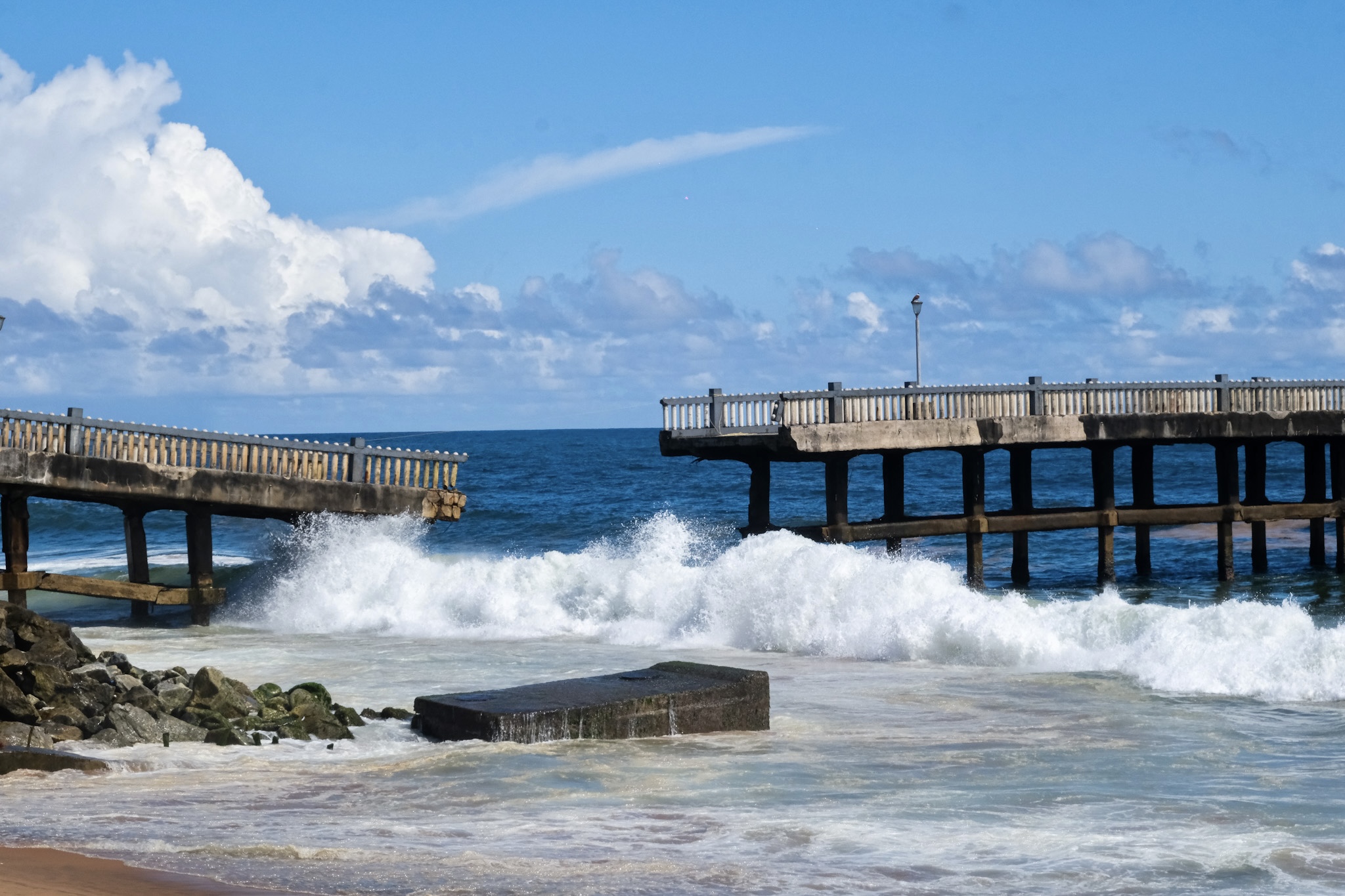
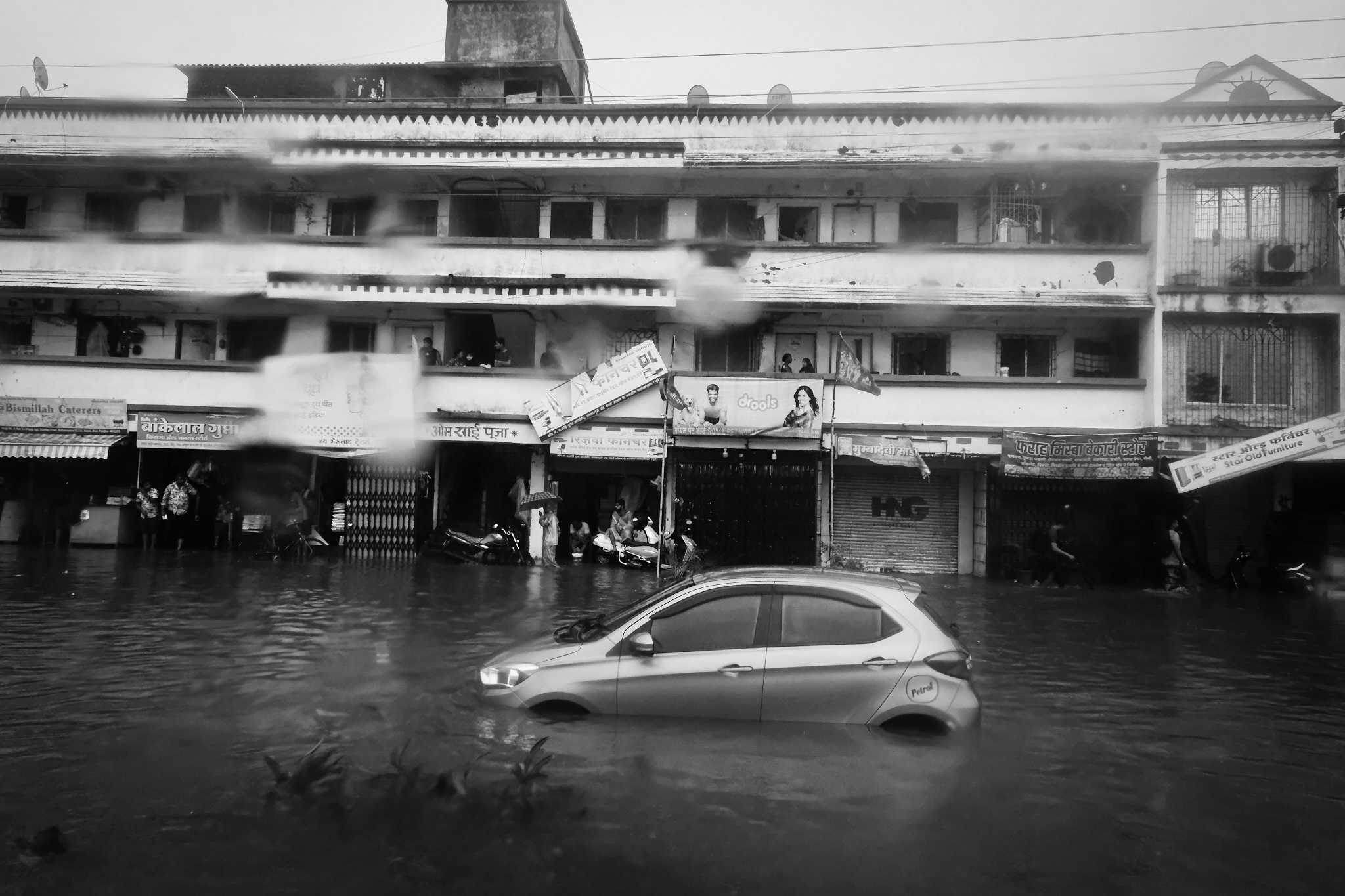
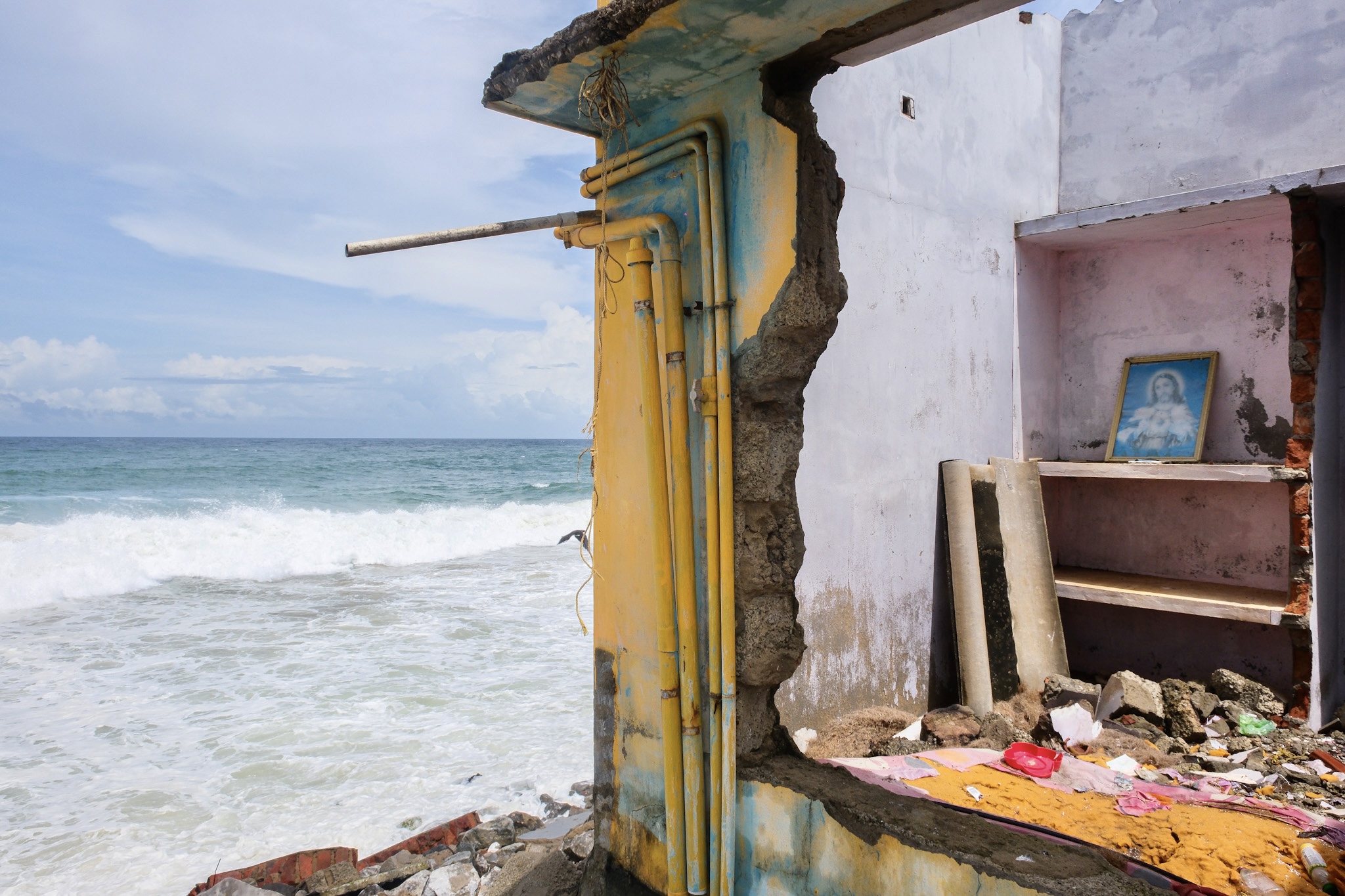
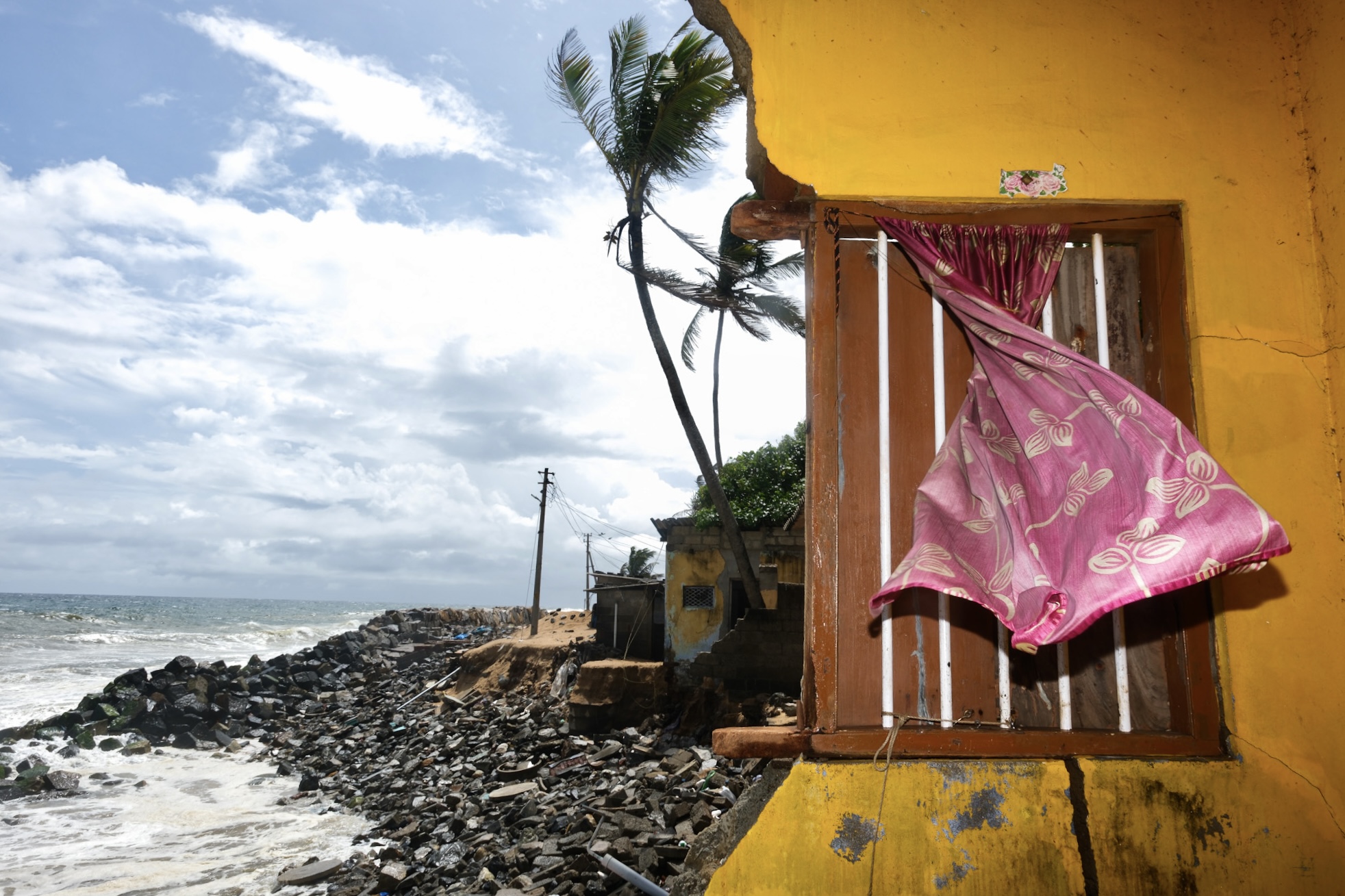
It takes a specific kind of unwavering sadist to watch this annual downfall of Mumbai. The greatest tragedy must be this: to be surrounded by the sea and yet be sinking in it. To swim through the streets but still receive insufficient water to drink. In Kerala’s coastal Pozhiyur, homes are torn apart by the great torrent of unpredictable, harsh lashing of rainfall. Development is an active threat there too; we find humans balancing the tightrope of farmland and industrialisation. Thiruvananthapuram’s Valiathura pier bridge is stretched apart by mere rain; concrete crumbles into cotton at Shankumugham beach as the sea gapes gleefully through a dented home. Rushing in to reclaim that which has been reclaimed over it, scoffing at the sheer hubris of human ego.
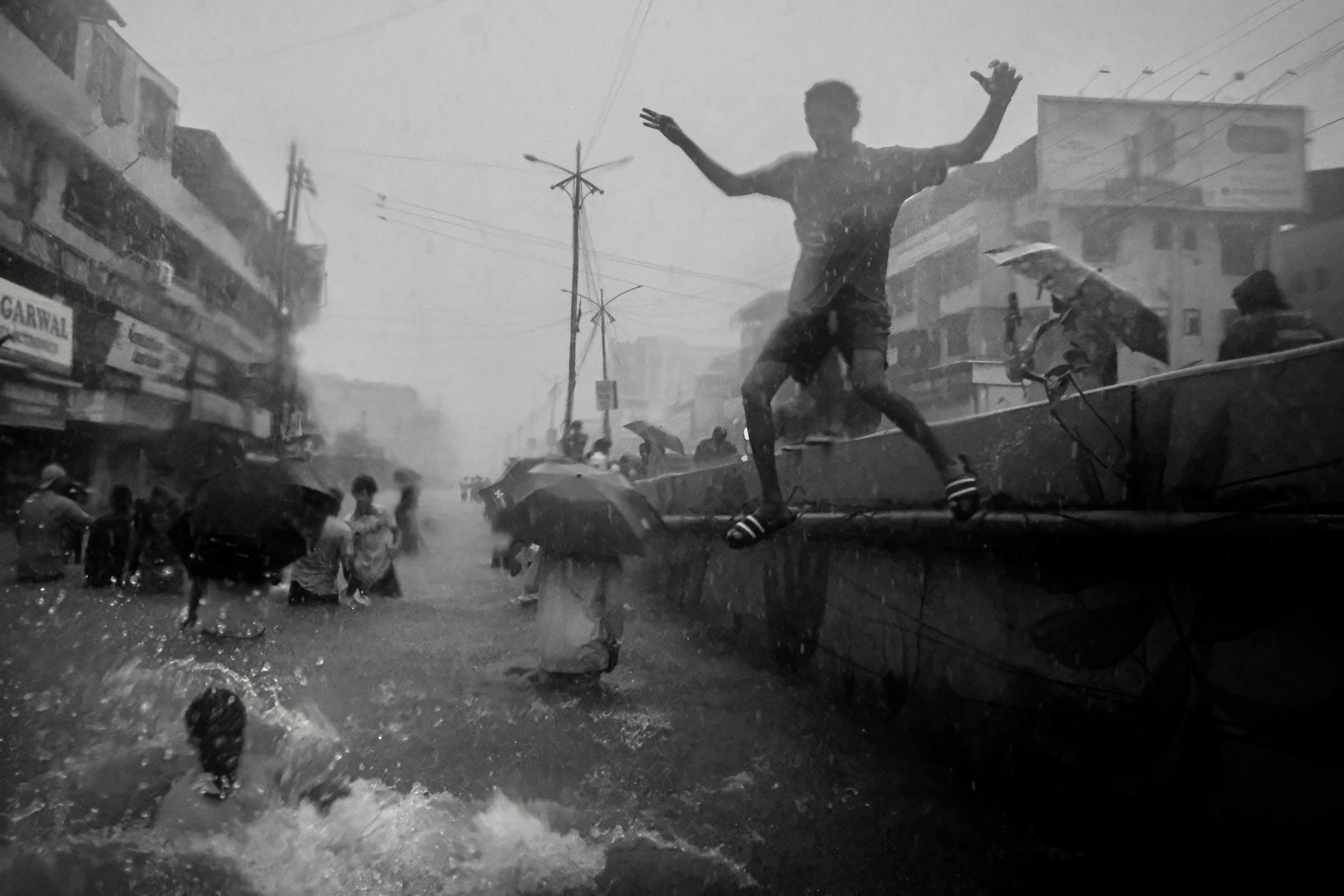
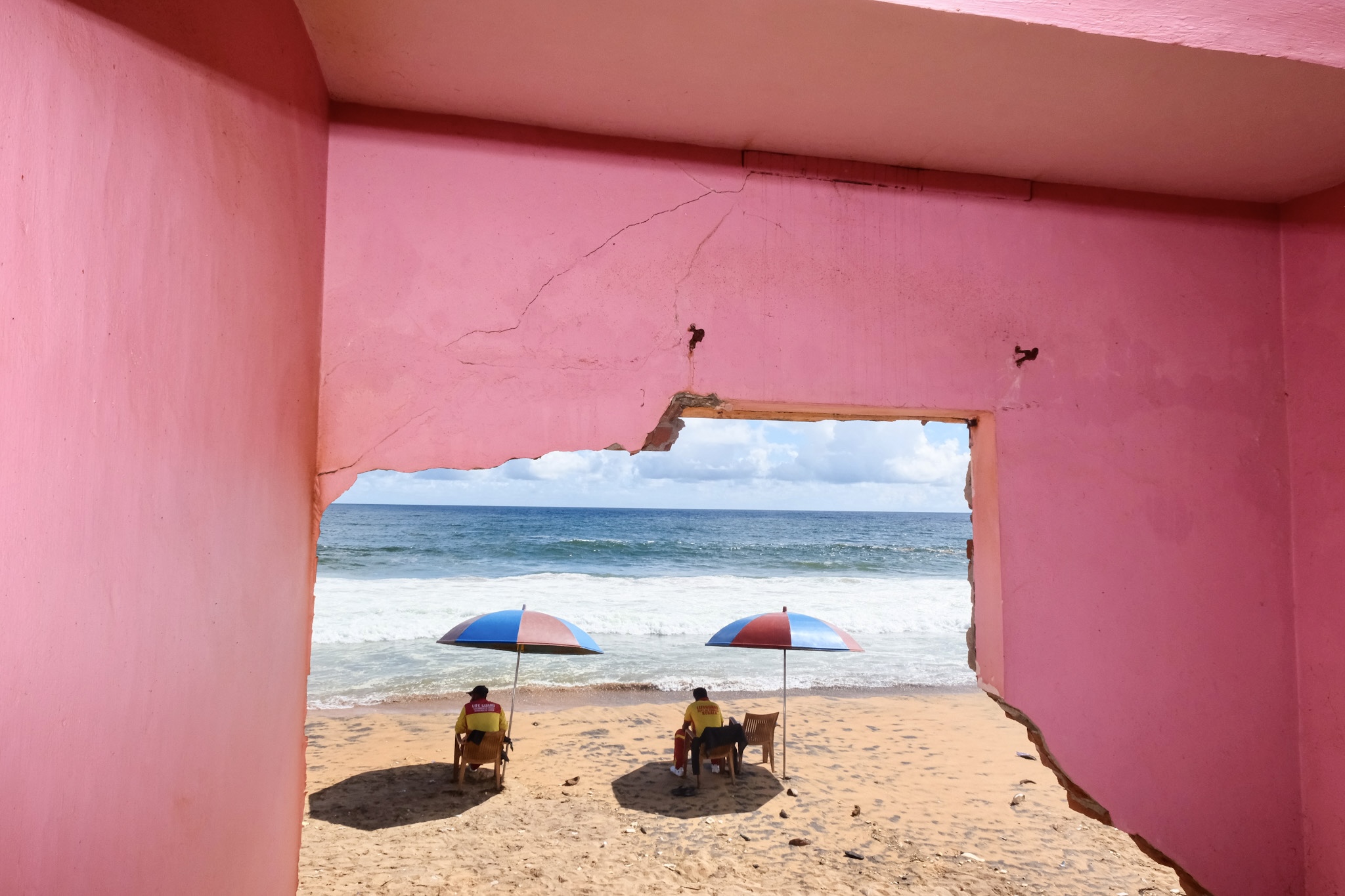
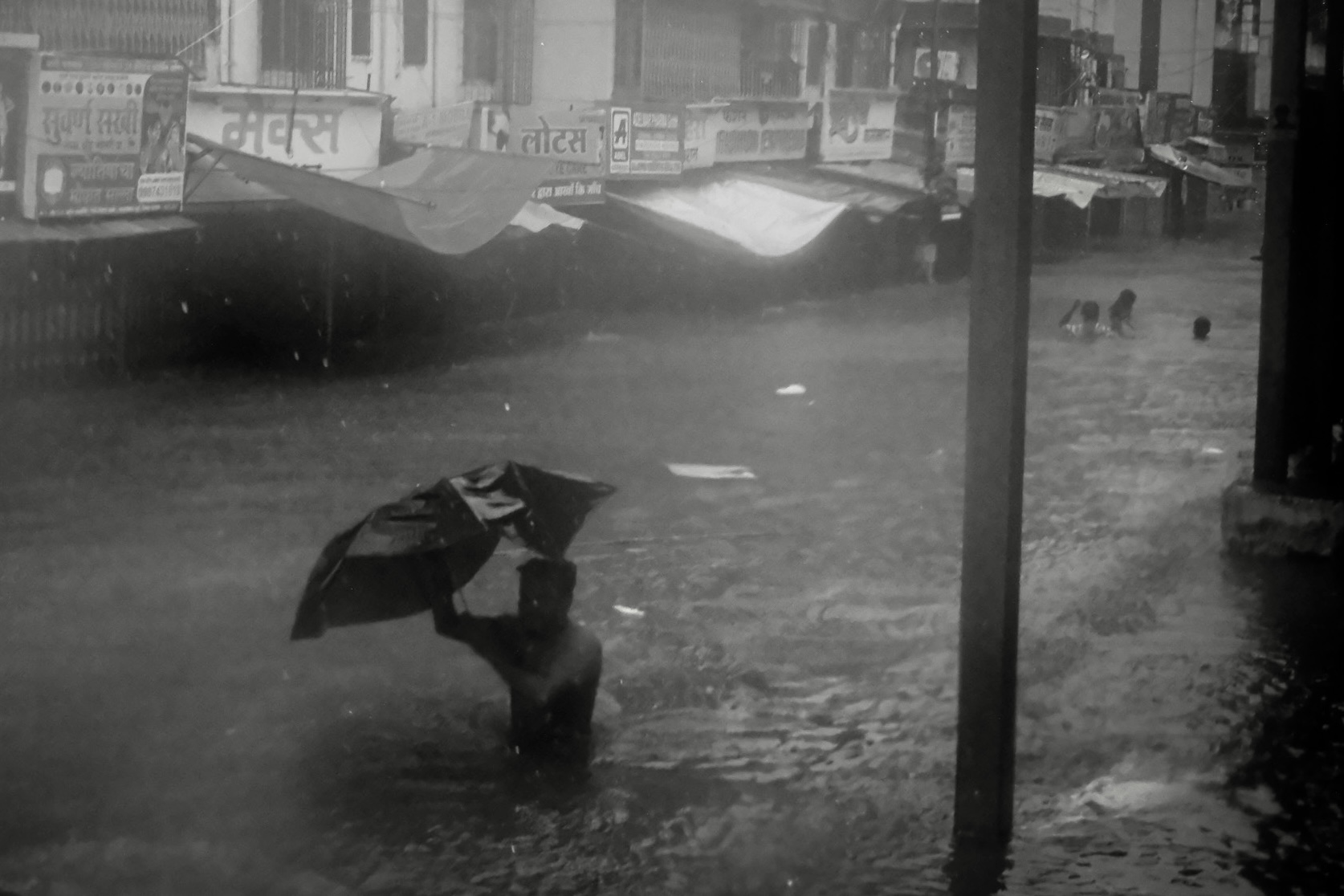
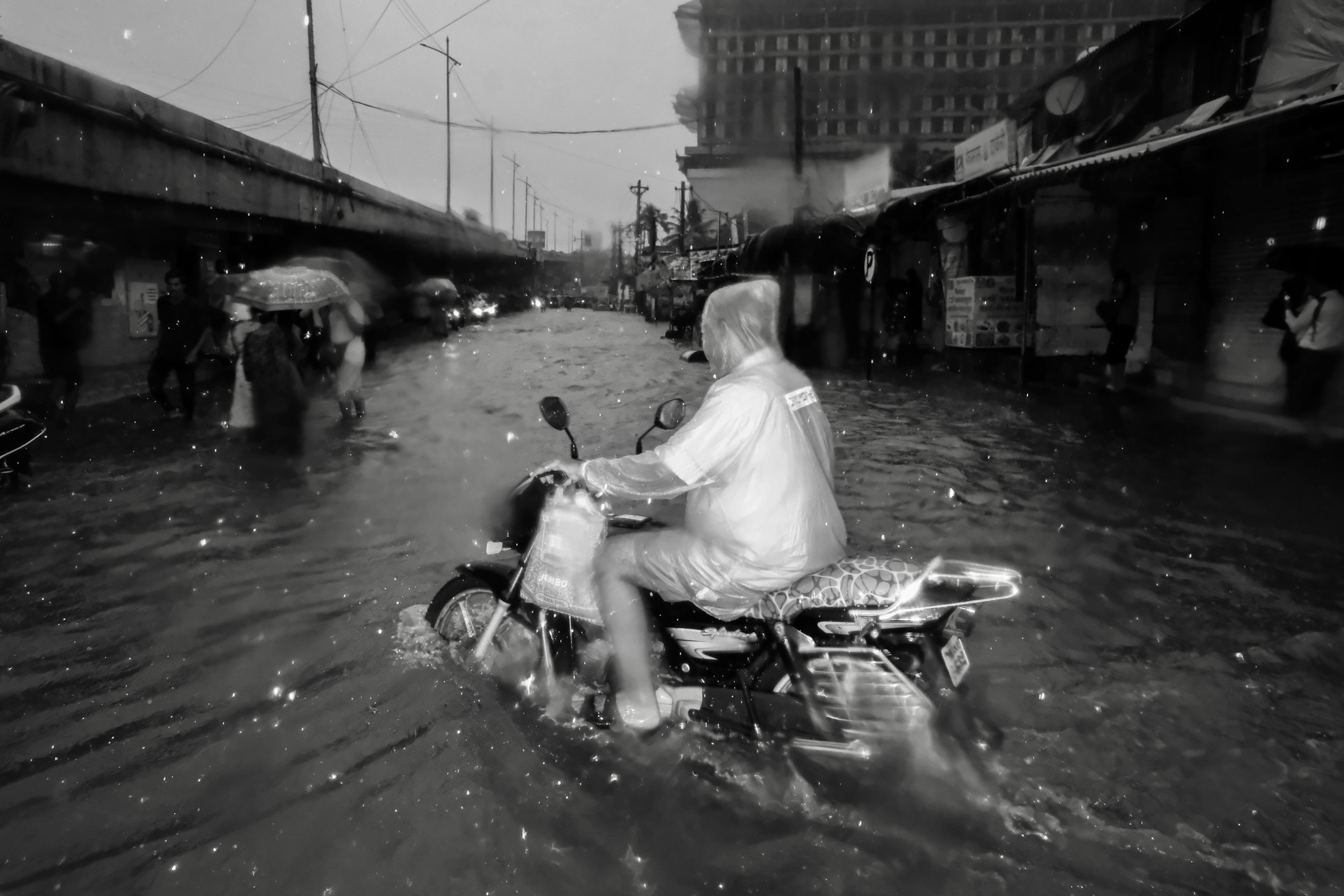
Yash takes his job as a documentary photographer with great, almost scientific, responsibility. To shoot the rain, the mad, maddening southwest monsoons, to track their mercurial movement, is the job that only a dedicated meteorologist can do. This is a study of what happens after water is made to break. After it traverses the southern coastlines and meets people with both a divine generosity and smug indignity. The photographer travels with it. He walks with those stranded on train tracks, he swims through waterlogged roads, holds his camera up high with one hand so that it sees what the human eye cannot. People look back at the lens, their silent stares making conversations with us, the viewer, through our screens. Neither of us is able to look away.
Elegise your end.
The velocity of rain
will end the drought soon.
Photography: Yash Sheth
Yash seems to do the impossible: he fractures water. A single raindrop is splintered open, split apart by its texture, character, and force. These divisions tear it apart and bring it to its original source: the winds, clouds, and heat that circulate to allow an outpour to occur. The same divisions that inspired him to begin photographing the way that water falls. “As a kid growing up in Mumbai’s suburbs, we waited for the rain after hot summers,” he says, “but that also meant dealing with issues like flooding, delayed trains, and daily life becoming difficult”. This emotional seesaw experienced with the monsoon, of simultaneous joy and frustration, is a common sentiment throughout the country. We all go through this torn season feeling fragments of pain and pleasure. Both in awe at the rain, and in contempt of it; how it moves across the varied geography of the Indian subcontinent, how it leads to issues like flooding, drought, wreckage, landslides, death and destruction. Lush green fields soaking in the rain coexist with entire homes being washed out. Its beauty: a force of nature, its harsh reality: the human-made consequences of development. Here, all seen in the enclosed safety of a photograph.
Except water resists entrapment. Even in Yash’s photography, water leaks out of every frame. You can feel it on your face, in your palms, thrashing against your skin. After all, this southern coastal monsoon comes from the wind, that reckless being, carrying moisture through its southwest travellers cascading in on India’s western coastline. But in the last few years, its haphazard waltz through the Western Ghats caused more wreckage than joy. But this dichotomy is what he cleaves open through his photography; Yash’s camera quite literally “shoots” at a single raindrop, his lens ripping a bullet through it to reveal both good and bad. By itself, rain has the power to create life and nurture it. By virtue of humankind’s gluttony and greed, natural landscapes are shredded to such bareness, that the wretched, vulgar aftermath of overconstruction causes our own end. But before we sink in the floods and wade miserably through potholes, we revel in the gleaming, glistening glory of the rain.
Here, the dichotomous character of water is studied through two coastlines that receive most of it: the Malabar, and then the Konkon coasts. The first receiving a heady, speedy outburst in full-throttle, and the second absorbing the rest of its velocity, its joyous, ferocious storm, all for months on end. So we journey on upward, from the Malabar to the Konkan, from Kerala’s districts to Mumbai’s, following the southwest winds on their annual migratory duties. We journey between six years of monsoon (2020-2026). Though the first five were in Mumbai, this year marked Yash’s quest towards the rest of India, and he has dedicated the next few decades to documenting India’s multilingual monsoon. All so that our eyes see the rain’s beauty and harsh reality. Supported by the photographer’s unrelenting aim to catch its conspicuous bipolarity.
Look at these photographs long enough, and I feel buoyant. Floating with the water, before the rain, before the sun, in anticipation of both. Surrounded by water, resting on the sea. Skin wrinkling. Hot air melting down on my face, bodies splashing in puddles and rivers, night lights softening in haze. Just as Yash captures them here: neon burning through a red umbrella in Kochi, a cigarette lighting in Alleppey. In Ponmudi, that southern tip where the southwest monsoon first breaks open, rain sets the scene for a processional walk down the aisle. Lovers are safe here. Bunched up together, like peeking Aambal flowers. In Kochi’s Tamil migrant community, dark umbrellas gather to spontaneously pitch tents during the World Cup. Amidst the grey of the sky, rainfall, and concrete pavement, a colourful koodai bag, sarees in yellow and red and orange, and multicoloured football banners seem to glow even in broad daylight. What a pleasure to look through the kaleidoscope that is the photographer’s camera.
A discoball of cloudburst. A shimmering sky. Sea that bleeds upward, a horizon that folds itself in surrender to the rain. Yash photographs freshwater fishing in Kochi, a time-honoured traditional occupation that structures its practice around fundamental respect for water. In 2015, the Kadar and Malayan communities of Kerala’s Vazhachal-Athirappilly region banned their own folk from fishing during the monsoon—all to ensure that endangered native fish species can grow in number. Wisdom passed down is as ancient as the monsoon itself. After all, it rained for two million years on Earth during the Carnian Pluvian Episode. Around 252 million to 201 million years ago. A reminder of our own mortality, of the timeless marvel that is monsoon.
Back in Mumbai, the city that owns me, I find myself in these cloudburst photographs. Where I spent most of the year waiting for the rain; this bastardised monsoon that barges in without asking. It booms and bellows while the sea brings us boomla and bombil; it burps and stutters before crashlanding onto this cosmopolis. The city’s palette yawns across an entire colour wheel. Move through the rain, and you see how colour varies from Haji Ali to Aarey: grey to green. The photographer causes a chasm in water, and we are called in to experience its uninhibited wonder. The rest of the year seems to be largely spent in anticipation of the rain. Menacing clouds perform like theatrical backdrops, cinematic and magnanimous in their presence. The charade of everyday life is enacted upon this urban stage. We glide on land, floating like the Arabian Sea. Such audacity. Such unapologetic liberation, only felt in the monsoon.
And then the rain falls. Water is everywhere. Shorelines become football arenas. Koli boats in Uttan, hibernating through their monsoon sabbatical, become makeshift water parks for children. An audacious green pasture of grass glows in Aarey forest. Water snakes towards no grandiose horizon, nowhere but deeper into the earth. Bodies river through its blades. Water soaks up the grass, the mud, the ponds and puddles, inviting us to boomerang straight in, jump back up to the sky. The utter lightness of life is felt only when water is all around. Beat your hands down and the rain springs back up. What joy it is to be anti-gravitational, to be weightless.
A dazzling, diamond-
studded curtain of rainfall.
New, glistening slate.
And then I crashland back into reality, I shudder at the sights I endure year after year. The photographer does not sentimentalise. He refuses any kind of fetishising of the rain. Rainwater is webbed apart by his pointed camera—it aims, it shoots, its bullet pierces through water’s gossamer-like raindrop—it forces us to see what we turn a blind eye to. Water logged in jam-packed streets, bringing mud, dirt, garbage, stray wires, machinery and people to its surface, ridding land of all importance, spreading disease, cholera, malaria, and other illnesses in its murky waters. Torturous daily commutes, life on standstill, daily deaths and falling trees, are all consequences of active afforestation practices in urban areas. Mangroves are cut and green patches of land are replaced with towers (or now data centres). Drainage systems are unchanged from colonial times and as much as the city floods, the lakes seem to be emptier. Mumbai is annually faced with the same problems. And annually, citizens are told to get the fuck on with it.
This very year, Mumbai and New Bombay’s rains crawled in lazily, almost a month delayed, and packed up their southwest winds almost a month before predicted. Water that fell was sporadic, temperamental, unwilling to console our desperation for it. Almost vengefully, the rain decided to reclaim what we stole from the sea, and filled up the streets to uncover systemic incompetence, yet again. Floods, yet again. Drought in rural Maharashtra, yet again. Landslides in Kerala, yet again. In the midst of all this, Yash’s camera continues to document human-made disasters. How can the camera stay upright when water threatens to swallow it whole?
In 2026, global warming somersaulted its way to the Indian Subcontinent, hand in hand with El Nino, creating deadly summers and monsoons. The municipal corporation aggravated things by multiplying construction projects on sensitive land. In Vasai, entire saltpans were flooded with rainwater, caused by poor drainage systems and rabid hyperdevelopment. The Agri community that historically works these salt pans are regularly displaced due to corrupt authorities and tragic disasters. But we all know this. And our powerlessness does not abdicate us from bearing witness. The photographer holds us responsible. We are complicit towards our own destruction.
Yash makes the choice to hush these photographs into black and white frames, which in turn drowns out the noise in each still. But I can hear it all. People’s cries and crises, vehicular honks and falling structures, all that goes complimentary with these drenched visuals. I can hear the heavy weight of every moving body wading through rising waters. Through the frame, we can smell the hydrogen sulfide from reeking gutters, pungent and scorching the eyes with its scalding stench. Its cobra-like savagery gulps every living being along the way.
It takes a specific kind of unwavering sadist to watch this annual downfall of Mumbai. The greatest tragedy must be this: to be surrounded by the sea and yet be sinking in it. To swim through the streets but still receive insufficient water to drink. In Kerala’s coastal Pozhiyur, homes are torn apart by the great torrent of unpredictable, harsh lashing of rainfall. Development is an active threat there too; we find humans balancing the tightrope of farmland and industrialisation. Thiruvananthapuram’s Valiathura pier bridge is stretched apart by mere rain; concrete crumbles into cotton at Shankumugham beach as the sea gapes gleefully through a dented home. Rushing in to reclaim that which has been reclaimed over it, scoffing at the sheer hubris of human ego.
Yash takes his job as a documentary photographer with great, almost scientific, responsibility. To shoot the rain, the mad, maddening southwest monsoons, to track their mercurial movement, is the job that only a dedicated meteorologist can do. This is a study of what happens after water is made to break. After it traverses the southern coastlines and meets people with both a divine generosity and smug indignity. The photographer travels with it. He walks with those stranded on train tracks, he swims through waterlogged roads, holds his camera up high with one hand so that it sees what the human eye cannot. People look back at the lens, their silent stares making conversations with us, the viewer, through our screens. Neither of us is able to look away.
Elegise your end.
The velocity of rain
will end the drought soon.
Photography: Yash Sheth