
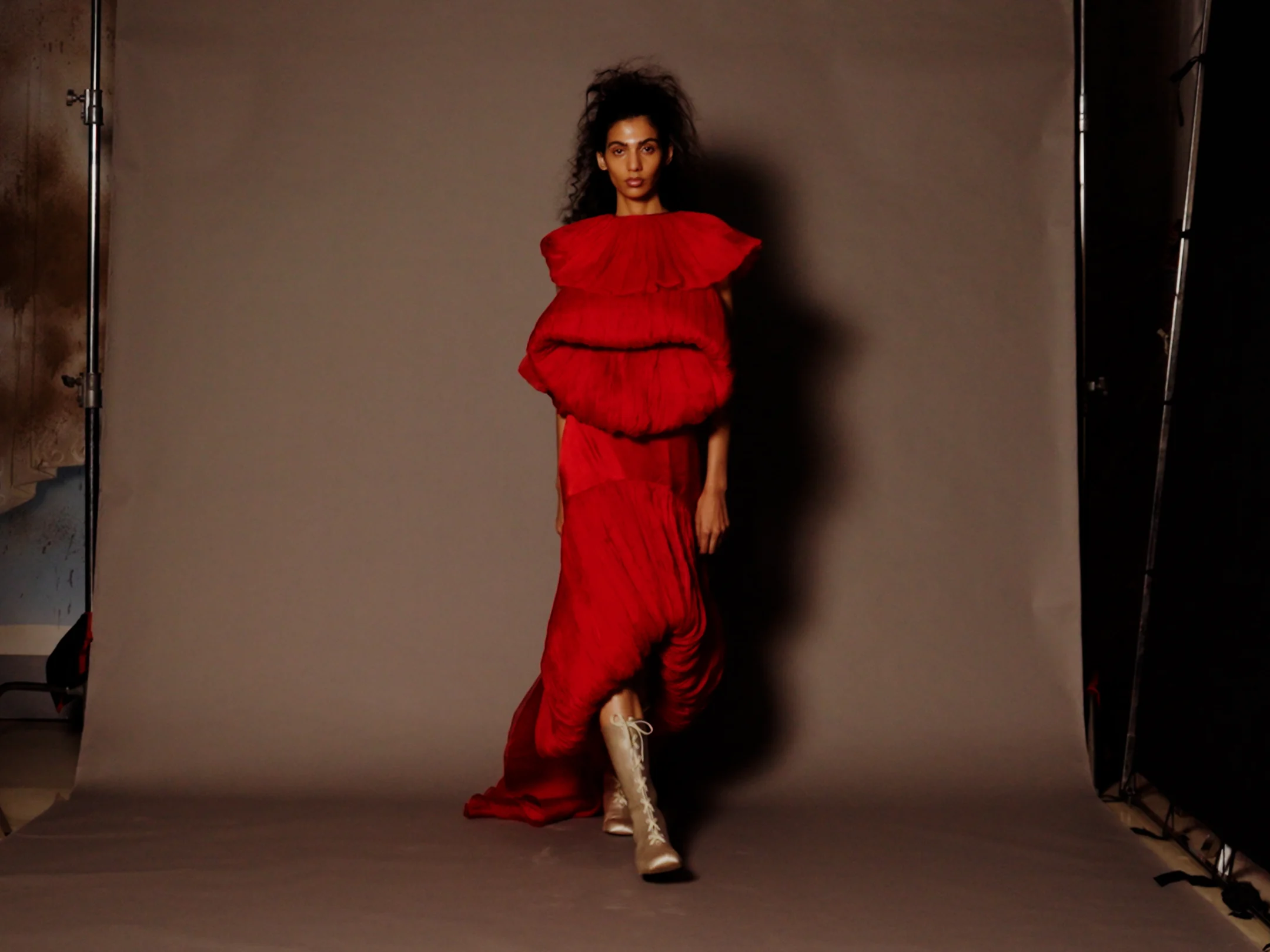
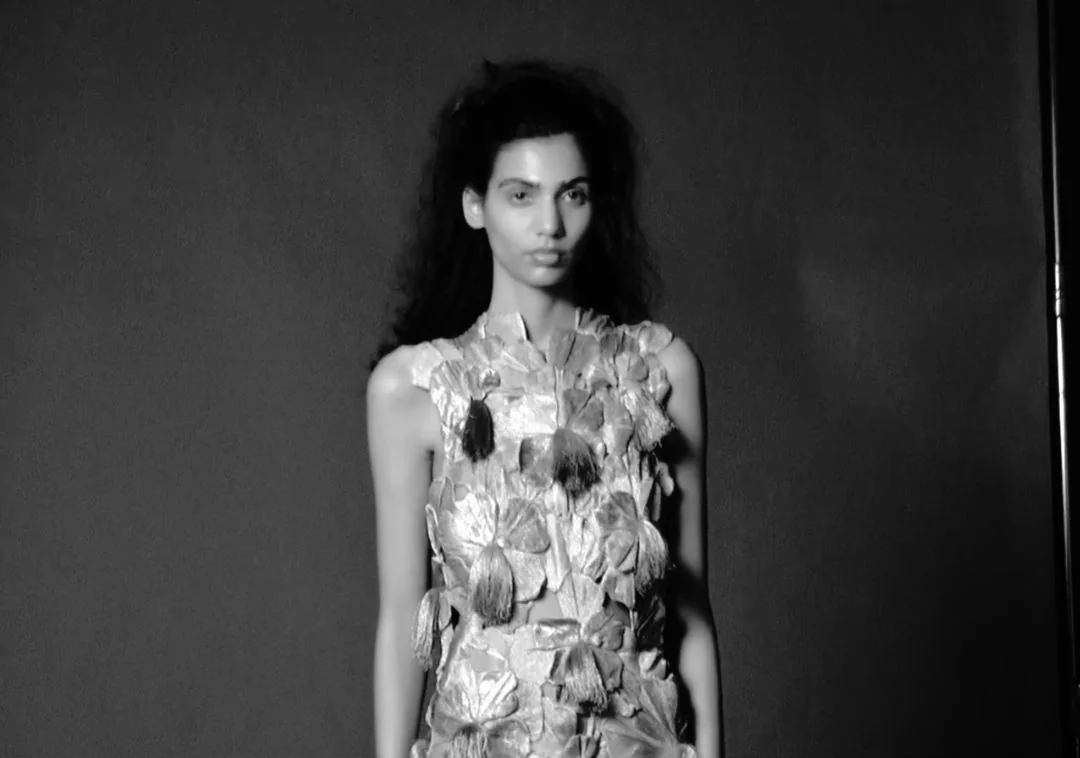
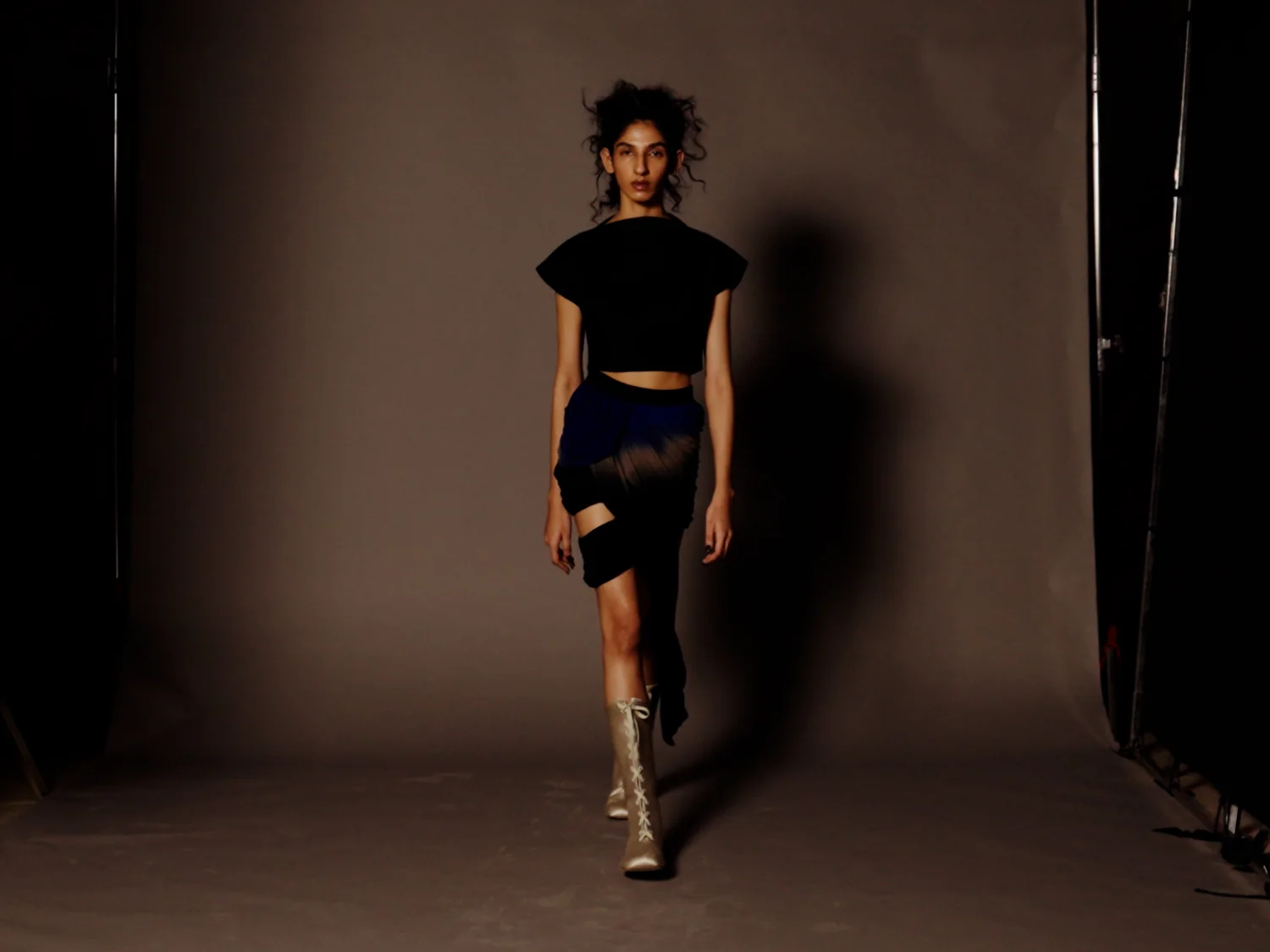
You probably know Vishesh Khanna as Anamika Khanna's son, Viraj's twin, and one half of the pair who pitched their mother the prêt line that became AK|OK. What you don't know yet is what he makes on his own. After an undergrad in economics and psychology at USC, years inside the family studio, and an MA at Central Saint Martins that he says rebuilt him from the ground up, he's showing his first collection. It's made in his family's couture ateliers, from what's already lying around in them, and it looks nothing like what came out of them before.
Let's start with the obvious thing. People know the name before they've seen a single piece. What do you want the clothes to say that the name can't?
Honestly, it's very difficult to answer that so directly. I design from a very different lens. My muse is someone my age, so it's basically my own projection of how someone should be dressing. I've been trying to figure out exactly what I want my designs to say for the last three years, and that's literally when I started designing.
Before that I had no experience of design. A lot of people come up to me and say, "Oh, you've grown up with it, it's in you." I don't think that's entirely true. It's a lot like language. I know people who've lived somewhere for 10 or 20 years and still can't speak the language. It's all about being engaged. Before I started, I was interested in everything apart from fashion design. A bit of your taste comes from what you grow up with, but it's very minor unless you pay full attention to it.
So if it wasn't fashion, what were you paying attention to?
My first few collections were a lot about things I liked. Cricket and golf, which I've played my entire life. I always wanted to be a golfer, and before that a cricketer. So there are sportswear references, but I don't want this collection to feel like sportswear, even if some of the colours come from there.
A lot of it was personal, too. My mother's Jain and my dad's Punjabi; his grandfather was Sikh. Jainism is quite ascetic, and that's a very different worldview. So it was about that tension, growing up between two parents who see the world so differently.
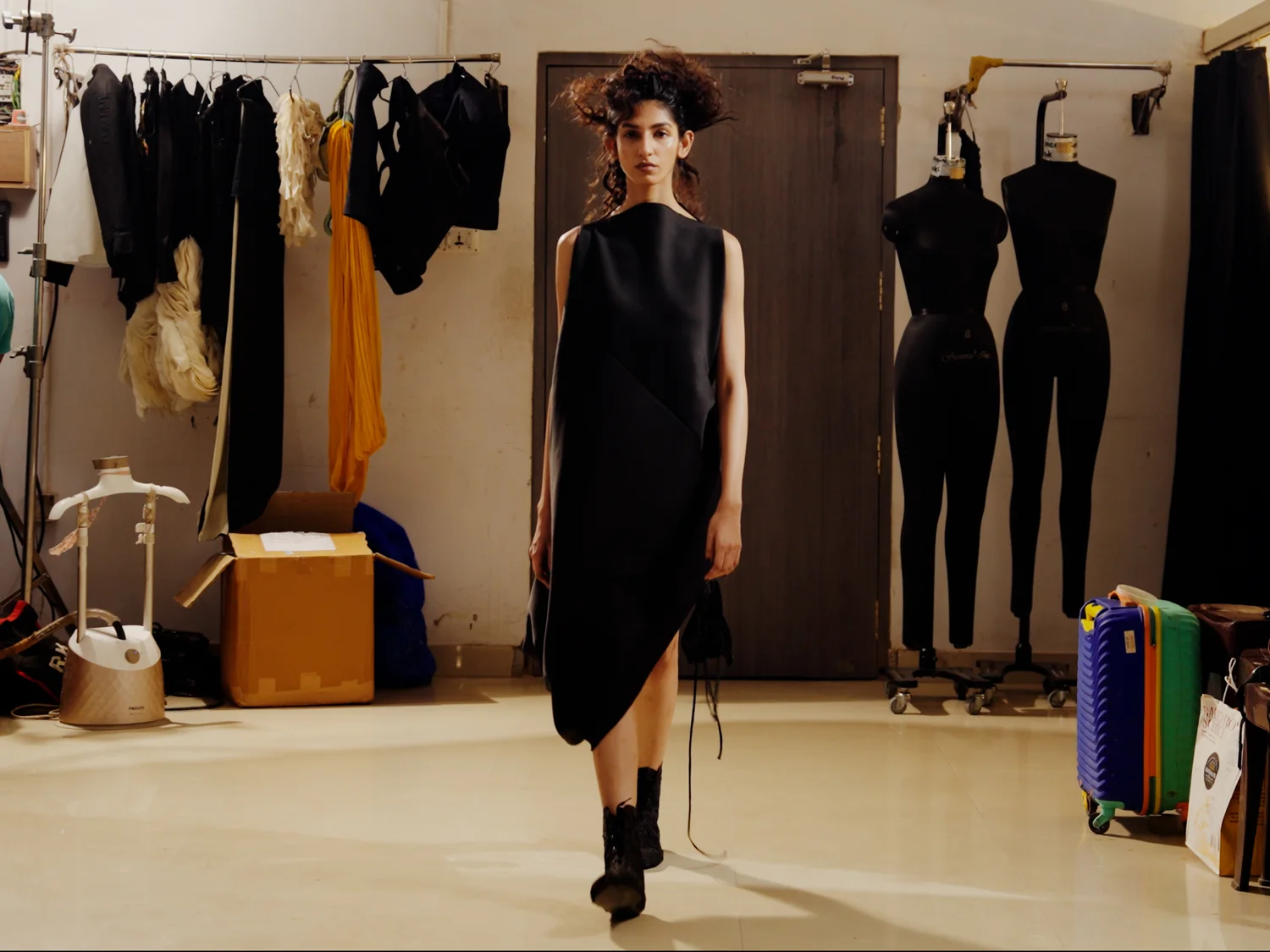
And I've always been obsessed with physiotherapy. I used to do classes with this guy from California, and the way he explained things stayed with me. It's all about balance, tension and relaxation. It comes back to that same tension, between intensity and lightness. A couple of pieces started with me thinking about training equipment.
All that tension. Was some of it about pushing back, too?
Yeah, after a point it was about rebellion. When you start working in fashion and everything around you is established, the vision, the aesthetic, there are so many rules. "This is the shape, this fabric works, this cut works. People don't want to show their arms, people don't want to wear miniskirts." Rules you build up after being in the industry a long time. Hearing all that, I felt limited. "I can't do something so short. You can't put embroidery here. Print shouldn't be there." Even at university I felt suffocated by the rules I'd placed on myself.
And when I started designing, my mother used to hate every single thing. Of course she did. Her standard is one of the best in the world, and I was just starting. So at some point I was like, "I'm going to do exactly what she doesn't like." If she doesn't like it, I'll do it and try to make it perfect. It took a long time to be assertive about that, because I wasn't confident. But with practice, I'm getting to know what I like.
Getting to know. So you're not quite there yet?
I'm still figuring out what I want my designs to say, and I don't know if anyone has that fully worked out. At university everyone seemed super clear about their concept and their story, and I was like, "I thought this was a place to explore." Then I realised it's an MA, and they'd done all that during their BA. I hadn't studied fashion as an undergrad. I literally started my fashion journey six months before university. I made a portfolio, sent it out, they liked it, and the moment I got there I decided to start everything fresh.
Maybe it's too soon, and I hope one day I figure it out. But I've always thought that if a designer knows exactly what they want, it's very hard for them to do new things or change what doesn't work. Some people are doing the same thing for 20 years, and that's something I've always feared. Everyone says, "You have to be crystal clear, otherwise the consumer gets confused." I know it's a bit counterintuitive. But once you start getting validation and building your confidence on one vision, it becomes very hard to let it go and evolve. So I'm letting it take its own time. If it happens, it happens, and I'm always going to challenge it.
But you're not starting from nothing. You've got a way of working.
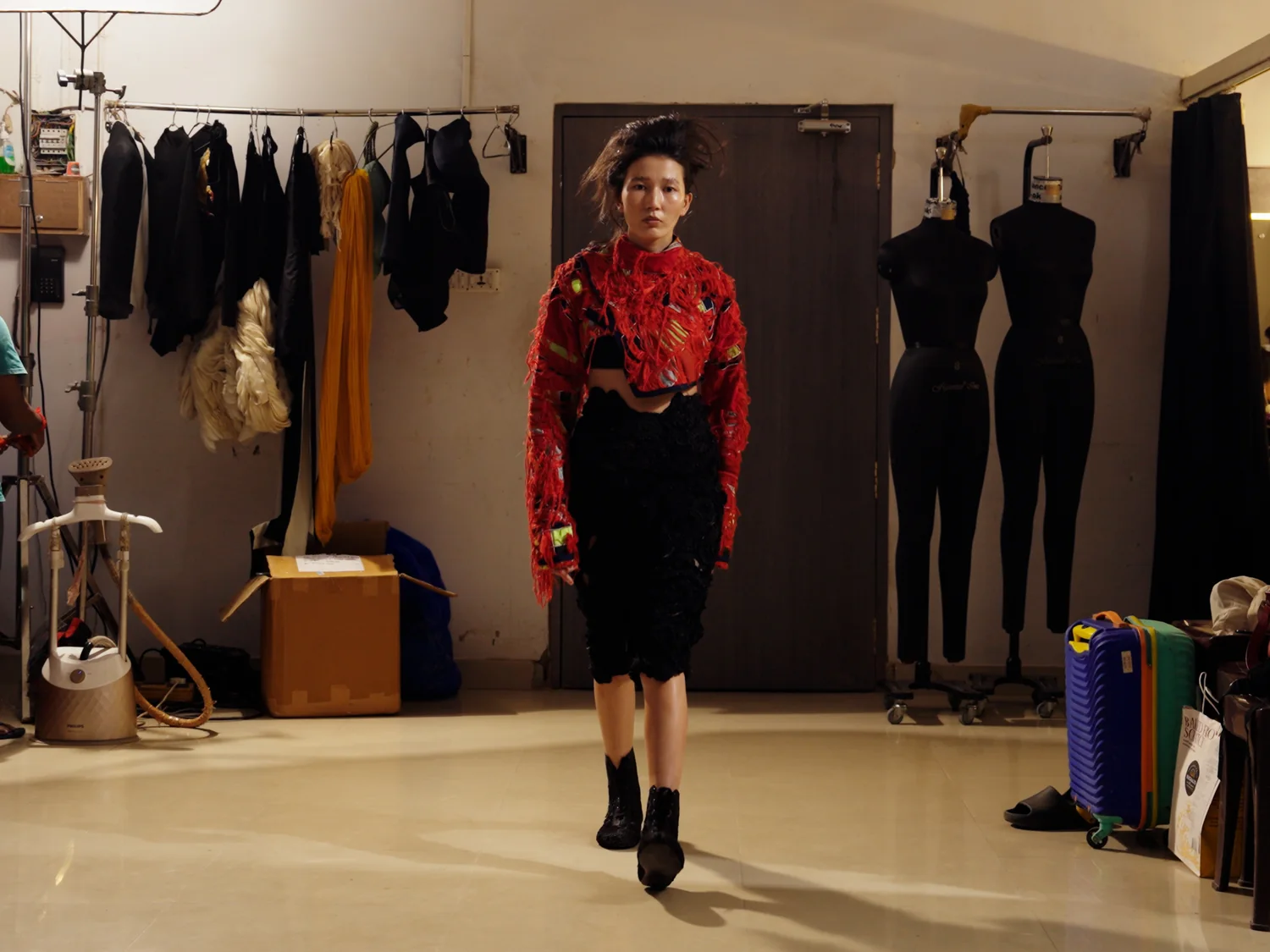
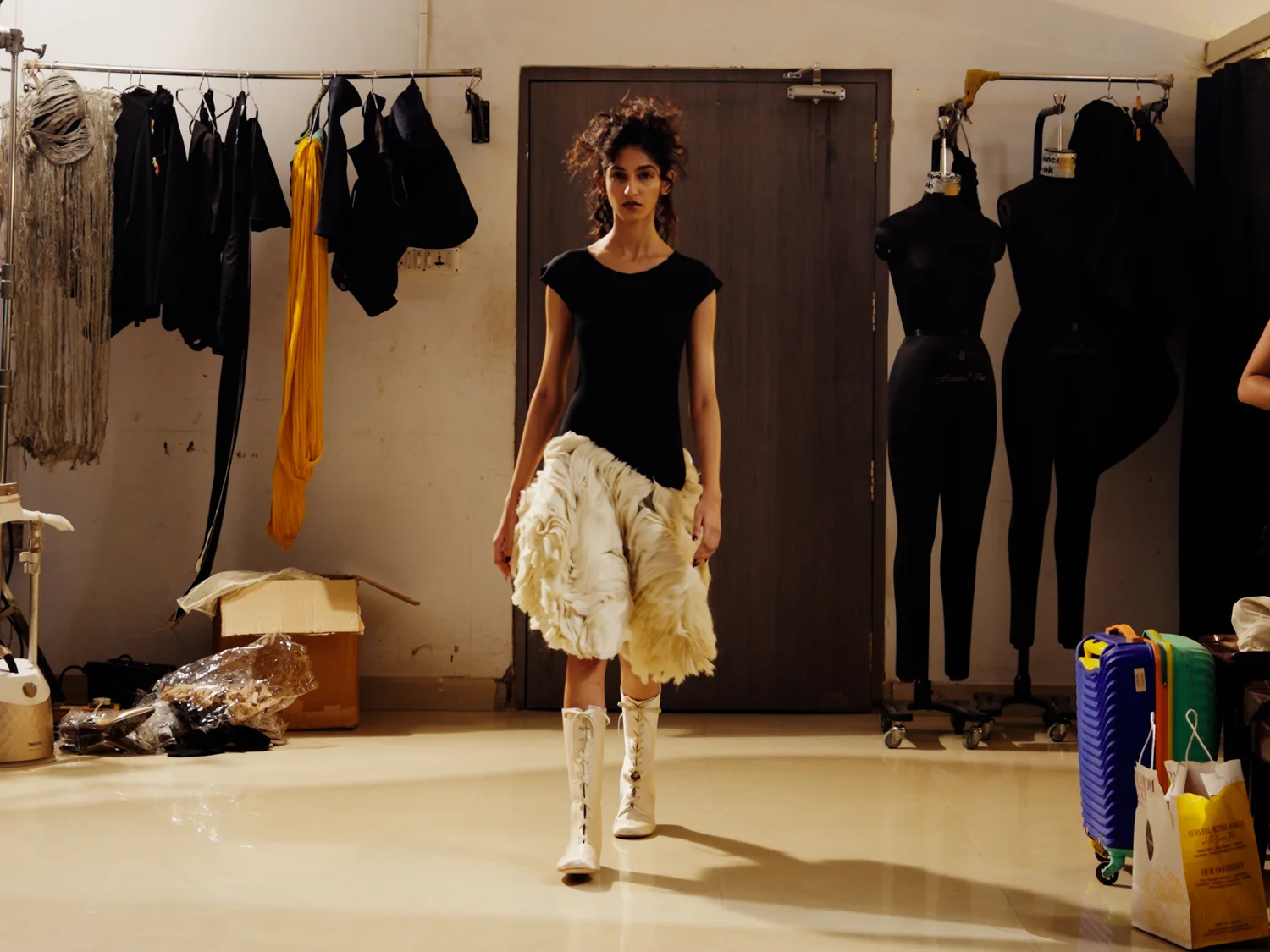
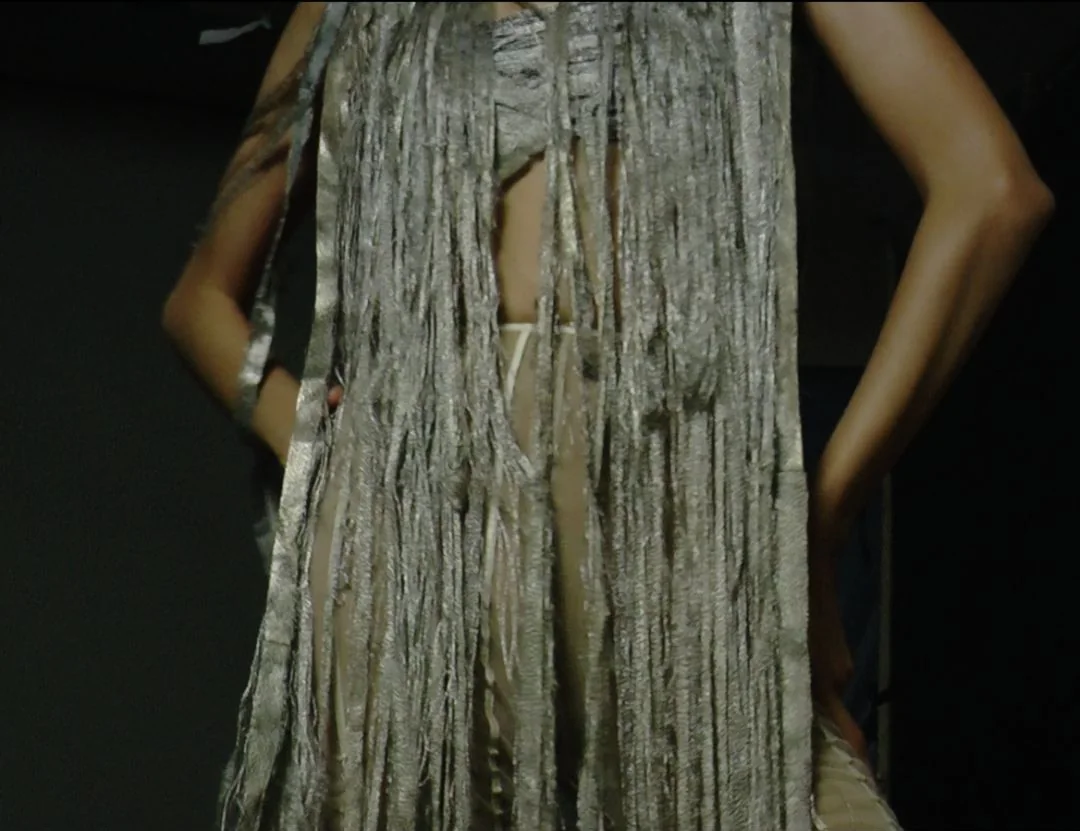
Yes. Right now it's a lot about upcycling things that are in our couture ateliers. Usually people go outside looking for things to upcycle: discarded outfits, things that are thrown away. For me that doesn't make sense. I look within our own premises. I wouldn't even call it upcycling, because upcycling sounds like something used and thrown away. I'd still call this couture.
Couture, but not the way most people picture it.
That's the thing. When you say couture, the first image that comes into your head is big gowns, something extremely old-fashioned. I want to challenge how couture is seen. Now couture is something very personal: it's handmade, it's special, and it's not easy to get. And it's about not doing the same thing where, "This is the client, make her look tall and pretty, follow the lines." If I want to put something somewhere on a body, I'll do that. I keep the muse in mind, but I don't limit myself. When you've worked somewhere a long time selling to clients, the focus is commercial, what sells. I haven't gone through that, so I don't feel compelled to do it.

Okay, play along. Someone walks past these pieces with no idea who made them. What do you hope they'd guess about the designer?
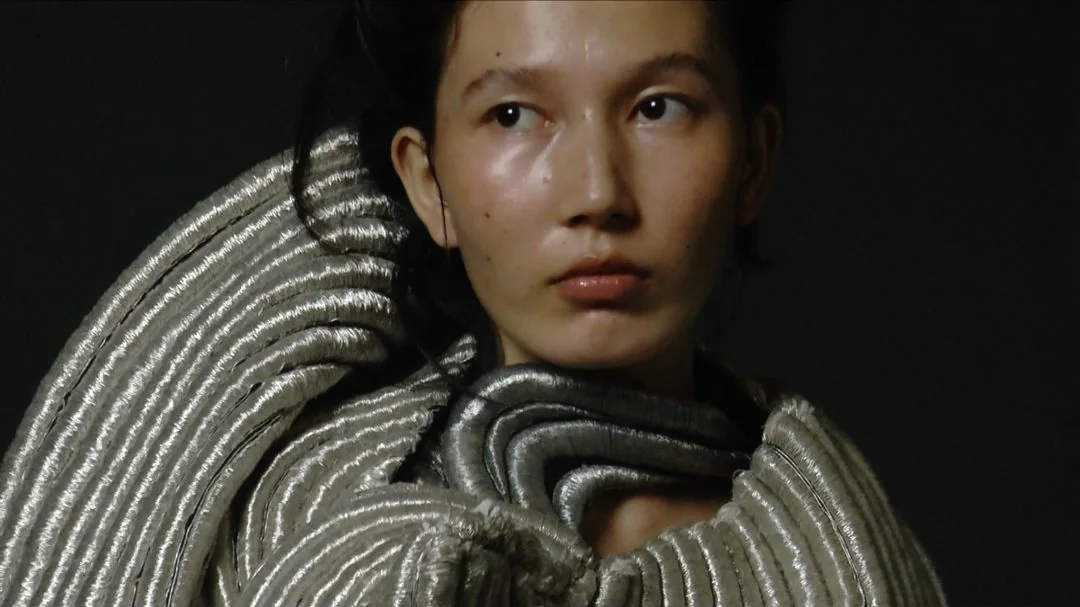
For a while I was like, "I'm a CSM designer, that's my aesthetic." Every university has one. You can immediately tell a designer's from Central Saint Martins just by looking at the clothes, because the tutors and the environment put you in that zone. At university I wanted to be recognised as a CSM designer. But once you graduate, that gets left behind. You keep evolving, and the reality of the world pushes you. So maybe I'd like people to think that what I'm making is special, valuable, beautiful, and pushing the boundaries of what fashion really is.
And the collection itself, in one line?
It's about what couture really is, and what fashion can be.
Take me back to CSM for a second. I know the juries had you reworking your graduate collection quite a bit. How was that?
My juries were quite confusing, honestly. Coming from India, you go in with the mindset that you listen to your teachers and respect everything they say. At CSM that's not really what's expected. So many tutors, so much advice, and most of it contradictory. One day a tutor told me, "This is lovely, it's amazing, the collection has really evolved." Thirty minutes later another one said, "I don't know what you're doing. What is it even about? What is the fashion?" I was like, "What the hell is going on?" That happened so many times.
After a point I realised maybe we're not supposed to just listen. You take what you think is right and follow through. If you keep listening to everyone, you'll never finish what you're making. That really helped, because it pushes you to be confident. They also never liked references from Pinterest or random things online. They wanted it personal, developed from one or two particular ideas.
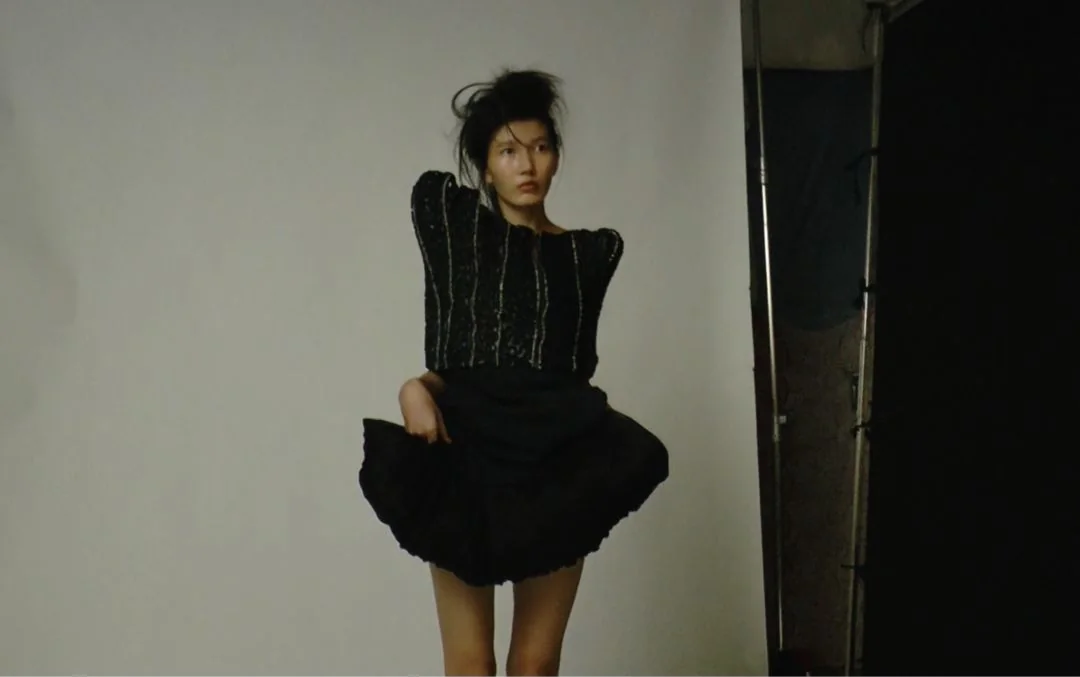
"What is the fashion?" You must have heard that one a lot.
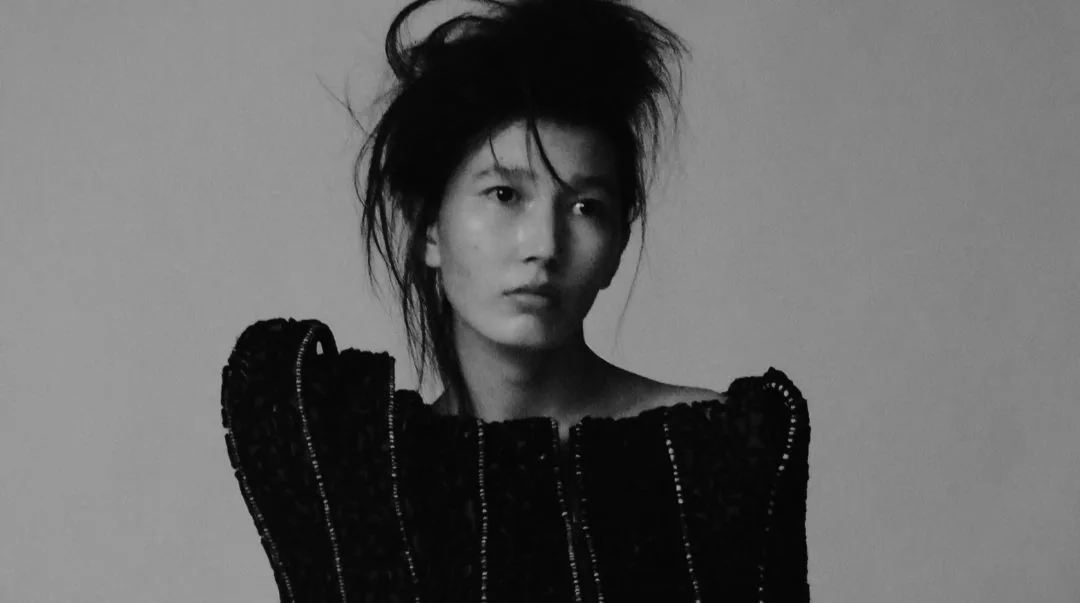
One of the tutors, Nikos, kept saying it from day one. Anything I showed him, jackets, T-shirts: "I don't understand. What is the fashion? What's the context?" What I took from that was to figure out where things sit. Otherwise you make things and they turn into sculptures, objects, art. If you place it in a context, for a certain kind of people or a certain kind of space, it feels more like fashion.
Was there one that really got under your skin?
I had this embroidered flower piece that everyone loved. I put it on the model and showed our course leader, Fabio. He was like, "Oh, it's a backless dress, beautiful embroidery." And then, randomly: "Your idea of couture is so old-fashioned." I was like, what the hell? Everyone back home loved it. My mother loved it. People in the industry loved it. And he gave me the example of Demna and Balenciaga, how the world has really moved forward with couture. That stayed with me.
I think he was pushing me to think differently. I don't think he really disliked the piece. But I stuck with it. I didn't want to change it just because he said so.
Sounds like a lot of unlearning. What did you have to let go of from your years at the studio?
Everything. Even though I hadn't studied fashion, my natural response was, "This is how embroidery should be, this is how couture should be," because you look at what's been done in your own environment and everyone says it's the best. When I brought things from India to CSM, people didn't understand them. Too much, too embroidered. CSM is much more ready-to-wear. Simplifying what comes from India and making it your own was the hardest part. Even embroidery, placed a certain way, wasn't understood, because their references for what fashion should be are so different from ours.
I had to realise I was in London and design for what was around me. I thought that would be easy. But everything I made just didn't feel London enough. That literally took a year and a half to unlearn. The more I made in that environment, the more relevant it became. I do wish I'd done the undergrad and grad dip like the other students, to go through that journey before the MA. I was just thrown in. The environment was insane. Nothing I could have imagined, but beautiful in every single way.
At my interview, the course leader and everyone said, "You're going to feel like the ground underneath you is breaking. You'll unlearn everything and we'll rebuild you as a designer." And I was like, "Yes, of course, we come from India, you can tell us anything." It was much more challenging than anything I could have imagined.
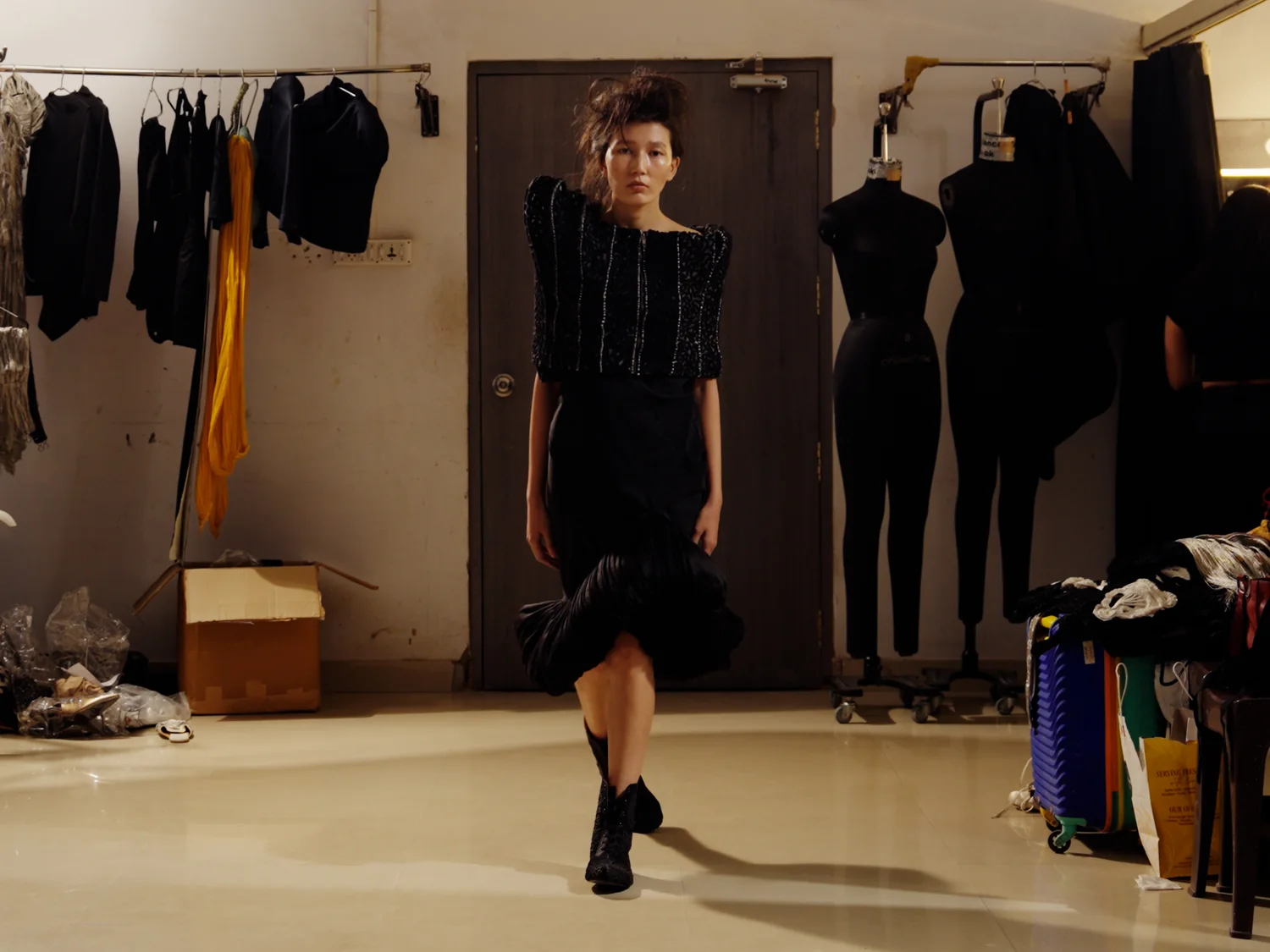
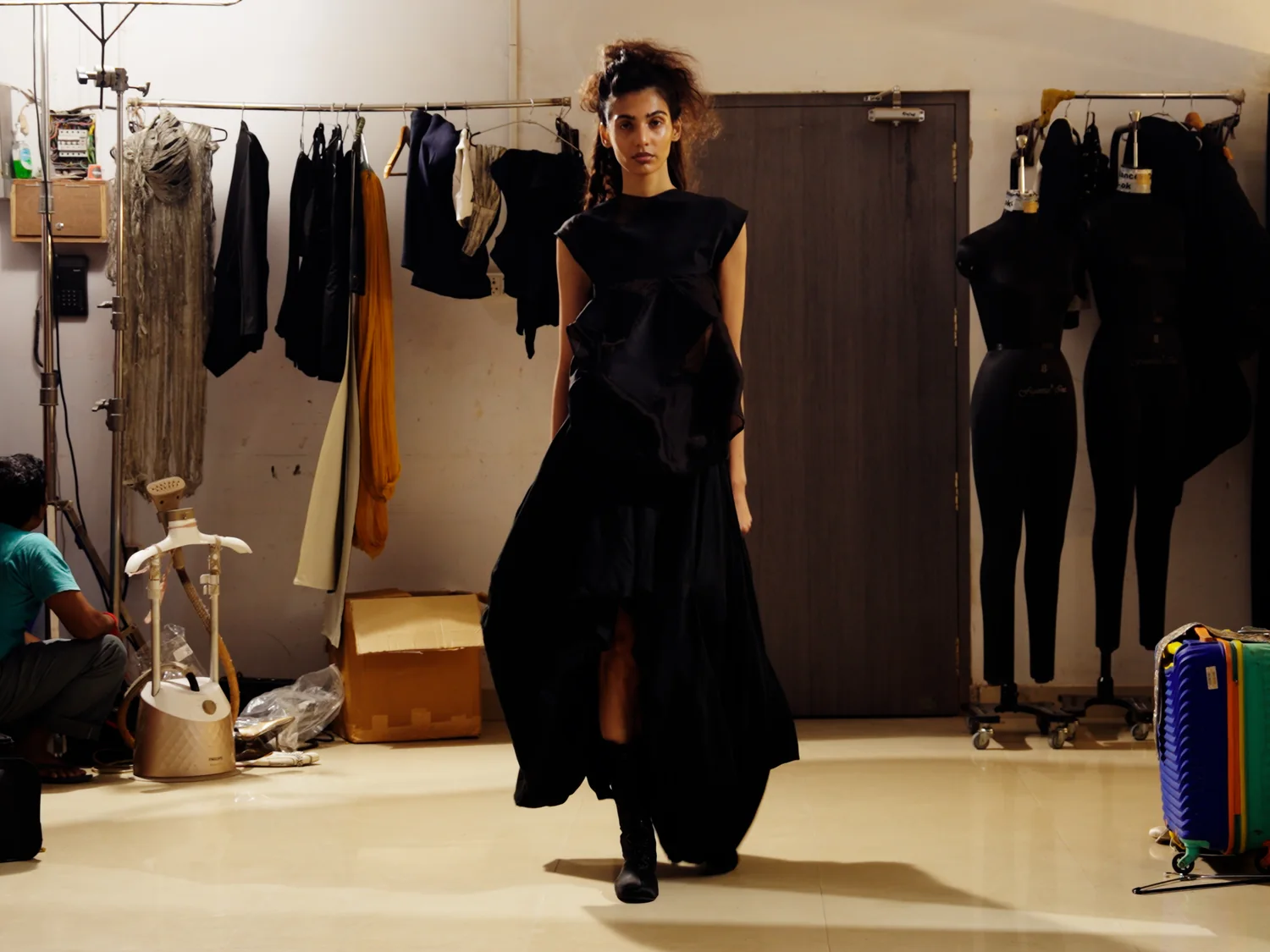
Let's get to the clothes. Which piece feels most like you?
The one with the yellow straps. It's the most experimental, most unwearable one, and it just has this energy. It's the colour. It's quite difficult to wear, so I hope people appreciate it. It's a simple idea, placing strips and satin like that, but it gives this rebellious feeling.
The best part: because it's made in our couture ateliers, every piece gets numbered while it's being draped, so they know which parts get stitched to which. There are AK labels on the back saying one, two, three, four, and they forgot to take them off. I saw it at the shoot and was like, "I love it. It's amazing." It shows it comes from our couture ateliers, but it's something that would never be created in those workshops.
I also love the adda piece [the wooden frame embroidery is worked on]. It shows the whole process of how embroidery is done. People just see the end product; they don't realise how it's made. Here someone literally wears the adda midway, before the embroidery's finished. It shows craft, things that are handmade, how imperfect they can be. And that's what makes it so special, and couture, and beautiful.
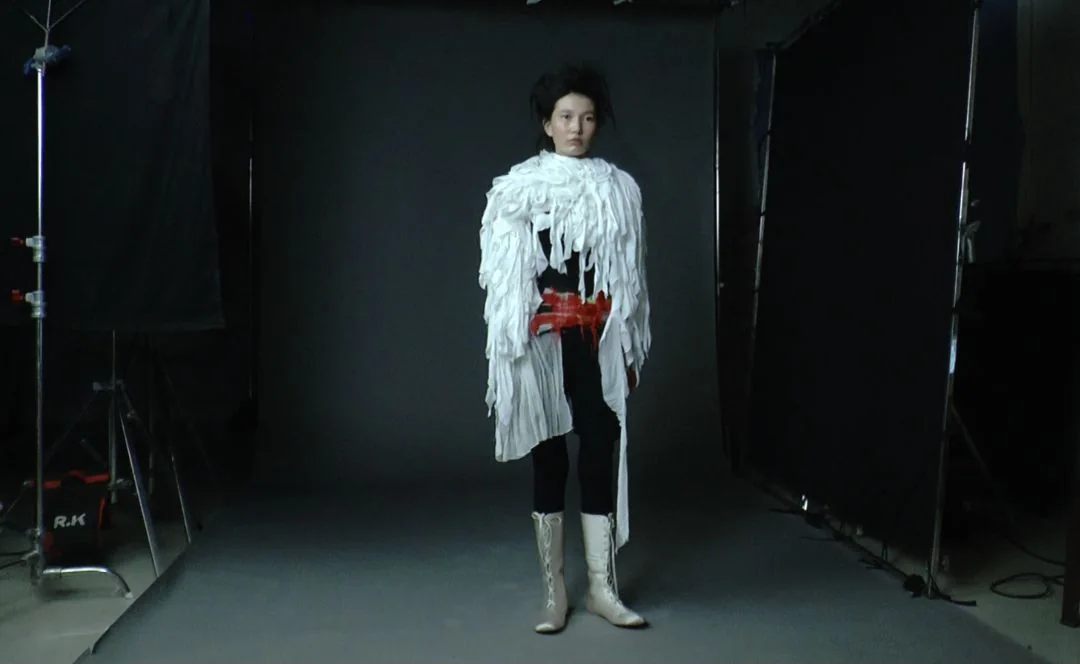
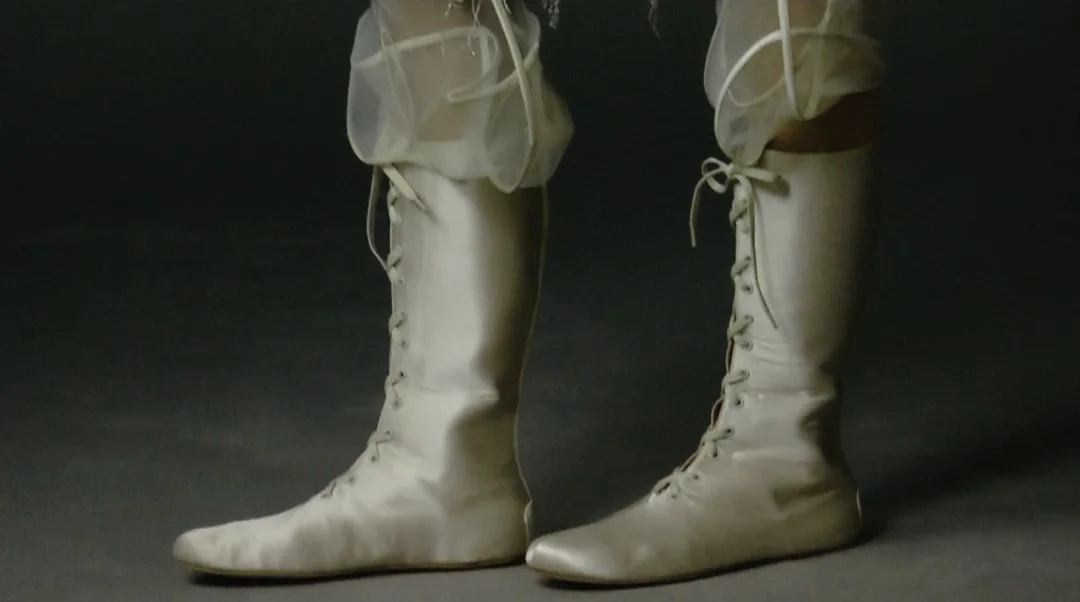
So someone's literally wearing the work in progress.
Yeah. With tailoring, Savile Row and all that, people make muslin fits or toiles and try them on clients. No one ever does that with embroidery. Here you can see it on a body before it's even cut, and change the shape entirely halfway through if you want. So you waste much less. You don't make something that doesn't work and then have to re-embroider, add things, hide things. It's another idea of how something can be made especially for one person.
Which is a world away from AK|OK, even though people still tie you to that label.
Everyone comes up to me saying, "Loved your AK|OK collection," and I always thought people assume Viraj and I design it, because that's how it started. But it's AK's vision, her aesthetic, her client, her sensibility. This collection is mostly about how I see the world. AK is a vision through a woman's eyes. I'm a male designer, so what I design for myself is going to be very different.
So where does it sit for you: more Calcutta or more London?
Definitely in the middle. The craft and technique come from Calcutta, but the ideas, the feeling and the vision are very shaped by London.
You keep coming back to your mum, though. What did she teach you about design that no fashion school could?
First, the basics. Things should look beautiful; women want to feel taller, slimmer. She has a very strong sense of what she likes, and she hates anything tacky. She goes to stores and malls and shows, and you can immediately tell she hates everything, because her taste is so refined.
But the most important thing is that making garments is a process that never ends. She's constantly changing things, and when you keep working on something, suddenly it comes out beautiful. Before, I'd stitch something, not like it, and go, "Fashion is so hard." But even now she reworks every single piece: where to put what, what's flattering, proportion, shape.
So it's work ethic. Constantly pushing yourself and never accepting that it's perfect. Even now she's like, "I don't know what I'm doing. I don't like what I'm creating." The collection's ready and she says, "I hate everything," and reworks the whole thing. And it's that growth mindset. You should be confident, but if you start thinking what you're doing is the best, you're stuck.
Last one. If there's one piece of advice you're carrying into all this, what is it?
After graduating, I emailed one of my tutors to thank her, and she wrote back, "Just remember, be brave, Vishesh." That's always stood out. I come from a background where it felt like you have to do things a certain way, and people look at your brand and expect you to design in that line. Most of the critique of AK and AK|OK goes to my mother. So, knowing I'm going to be judged: should I play it safe? Do what everyone else is doing, make something that looks understood? That would have been easier. But I was like, "Fuck that, I'm going to do what I like," especially this early on.
And the upcycled couture elements in this collection could still be used for AK couture, where we could charge a lot more. Using them for myself means you just go for it and don't think so commercially. I hope people look at it and think, "I can wear that too." But that's not where I start. You have to really like what you're doing instead of moulding it to everyone else's taste.
You probably know Vishesh Khanna as Anamika Khanna's son, Viraj's twin, and one half of the pair who pitched their mother the prêt line that became AK|OK. What you don't know yet is what he makes on his own. After an undergrad in economics and psychology at USC, years inside the family studio, and an MA at Central Saint Martins that he says rebuilt him from the ground up, he's showing his first collection. It's made in his family's couture ateliers, from what's already lying around in them, and it looks nothing like what came out of them before.
Let's start with the obvious thing. People know the name before they've seen a single piece. What do you want the clothes to say that the name can't?
Honestly, it's very difficult to answer that so directly. I design from a very different lens. My muse is someone my age, so it's basically my own projection of how someone should be dressing. I've been trying to figure out exactly what I want my designs to say for the last three years, and that's literally when I started designing.
Before that I had no experience of design. A lot of people come up to me and say, "Oh, you've grown up with it, it's in you." I don't think that's entirely true. It's a lot like language. I know people who've lived somewhere for 10 or 20 years and still can't speak the language. It's all about being engaged. Before I started, I was interested in everything apart from fashion design. A bit of your taste comes from what you grow up with, but it's very minor unless you pay full attention to it.
So if it wasn't fashion, what were you paying attention to?
My first few collections were a lot about things I liked. Cricket and golf, which I've played my entire life. I always wanted to be a golfer, and before that a cricketer. So there are sportswear references, but I don't want this collection to feel like sportswear, even if some of the colours come from there.
A lot of it was personal, too. My mother's Jain and my dad's Punjabi; his grandfather was Sikh. Jainism is quite ascetic, and that's a very different worldview. So it was about that tension, growing up between two parents who see the world so differently.
And I've always been obsessed with physiotherapy. I used to do classes with this guy from California, and the way he explained things stayed with me. It's all about balance, tension and relaxation. It comes back to that same tension, between intensity and lightness. A couple of pieces started with me thinking about training equipment.
All that tension. Was some of it about pushing back, too?
Yeah, after a point it was about rebellion. When you start working in fashion and everything around you is established, the vision, the aesthetic, there are so many rules. "This is the shape, this fabric works, this cut works. People don't want to show their arms, people don't want to wear miniskirts." Rules you build up after being in the industry a long time. Hearing all that, I felt limited. "I can't do something so short. You can't put embroidery here. Print shouldn't be there." Even at university I felt suffocated by the rules I'd placed on myself.
And when I started designing, my mother used to hate every single thing. Of course she did. Her standard is one of the best in the world, and I was just starting. So at some point I was like, "I'm going to do exactly what she doesn't like." If she doesn't like it, I'll do it and try to make it perfect. It took a long time to be assertive about that, because I wasn't confident. But with practice, I'm getting to know what I like.
Getting to know. So you're not quite there yet?
I'm still figuring out what I want my designs to say, and I don't know if anyone has that fully worked out. At university everyone seemed super clear about their concept and their story, and I was like, "I thought this was a place to explore." Then I realised it's an MA, and they'd done all that during their BA. I hadn't studied fashion as an undergrad. I literally started my fashion journey six months before university. I made a portfolio, sent it out, they liked it, and the moment I got there I decided to start everything fresh.
Maybe it's too soon, and I hope one day I figure it out. But I've always thought that if a designer knows exactly what they want, it's very hard for them to do new things or change what doesn't work. Some people are doing the same thing for 20 years, and that's something I've always feared. Everyone says, "You have to be crystal clear, otherwise the consumer gets confused." I know it's a bit counterintuitive. But once you start getting validation and building your confidence on one vision, it becomes very hard to let it go and evolve. So I'm letting it take its own time. If it happens, it happens, and I'm always going to challenge it.
But you're not starting from nothing. You've got a way of working.
Yes. Right now it's a lot about upcycling things that are in our couture ateliers. Usually people go outside looking for things to upcycle: discarded outfits, things that are thrown away. For me that doesn't make sense. I look within our own premises. I wouldn't even call it upcycling, because upcycling sounds like something used and thrown away. I'd still call this couture.
Couture, but not the way most people picture it.
That's the thing. When you say couture, the first image that comes into your head is big gowns, something extremely old-fashioned. I want to challenge how couture is seen. Now couture is something very personal: it's handmade, it's special, and it's not easy to get. And it's about not doing the same thing where, "This is the client, make her look tall and pretty, follow the lines." If I want to put something somewhere on a body, I'll do that. I keep the muse in mind, but I don't limit myself. When you've worked somewhere a long time selling to clients, the focus is commercial, what sells. I haven't gone through that, so I don't feel compelled to do it.
Okay, play along. Someone walks past these pieces with no idea who made them. What do you hope they'd guess about the designer?
For a while I was like, "I'm a CSM designer, that's my aesthetic." Every university has one. You can immediately tell a designer's from Central Saint Martins just by looking at the clothes, because the tutors and the environment put you in that zone. At university I wanted to be recognised as a CSM designer. But once you graduate, that gets left behind. You keep evolving, and the reality of the world pushes you. So maybe I'd like people to think that what I'm making is special, valuable, beautiful, and pushing the boundaries of what fashion really is.
And the collection itself, in one line?
It's about what couture really is, and what fashion can be.
Take me back to CSM for a second. I know the juries had you reworking your graduate collection quite a bit. How was that?
My juries were quite confusing, honestly. Coming from India, you go in with the mindset that you listen to your teachers and respect everything they say. At CSM that's not really what's expected. So many tutors, so much advice, and most of it contradictory. One day a tutor told me, "This is lovely, it's amazing, the collection has really evolved." Thirty minutes later another one said, "I don't know what you're doing. What is it even about? What is the fashion?" I was like, "What the hell is going on?" That happened so many times.
After a point I realised maybe we're not supposed to just listen. You take what you think is right and follow through. If you keep listening to everyone, you'll never finish what you're making. That really helped, because it pushes you to be confident. They also never liked references from Pinterest or random things online. They wanted it personal, developed from one or two particular ideas.
"What is the fashion?" You must have heard that one a lot.
One of the tutors, Nikos, kept saying it from day one. Anything I showed him, jackets, T-shirts: "I don't understand. What is the fashion? What's the context?" What I took from that was to figure out where things sit. Otherwise you make things and they turn into sculptures, objects, art. If you place it in a context, for a certain kind of people or a certain kind of space, it feels more like fashion.
Was there one that really got under your skin?
I had this embroidered flower piece that everyone loved. I put it on the model and showed our course leader, Fabio. He was like, "Oh, it's a backless dress, beautiful embroidery." And then, randomly: "Your idea of couture is so old-fashioned." I was like, what the hell? Everyone back home loved it. My mother loved it. People in the industry loved it. And he gave me the example of Demna and Balenciaga, how the world has really moved forward with couture. That stayed with me.
I think he was pushing me to think differently. I don't think he really disliked the piece. But I stuck with it. I didn't want to change it just because he said so.
Sounds like a lot of unlearning. What did you have to let go of from your years at the studio?
Everything. Even though I hadn't studied fashion, my natural response was, "This is how embroidery should be, this is how couture should be," because you look at what's been done in your own environment and everyone says it's the best. When I brought things from India to CSM, people didn't understand them. Too much, too embroidered. CSM is much more ready-to-wear. Simplifying what comes from India and making it your own was the hardest part. Even embroidery, placed a certain way, wasn't understood, because their references for what fashion should be are so different from ours.
I had to realise I was in London and design for what was around me. I thought that would be easy. But everything I made just didn't feel London enough. That literally took a year and a half to unlearn. The more I made in that environment, the more relevant it became. I do wish I'd done the undergrad and grad dip like the other students, to go through that journey before the MA. I was just thrown in. The environment was insane. Nothing I could have imagined, but beautiful in every single way.
At my interview, the course leader and everyone said, "You're going to feel like the ground underneath you is breaking. You'll unlearn everything and we'll rebuild you as a designer." And I was like, "Yes, of course, we come from India, you can tell us anything." It was much more challenging than anything I could have imagined.
Let's get to the clothes. Which piece feels most like you?
The one with the yellow straps. It's the most experimental, most unwearable one, and it just has this energy. It's the colour. It's quite difficult to wear, so I hope people appreciate it. It's a simple idea, placing strips and satin like that, but it gives this rebellious feeling.
The best part: because it's made in our couture ateliers, every piece gets numbered while it's being draped, so they know which parts get stitched to which. There are AK labels on the back saying one, two, three, four, and they forgot to take them off. I saw it at the shoot and was like, "I love it. It's amazing." It shows it comes from our couture ateliers, but it's something that would never be created in those workshops.
I also love the adda piece [the wooden frame embroidery is worked on]. It shows the whole process of how embroidery is done. People just see the end product; they don't realise how it's made. Here someone literally wears the adda midway, before the embroidery's finished. It shows craft, things that are handmade, how imperfect they can be. And that's what makes it so special, and couture, and beautiful.
So someone's literally wearing the work in progress.
Yeah. With tailoring, Savile Row and all that, people make muslin fits or toiles and try them on clients. No one ever does that with embroidery. Here you can see it on a body before it's even cut, and change the shape entirely halfway through if you want. So you waste much less. You don't make something that doesn't work and then have to re-embroider, add things, hide things. It's another idea of how something can be made especially for one person.
Which is a world away from AK|OK, even though people still tie you to that label.
Everyone comes up to me saying, "Loved your AK|OK collection," and I always thought people assume Viraj and I design it, because that's how it started. But it's AK's vision, her aesthetic, her client, her sensibility. This collection is mostly about how I see the world. AK is a vision through a woman's eyes. I'm a male designer, so what I design for myself is going to be very different.
So where does it sit for you: more Calcutta or more London?
Definitely in the middle. The craft and technique come from Calcutta, but the ideas, the feeling and the vision are very shaped by London.
You keep coming back to your mum, though. What did she teach you about design that no fashion school could?
First, the basics. Things should look beautiful; women want to feel taller, slimmer. She has a very strong sense of what she likes, and she hates anything tacky. She goes to stores and malls and shows, and you can immediately tell she hates everything, because her taste is so refined.
But the most important thing is that making garments is a process that never ends. She's constantly changing things, and when you keep working on something, suddenly it comes out beautiful. Before, I'd stitch something, not like it, and go, "Fashion is so hard." But even now she reworks every single piece: where to put what, what's flattering, proportion, shape.
So it's work ethic. Constantly pushing yourself and never accepting that it's perfect. Even now she's like, "I don't know what I'm doing. I don't like what I'm creating." The collection's ready and she says, "I hate everything," and reworks the whole thing. And it's that growth mindset. You should be confident, but if you start thinking what you're doing is the best, you're stuck.
Last one. If there's one piece of advice you're carrying into all this, what is it?
After graduating, I emailed one of my tutors to thank her, and she wrote back, "Just remember, be brave, Vishesh." That's always stood out. I come from a background where it felt like you have to do things a certain way, and people look at your brand and expect you to design in that line. Most of the critique of AK and AK|OK goes to my mother. So, knowing I'm going to be judged: should I play it safe? Do what everyone else is doing, make something that looks understood? That would have been easier. But I was like, "Fuck that, I'm going to do what I like," especially this early on.
And the upcycled couture elements in this collection could still be used for AK couture, where we could charge a lot more. Using them for myself means you just go for it and don't think so commercially. I hope people look at it and think, "I can wear that too." But that's not where I start. You have to really like what you're doing instead of moulding it to everyone else's taste.