

<h1 class="left">Dhanji was only a 10-year-old boy in Ahmedabad when he first heard the soundtrack of Ghajini by A.R. Rahman. He says that his “prefrontal cortex wasn’t even developed”, but it hit him enough to the point where he’d study for his school exams and the songs, imbued with absolute tragedy, kept playing on loop. There were days when he’d stop everything to memorise the lyrics. It is his first conscious memory of what music could do, the hold it could have even on the unsuspecting mind of a little boy.</h1>
<h1 class="centre">The genesis of his journey as a musician, though, had nothing to do with Rahman. The vice-like grip of Amdavad was too strong, too packed to allow any other influence in. It was always the city, and more crucially, the Gujarati language. If it were up to him, he’d run the city through the rooftops, shouting sermons in Gujarati. “There are a dozen ways to refer to someone—aye, la, lya, oo kaka. Gujarati, if you think about it, is just a stream of sounds and vowels. How could it not be musical?”</h1>
<h1 class="left">Dhanji’s empire holds many worlds. He has collaborated with RANJ and Clifr on their “8oz. OF PUSSY JUICE.” But the rapper—born Jayraj Ganatra—across seven mixtapes and his debut album Ruab, has turned the slang of Amdavad’s streets into a sound that draws as readily on Jay-Z and Nas as on jazz and funk, sliding between Gujarati, Hindi and English without missing a breath. But he also runs Thaltej Publishing Co., with a DIY, old-soul ethos. It is from Thaltej’s office, and not a music studio, that he is chatting with dirty.</h1>
<h1 class="centre">“It’s not that I have a romantic view of my city either,” he says. “I’m not its brand ambassador, and it has aspects that I hate. The driving sucks, and the people can be… ruthless.”</h1>
<h1 class="left">He takes a beat. Who has been ruthless to him? Road rage? He has seen it since he was a child. Alongside his obsession with Ghajini was the looming shadow of his father too—his arrests. Only sometime back, his father was arrested and released. “People just go crazy. It’s the comments, the way they speak. It takes nothing to ignite them. When he was on the run for nearly eight years, I could see how many people turned on us. You want revenge, you get angry, there is grief and confusion. Now, I must take all this shit and turn it into music. Let’s pimp the hurt, put some actual craft around it, otherwise what’s the point?”</h1>
<h1 class="right">But he must guard his creativity. The bluntness of the world gets to him. He shuts down and isolates from the world on some days, too. To know what he’s in for, the last light on the horizon, helps. It clarifies his vision. His horizon is the belief that he was “born to get cake” and he is in the “pursuit of wealth
and pussy.”</h1>
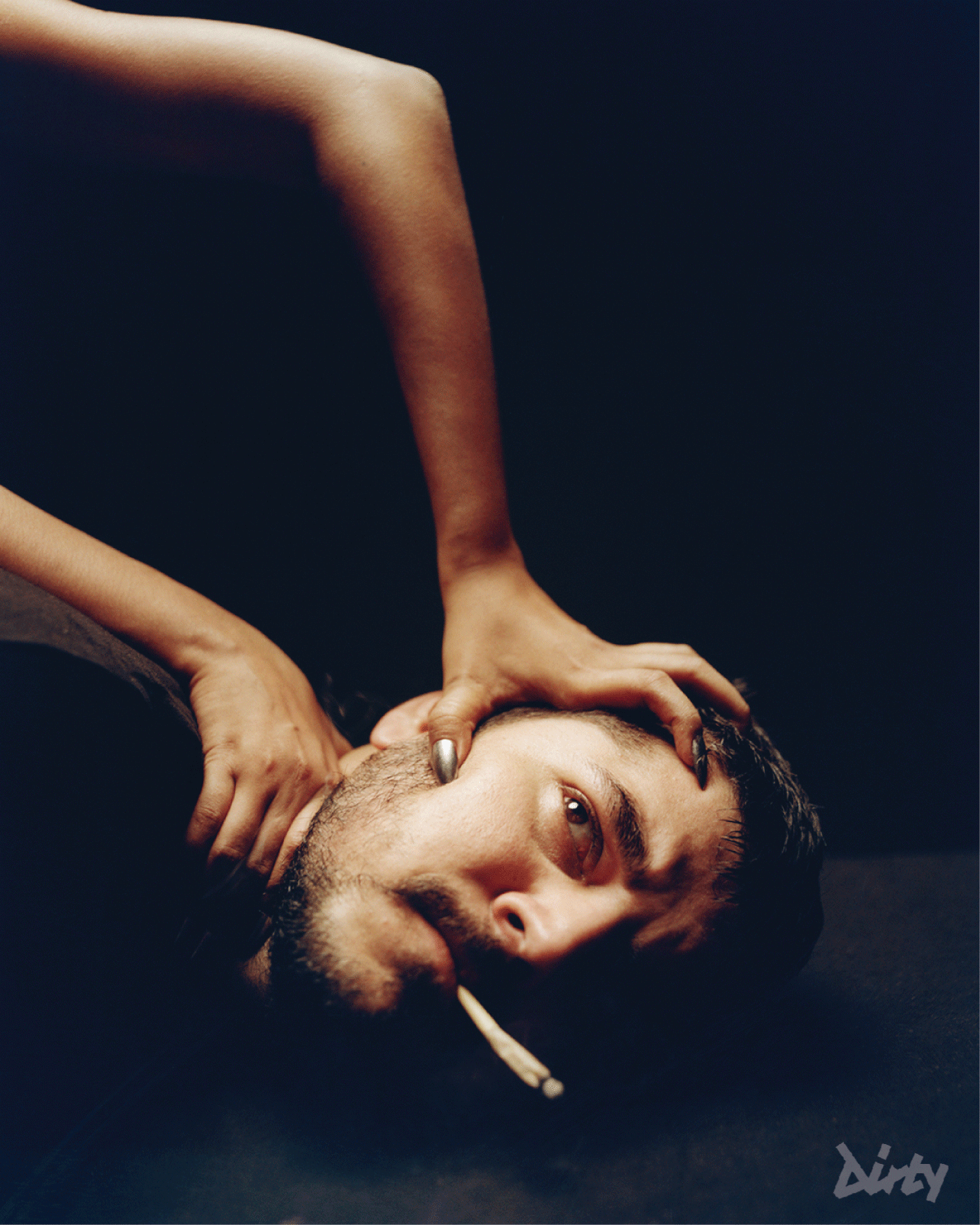
<h1 class="left">Just under his desk is his favourite novel, whose story is, in some ways, an exaggeration of his own situation. It is Fyodor Dostoevsky’s novella Notes from Underground. It is staggering, to Dhanji, that the writer escaped the deepest horrors of the world—escaping death by firing squad at the last minute, four years of hard labour in a labour camp, compulsory military service in the coldest depths of Siberia. “I hated myself too, and it takes a lot to come out of it. You have to go through the whole process of self-hate to actually come out of it.” </h1>
<h1 class="centre"> His songs precisely mirror the many volcanic eruptions of his mind. Even before the more cohesive Ruab, he has experimented with anything and everything that pricked his ears. His debut mixtape, The Dhaniya Tape, available only on YouTube, sounds like a man let loose in the studio, playing with whatever first catches his fancy. How else do you explain phrases such as “I stand for Bharat Mata? No bro, I stand for Prithvi Mata, man” layered over the restless, improvised drum solo of Birdman (2014)? In Ruab, there are references and samples picked from Bill Burr, the movie Taxi Driver, and even a totally unrelated 1988 CNN interview with
James Brown. </h1>
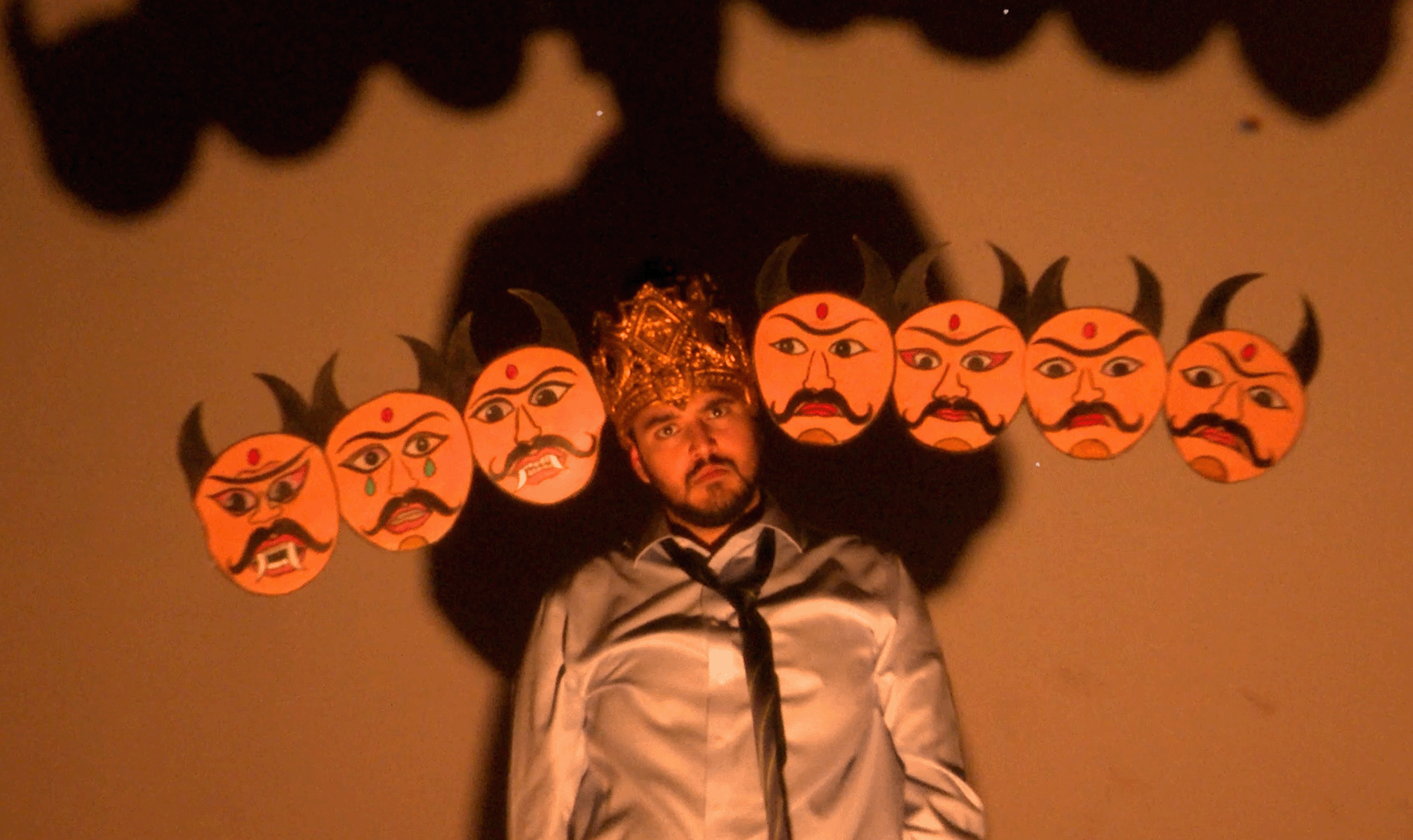
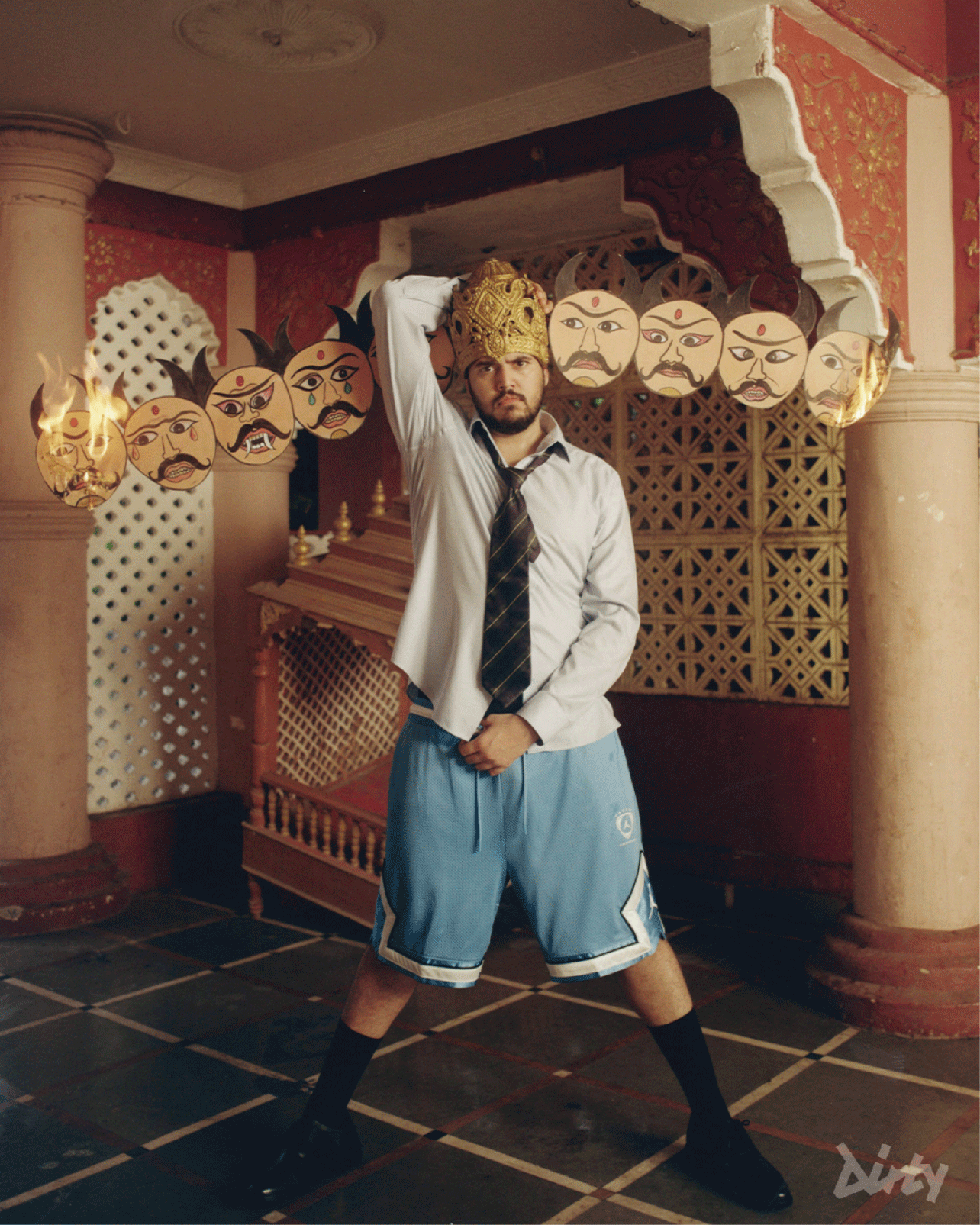
<h1 class="left"> Dhanji & Dostoevsky. Dhanji & Bill Burr. Dhanji & his father’s arrests. Dhanji & the grimy streets of Amdavad. It’s all him. It’s his world, and it continues to expand—it swerves in the heat of his rap. On the dirty cover, he poses with multiple heads, and all those heads might just as well represent all the truths he inhabits. But these heads also pull each other apart, and still hold up in perfect balance. It is the reason Dhanji can espouse on all things life and death, as he smokes and chats in the intimacy of his publishing office. </h1>
<h1 class="centre"> “The only thing I’d want people to remember me for,” he says, “is perhaps the greatest rapper ever. But life has to be more than that, no?” </h1>
<h1 class="left"> Editor: Kshitij Kankaria </h1>
<h1 class="left"> Photographer: Rid Burman </h1>
<h1 class="left"> Stylist: Ruhani Singh </h1>
<h1 class="left"> Set designer: Risha Shetty </h1>
<h1 class="left"> Makeup: Richelle Fernandes </h1>
<h1 class="left"> Hair: Abhishek Indu </h1>
<h1 class="left"> Assist: Deepti Soste </h1>
<h1 class="left"> Art Director: Rishika Sikder </h1>
<h1 class="left"> Creative Producer: Saif Zaki </h1>
<h1 class="left"> Producer: Imran Khatri Productions </h1>
<h1 class="left"> Assistant Stylist: Preeti Aparna Venkatesh </h1>
<h1 class="left"> Artist team: Yajat Shrimali, Aditi B </h1>
<h1 class="left"> On Dhanji: Shorts, Nike </h1>
<h1 class="full">Dhanji was only a 10-year-old boy in a little corner in Ahmedabad when he first heard the soundtrack of Ghajini by A.R. Rahman. He says that his “prefrontal cortex wasn’t even developed”, but it hit him enough to the point where he’d study for his school exams and the songs, imbued with absolute tragedy, kept playing on loop. There were days when he’d stop everything to memorise the lyrics. It is his first conscious memory of what music could do, the hold it could have even on the unsuspecting mind of a little boy.</h1>
<h1 class="full">The genesis of his journey as a musician, though, had nothing to do with Rahman. The vice-like grip of Amdavad was too strong, too packed to allow any other influence in. It was always the city, and more crucially, the Gujarati language. If it were up to him, he’d run the city through the rooftops, shouting sermons in Gujarati. “There are a dozen ways to refer to someone—aye, la, lya, oo kaka. Gujarati, if you think about it, is just a stream of sounds and vowels. How could it not be musical?”</h1>
<h1 class="full">Dhanji’s empire holds many worlds. He has collaborated with RANJ and Clifr on their “8oz. OF PUSSY JUICE.” But the rapper—born Jayraj Ganatra—across seven mixtapes and his debut album Ruab, has turned the slang of Amdavad’s streets into a sound that draws as readily on Jay-Z and Nas as on jazz and funk, sliding between Gujarati, Hindi and English without missing a breath. But he also runs Thaltej Publishing Co., with a DIY, old-soul ethos. It is from Thaltej’s office, and not a music studio, that he is chatting with dirty.</h1>
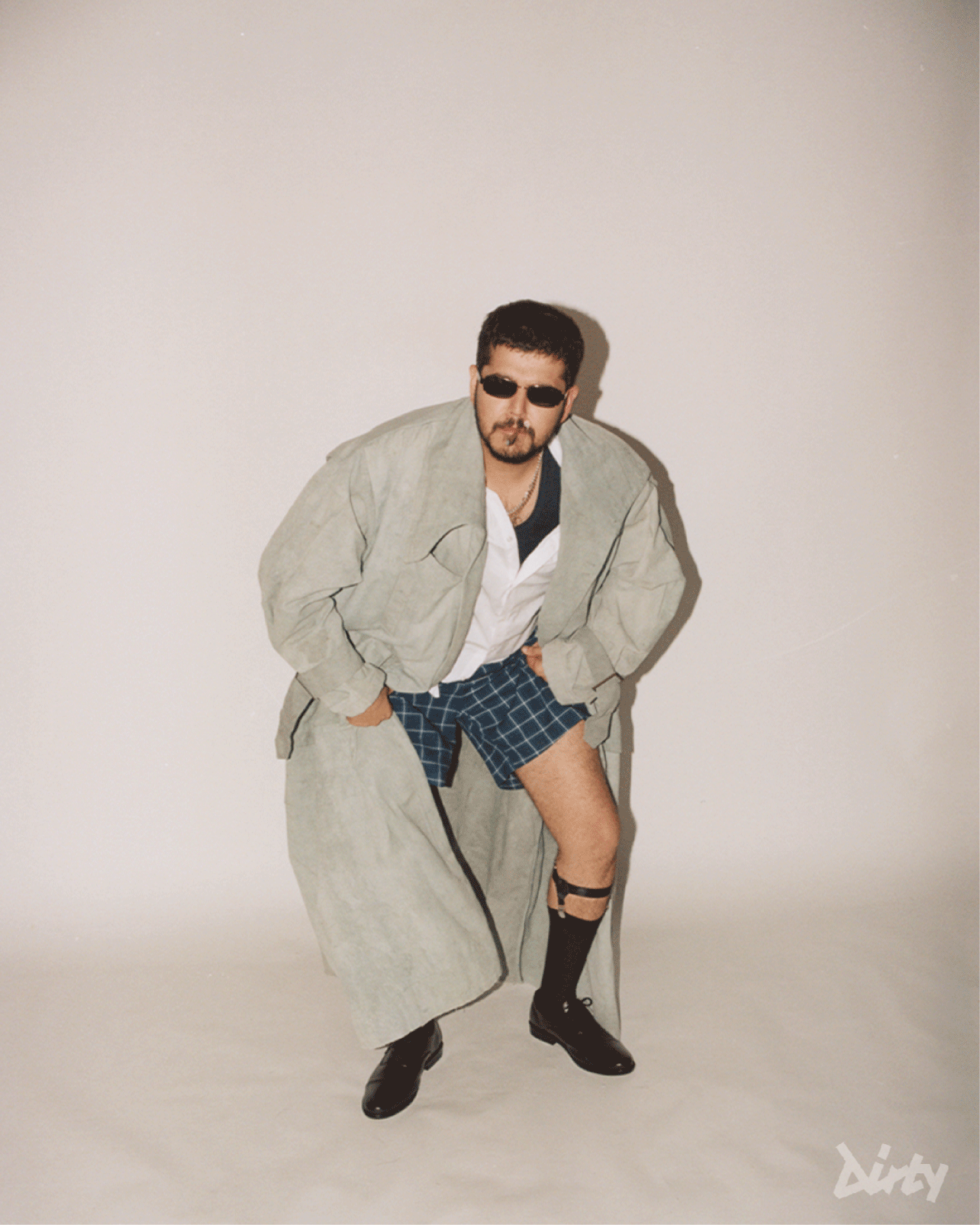
<h1 class="full">“It’s not that I have a romantic view of my city either,” he says. “I’m not its brand ambassador, and it has aspects that I hate. The driving sucks, and the people can be… ruthless.”</h1>
<h1 class="full">He takes a beat. Who has been ruthless to him? Road rage? He has seen it since he was a child. Alongside his obsession with Ghajini was the looming shadow of his father too—his arrests. Only sometime back, his father was arrested and released. “People just go crazy. It’s the comments, the way they speak. It takes nothing to ignite them. When he was on the run for nearly eight years, I could see how many people turned on us. You want revenge, you get angry, there is grief and confusion. Now, I must take all this shit and turn it into music. Let’s pimp the hurt, put some actual craft around it, otherwise what’s the point?” </h1>
<h1 class="full">But he must guard his creativity. The bluntness of the world gets to him. He shuts down and isolates from the world on some days, too. To know what he’s in for, the last light on the horizon, helps. It clarifies his vision. His horizon is the belief that he was “born to get cake” and he is in the “pursuit of wealth and pussy.”</h1>
<h1 class="full">Just under his desk is his favourite novel, whose story is, in some ways, an exaggeration of his own situation. It is Fyodor Dostoevsky’s novella Notes from Underground. It is staggering, to Dhanji, that the writer escaped the deepest horrors of the world—escaping death by firing squad at the last minute, four years of hard labour in a labour camp, compulsory military service in the coldest depths of Siberia. “I hated myself too, and it takes a lot to come out of it. You have to go through the whole process of self-hate to actually come out of it.”</h1>
<h1 class="full"> His songs precisely mirror the many volcanic eruptions of his mind. Even before the more cohesive Ruab, he has experimented with anything and everything that pricked his ears. His debut mixtape, The Dhaniya Tape, available only on YouTube, sounds like a man let loose in the studio, playing with whatever first catches his fancy. How else do you explain phrases such as “I stand for Bharat Mata? No bro, I stand for Prithvi Mata, man” layered over the restless, improvised drum
solo of Birdman (2014)? In Ruab, there are references and samples picked from Bill Burr, the movie Taxi Driver, and even a totally unrelated 1988 CNN interview
with James Brown. </h1>
<h1 class="full"> Dhanji & Dostoevsky. Dhanji & Bill Burr. Dhanji & his father’s arrests. Dhanji & the grimy streets of Amdavad. It’s all him. It’s his world, and it continues to expand—it swerves in the heat of his rap. On the dirty cover, he poses with multiple heads, and all those heads might just as well represent all the truths he inhabits. But these heads also pull each other apart, and still hold up in perfect balance. It is the reason Dhanji can espouse on all things life and death, as he smokes and chats in the intimacy of his publishing office. </h1>
<h1 class="full"> “The only thing I’d want people to remember me for,” he says, “is perhaps the greatest rapper ever. But life has to be more than that, no?” </h1>
<h1 class="full"> Editor: Kshitij Kankaria </h1>
<h1 class="full"> Photographer: Rid Burman </h1>
<h1 class="full"> Stylist: Ruhani Singh </h1>
<h1 class="full"> Set designer: Risha Shetty </h1>
<h1 class="full"> Makeup: Richelle Fernandes </h1>
<h1 class="full"> Hair: Abhishek Indu </h1>
<h1 class="full"> Assist: Deepti Soste </h1>
<h1 class="full"> Art Director: Rishika Sikder </h1>
<h1 class="full"> Creative Producer: Saif Zaki </h1>
<h1 class="full"> Producer: Imran Khatri Productions </h1>
<h1 class="full"> Assistant Stylist: Preeti Aparna Venkatesh </h1>
<h1 class="full"> Artist team: Yajat Shrimali, Aditi B </h1>
<h1 class="full"> On Dhanji: Shorts, Nike </h1>