
<h1 class="left"> From behind the ironclad gates of the apartheid-era regime in South Africa, a system of totalitarian control that allowed little to slip by the surveillance of the state and watchful eyes of its prison guards, a young Black photographer brought the world into the lives of the Black citizens of the country sentenced to unimaginable brutality. Locked away in isolation, the state's assertion of colonial authority upon its non-white subjects was concealed from view for so long, in a system under which widespread violations of human rights and terror proliferated unchecked. In Ernest Cole's seminal photographic book, House of Bondage, published in New York in 1967, the photojournalist pierced through the quietness shrouding the system, behind its high prison walls of secrecy, and for the first time, the horrors of Black life under apartheid, of a people captured and categorised, were shown to the public eye.</h1>
<h1 class="centre"> The work cemented Cole's place in history as one of the great documentary photographers of his time. It is tragic that by the end of his career, Cole was to become disillusioned and stateless, having lived a life in exile, longing for a return to his homeland that was never granted. Despite the misfortune of a short-lived career, he presented to the world one of the greatest indictments of a political system undertaken through his sustained investigations into life under apartheid, one that continues to exert influence around the world.</h1>
<h1 class="right"> Born in 1940 in Eersterust, a Black township outside Pretoria, Cole left his schooling after the introduction of The Bantu Education Act (1953) and continued his education via correspondence courses, while producing portraits of his neighbours after a family friend gifted him an old-fashioned camera. His family was forcefully removed from his childhood home not long after, forced to pack up what was left of their belongings after the house they owned was bulldozed into rubble. They moved to Mamelodi, a new Black "location" which the Government had put up on the far eastern-edge of Pretoria, robbing them of the privilege of owning land and forcing them to become renters in debilitating conditions.</h1>
<h1 class="left"> In 1958, Cole began working as a darkroom assistant to German photographer and editor Jürgen Schadeberg at DRUM. He photographed everyday life, worked alongside other Black journalists and photographers, and developed a photojournalistic practice that moved between the intimate and the political. He would eventually leave DRUM to become South Africa's first freelance photographer, in a time when apartheid laws classified Black people as fit only for employment as "labour." Cole's time at DRUM was integral, because the magazine allowed for a platform in which Black South Africans could document their own communities and, whenever censorship allowed, confront the realities of apartheid. Its staff were repeatedly subjected to arrest for crossing the boundaries imposed by the regime. Cole's apprenticeship there therefore placed him within a culture of visual resistance, but as a young photographer with a fire that burned in the pit of his belly, Cole wanted to go further than the assignments that could make it into print, always chasing after crystallising his work in the form of a book.</h1>
<h1 class="centre"> He later writes, "I wanted to shoot the sort of things that I thought were important and I knew they would not print."</h1>
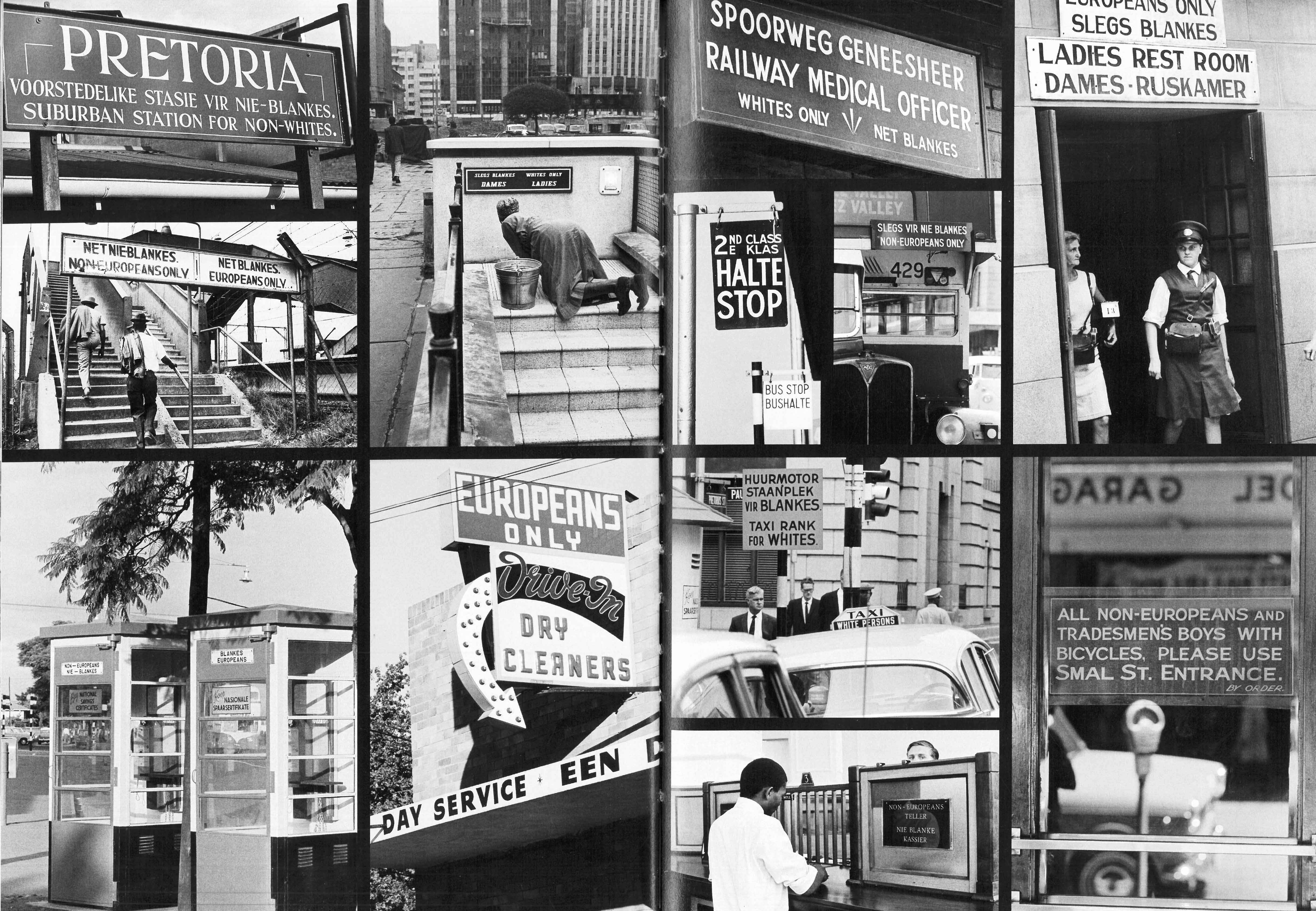
<h1 class="right"> Cole was a photographer working within a media system, but he was also aware of the limits of that system. There were things he could see that editors could not, or would not, publish. In the early 1960s, Cole began systematically photographing the conditions of Black life under apartheid. Apartheid was, among other things, a profoundly visual system. The Population Registration Act of 1950 divided all South African citizens into one of four groups: Black, white, Coloured or Indian. These classifications dictated one's life chances under apartheid, so for Cole to gain access to the stories that highlight the horrors of apartheid and gain access to areas Black people could not, his identity had to have been reclassified as "Coloured," which he managed by manipulating the racial bureaucracy that governed his own existence. He changed the spelling of his surname from Kole to the more Anglicised version, Cole. The reclassification gave him greater freedom of movement and eventually helped him obtain a passport.</h1>
<h1 class="left"> His photographic practice was similarly dependent on bureaucratic circumvention. To photograph inside spaces where a camera might expose him to arrest, Cole had to conceal his intentions. It is said that he learned from photographers such as Ian Berry how to shoot fast from the hip, so that before he could even be spotted the camera would be gone and the photo captured. His camera became a tool for seeing through the restrictions placed upon seeing itself.</h1>
<h1 class="centre"> In Nicholas Mirzoeff's theory of visuality, the theorist provides a useful vocabulary for understanding this problem. In The Right to Look: A Counterhistory of Visuality, Mirzoeff describes visuality as a way in which authority organises and legitimises its power through systems of representation, making hierarchies appear natural and self-evident. Against this, he proposes countervisuality, or the "right to look," a way of seeing that contests the authority of dominant systems and insists upon another account of reality. </h1>
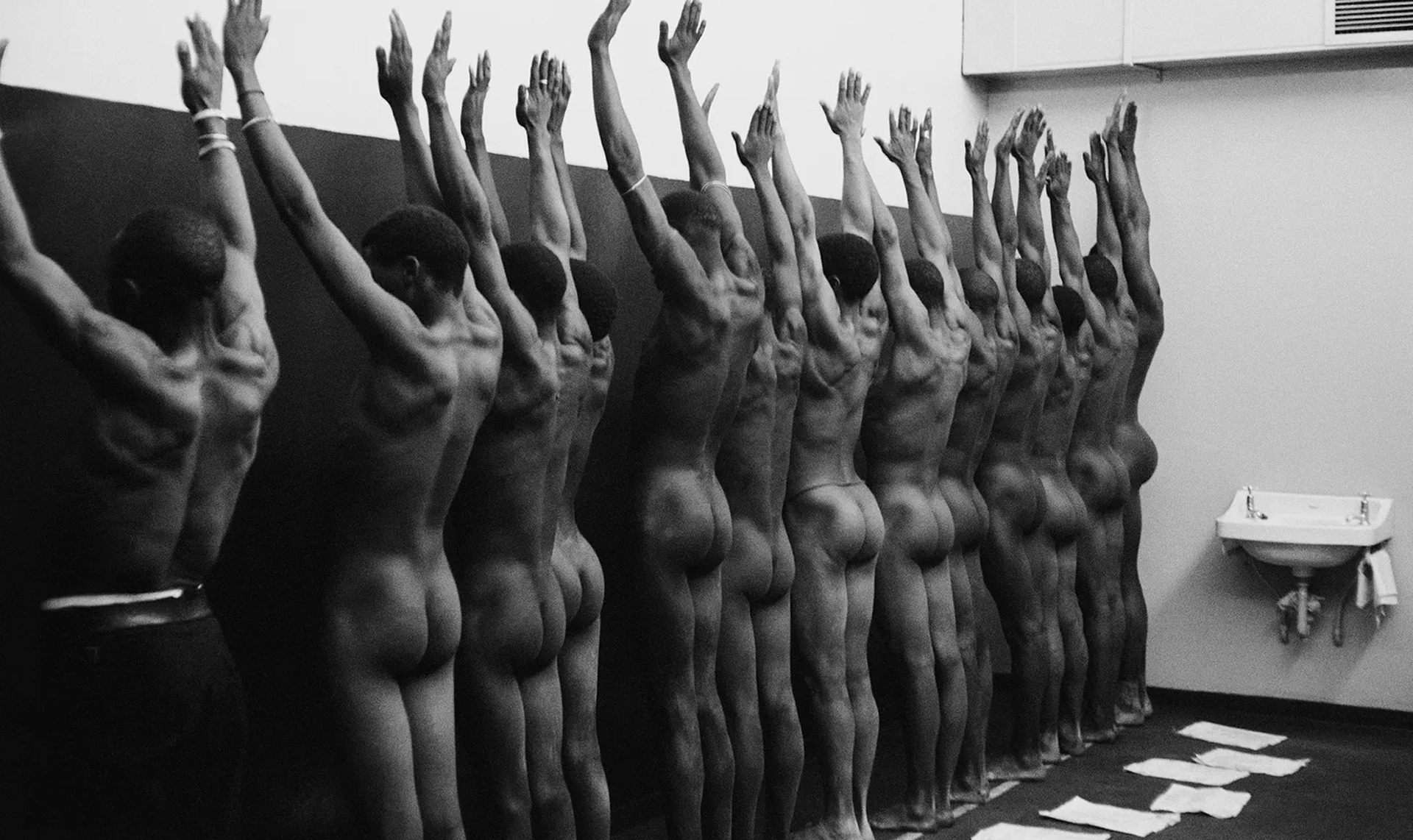
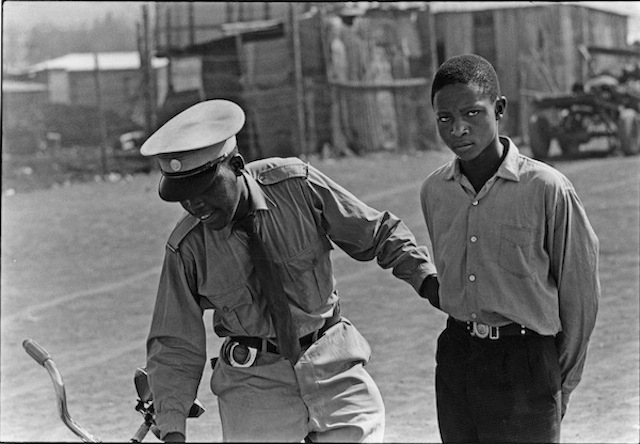
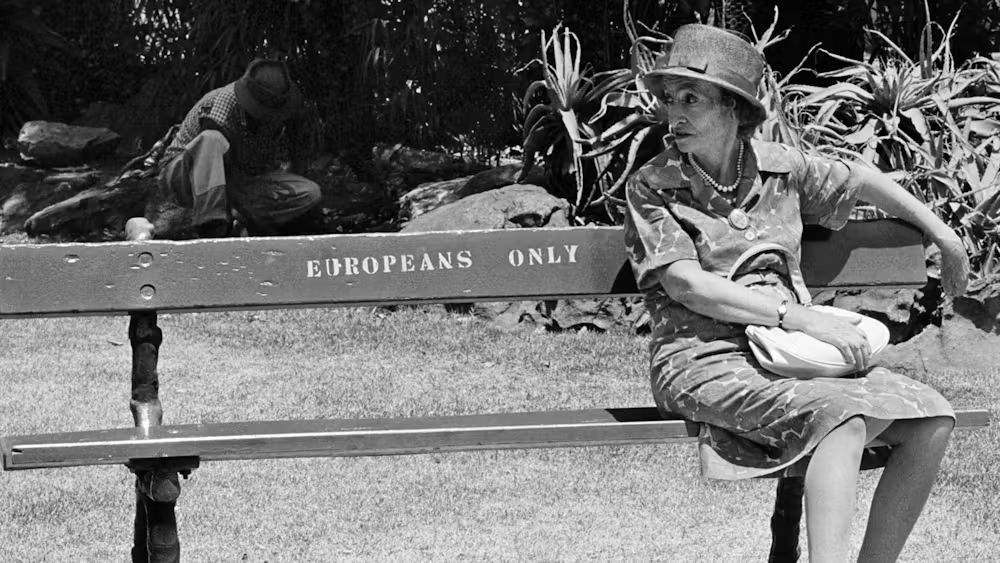
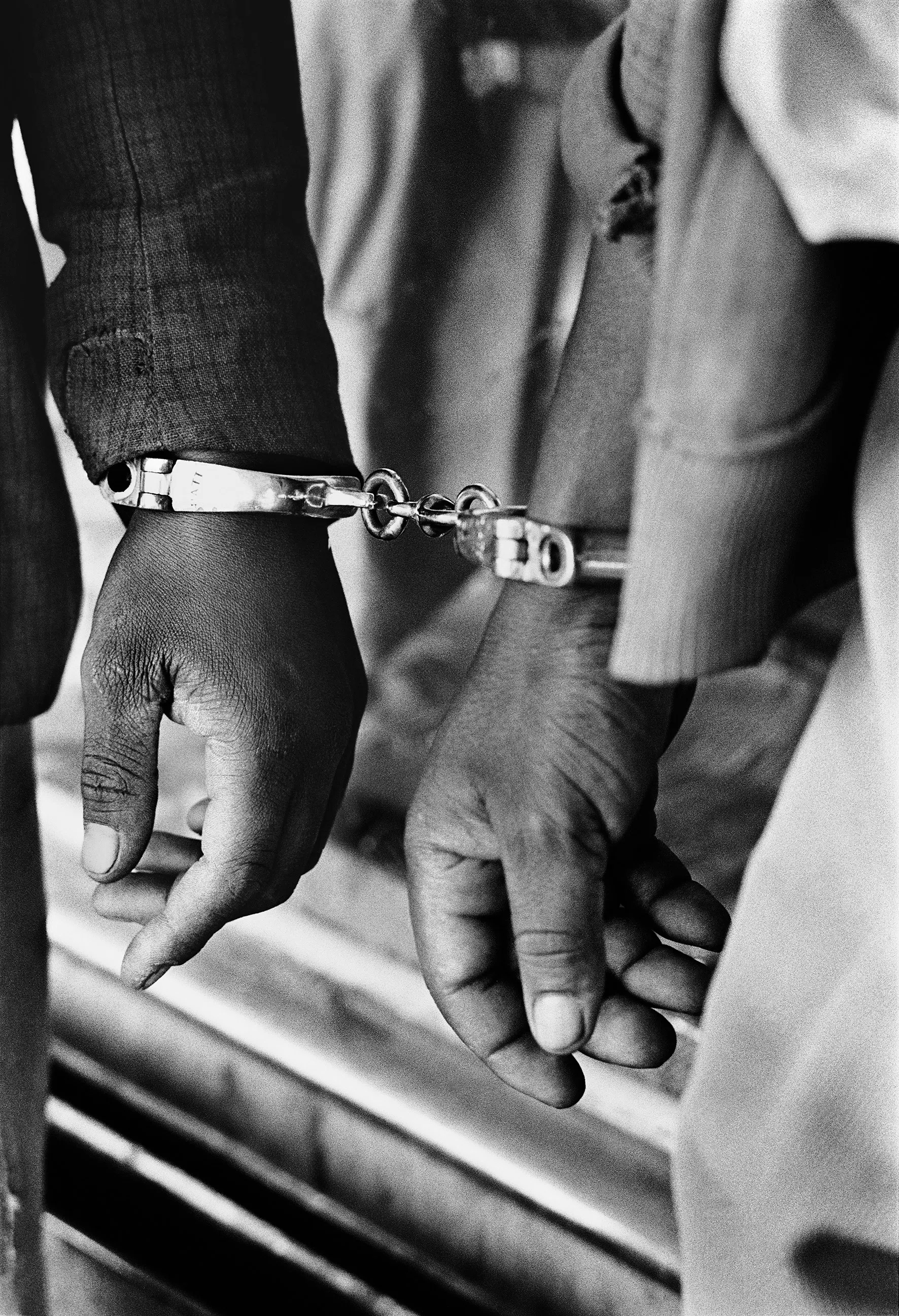
<h1 class="left"> Cole turned the camera back onto this visual order. What moves one most about Cole's photography is that the traditional expectation of the documentary photograph that witnesses and makes realities known without emotional entanglement is dismantled. Exhaustion bleeds from the crevices of his photographs. A train hurtles forward while Black passengers cling to its exterior; men stand naked in a line with their hands held up in the air, awaiting the medical inspection that will determine their fate as mine workers; a policeman searches a man's body for the pass that determines whether he is permitted to exist in a particular place; a Black child begging for money from a white man is callously slapped as tears spring upon his face. The images refuse the distance a viewer secretly hopes for while looking through historical photographs because they come to us from the photographer's lived history. </h1>
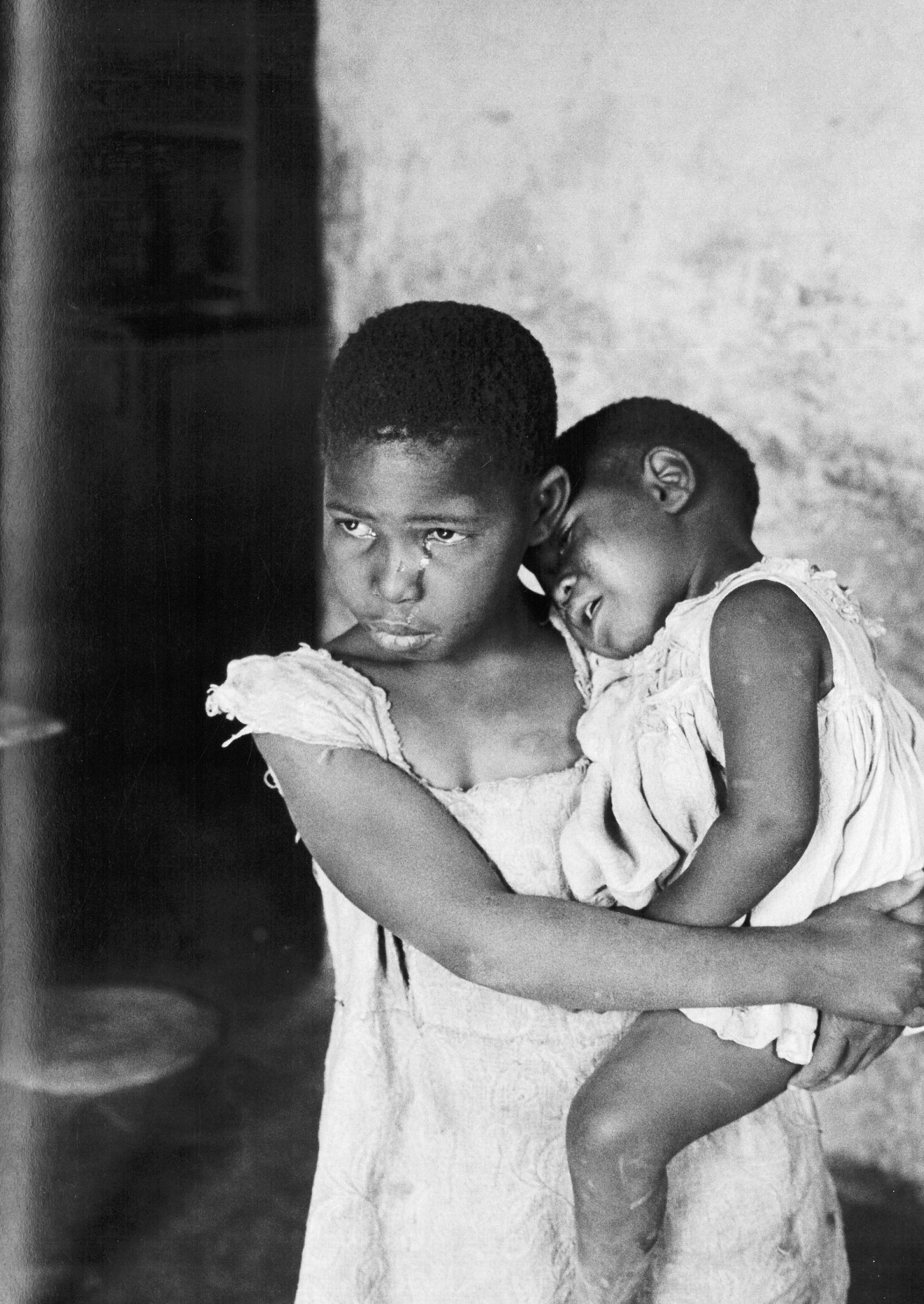
<h1 class="centre"> Ernest Cole's photographs are never constructed from the perspective of an outsider capturing the mythical "Other," eager to brandish the camera as a tool of conquest upon a colonised subject who has no participation in the making of the image. The book refuses to be a story of great misery narrated by an all-knowing, god's-eye voice, detached from the fate of the subjects trapped inside its own glossy, contaminated images. House of Bondage exists as an accusation, from beginning to end. </h1>
<h1 class="right"> Cole organised the book into fifteen thematic chapters exploring different aspects of life under apartheid, including living conditions, commuting, work, healthcare, religion, and education. The structure moves through the different mechanisms by which apartheid entered everyday life. The sequencing matters because it prevents individual photographs from becoming isolated spectacles. Each image accumulates meaning beside the next. The photographs begin to describe a system of cruelty that unfolds as the viewer looks through the book.</h1>
<h1 class="left"> The opening sequences of House of Bondage make this particularly clear. Black men newly recruited to the mines are photographed awaiting processing. In one of the book's most devastating images, a group of men stands naked with their arms raised as they undergo medical examinations. Their bodies have been stripped not only of clothing but of privacy. The image reverses the colonial tradition of photographing the Black body as an object of examination. Cole does not photograph these men as specimens for an outside viewer. He photographs the bureaucratic process through which their bodies are inspected, classified, and prepared for labour. </h1>
<h1 class="right"> Elsewhere, Cole photographs Black commuters clinging to moving trains. The photograph strikes the viewer as almost kinetic: bodies stretch from the carriage, hands gripping whatever they can find, the train carrying workers between segregated townships and places of employment. The image is terrifying partly because it captures something that has become routine. Cole's caption reads: "Train accelerates with its load of clinging passengers." He continues to describe how they travel this way through rain and cold, sometimes for the entire journey.</h1>
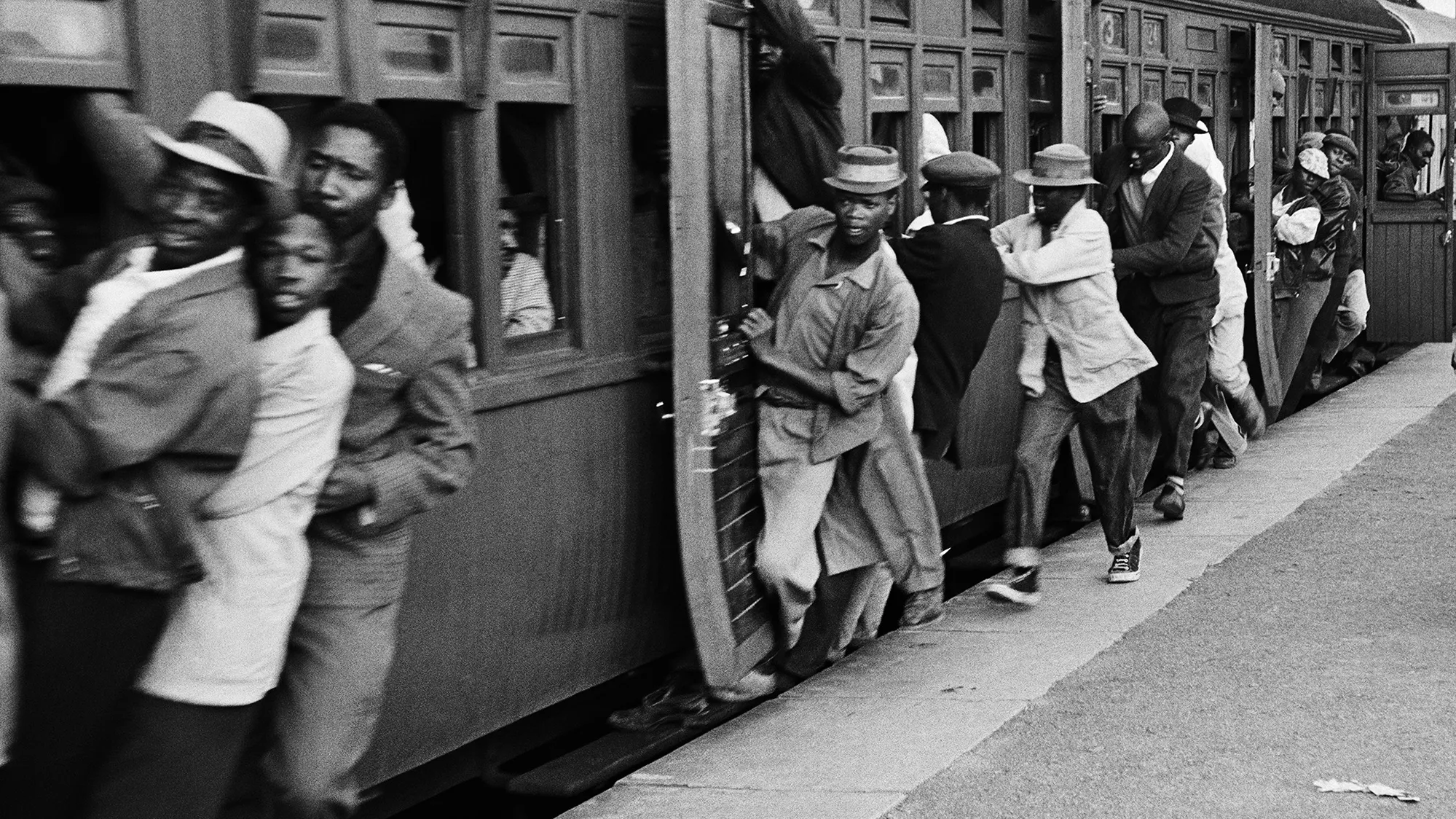
<h1 class="left">If visuality allows power to organise the world into categories that appear natural, Cole's photographs expose the labour required to maintain those categories. He makes visible the machinery behind what apartheid wanted to appear as ordinary. In House of Bondage, Cole writes many of the captions and texts himself, bringing us into the world he inhabited. In the introduction to House of Bondage, he writes: "Three hundred years of white supremacy in South Africa have placed us in bondage, stripped us of dignity, robbed us of self-esteem, and surrounded us with hate."</h1>
<h1 class="left"> For all that it was and all that it stood for, House of Bondage could never be published freely in South Africa.</h1>
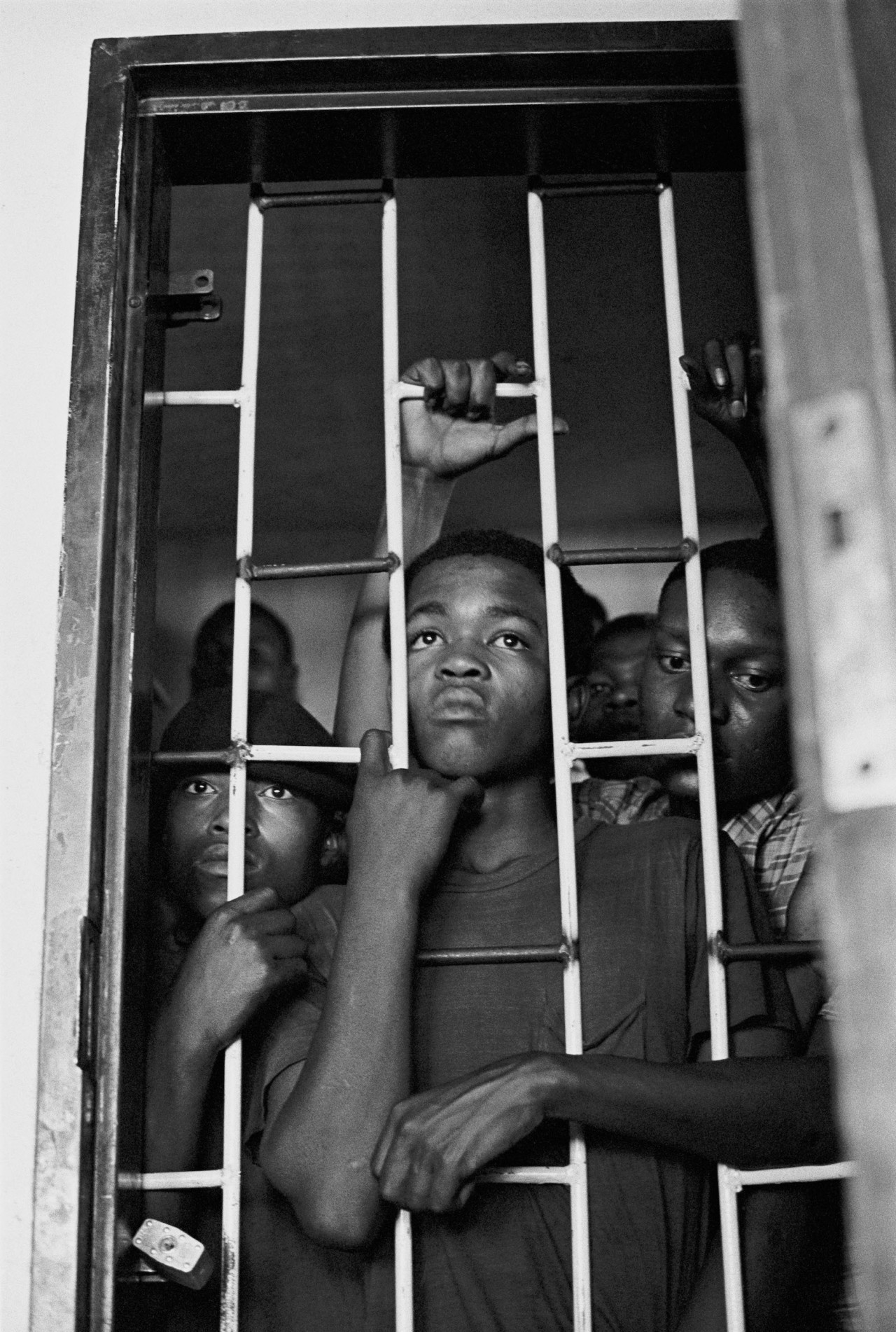
<h1 class="left"> By 1966, it was becoming increasingly challenging for Cole to work in South Africa because of the lengths he went to and the risks he took to photograph, which could have earned him life imprisonment. Cole left South Africa, carrying his photographs with him. He travelled through Europe before settling in New York. Upon his arrival in New York, he approached Magnum Photos with his work, which facilitated a publishing deal that eventually led to the release of House of Bondage in 1967 by Ridge Press in association with Random House, including his first-person accounts, notes and images.</h1>
<h1 class="centre"> The book was banned in South Africa, and Cole was effectively exiled from his own country and subsequently refused the renewal of his South African passport, leaving him stateless. The publication thus produced a strange reversal. The images that had been impossible to publish at home now circulated internationally as evidence of apartheid. Cole had succeeded in making visible what the South African state wanted contained.</h1>
<h1 class="left"> Cole's exile increasingly became a story of disillusionment. In the United States, he turned his camera toward Black life in American cities and the rural South, supported in part by a Ford Foundation grant. He photographed Harlem, protests, communities in the South, and the aftermath of Martin Luther King Jr.'s assassination. While he surely recognised continuities between the racial structures of South Africa and the United States, the America he encountered was not a society of great liberation that he might have imagined, and it was never a system he was part of. Cole's relationship to photography itself began to fracture. The tragedy of his later life is partly the tragedy of an artist whose work had become inseparable from a political mission. After years of exile, his life fell into disarray. He experienced homelessness and eventually stopped working consistently as a photographer. He died in New York in 1990, at the age of 49.</h1>
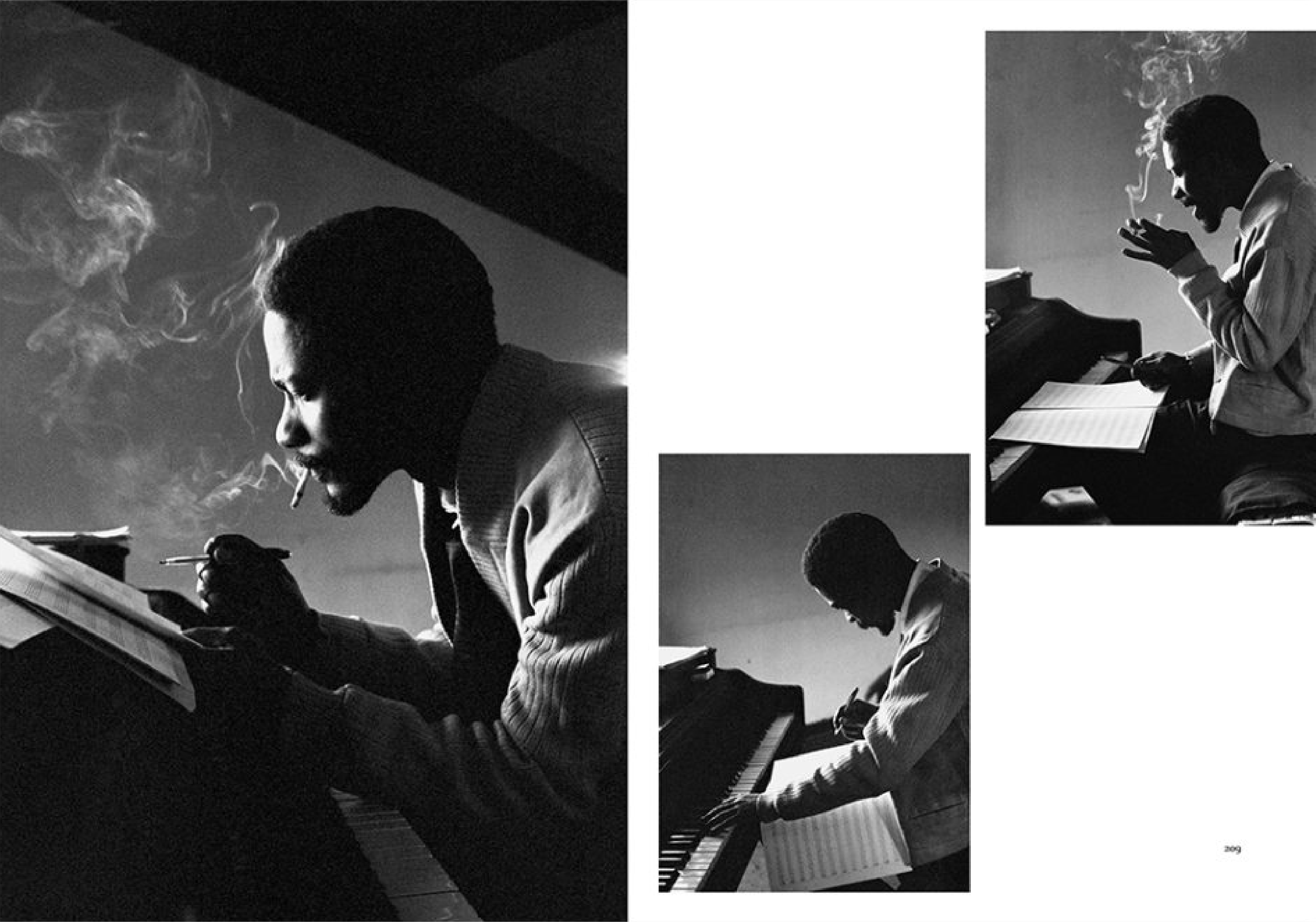
<h1 class="left"> For decades, much of his archive was believed to be lost.</h1>
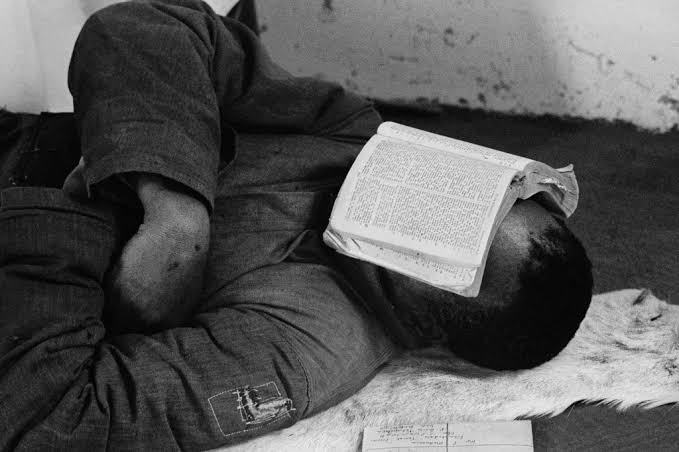
<h1 class="left"> In 2017, more than 60,000 negatives, missing for more than forty years, were found in a Stockholm bank vault. Around 14,000 came from Cole's years in South Africa, while the remainder documented his life and work in exile, particularly in the United States. The recovered archive eventually came into the care of Magnum Photos and the Ernest Cole Family Trust, where the material was catalogued and preserved. In 2022, Aperture republished House of Bondage with an additional chapter, "Black Ingenuity," which Cole had conceived and selected photographs for, but which never appeared in the original 1967 edition. The chapter turns the book's gaze toward the cultural production that continued within Black communities under apartheid: the creativity, resourcefulness, and vitality that persisted alongside oppression.</h1>
<h1 class="left"> For a long time, the apartheid state attempted to determine who could move, who could work, who could look, and who could be seen. Cole's photographs moved despite those restrictions. They crossed borders when he could not and survived after him. They returned when he could no longer return himself. In Ernest Cole's intervention, the images do not allow apartheid to remain an abstraction or a political system that existed somewhere in the distant past, terrorising a people whose lives we have no stake in. Instead, they create a document of countervisuality that shows how domination becomes routine, and that the photographic medium is never passive. Cole's documentation in House of Bondage reclaimed the right to look at a system of colonial violence that the world had turned its back on for as long as it could, and when his photographs resurfaced decades after his death, they looked back at us again.</h1>
<h1 class="full"> From behind the ironclad gates of the apartheid-era regime in South Africa, a system of totalitarian control that allowed little to slip by the surveillance of the state and watchful eyes of its prison guards, a young Black photographer brought the world into the lives of the Black citizens of the country sentenced to unimaginable brutality. Locked away in isolation, the state's assertion of colonial authority upon its non-white subjects was concealed from view for so long, in a system under which widespread violations of human rights and terror proliferated unchecked. In Ernest Cole's seminal photographic book, House of Bondage, published in New York in 1967, the photojournalist pierced through the quietness shrouding the system, behind its high prison walls of secrecy, and for the first time, the horrors of Black life under apartheid, of a people captured and categorised, were shown to the public eye.</h1>
<h1 class="full">The work cemented Cole's place in history as one of the great documentary photographers of his time. It is tragic that by the end of his career, Cole was to become disillusioned and stateless, having lived a life in exile, longing for a return to his homeland that was never granted. Despite the misfortune of a short-lived career, he presented to the world one of the greatest indictments of a political system undertaken through his sustained investigations into life under apartheid, one that continues to exert influence around the world.</h1>
<h1 class="full">Born in 1940 in Eersterust, a Black township outside Pretoria, Cole left his schooling after the introduction of The Bantu Education Act (1953) and continued his education via correspondence courses, while producing portraits of his neighbours after a family friend gifted him an old-fashioned camera. His family was forcefully removed from his childhood home not long after, forced to pack up what was left of their belongings after the house they owned was bulldozed into rubble. They moved to Mamelodi, a new Black "location" which the Government had put up on the far eastern-edge of Pretoria, robbing them of the privilege of owning land and forcing them to become renters in debilitating conditions.</h1>
<h1 class="full">In 1958, Cole began working as a darkroom assistant to German photographer and editor Jürgen Schadeberg at DRUM. He photographed everyday life, worked alongside other Black journalists and photographers, and developed a photojournalistic practice that moved between the intimate and the political. He would eventually leave DRUM to become South Africa's first freelance photographer, in a time when apartheid laws classified Black people as fit only for employment as "labour." Cole's time at DRUM was integral, because the magazine allowed for a platform in which Black South Africans could document their own communities and, whenever censorship allowed, confront the realities of apartheid. Its staff were repeatedly subjected to arrest for crossing the boundaries imposed by the regime. Cole's apprenticeship there therefore placed him within a culture of visual resistance, but as a young photographer with a fire that burned in the pit of his belly, Cole wanted to go further than the assignments that could make it into print, always chasing after crystallising his work in the form of a book.</h1>
<h1 class="full">He later writes, "I wanted to shoot the sort of things that I thought were important and I knew they would not print."</h1>
<h1 class="full">Cole was a photographer working within a media system, but he was also aware of the limits of that system. There were things he could see that editors could not, or would not, publish. In the early 1960s, Cole began systematically photographing the conditions of Black life under apartheid. Apartheid was, among other things, a profoundly visual system. The Population Registration Act of 1950 divided all South African citizens into one of four groups: Black, white, Coloured or Indian. These classifications dictated one's life chances under apartheid, so for Cole to gain access to the stories that highlight the horrors of apartheid and gain access to areas Black people could not, his identity had to have been reclassified as "Coloured," which he managed by manipulating the racial bureaucracy that governed his own existence. He changed the spelling of his surname from Kole to the more Anglicised version, Cole. The reclassification gave him greater freedom of movement and eventually helped him obtain a passport.</h1>
<h1 class="full">His photographic practice was similarly dependent on bureaucratic circumvention. To photograph inside spaces where a camera might expose him to arrest, Cole had to conceal his intentions. It is said that he learned from photographers such as Ian Berry how to shoot fast from the hip, so that before he could even be spotted the camera would be gone and the photo captured. His camera became a tool for seeing through the restrictions placed upon seeing itself.</h1>
<h1 class="full">In Nicholas Mirzoeff's theory of visuality, the theorist provides a useful vocabulary for understanding this problem. In The Right to Look: A Counterhistory of Visuality, Mirzoeff describes visuality as a way in which authority organises and legitimises its power through systems of representation, making hierarchies appear natural and self-evident. Against this, he proposes countervisuality, or the "right to look," a way of seeing that contests the authority of dominant systems and insists upon another account of reality.</h1>
<h1 class="full">Cole turned the camera back onto this visual order. What moves one most about Cole's photography is that the traditional expectation of the documentary photograph that witnesses and makes realities known without emotional entanglement is dismantled. Exhaustion bleeds from the crevices of his photographs. A train hurtles forward while Black passengers cling to its exterior; men stand naked in a line with their hands held up in the air, awaiting the medical inspection that will determine their fate as mine workers; a policeman searches a man's body for the pass that determines whether he is permitted to exist in a particular place; a Black child begging for money from a white man is callously slapped as tears spring upon his face. The images refuse the distance a viewer secretly hopes for while looking through historical photographs because they come to us from the photographer's lived history.</h1>
<h1 class="full">Ernest Cole's photographs are never constructed from the perspective of an outsider capturing the mythical "Other," eager to brandish the camera as a tool of conquest upon a colonised subject who has no participation in the making of the image. The book refuses to be a story of great misery narrated by an all-knowing, god's-eye voice, detached from the fate of the subjects trapped inside its own glossy, contaminated images. House of Bondage exists as an accusation, from beginning to end.</h1>
<h1 class="full">Cole organised the book into fifteen thematic chapters exploring different aspects of life under apartheid, including living conditions, commuting, work, healthcare, religion, and education. The structure moves through the different mechanisms by which apartheid entered everyday life. The sequencing matters because it prevents individual photographs from becoming isolated spectacles. Each image accumulates meaning beside the next. The photographs begin to describe a system of cruelty that unfolds as the viewer looks through the book.</h1>
<h1 class="full">The opening sequences of House of Bondage make this particularly clear. Black men newly recruited to the mines are photographed awaiting processing. In one of the book's most devastating images, a group of men stands naked with their arms raised as they undergo medical examinations. Their bodies have been stripped not only of clothing but of privacy. The image reverses the colonial tradition of photographing the Black body as an object of examination. Cole does not photograph these men as specimens for an outside viewer. He photographs the bureaucratic process through which their bodies are inspected, classified, and prepared for labour.</h1>
<h1 class="full">Elsewhere, Cole photographs Black commuters clinging to moving trains. The photograph strikes the viewer as almost kinetic: bodies stretch from the carriage, hands gripping whatever they can find, the train carrying workers between segregated townships and places of employment. The image is terrifying partly because it captures something that has become routine. Cole's caption reads: "Train accelerates with its load of clinging passengers." He continues to describe how they travel this way through rain and cold, sometimes for the entire journey.</h1>
<h1 class="full">If visuality allows power to organise the world into categories that appear natural, Cole's photographs expose the labour required to maintain those categories. He makes visible the machinery behind what apartheid wanted to appear as ordinary. In House of Bondage, Cole writes many of the captions and texts himself, bringing us into the world he inhabited. In the introduction to House of Bondage, he writes: "Three hundred years of white supremacy in South Africa have placed us in bondage, stripped us of dignity, robbed us of self-esteem, and surrounded us with hate."</h1>
<h1 class="full">For all that it was and all that it stood for, House of Bondage could never be published freely in South Africa.</h1>
<h1 class="full">By 1966, it was becoming increasingly challenging for Cole to work in South Africa because of the lengths he went to and the risks he took to photograph, which could have earned him life imprisonment. Cole left South Africa, carrying his photographs with him. He travelled through Europe before settling in New York. Upon his arrival in New York, he approached Magnum Photos with his work, which facilitated a publishing deal that eventually led to the release of House of Bondage in 1967 by Ridge Press in association with Random House, including his first-person accounts, notes and images.</h1>
<h1 class="full">The book was banned in South Africa, and Cole was effectively exiled from his own country and subsequently refused the renewal of his South African passport, leaving him stateless. The publication thus produced a strange reversal. The images that had been impossible to publish at home now circulated internationally as evidence of apartheid. Cole had succeeded in making visible what the South African state wanted contained.</h1>
<h1 class="full">Cole's exile increasingly became a story of disillusionment. In the United States, he turned his camera toward Black life in American cities and the rural South, supported in part by a Ford Foundation grant. He photographed Harlem, protests, communities in the South, and the aftermath of Martin Luther King Jr.'s assassination. While he surely recognised continuities between the racial structures of South Africa and the United States, the America he encountered was not a society of great liberation that he might have imagined, and it was never a system he was part of. Cole's relationship to photography itself began to fracture. The tragedy of his later life is partly the tragedy of an artist whose work had become inseparable from a political mission. After years of exile, his life fell into disarray. He experienced homelessness and eventually stopped working consistently as a photographer. He died in New York in 1990, at the age of 49.</h1>
<h1 class="full">For decades, much of his archive was believed to be lost.</h1>
<h1 class="full">In 2017, more than 60,000 negatives, missing for more than forty years, were found in a Stockholm bank vault. Around 14,000 came from Cole's years in South Africa, while the remainder documented his life and work in exile, particularly in the United States. The recovered archive eventually came into the care of Magnum Photos and the Ernest Cole Family Trust, where the material was catalogued and preserved. In 2022, Aperture republished House of Bondage with an additional chapter, "Black Ingenuity," which Cole had conceived and selected photographs for, but which never appeared in the original 1967 edition. The chapter turns the book's gaze toward the cultural production that continued within Black communities under apartheid: the creativity, resourcefulness, and vitality that persisted alongside oppression.</h1>
<h1 class="full">For a long time, the apartheid state attempted to determine who could move, who could work, who could look, and who could be seen. Cole's photographs moved despite those restrictions. They crossed borders when he could not and survived after him. They returned when he could no longer return himself. In Ernest Cole's intervention, the images do not allow apartheid to remain an abstraction or a political system that existed somewhere in the distant past, terrorising a people whose lives we have no stake in. Instead, they create a document of countervisuality that shows how domination becomes routine, and that the photographic medium is never passive. Cole's documentation in House of Bondage reclaimed the right to look at a system of colonial violence that the world had turned its back on for as long as it could, and when his photographs resurfaced decades after his death, they looked back at us again.</h1>