



<h1 class="left">T. Venkanna's figures don't stay still. They observe, perform, transform — sometimes intimate, sometimes threatening, always on the edge of something you can't quite name. His paintings have always lived in the territory where desire meets its complications: power, fear, loneliness and the particular violence of wanting.</h1>
<h1 class="left">For his first institutional solo show at Studio Voltaire, London, he arrives with the most expansive body of work he has made to date — expansive, multi-panel paintings where figures, landscape and architecture exist together in one space, and the line between public and private, real and imagined, quietly dissolves. The show grew around a single painting called Sculpture Garden: towering, verdant, populated by humans and hybrid figures tangled with sculptures, a world that refuses to explain itself. Dirty took a peek into Venkanna’s months leading up to the opening on 17th May.</h1>

<h1 class="centre">dirty: This is your first institutional solo show in London, how is this different from your previous shows, and what is the progression you see within your own body of work?</h1>
<h1 class="centre">Venkanna: This exhibition is probably the most ambitious body of work I have made so far. Earlier, many of my works were single images. Here, the paintings have expanded physically and psychologically across multiple panels. I wanted the figures, landscape, and architecture to exist together in one space. Over the years, I feel the work has become less about a single idea and more about building something a larger narrative.</h1>
<h1 class="left">dirty: Your work has always carried an intensity around sexual fantasy and desire. How has that evolved, grown, or perhaps even subdued within this new body of work?</h1>
<h1 class="left">Venkanna: For me, desire has never been only sexual. It is also about power, fear, loneliness, violence, pleasure, and control. In this body of work, the figures are sometimes intimate, but they are also observing each other, performing or transforming.</h1>
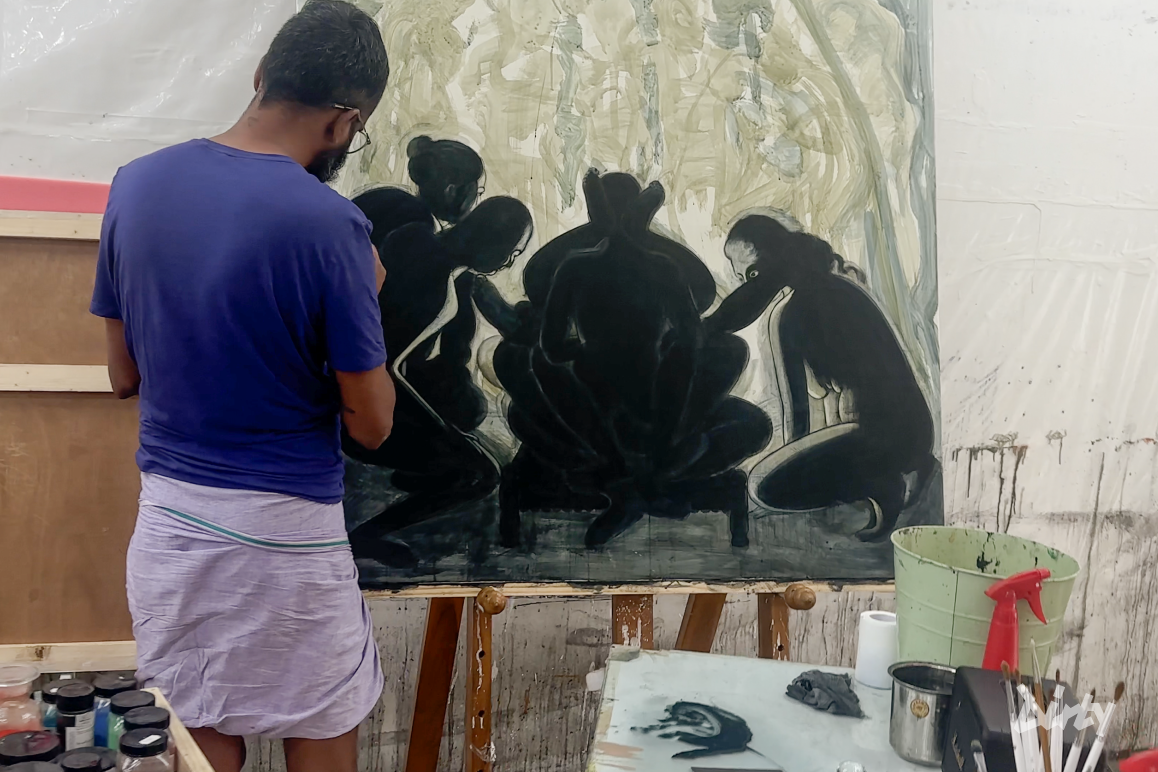
<h1 class="right">dirty: Are these large-scale works? And how do you differentiate between making a small piece versus a large one? What changes in your process, your thinking and your intention?</h1>
<h1 class="right">Venkanna: Yes, many of the works are quite large and made across multiple panels. Golden Quartet, for example, is a triptych that is 14 feet wide. A small work can begin from a single gesture or feeling. A large painting takes much longer and keeps changing over time. I have to enter and leave the painting many times. Sometimes the painting itself starts guiding me. In the larger works, space becomes very important. The figures need space to breathe and interact with one another.</h1>
<h1 class="centre">dirty: You're using egg tempera for the first time in this show. Can you describe what that paint actually looks, feels, and behaves like; the dryness of it, the texture? What has been the struggle?</h1>
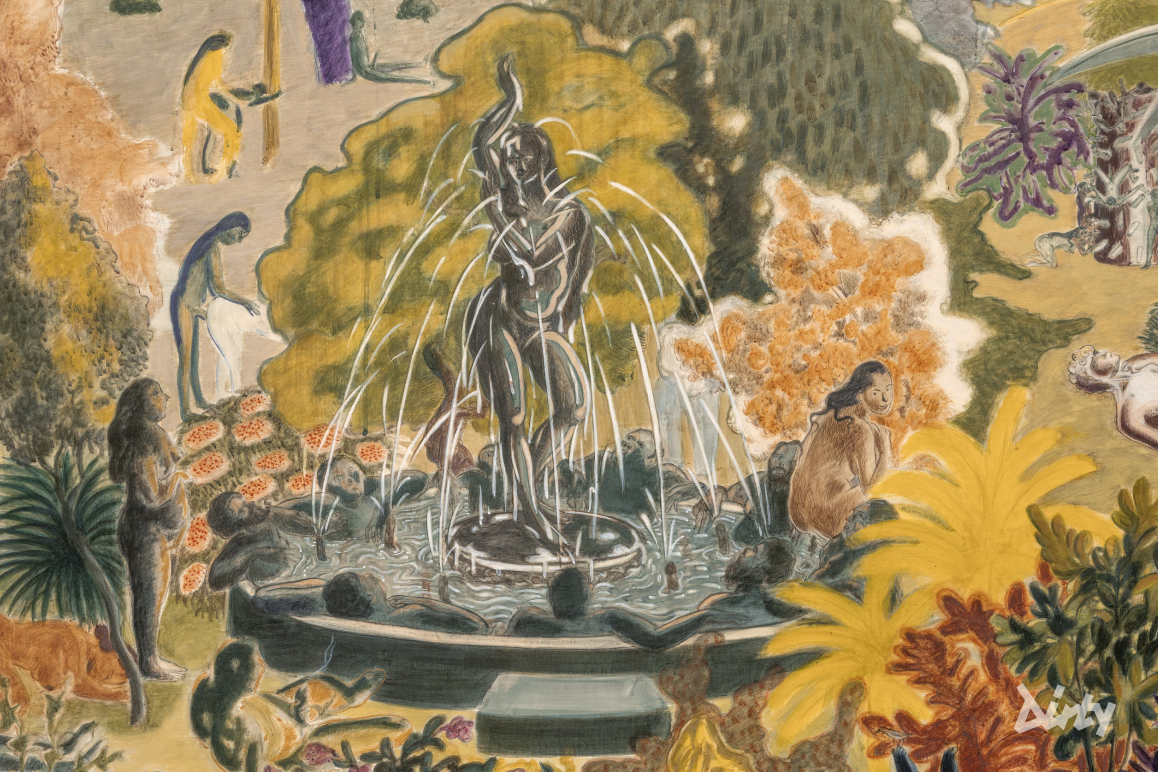
<h1 class="centre">Venkanna: Actually, I have been working with egg tempera since 2023, but never on this scale. Egg tempera dries almost immediately, so you cannot blend colours the way you can in oil painting. The surface absorbs everything very quickly. I prepare the boards with multiple layers of gesso – often more than 20, then slowly build the image in thin layers of pigment mixed with egg yolk. The struggle is that the medium demands speed but also patience and complete attention. But I also like that the painting develops slowly.</h1>

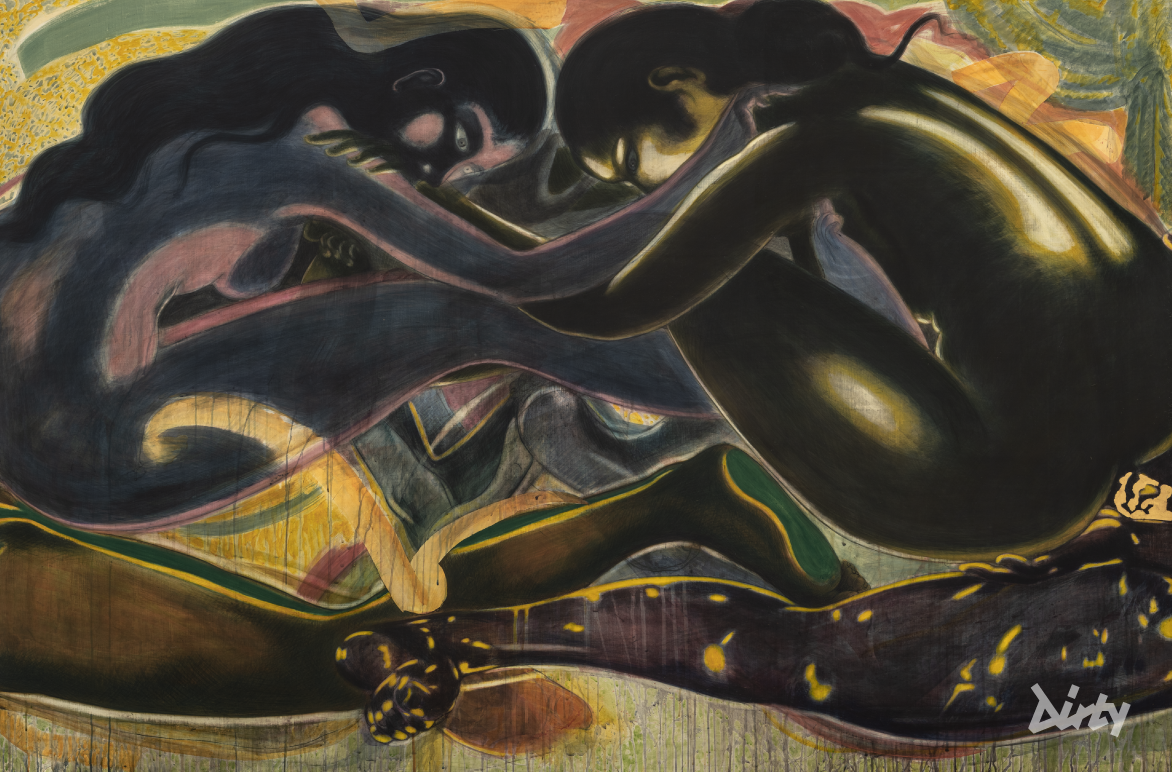
<h1 class="centre">dirty: While working with a medium that demands speed, did you discover something new about your own art-making because of it? Does working faster automatically change something within your practice?</h1>
<h1 class="centre">Venkanna: Because it dries quickly, I have to make decisions immediately, but then I keep returning to the surface again and again. I discovered that erasing and rebuilding became very important for me. Sometimes I wash away areas or sand them back before repainting. The image keeps shifting until it finds the right tones and balance.</h1>
<h1 class="left">dirty: While working with a medium that demands speed, did you discover something new about your own art-making because of it? Does working faster automatically change something within your practice?</h1>
<h1 class="left">Venkanna: Because it dries quickly, I have to make decisions immediately, but then I keep returning to the surface again and again. I discovered that erasing and rebuilding became very important for me. Sometimes I wash away areas or sand them back before repainting. The image keeps shifting until it finds the right tones and balance.</h1>
<h1 class="right">dirty: How many pieces are in the show? Is there a favourite, or does every piece carry its own distinct story?</h1>
<h1 class="right">Venkanna: The exhibition features 13 works, of which five are monumental multi-panel egg tempera paintings, and eight are smaller egg tempera works. Every work has its own feeling and story. Some paintings are quieter, while others are more intense. I do feel very connected to 'Sculpture Garden' because it became the centre around which the exhibition slowly grew.</h1>
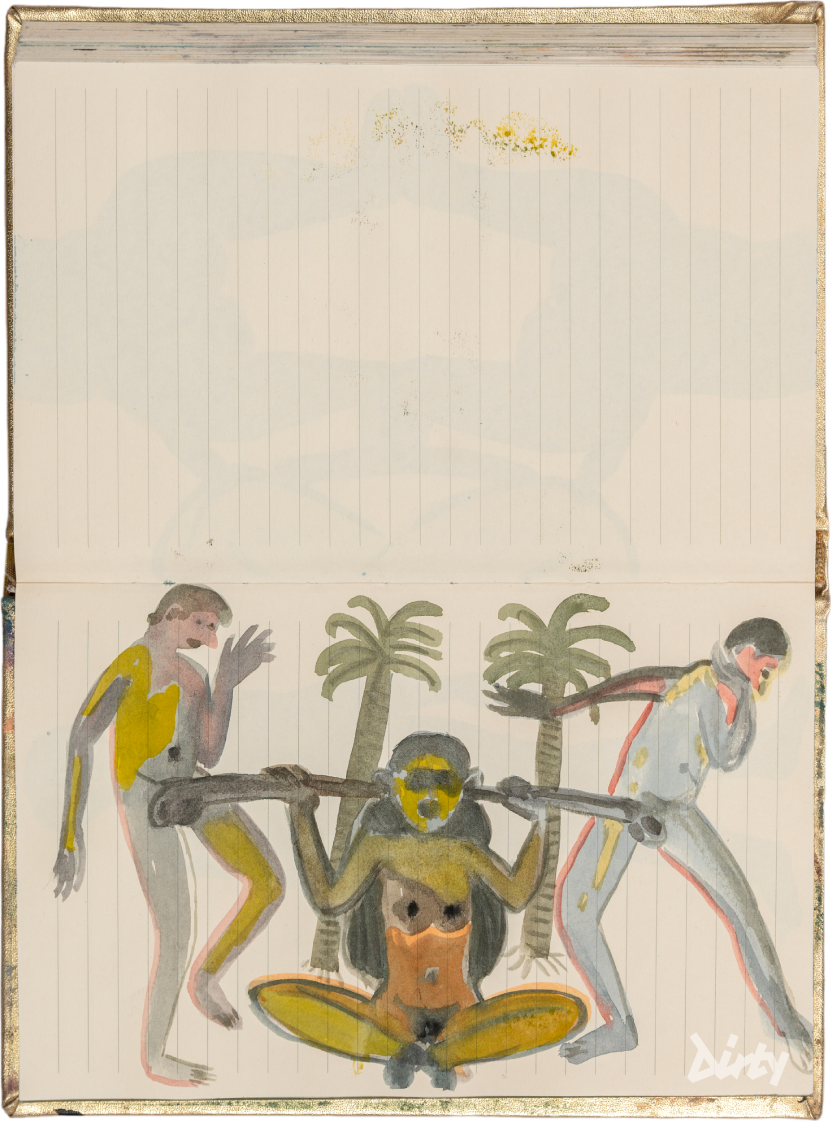

<h1 class="right">dirty: Is there a particular piece you're having a very difficult time parting with and why?</h1>
<h1 class="right">Venkanna: Usually, after I finish a work, I slowly detach from it because I have already lived with it in the studio for a long time. However, if I were to keep one work for myself, it would probably be 'Celebration'.</h1>
<h1 class="centre">dirty: When you talk about your work in India, the context is understood. But for a new audience in London, how do you frame who you are and what you're doing for someone encountering it fresh?</h1>
<h1 class="centre">Venkanna: I don’t think too much about explaining the work differently for different places. The paintings come from my own life, surroundings, memories and observations, but emotions like desire, fear, intimacy, and violence are universal. Even if someone does not recognise a specific reference, they can still enjoy the painting.</h1>
<h1 class="centre">dirty: What are you most excited about with this collection?</h1>
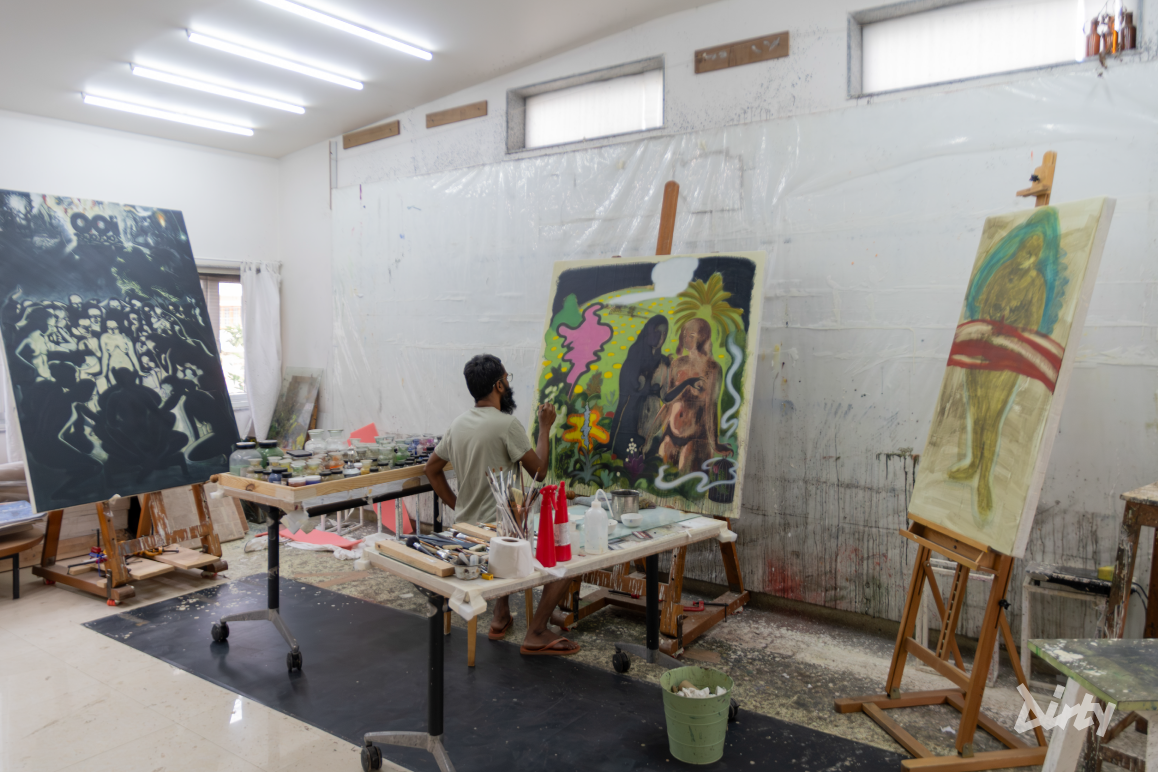
<h1 class="centre">Venkanna: I am excited to see the works together outside the studio for the first time. Many of these paintings were made over the last eighteen months, often simultaneously. I am also curious to see how people respond to them physically within the chapel’s architecture at Studio Voltaire.</h1>
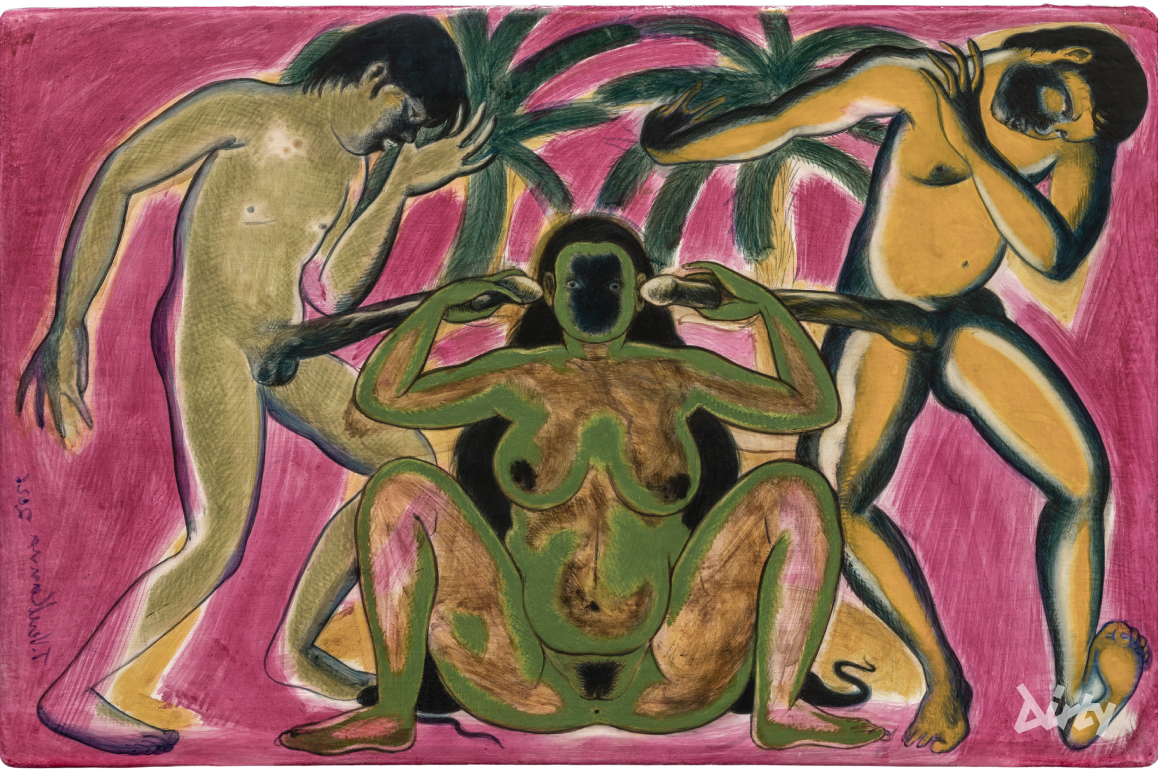
<h1 class="left">dirty: Where would you ideally want to see these pieces end up? Are there specific kinds of spaces, collections, or places you imagine them living in?</h1>
<h1 class="left">Venkanna: I would be happy if the works were placed in public spaces where people could spend time with them slowly. Museums or institutions where the paintings can be seen and experienced by many people for many years would be nice.</h1>
<h1 class="centre">dirty: What has your inspiration been for this body of work? Have you been reading, looking, absorbing something specific?</h1>
<h1 class="centre">Venkanna: My inspiration comes from many places. Miniature painting, medieval art, Renaissance painting, everyday life, people around me, dreams, and things I see and read. I do not begin with a fixed narrative. Usually, images appear through drawing and painting. The studio itself becomes a place where different memories and references begin to mix.</h1>
<h1 class="left">All images courtesy of Gallery Maskara</h1>
<h1 class="full">T. Venkanna's figures don't stay still. They observe, perform, transform — sometimes intimate, sometimes threatening, always on the edge of something you can't quite name. His paintings have always lived in the territory where desire meets its complications: power, fear, loneliness and the particular violence of wanting.</h1>
<h1 class="full">For his first institutional solo show at Studio Voltaire, London, he arrives with the most expansive body of work he has made to date — expansive, multi-panel paintings where figures, landscape and architecture exist together in one space, and the line between public and private, real and imagined, quietly dissolves. The show grew around a single painting called Sculpture Garden: towering, verdant, populated by humans and hybrid figures tangled with sculptures, a world that refuses to explain itself. Dirty took a peek into Venkanna’s months leading up to the opening on 17th May.</h1>
<h1 class="full">dirty: This is your first institutional solo show in London, how is this different from your previous shows, and what is the progression you see within your own body of work?</h1>
<h1 class="full">Venkanna: This exhibition is probably the most ambitious body of work I have made so far. Earlier, many of my works were single images. Here, the paintings have expanded physically and psychologically across multiple panels. I wanted the figures, landscape, and architecture to exist together in one space. Over the years, I feel the work has become less about a single idea and more about building something a larger narrative.</h1>
<h1 class="full">dirty: Your work has always carried an intensity around sexual fantasy and desire. How has that evolved, grown, or perhaps even subdued within this new body of work?</h1>
<h1 class="full">Venkanna: For me, desire has never been only sexual. It is also about power, fear, loneliness, violence, pleasure, and control. In this body of work, the figures are sometimes intimate, but they are also observing each other, performing or transforming.</h1>
<h1 class="full">dirty: Are these large-scale works? And how do you differentiate between making a small piece versus a large one? What changes in your process, your thinking and your intention?</h1>
<h1 class="full">Venkanna: Yes, many of the works are quite large and made across multiple panels. Golden Quartet, for example, is a triptych that is 14 feet wide. A small work can begin from a single gesture or feeling. A large painting takes much longer and keeps changing over time. I have to enter and leave the painting many times. Sometimes the painting itself starts guiding me. In the larger works, space becomes very important. The figures need space to breathe and interact with one another.</h1>
<h1 class="full">dirty: You're using egg tempera for the first time in this show. Can you describe what that paint actually looks, feels, and behaves like; the dryness of it, the texture? What has been the struggle?</h1>
<h1 class="full">Venkanna: Actually, I have been working with egg tempera since 2023, but never on this scale. Egg tempera dries almost immediately, so you cannot blend colours the way you can in oil painting. The surface absorbs everything very quickly. I prepare the boards with multiple layers of gesso – often more than 20, then slowly build the image in thin layers of pigment mixed with egg yolk. The struggle is that the medium demands speed but also patience and complete attention. But I also like that the painting develops slowly.</h1>
<h1 class="full">dirty: While working with a medium that demands speed, did you discover something new about your own art-making because of it? Does working faster automatically change something within your practice?</h1>
<h1 class="full">Venkanna: Because it dries quickly, I have to make decisions immediately, but then I keep returning to the surface again and again. I discovered that erasing and rebuilding became very important for me. Sometimes I wash away areas or sand them back before repainting. The image keeps shifting until it finds the right tones and balance.</h1>
<h1 class="full">dirty: While working with a medium that demands speed, did you discover something new about your own art-making because of it? Does working faster automatically change something within your practice?</h1>
<h1 class="full">Venkanna: Because it dries quickly, I have to make decisions immediately, but then I keep returning to the surface again and again. I discovered that erasing and rebuilding became very important for me. Sometimes I wash away areas or sand them back before repainting. The image keeps shifting until it finds the right tones and balance.</h1>
<h1 class="full">dirty: How many pieces are in the show? Is there a favourite, or does every piece carry its own distinct story?</h1>
<h1 class="full">Venkanna: The exhibition features 13 works, of which five are monumental multi-panel egg tempera paintings, and eight are smaller egg tempera works. Every work has its own feeling and story. Some paintings are quieter, while others are more intense. I do feel very connected to 'Sculpture Garden' because it became the centre around which the exhibition slowly grew.</h1>
<h1 class="full">dirty: Is there a particular piece you're having a very difficult time parting with and why?</h1>
<h1 class="full">Venkanna: Usually, after I finish a work, I slowly detach from it because I have already lived with it in the studio for a long time. However, if I were to keep one work for myself, it would probably be 'Celebration'.</h1>
<h1 class="full">dirty: When you talk about your work in India, the context is understood. But for a new audience in London, how do you frame who you are and what you're doing for someone encountering it fresh?</h1>
<h1 class="full">Venkanna: I don’t think too much about explaining the work differently for different places. The paintings come from my own life, surroundings, memories and observations, but emotions like desire, fear, intimacy, and violence are universal. Even if someone does not recognise a specific reference, they can still enjoy the painting.</h1>
<h1 class="full">dirty: What are you most excited about with this collection?</h1>
<h1 class="full">Venkanna: I am excited to see the works together outside the studio for the first time. Many of these paintings were made over the last eighteen months, often simultaneously. I am also curious to see how people respond to them physically within the chapel’s architecture at Studio Voltaire.</h1>
<h1 class="full">dirty: Where would you ideally want to see these pieces end up? Are there specific kinds of spaces, collections, or places you imagine them living in?</h1>
<h1 class="full">Venkanna: I would be happy if the works were placed in public spaces where people could spend time with them slowly. Museums or institutions where the paintings can be seen and experienced by many people for many years would be nice.</h1>
<h1 class="full">dirty: What has your inspiration been for this body of work? Have you been reading, looking, absorbing something specific?</h1>
<h1 class="full">Venkanna: My inspiration comes from many places. Miniature painting, medieval art, Renaissance painting, everyday life, people around me, dreams, and things I see and read. I do not begin with a fixed narrative. Usually, images appear through drawing and painting. The studio itself becomes a place where different memories and references begin to mix.</h1>
<h1 class="full">Images Courtesy of: Gallery Maskara</h1>