
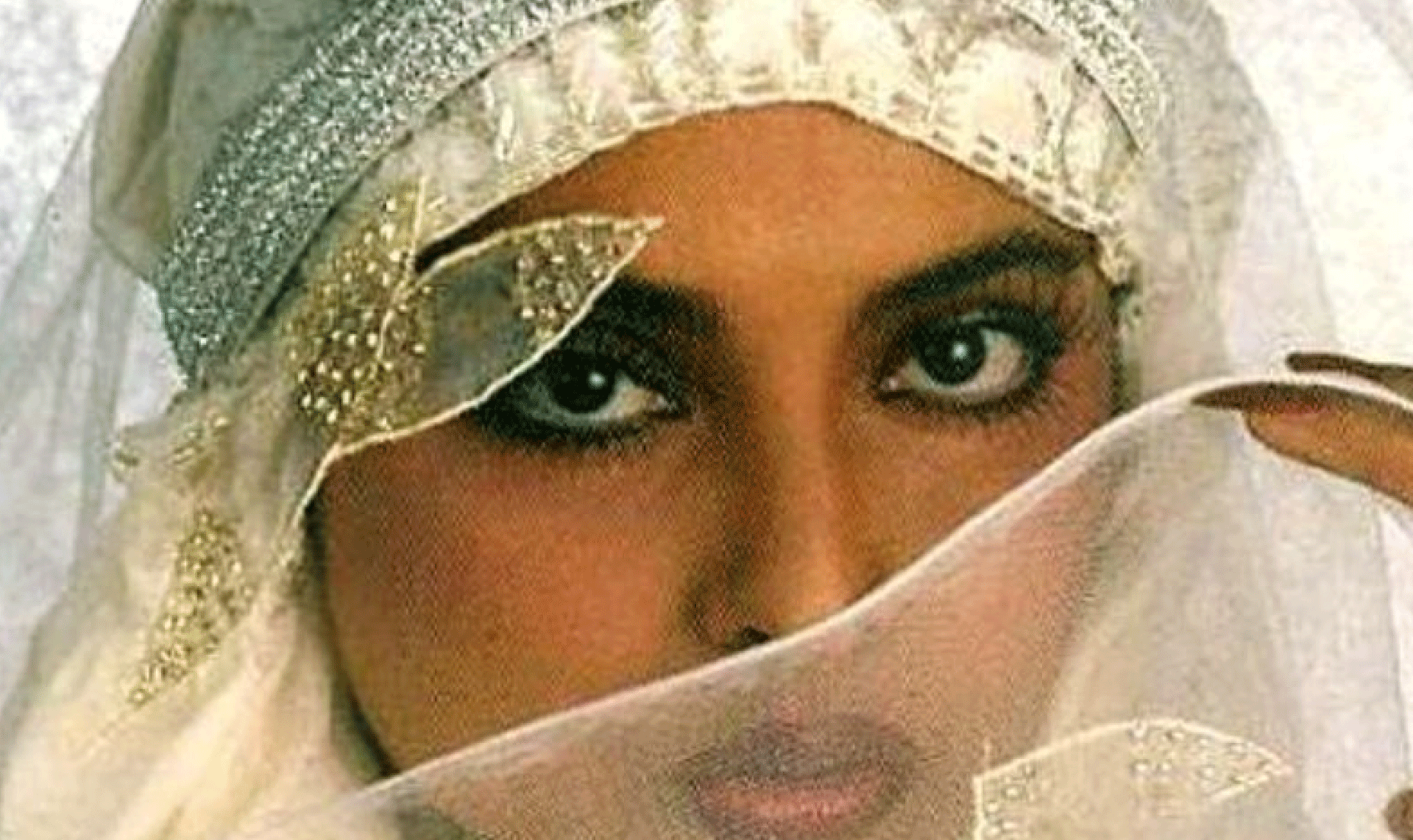


<h1 class="left">The Curtain</h1>
<h1 class="left">The most terrifying scene you have ever watched — is it also the goriest? Does the dread arrive with the blood, or does it live precisely in its absence, in the penultimate moment that stayed?</h1>
<h1 class="centre">The best horror already knows the answer. What the eye is denied, the mind finishes — and the mind is always more savage, more exact, more personal than anything that could be staged. The shower in Psycho works because the knife never enters the flesh. Forty-five cuts, a shadow, a scream — and you supply the rest.¹</h1>
<h1 class="right">A good striptease never ends in nudity. Which means a good striptease never ends. Nudity would be its conclusion, and the conclusion is the one thing it refuses. It lives in the perpetual, exquisite approach towards an imagined nudity, and forbids touch along the way.</h1>
<h1 class="left">Meteorology of Desire</h1>
<h1 class="left">Bollywood rains are conspiracy disguised as meteorology. A cotton kurta, a chiffon sari, a delicate pallu — garments that certify modesty — turn traitor under the downpour. Mandakini under the waterfall, white cloth plastered to skin, technically clothed and suddenly, catastrophically legible. A thousand drenched heroines, perfectly dressed and only appearing to be clothed.</h1>
<h1 class="left">Children play peek-a-boo long before they develop object permanence — the understanding that things continue to exist when out of sight. Before that clicks into place, the hidden face might genuinely not be there anymore. The reveal is a small resurrection. Sheer fabric plays the same game at a different register: the body is present, we know it is present, and yet the partial occlusion touches something older and unresolved — the pleasure-dread of not-quite-knowing, of a presence that could at any moment become absence.² In Main Hoon Na, Sushmita Sen’s chiffon sari conceals nothing while performing concealment flawlessly. Across the classroom, Shah Rukh Khan carries a secret she cannot read — student as cover for army officer, the scene already doubled. Two half-reveals, one frame. The tension runs entirely on what the audience knows and neither character will say.</h1>
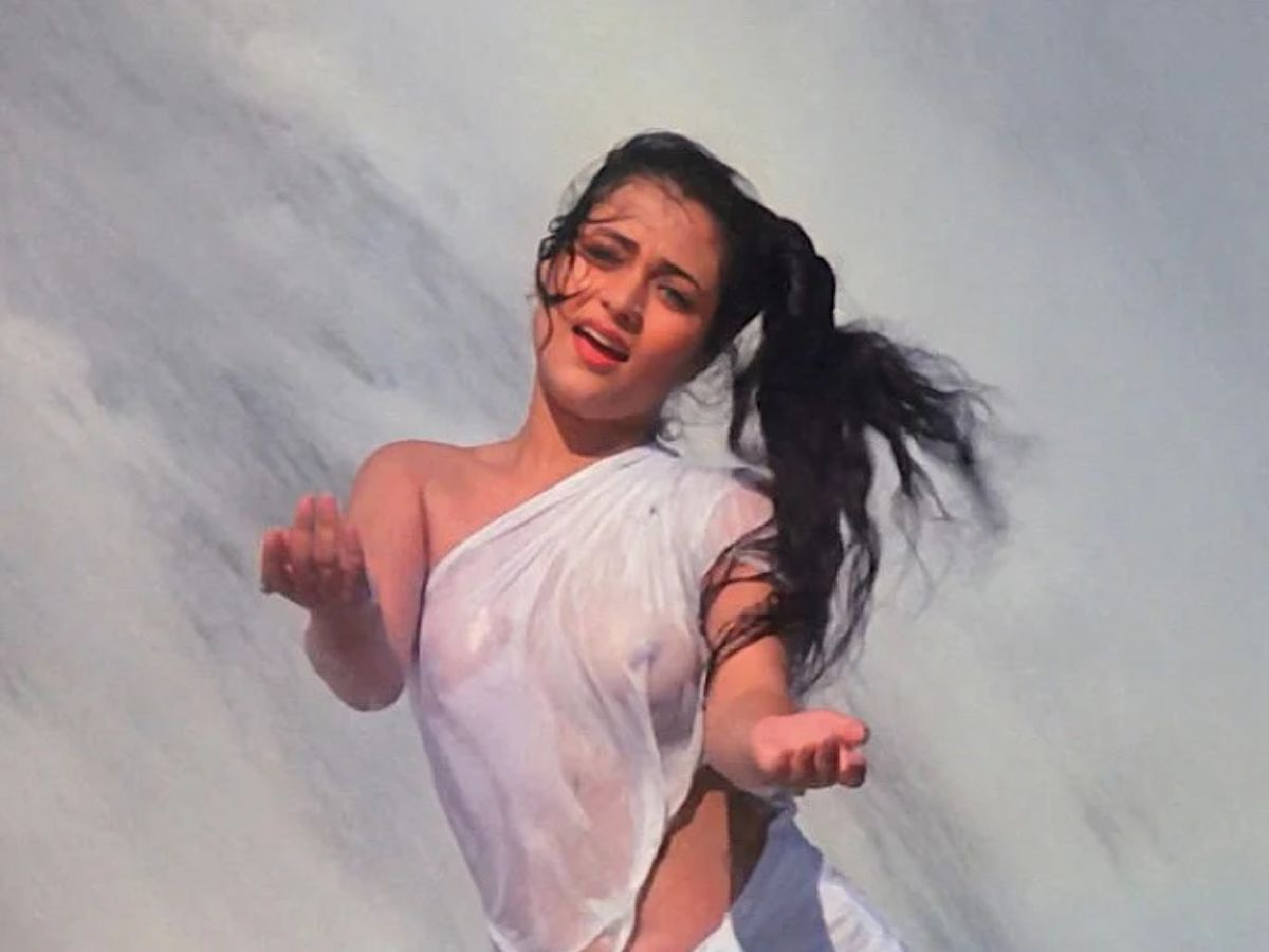
<h1 class="left">The seduction is in the helplessness — and helplessness, here, is doing very specific cultural work. The abla naari, the damsel, the keeper of izzat: her desirability is legitimate only when it is accidental, when the body speaks without her permission. The fabric meant to protect betrays its wearer. Sexiness arrives as coincidence of monsoon, ensuring the heroine remains innocent, her purity intact. The rain did it. Because the revelation was not chosen, she and the viewer are both absolved. The erotic charge is in the agency robbed.</h1>
<h1 class="centre"> Roland Barthes — the French literary theorist who spent a career finding the erotic in the most improbable places — located desire not in nakedness but in the gap, *the flash of skin between garments, what he called “the staging of an appearance-as-disappearance.”*³ </h1>
<h1 class="left">The Gaze (That Needs No Watcher)</h1>
<h1 class="left"> Picture a prison built as a ring. The cells line the outer edge, each one oriented inward along radial lines of sight toward the centre, where a watchtower stands. A guard inside could watch any prisoner at any moment — but the prisoner cannot see whether the tower is occupied. That is the horror: permanent possibility of surveillance, indistinguishable from actual surveillance. Like a dummy CCTV camera, glassy and convincing and connected to nothing — you behave anyway. *The prisoner begins to regulate herself. The guard becomes unnecessary. Power achieves its most efficient form: self-administered, running without an operator.*⁴</h1>
<h1 class="centre"> The woman who adjusts her pallu before entering a room, who reads a neckline against an occasion, who calculates how she will be seen before she arrives — she is not responding to anyone specific. She is responding to a structure absorbed so early it feels like instinct. The watcher doesn’t need to be in the room. She brought the watchtower and its guard with her. This is why the problem survives the absence of men, survives feminist consciousness, survives every era that announces its own liberation. The occupancy of the watchtower was never the point.</h1>
<h1 class="left">The gaze is phallogocentric — yes, exactly what it sounds like: a logic organised around the phallus, the dick, around a particular structure of desire and power that determines who is seen, how, and on whose terms. Not because it always belongs to a man, but because the entire architecture of visibility was built on terms that predate and exceed any individual viewer. Counter-gazes, feminist gazes, queer gazes — all are legible only in the language the structure invented. To resist the terms, you must first speak them.⁵</h1>
<h1 class="centre"> The horror genre has always known this. Its most unbearable revelation is never the monster — it is the moment the protagonist discovers the danger was never outside. *The call is coming from inside the house.*⁶</h1>
<h1 class="left"> The Veil (as Architecture)</h1>
<h1 class="left"> Draped across the breast, the pallu certifies modesty. Yet the very act of covering makes the breast conspicuous, turning it into spectacle. The cloth insists on the body beneath it. The veil does not hide content — it produces an excess, an intensity, that the gaze then fills.⁷ The covering manufactures the very thing it conceals.</h1>
_2.png)
<h1 class="left"> Flesh alone is just flesh. Once veiled, it becomes charged, excessive, erotically overdetermined. By veiling the breast, the pallu makes the breast the only thing to see. Modesty becomes theater. The cloth makes it spectacle.</h1>
<h1 class="left">The bridal ghoonghat is this logic made ceremony. Veiled, faceless, she appears erased — and is the most scrutinized body in the room, and in that holds the most power. Her beauty measured precisely because it is withheld. The ghoonghat places every person present in the watchtower; her body — the inmate, the cell — is what every sightline converges upon. *She is not sheltered from the gaze. She is its organising principle.*⁸</h1>
<h1 class="left"> Who Gets to Be Sheer? </h1>
<h1 class="left">Sheerness, like any other -ness, is never neutral. It sorts bodies into categories of desire and shame, deciding who reads as demure and who as indecent. On a thin frame, a sheer sari is ethereal, tasteful. On a fat body, the same fabric becomes vulgar, excessive. White chiffon against pale skin codes as angelic restraint; on darker skin, it is marked as raw, unruly, too much.</h1>
<h1 class="centre">This sorting has a history. **Dacca muslin — so fine Mughal courts called it “woven air,” “running water,” “evening dew” — was systematically destroyed by British colonial policy because English mills could not compete with it. The most exquisite tradition of sheerness on this subcontinent was dismantled not despite its mastery but because of it.**¹⁰ Sheerness has never been innocent here.</h1>
.png)
<h1 class="left">It is not innocent now either. Skinny is back — aggressively, programmatically back — and fashion knew it before anyone announced it. The trad wife aesthetic, the manosphere’s fantasy of the small, yielding, domestic woman: these are not eruptions of the primitive. They are symptoms of a civilisation so overconvenient, so frictionlessly serviced, that it reaches for archaic structures of possession just to feel friction, just to have to want something it must work toward. Women shrinking. Women becoming more sheer. The more the female body disappears, the more legible — the more desirable — it becomes to the architecture that requires its incompletion. Skinny, translucent, nearly absent — and therefore, in the logic we have been tracing, infinitely present.</h1>
<h1 class="centre"> Rekha </h1>
<h1 class="centre"> Rekha is sheer incarnate. In Umrao Jaan, she moves behind latticed screens, visible only through the jaali’s geometry, her face arriving in fragments. But even there, it is not the face that undoes you — it is the eyes: heavy-lidded, dropping slowly downward, then lifting with the deliberate patience of a pallu being drawn aside. The eyelid itself as veil. The entire performance of her celebrity works this way: the kanjeevarams, the sindoor, the rumours that trail her like a second pallu. In interviews, she plays peek-a-boo. Asked about marriage, she once quipped: “To a man?” The absurdity was not the question. It was the assumption — that desire must arrive in a legible, hetero-verifiable form, that the panoptic architecture requires a particular kind of body to surveil.</h1>
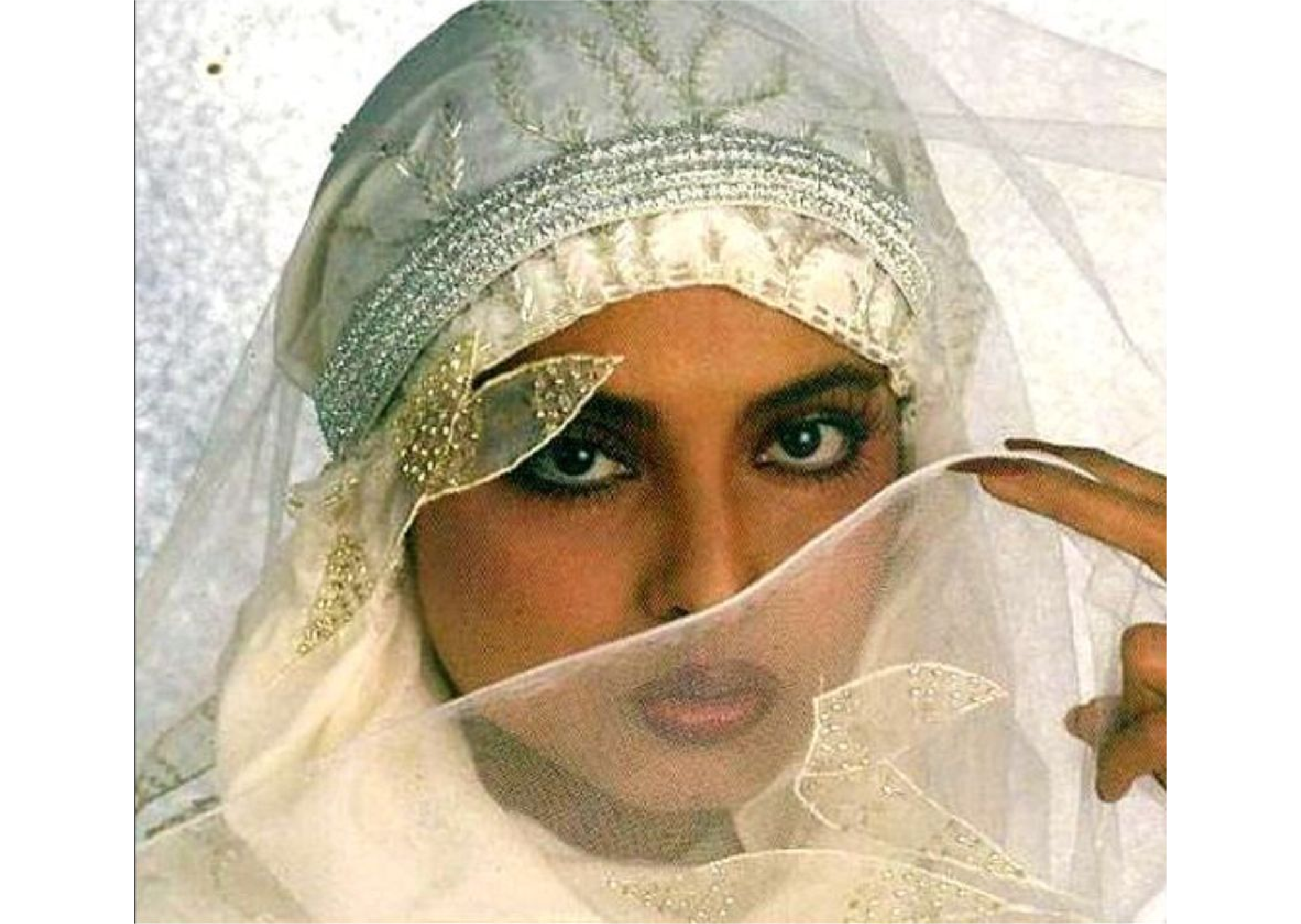
<h1 class="centre"> Her opacity is finely regulated. She manages her sheerness with such precision that the structure becomes visible in her hands, while she refuses to be its proof. Rekha, like sheer fabric, seduces by being always partial, never whole. What is excluded from the frame burns hotter than what is shown. Transparency is the cleverest disguise. Rekha understood this before Instagram needed a word for it. </h1>
<h1 class="left">The Call (is coming from the inside)</h1>
<h1 class="left"> From fabrics that betray to rains that conspire, from the ghoonghat’s ceremony to the watchtower absorbed into the body — the gaze requires no watcher. The watchtower has been empty for some time. </h1>
<h1 class="centre"> Feminist consciousness, critical theory, experience, age — these make the structure sheerer. You begin to see through it: its logic, its histories, its economies, all becoming traceable. But seeing through a veil is not the same as lifting it. The light of understanding thins the fabric; it does not remove it. And thinning, as this essay has been arguing, only intensifies presence. The more sheer the structure becomes, the more legible — the more undeniable — its hold. </h1>
<h1 class="right"> “The text you write must prove to me that it desires me,” Barthes wrote. Sheer fabric is this text. Its seduction lies in incompletion. Sheerness keeps the body infinite because it never finishes showing. What it hides is what we want. What it reveals is never enough. </h1>
.png)
<h1 class="centre"> The cop is inside. The call was always inside. The veil thins with knowing but does not lift. </h1>
<h1 class="centre"> And that is why we keep looking. </h1>
<h1 class="left"> Footnotes </h1>
<h1 class="left"> ¹ Psycho (1960): 45 cuts, 70 camera setups, one week of filming, zero frames of knife entering flesh. The stabbing is assembled entirely in the viewer’s mind. Hitchcock called it the difference between surprise (fifteen seconds of shock) and suspense (fifteen minutes of dread): you know the bomb is under the table; the characters don’t; that gap is where horror actually lives. François Truffaut’s book-length conversation with him — Hitchcock/Truffaut (1966) — remains the most lucid account of how he theorised his own technique.</h1>
<h1 class="left"> ² Object permanence develops in infants around 8 months. Before it clicks, the hidden object genuinely ceases to exist — out of sight, out of world. Peek-a-boo is a rehearsal of this shock and relief, over and over, until the child is convinced things come back. Sheer fabric is peek-a-boo for adults who have technically resolved the question of whether hidden things persist — and are still, apparently, not entirely sure.</h1>
<h1 class="left"> ³ Roland Barthes, The Pleasure of the Text, trans. Richard Miller (Hill and Wang, 1973). Full passage: “Is not the most erotic portion of a body where the garment gapes? … it is intermittence … which is erotic: the intermittence of skin flashing between two articles of clothing … the staging of an appearance-as-disappearance.” Short book, written in deliberate flashes. Worth an afternoon.</h1>
<h1 class="left"> ⁴ Michel Foucault, Discipline and Punish, trans. Alan Sheridan (Pantheon, 1977). Foucault took Bentham’s actual architectural blueprints for a panoptic prison and extrapolated a theory of how modern power functions — not through force but through the permanent possibility of being seen. The panopticism chapter is about 30 pages. Its application to the female body under social surveillance is not a metaphor Foucault makes himself; it is, however, almost structurally inevitable from what he describes.</h1>
<h1 class="left"> ⁵ The theorist operating in the background here is Lacan — specifically his argument that the phallus functions not as a body part but as the master signifier organising the entire architecture of desire and visibility. A grammar, not a person; a structure, not a man in the room. Seminar XI (1973) has his most useful account of the gaze — not something we possess, but something we are always already caught inside. For a feminist elaboration that takes Lacan seriously without capitulating to him, Jacqueline Rose’s Sexuality in the Field of Vision (1986). Laura Mulvey’s “Visual Pleasure and Narrative Cinema” (Screen, 1975) is where the male gaze was first named as a structural feature of cinema — foundational, and the precise point from which this essay departs.</h1>
<h1 class="left"> ⁶ When a Stranger Calls (Fred Walton, 1979) gave the phrase its pop-cultural life, but the grammar — threat already interior, danger already domestic — runs through horror from its origins. That the genre so reliably centres women in household spaces is not incidental to this logic.</h1>
<h1 class="left"> ⁷ Slavoj Žižek, The Plague of Fantasies (Verso, 1997). His argument: ideology doesn’t conceal enjoyment — it produces it. The veil is not a cover but a generator. Dense and occasionally maddening; the chapter “The Undergrowth of Enjoyment” earns its difficulty.</h1>
<h1 class="left"> ⁸ For readings of the veil that take seriously what it means to the women who wear it — rather than to those watching — see Saba Mahmood, Politics of Piety (Princeton, 2005) and Leila Ahmed, Women and Gender in Islam (Yale, 1992). This essay’s argument is narrower and structural: whatever the veil means to its wearer, and those meanings are genuinely multiple, the panoptic mechanism operates independently of intention.</h1>
<h1 class="left"> ⁹ Angela McRobbie, The Aftermath of Feminism (Sage, 2009). Her concept of the “double entanglement”: feminist gains are acknowledged and simultaneously weaponised to dismantle feminist politics. The freedom to choose is real. The menu was designed by someone else.</h1>
<h1 class="left"> ¹⁰ Dacca muslin’s three legendary varieties — baft hawa (woven air), ab-i-rawan (running water), shabnam (evening dew) — were produced in the Dhaka region from at least the sixteenth century and systematically made unviable by East India Company tariff policy and British industrial competition over the nineteenth century. The craft did not survive. There are current revival efforts — surviving techniques, botanists attempting to recover the original cotton variety. That story deserves its own essay. Sonia Ashmore’s Muslin (V&A Publishing, 2012) is the most readable entry point.</h1>
<h1 class="full">The Curtain</h1>
<h1 class="full">The most terrifying scene you have ever watched — is it also the goriest? Does the dread arrive with the blood, or does it live precisely in its absence, in the penultimate moment that stayed?</h1>
<h1 class="full"> The best horror already knows the answer. What the eye is denied, the mind finishes — and the mind is always more savage, more exact, more personal than anything that could be staged. The shower in Psycho works because the knife never enters the flesh. Forty-five cuts, a shadow, a scream — and you supply the rest.¹</h1>
<h1 class="full"> A good striptease never ends in nudity. Which means a good striptease never ends. Nudity would be its conclusion, and the conclusion is the one thing it refuses. It lives in the perpetual, exquisite approach towards an imagined nudity, and forbids touch along the way.</h1>
<h1 class="full"> Meteorology of Desire</h1>
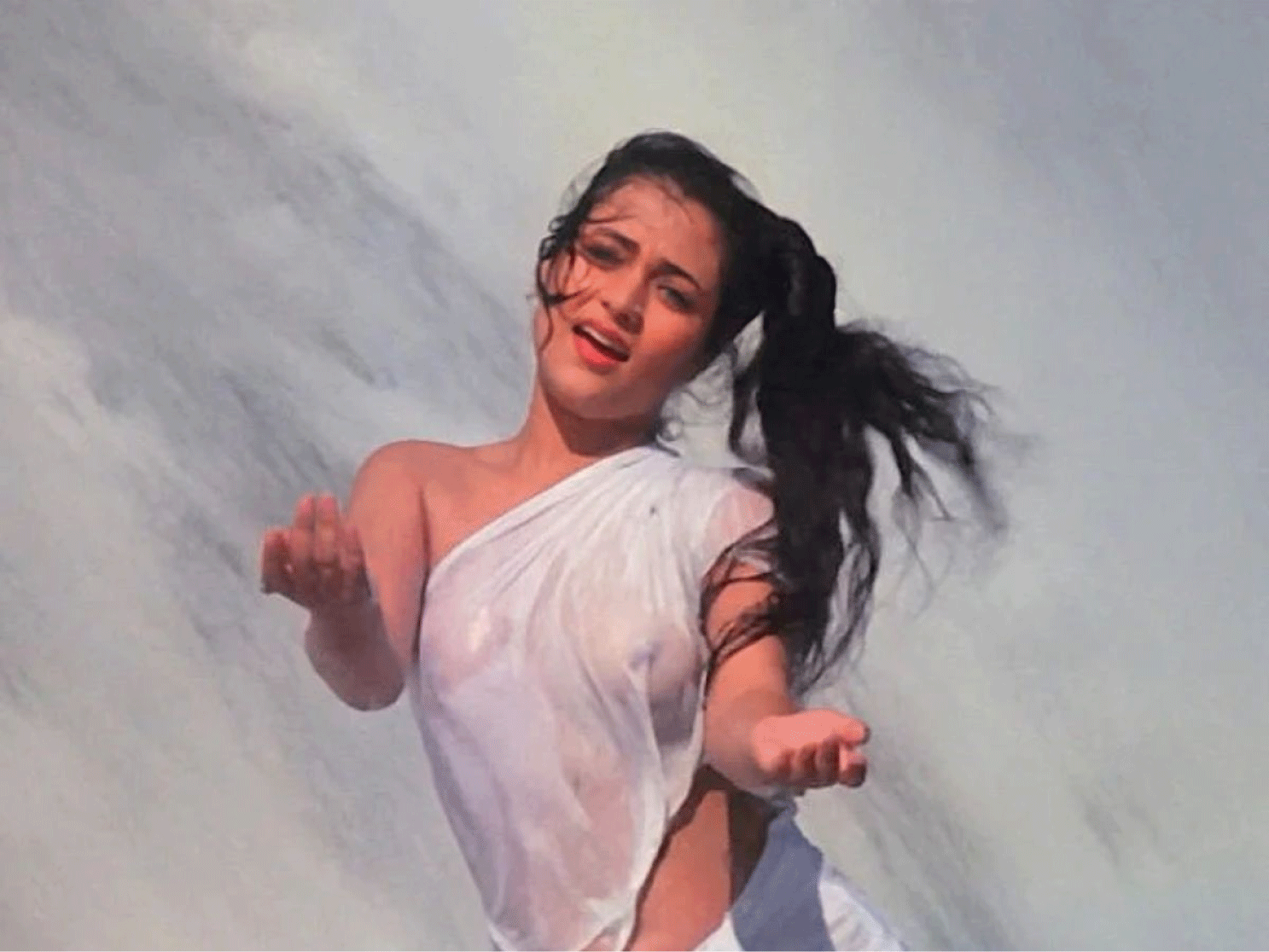
<h1 class="full">Bollywood rains are conspiracy disguised as meteorology. A cotton kurta, a chiffon sari, a delicate pallu — garments that certify modesty — turn traitor under the downpour. Mandakini under the waterfall, white cloth plastered to skin, technically clothed and suddenly, catastrophically legible. A thousand drenched heroines, perfectly dressed and only appearing to be clothed.</h1>
<h1 class="full"> Children play peek-a-boo long before they develop object permanence — the understanding that things continue to exist when out of sight. Before that clicks into place, the hidden face might genuinely not be there anymore. The reveal is a small resurrection. Sheer fabric plays the same game at a different register: the body is present, we know it is present, and yet the partial occlusion touches something older and unresolved — the pleasure-dread of not-quite-knowing, of a presence that could at any moment become absence.² In Main Hoon Na, Sushmita Sen’s chiffon sari conceals nothing while performing concealment flawlessly. Across the classroom, Shah Rukh Khan carries a secret she cannot read — student as cover for army officer, the scene already doubled. Two half-reveals, one frame. The tension runs entirely on what the audience knows and neither character will say.</h1>
<h1 class="full"> The seduction is in the helplessness — and helplessness, here, is doing very specific cultural work. The abla naari, the damsel, the keeper of izzat: her desirability is legitimate only when it is accidental, when the body speaks without her permission. The fabric meant to protect betrays its wearer. Sexiness arrives as coincidence of monsoon, ensuring the heroine remains innocent, her purity intact. The rain did it. Because the revelation was not chosen, she and the viewer are both absolved. The erotic charge is in the agency robbed.</h1>
<h1 class="full"> Roland Barthes — the French literary theorist who spent a career finding the erotic in the most improbable places — located desire not in nakedness but in the gap, *the flash of skin between garments, what he called “the staging of an appearance-as-disappearance.”*³ </h1>
<h1 class="full"> The Gaze (That Needs No Watcher)</h1>
<h1 class="full"> Picture a prison built as a ring. The cells line the outer edge, each one oriented inward along radial lines of sight toward the centre, where a watchtower stands. A guard inside could watch any prisoner at any moment — but the prisoner cannot see whether the tower is occupied. That is the horror: permanent possibility of surveillance, indistinguishable from actual surveillance. Like a dummy CCTV camera, glassy and convincing and connected to nothing — you behave anyway. *The prisoner begins to regulate herself. The guard becomes unnecessary. Power achieves its most efficient form: self-administered, running without an operator.*⁴</h1>
<h1 class="full"> The woman who adjusts her pallu before entering a room, who reads a neckline against an occasion, who calculates how she will be seen before she arrives — she is not responding to anyone specific. She is responding to a structure absorbed so early it feels like instinct. The watcher doesn’t need to be in the room. She brought the watchtower and its guard with her. This is why the problem survives the absence of men, survives feminist consciousness, survives every era that announces its own liberation. The occupancy of the watchtower was never the point.</h1>
<h1 class="full"> The gaze is phallogocentric — yes, exactly what it sounds like: a logic organised around the phallus, the dick, around a particular structure of desire and power that determines who is seen, how, and on whose terms. Not because it always belongs to a man, but because the entire architecture of visibility was built on terms that predate and exceed any individual viewer. Counter-gazes, feminist gazes, queer gazes — all are legible only in the language the structure invented. To resist the terms, you must first speak them.⁵</h1>
<h1 class="full"> The horror genre has always known this. Its most unbearable revelation is never the monster — it is the moment the protagonist discovers the danger was never outside. *The call is coming from inside the house.*⁶</h1>
<h1 class="full"> The Veil (as Architecture)</h1>
<h1 class="full"> Draped across the breast, the pallu certifies modesty. Yet the very act of covering makes the breast conspicuous, turning it into spectacle. The cloth insists on the body beneath it. The veil does not hide content — it produces an excess, an intensity, that the gaze then fills.⁷ The covering manufactures the very thing it conceals.</h1>
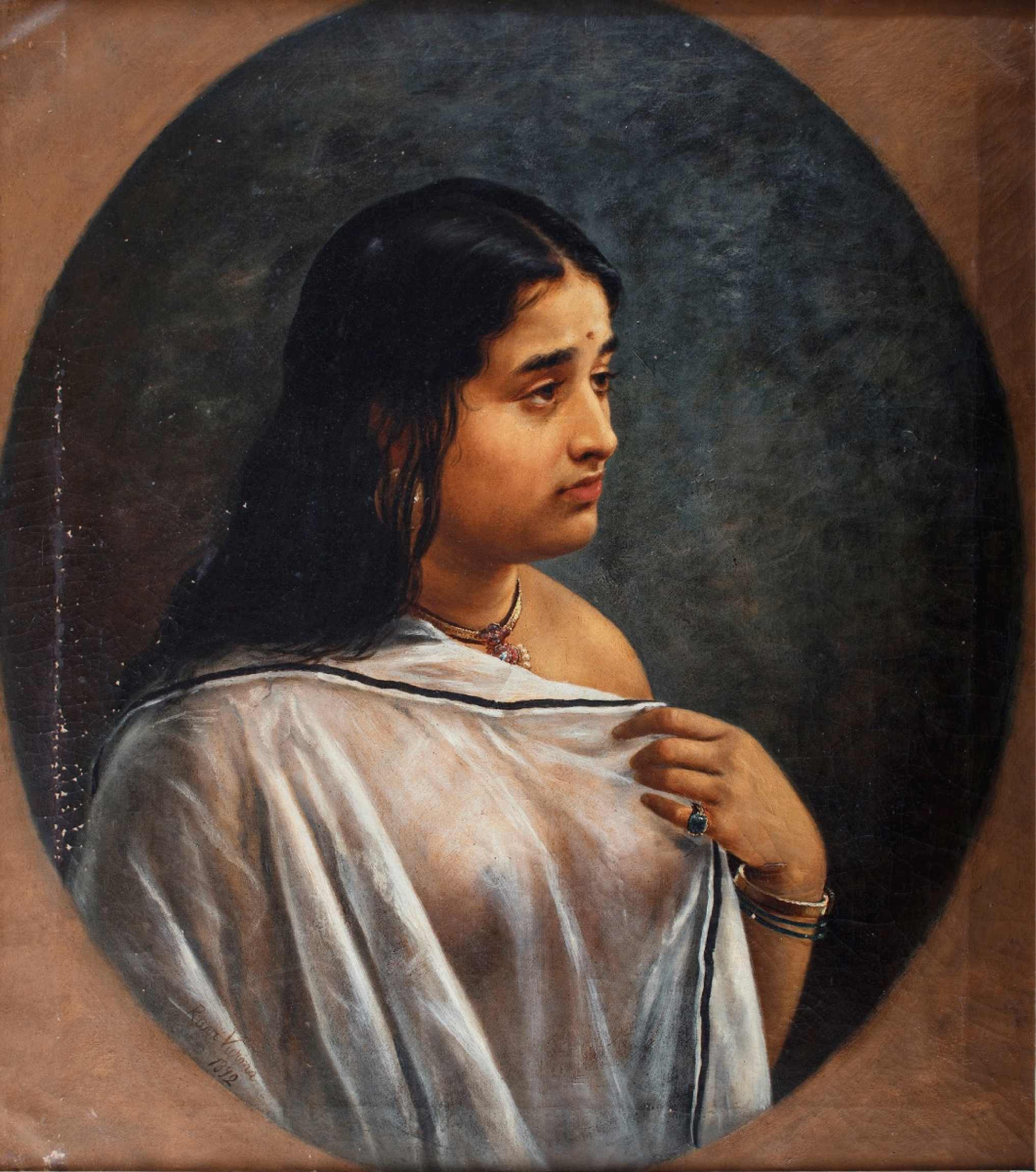
<h1 class="full"> Flesh alone is just flesh. Once veiled, it becomes charged, excessive, erotically overdetermined. By veiling the breast, the pallu makes the breast the only thing to see. Modesty becomes theater. The cloth makes it spectacle.</h1>
<h1 class="full">The bridal ghoonghat is this logic made ceremony. Veiled, faceless, she appears erased — and is the most scrutinized body in the room, and in that holds the most power. Her beauty measured precisely because it is withheld. The ghoonghat places every person present in the watchtower; her body — the inmate, the cell — is what every sightline converges upon. *She is not sheltered from the gaze. She is its organising principle.*⁸</h1>
<h1 class="full"> Who Gets to Be Sheer? </h1>
<h1 class="full"> Sheerness, like any other -ness, is never neutral. It sorts bodies into categories of desire and shame, deciding who reads as demure and who as indecent. On a thin frame, a sheer sari is ethereal, tasteful. On a fat body, the same fabric becomes vulgar, excessive. White chiffon against pale skin codes as angelic restraint; on darker skin, it is marked as raw, unruly, too much.</h1>
<h1 class="full"> This sorting has a history. **Dacca muslin — so fine Mughal courts called it “woven air,” “running water,” “evening dew” — was systematically destroyed by British colonial policy because English mills could not compete with it. The most exquisite tradition of sheerness on this subcontinent was dismantled not despite its mastery but because of it.**¹⁰ Sheerness has never been innocent here.</h1>
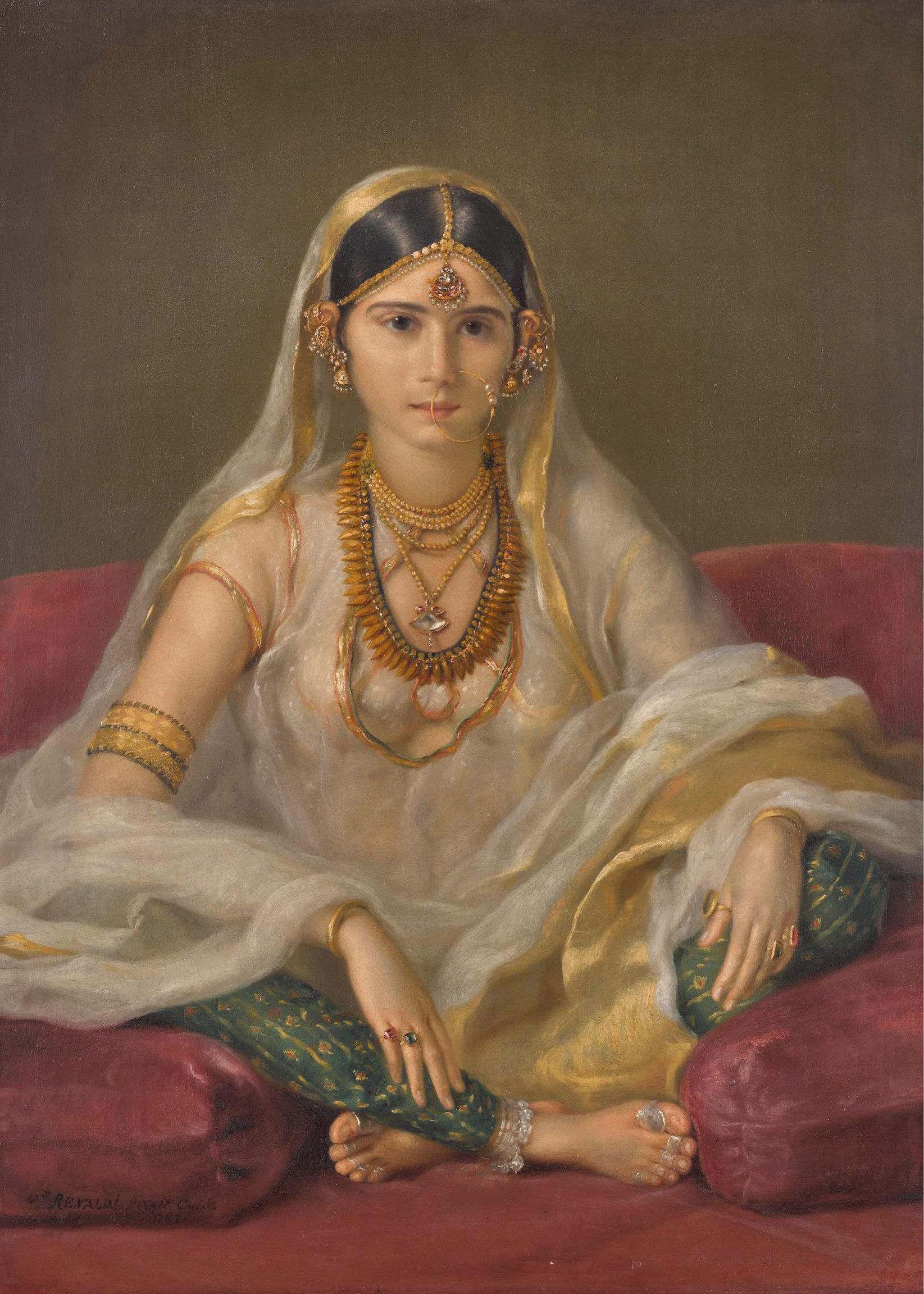
<h1 class="full">?It is not innocent now either. Skinny is back — aggressively, programmatically back — and fashion knew it before anyone announced it. The trad wife aesthetic, the manosphere’s fantasy of the small, yielding, domestic woman: these are not eruptions of the primitive. They are symptoms of a civilisation so overconvenient, so frictionlessly serviced, that it reaches for archaic structures of possession just to feel friction, just to have to want something it must work toward. Women shrinking. Women becoming more sheer. The more the female body disappears, the more legible — the more desirable — it becomes to the architecture that requires its incompletion. Skinny, translucent, nearly absent — and therefore, in the logic we have been tracing, infinitely present.</h1>
<h1 class="full"> Rekha </h1>
<h1 class="full"> Rekha is sheer incarnate. In Umrao Jaan, she moves behind latticed screens, visible only through the jaali’s geometry, her face arriving in fragments. But even there, it is not the face that undoes you — it is the eyes: heavy-lidded, dropping slowly downward, then lifting with the deliberate patience of a pallu being drawn aside. The eyelid itself as veil. The entire performance of her celebrity works this way: the kanjeevarams, the sindoor, the rumours that trail her like a second pallu. In interviews, she plays peek-a-boo. Asked about marriage, she once quipped: “To a man?” The absurdity was not the question. It was the assumption — that desire must arrive in a legible, hetero-verifiable form, that the panoptic architecture requires a particular kind of body to surveil.</h1>
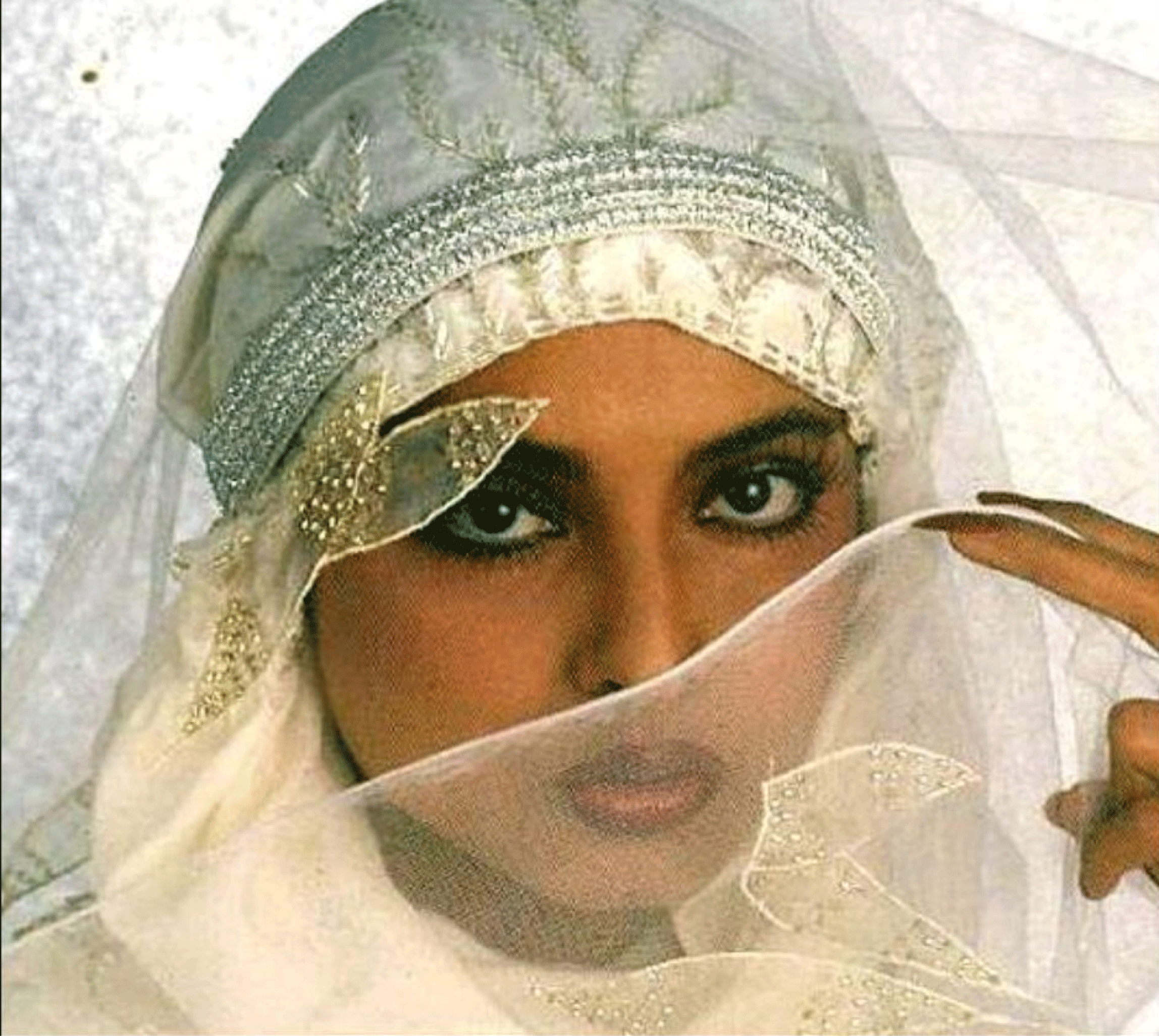
<h1 class="full"> Her opacity is finely regulated. She manages her sheerness with such precision that the structure becomes visible in her hands, while she refuses to be its proof. Rekha, like sheer fabric, seduces by being always partial, never whole. What is excluded from the frame burns hotter than what is shown. Transparency is the cleverest disguise. Rekha understood this before Instagram needed a word for it. </h1>
<h1 class="full"> The Call (is coming from the inside)</h1>
<h1 class="full"> From fabrics that betray to rains that conspire, from the ghoonghat’s ceremony to the watchtower absorbed into the body — the gaze requires no watcher. The watchtower has been empty for some time. </h1>
<h1 class="full"> Feminist consciousness, critical theory, experience, age — these make the structure sheerer. You begin to see through it: its logic, its histories, its economies, all becoming traceable. But seeing through a veil is not the same as lifting it. The light of understanding thins the fabric; it does not remove it. And thinning, as this essay has been arguing, only intensifies presence. The more sheer the structure becomes, the more legible — the more undeniable — its hold. </h1>
<h1 class="full"> “The text you write must prove to me that it desires me,” Barthes wrote. Sheer fabric is this text. Its seduction lies in incompletion. Sheerness keeps the body infinite because it never finishes showing. What it hides is what we want. What it reveals is never enough. </h1>
<h1 class="full"> The cop is inside. The call was always inside. The veil thins with knowing but does not lift. </h1>
<h1 class="full"> And that is why we keep looking. </h1>
<h1 class="full"> Footnotes </h1>
<h1 class="full"> ¹ Psycho (1960): 45 cuts, 70 camera setups, one week of filming, zero frames of knife entering flesh. The stabbing is assembled entirely in the viewer’s mind. Hitchcock called it the difference between surprise (fifteen seconds of shock) and suspense (fifteen minutes of dread): you know the bomb is under the table; the characters don’t; that gap is where horror actually lives. François Truffaut’s book-length conversation with him — Hitchcock/Truffaut (1966) — remains the most lucid account of how he theorised his own technique.</h1>
<h1 class="full">² Object permanence develops in infants around 8 months. Before it clicks, the hidden object genuinely ceases to exist — out of sight, out of world. Peek-a-boo is a rehearsal of this shock and relief, over and over, until the child is convinced things come back. Sheer fabric is peek-a-boo for adults who have technically resolved the question of whether hidden things persist — and are still, apparently, not entirely sure.</h1>
<h1 class="full"> ³ Roland Barthes, The Pleasure of the Text, trans. Richard Miller (Hill and Wang, 1973). Full passage: “Is not the most erotic portion of a body where the garment gapes? … it is intermittence … which is erotic: the intermittence of skin flashing between two articles of clothing … the staging of an appearance-as-disappearance.” Short book, written in deliberate flashes. Worth an afternoon.</h1>
<h1 class="full"> ⁴ Michel Foucault, Discipline and Punish, trans. Alan Sheridan (Pantheon, 1977). Foucault took Bentham’s actual architectural blueprints for a panoptic prison and extrapolated a theory of how modern power functions — not through force but through the permanent possibility of being seen. The panopticism chapter is about 30 pages. Its application to the female body under social surveillance is not a metaphor Foucault makes himself; it is, however, almost structurally inevitable from what he describes.</h1>
<h1 class="full"> ⁵ The theorist operating in the background here is Lacan — specifically his argument that the phallus functions not as a body part but as the master signifier organising the entire architecture of desire and visibility. A grammar, not a person; a structure, not a man in the room. Seminar XI (1973) has his most useful account of the gaze — not something we possess, but something we are always already caught inside. For a feminist elaboration that takes Lacan seriously without capitulating to him, Jacqueline Rose’s Sexuality in the Field of Vision (1986). Laura Mulvey’s “Visual Pleasure and Narrative Cinema” (Screen, 1975) is where the male gaze was first named as a structural feature of cinema — foundational, and the precise point from which this essay departs.</h1>
<h1 class="full"> ⁶ When a Stranger Calls (Fred Walton, 1979) gave the phrase its pop-cultural life, but the grammar — threat already interior, danger already domestic — runs through horror from its origins. That the genre so reliably centres women in household spaces is not incidental to this logic.</h1>
<h1 class="full"> ⁷ Slavoj Žižek, The Plague of Fantasies (Verso, 1997). His argument: ideology doesn’t conceal enjoyment — it produces it. The veil is not a cover but a generator. Dense and occasionally maddening; the chapter “The Undergrowth of Enjoyment” earns its difficulty.</h1>
<h1 class="full"> ⁸ For readings of the veil that take seriously what it means to the women who wear it — rather than to those watching — see Saba Mahmood, Politics of Piety (Princeton, 2005) and Leila Ahmed, Women and Gender in Islam (Yale, 1992). This essay’s argument is narrower and structural: whatever the veil means to its wearer, and those meanings are genuinely multiple, the panoptic mechanism operates independently of intention.</h1>
<h1 class="full"> ⁹ Angela McRobbie, The Aftermath of Feminism (Sage, 2009). Her concept of the “double entanglement”: feminist gains are acknowledged and simultaneously weaponised to dismantle feminist politics. The freedom to choose is real. The menu was designed by someone else.</h1>
<h1 class="full"> ¹⁰ Dacca muslin’s three legendary varieties — baft hawa (woven air), ab-i-rawan (running water), shabnam (evening dew) — were produced in the Dhaka region from at least the sixteenth century and systematically made unviable by East India Company tariff policy and British industrial competition over the nineteenth century. The craft did not survive. There are current revival efforts — surviving techniques, botanists attempting to recover the original cotton variety. That story deserves its own essay. Sonia Ashmore’s Muslin (V&A Publishing, 2012) is the most readable entry point.</h1>