


<h1 class="left">Ranjani Ramadoss, or RANJ, has grown up with music. The musical atmosphere in the Chennai home that she grew up in was almost too contagious. But contagious, too, was her relationship with her parents, her father, all that she calls home. It leaks into her songs, into her polyphonic dreams. Her father enrolled RANJ in music classes, and, just like any doting father, was more excited about them than she was. “He’d record the whole class, every single class, on cassettes. And then go back home and play those cassettes for the rest of the day, every Sunday, every single Sunday, for a while,” she tells me.</h1>
<h1 class="centre">She trained in Carnatic music too. It was a classic childhood, one that nurtures artists. Except, the cracks in that childhood would appear soon after. Almost every track that RANJ has ever worked on goes against the warmth of home. It was too sanctified; it hid things. Her grandmother, for one, was expecting a son when she was born; the grandmother, in a typical Indian way, hated her mother too. “Then there was Carnatic music itself,” she says. “I loved the art form, but it was casteist. It was a very Brahmin practice in my household. It came tied to, ‘You need to pray, it is very sacred, so remove your shoes.’ That made me lose interest in it really fast, because I felt suffocated by the ritual around the music.”</h1>
<h1 class="left">It was in rap and R&B that RANJ would find a different kind of home. It was a home where she didn’t have to hide from her father, who still doesn’t know that she eats meat. A home away from her grandmother’s probing eyes, away from her mother who implores her, of all things, to get married. When she is RANJ and not Ranjani, she can say things that she otherwise cannot. It all comes to a head on the 27-track mixtape 27 CLUB on Azadi Records, produced with her frequent collaborator Clifr, which is a break from her earlier way of working—the mood is hot, heavy, and angry. The music video for “Who You Are” from 27 CLUB is RANJ going all out. It stages a South Indian photo studio as a stand-in for patriarchy and beauty norms. It is a dated setting; it has to be. The direction is spatial: outside the studio, she has a wide view of her world; inside it, she is hemmed in, confined to a narrow idea of who she is meant to be. 27 CLUB is structured less like a conventional rap album than a browser with thirty tabs open at once. Nothing stays fixed for long. A synth line appears, mutates into a Tamil film cue, dissolves into Jersey club percussion, then gives way to a clipped punk-rap chant before the listener has had time to settle.</h1>
<h1 class="centre">RANJ won’t let go of the dickheads that she fell in love with, too. They must all work their way into her music, funneled through the lathe of disgust. It is messy, crucial. She says she can take one bad breakup and write a lifetime of songs from it. That is just how the craft is. “This one guy used to live with my producer, Clifr. He was lame and Clifr was already only tolerating him because I was dating him. It was a toxic, terrible relationship. And then he had the gall to try to cheat on me with Clifr’s then-girlfriend. Like, how did you think that wasn’t going to come out immediately? That was hilarious. So both of us said, ‘Okay, bro, like, fuck you.’ So, yeah.”.</h1>
<h1 class="right">He is immortalised in “PEOPLE LIKE THAT,” where RANJ says that he looked like a slob. What holds 27 CLUB together is sequencing. RANJ has ordered it as an emotional arc: newness at the top, grief at the bottom. Most tracks average around than three minutes. “MADRAS CHECKS” is just a minute-long regional flex. The beat feels skeletal because the emphasis falls on cadence. The sound is fresh because it doesn’t need to fit a mold. There are weaker moments in 27 CLUB too where her collaborators veer her off from what she does best, her R&B core. </h1>
<h1 class="left">RANJ’s vantage point as a songwriter who can effectively switch gears between clingy hookups, bad breakups and her own childhood is precisely the kind of high-octane, kinetic flow that makes her sound work. For instance, she says that “EVERYTHING IS BIRTH CONTROL,” is a song about abortion, “and how it feels to even visit a gynaecologist in India, how it feels to get judged over there, how the room feels—just the weight of childbirth as a concept, the heaviness of it all.”</h1>
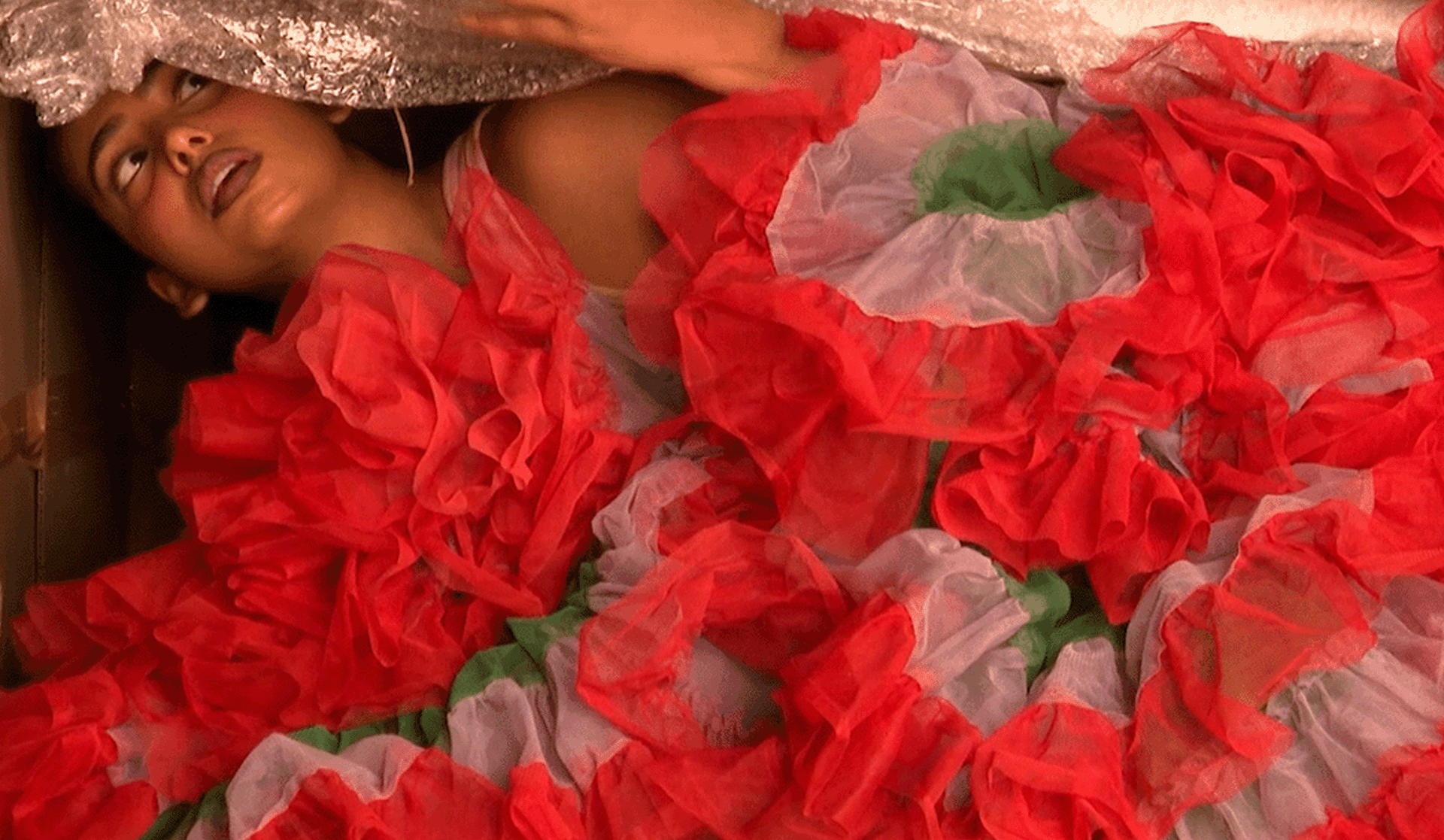
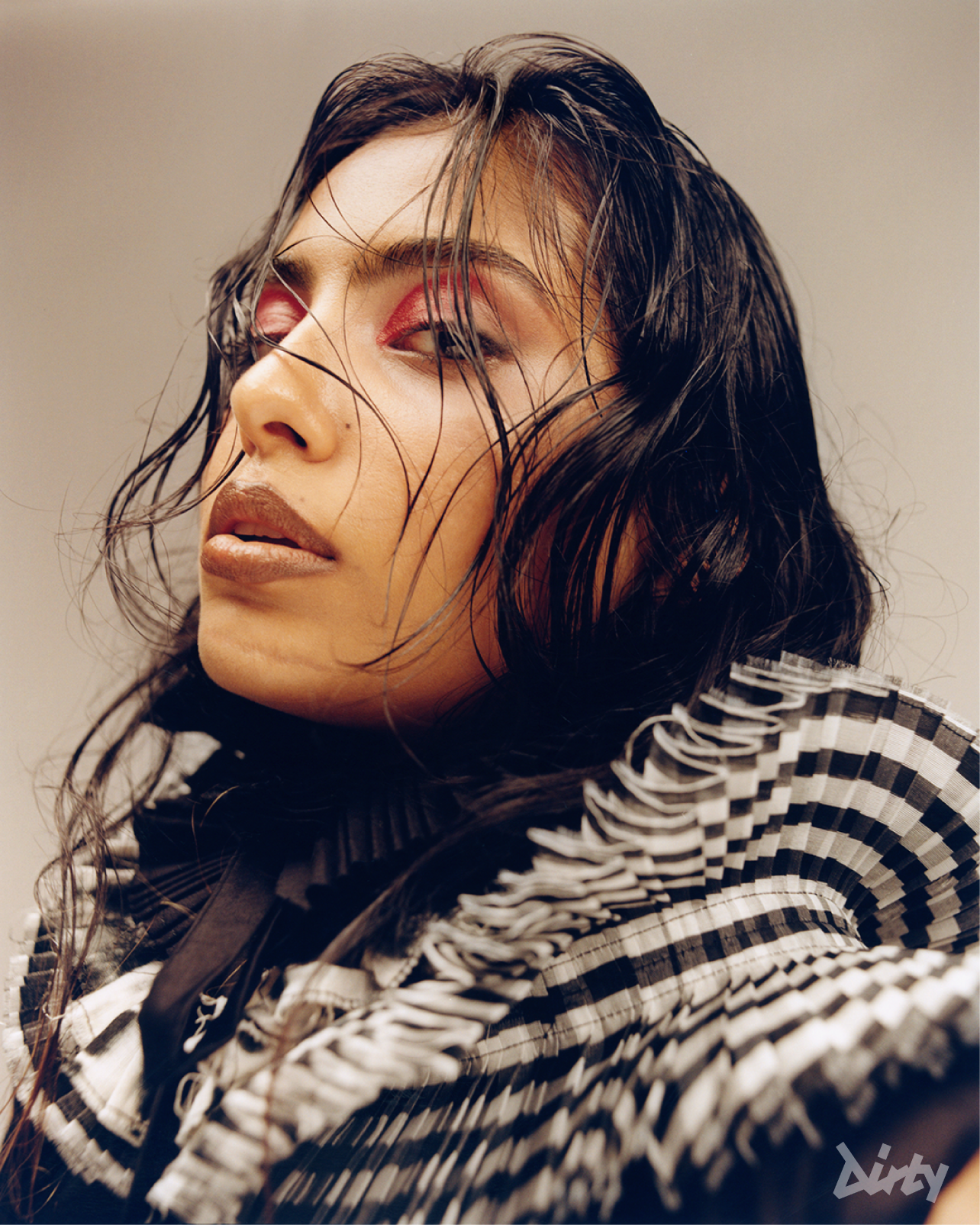
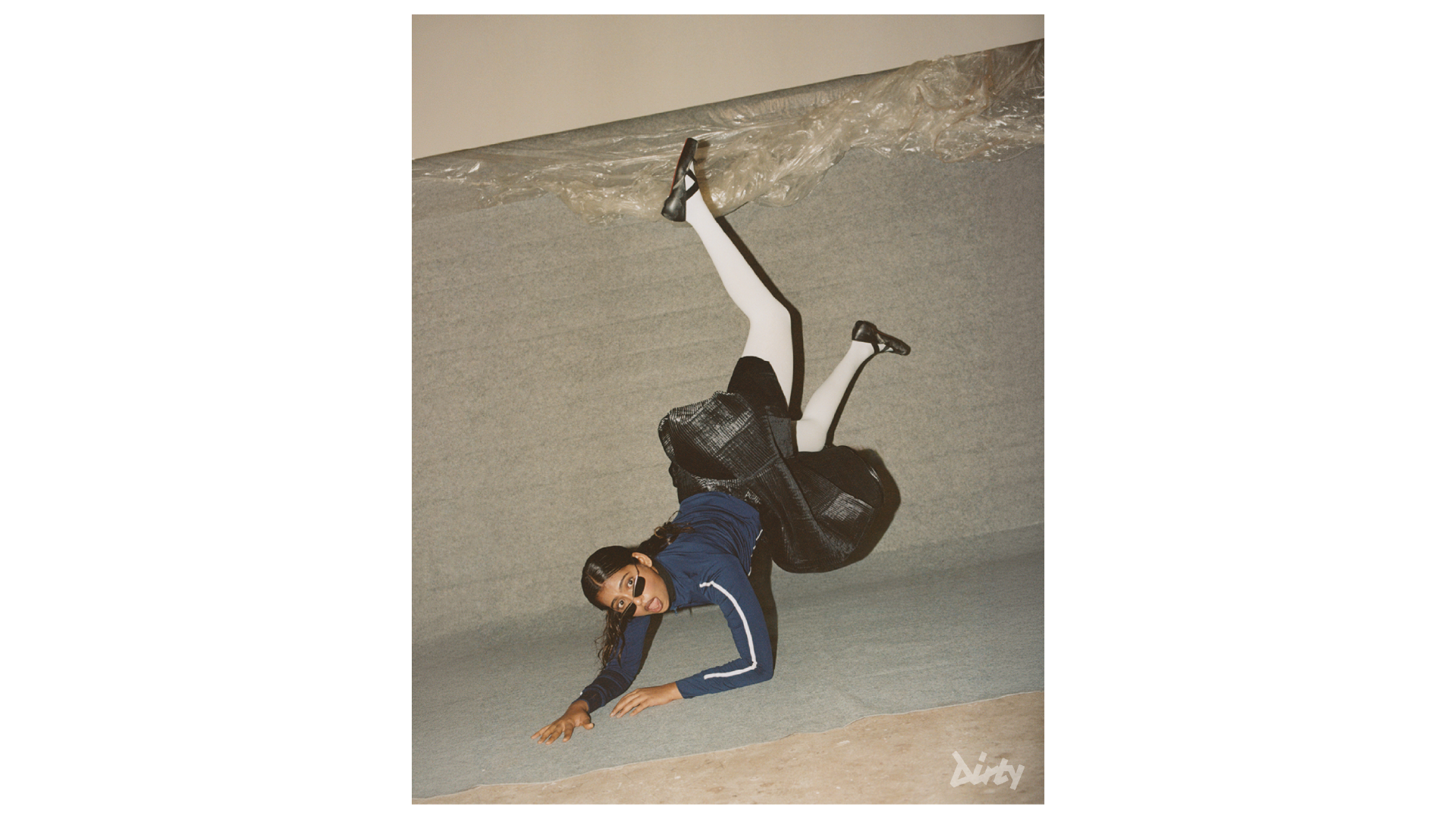
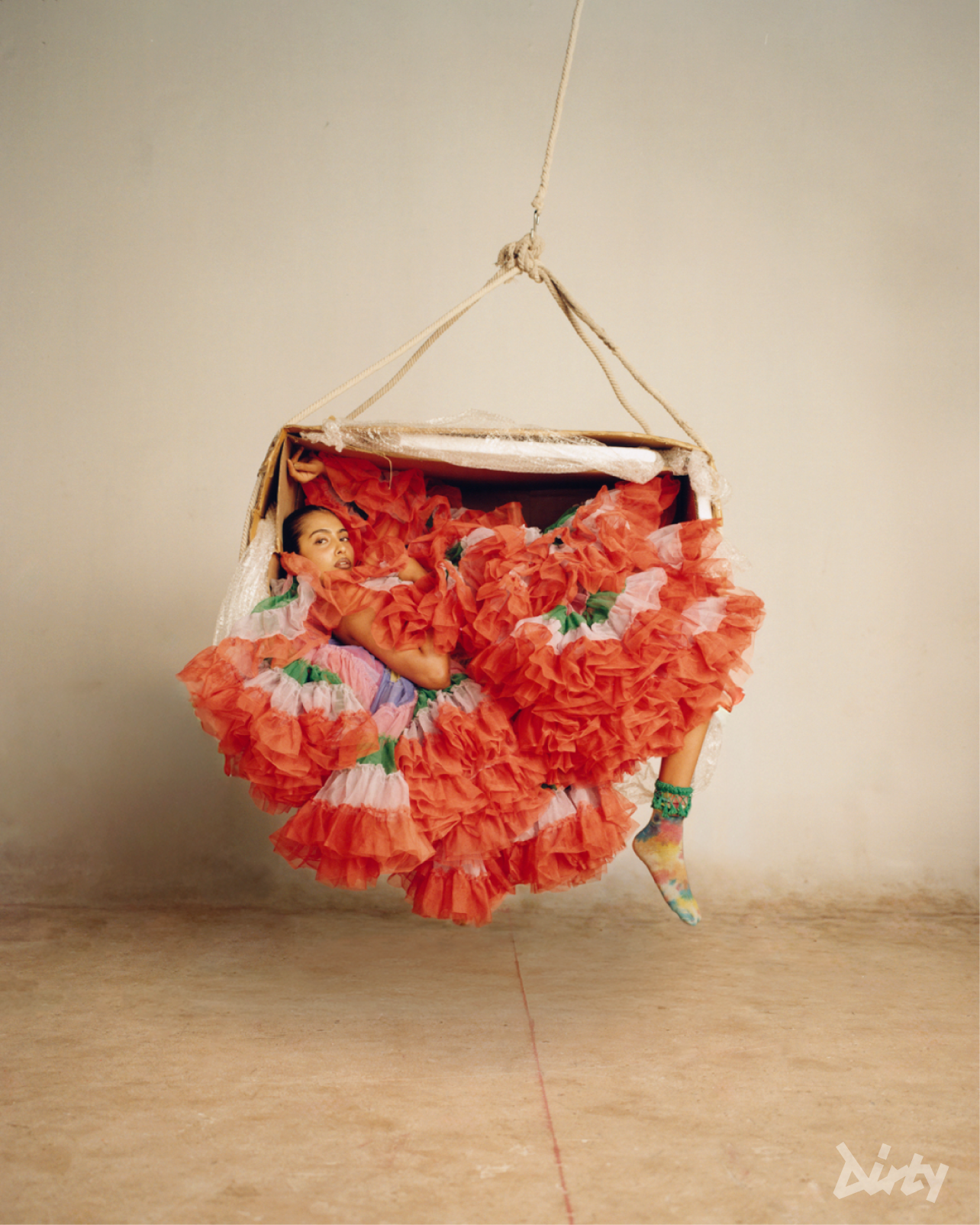
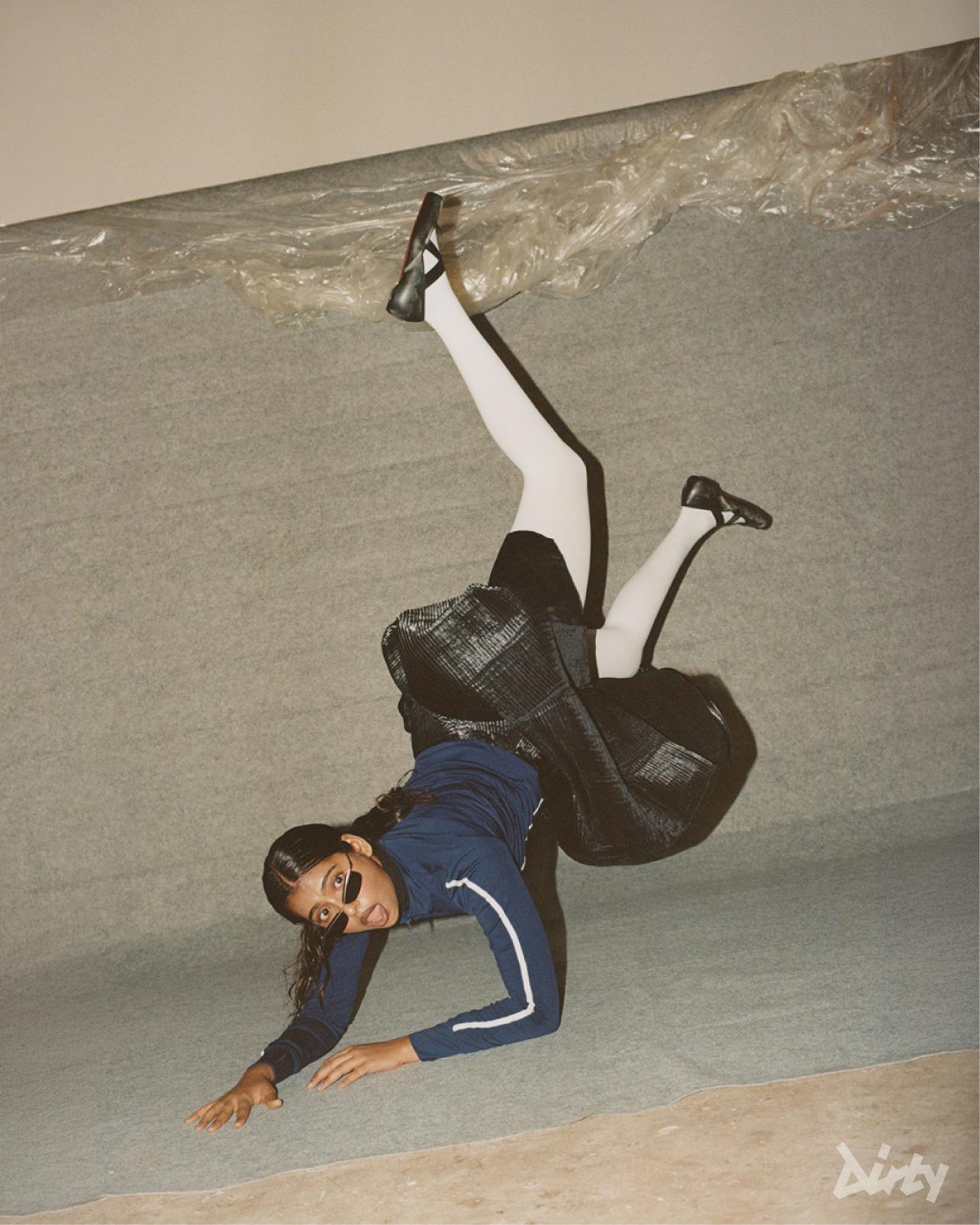
<h1 class="centre">It all coheres visually too. Her music videos cannot be read simply as political statements, regardless of what they have to say. When she is rapping, dressed in a shirt and sari, blowing up shops, boxing in a ring, bejewelled with heavyset nose rings in a car drowning in neon lights—it’s all a wink to that little girl who wanted to be seen exactly as she is, shoes on, meat on her plate, mic in hand. “I want to tell myself, ‘It’s okay. You don’t need to look perfect.’ And mainly, all the visuals are the kind the inner child in me would be very, very excited by. The way I dress is putting a bunch of disparate things together. When I was a kid and I used to do that, my mom would tell me, ‘You look ridiculous, go change.’ So now there is no one who can say that to me—especially to RANJ. Nobody can say that.” </h1>
<h1 class="left"> Editor: Kshitij Kankaria </h1>
<h1 class="left"> Photographer: Rid Burman </h1>
<h1 class="left"> Stylist: Ruhani Singh </h1>
<h1 class="left"> Set designer: Risha Shetty </h1>
<h1 class="left"> Makeup: Richelle Fernandes </h1>
<h1 class="left"> Hair: Abhishek Indu </h1>
<h1 class="left"> Art Director: Rishika Sikder </h1>
<h1 class="left"> Creative Producer: Saif Zaki </h1>
<h1 class="left"> Producer: Imran Khatri Productions </h1>
<h1 class="left"> Assistant Stylist: Preeti Aparna Venkatesh</h1>
<h1 class="left"> Manager: Siddhant Shetty </h1>
<h1 class="left"> Assist: Deepti Soste</h1>
<h1 class="left"> On Ranj: Skirt & socks, Norblack Norwhite </h1>
<h1 class="full">Ranjani Ramadoss, or RANJ, has grown up with music. The musical atmosphere in the Chennai home that she grew up in was almost too contagious. But contagious, too, was her relationship with her parents, her father, all that she calls home. It leaks into her songs, into her polyphonic dreams. Her father enrolled RANJ in music classes, and, just like any doting father, was more excited about them than she was. “He’d record the whole class, every single class, on cassettes. And then go back home and play those cassettes for the rest of the day, every Sunday, every single Sunday, for a while,” she tells me.</h1>
<h1 class="full">She trained in Carnatic music too. It was a classic childhood, one that nurtures artists. Except, the cracks in that childhood would appear soon after. Almost every track that RANJ has ever worked on goes against the warmth of home. It was too sanctified; it hid things. Her grandmother, for one, was expecting a son when she was born; the grandmother, in a typical Indian way, hated her mother too. “Then there was Carnatic music itself,” she says. “I loved the art form, but it was casteist. It was a very Brahmin practice in my household. It came tied to, ‘You need to pray, it is very sacred, so remove your shoes.’ That made me lose interest in it really fast, because I felt suffocated by the ritual around the music.”</h1>
<h1 class="full">It was in rap and R&B that RANJ would find a different kind of home. It was a home where she didn’t have to hide from her father, who still doesn’t know that she eats meat. A home away from her grandmother’s probing eyes, away from her mother who implores her, of all things, to get married. When she is RANJ and not Ranjani, she can say things that she otherwise cannot. It all comes to a head on the 27-track mixtape 27 CLUB on Azadi Records, produced with her frequent collaborator Clifr, which is a break from her earlier way of working—the mood is hot, heavy, and angry. The music video for “Who You Are” from 27 CLUB is RANJ going all out. It stages a South Indian photo studio as a stand-in for patriarchy and beauty norms. It is a dated setting; it has to be. The direction is spatial: outside the studio, she has a wide view of her world; inside it, she is hemmed in, confined to a narrow idea of who she is meant to be. 27 CLUB is structured less like a conventional rap album than a browser with thirty tabs open at once. Nothing stays fixed for long. A synth line appears, mutates into a Tamil film cue, dissolves into Jersey club percussion, then gives way to a clipped punk-rap chant before the listener has had time to settle.</h1>
<h1 class="full">RANJ won’t let go of the dickheads that she fell in love with, too. They must all work their way into her music, funneled through the lathe of disgust. It is messy, crucial. She says she can take one bad breakup and write a lifetime of songs from it. That is just how the craft is. “This one guy used to live with my producer, Clifr. He was lame and Clifr was already only tolerating him because I was dating him. It was a toxic, terrible relationship. And then he had the gall to try to cheat on me with Clifr’s then-girlfriend. Like, how did you think that wasn’t going to come out immediately? That was hilarious. So both of us said, ‘Okay, bro, like, fuck you.’ So, yeah.”</h1>
<h1 class="full">He is immortalised in “PEOPLE LIKE THAT,” where RANJ says that he looked like a slob. What holds 27 CLUB together is sequencing. RANJ has ordered it as an emotional arc: newness at the top, grief at the bottom. Most tracks average around than three minutes. “MADRAS CHECKS” is just a minute-long regional flex. The beat feels skeletal because the emphasis falls on cadence. The sound is fresh because it doesn’t need to fit a mold. There are weaker moments in 27 CLUB too where her collaborators veer her off from what she does best, her R&B core. </h1>
<h1 class="full">RANJ’s vantage point as a songwriter who can effectively switch gears between clingy hookups, bad breakups and her own childhood is precisely the kind of high-octane, kinetic flow that makes her sound work. For instance, she says that “EVERYTHING IS BIRTH CONTROL,” is a song about abortion, “and how it feels to even visit a gynaecologist in India, how it feels to get judged over there, how the room feels—just the weight of childbirth as a concept, the heaviness of it all.”</h1>
<h1 class="full">It all coheres visually too. Her music videos cannot be read simply as political statements, regardless of what they have to say. When she is rapping, dressed in a shirt and sari, blowing up shops, boxing in a ring, bejewelled with heavyset nose rings in a car drowning in neon lights—it’s all a wink to that little girl who wanted to be seen exactly as she is, shoes on, meat on her plate, mic in hand. “I want to tell myself, ‘It’s okay. You don’t need to look perfect.’ And mainly, all the visuals are the kind the inner child in me would be very, very excited by. The way I dress is putting a bunch of disparate things together. When I was a kid and I used to do that, my mom would tell me, ‘You look ridiculous, go change.’ So now there is no one who can say that to me—especially to RANJ. Nobody can say that.” </h1>
<h1 class="full"> Editor: Kshitij Kankaria </h1>
<h1 class="full"> Photographer: Rid Burman </h1>
<h1 class="full"> Stylist: Ruhani Singh </h1>
<h1 class="full"> Set designer: Risha Shetty </h1>
<h1 class="full"> Makeup: Richelle Fernandes </h1>
<h1 class="full"> Hair: Abhishek Indu </h1>
<h1 class="full"> Art Director: Rishika Sikder </h1>
<h1 class="full"> Creative Producer: Saif Zaki </h1>
<h1 class="full"> Producer: Imran Khatri Productions </h1>
<h1 class="full"> Assistant Stylist: Preeti Aparna Venkatesh</h1>
<h1 class="full"> Manager: Siddhant Shetty </h1>
<h1 class="full"> Assist: Deepti Soste</h1>
<h1 class="full"> On Ranj: Skirt & socks, Norblack Norwhite </h1>