
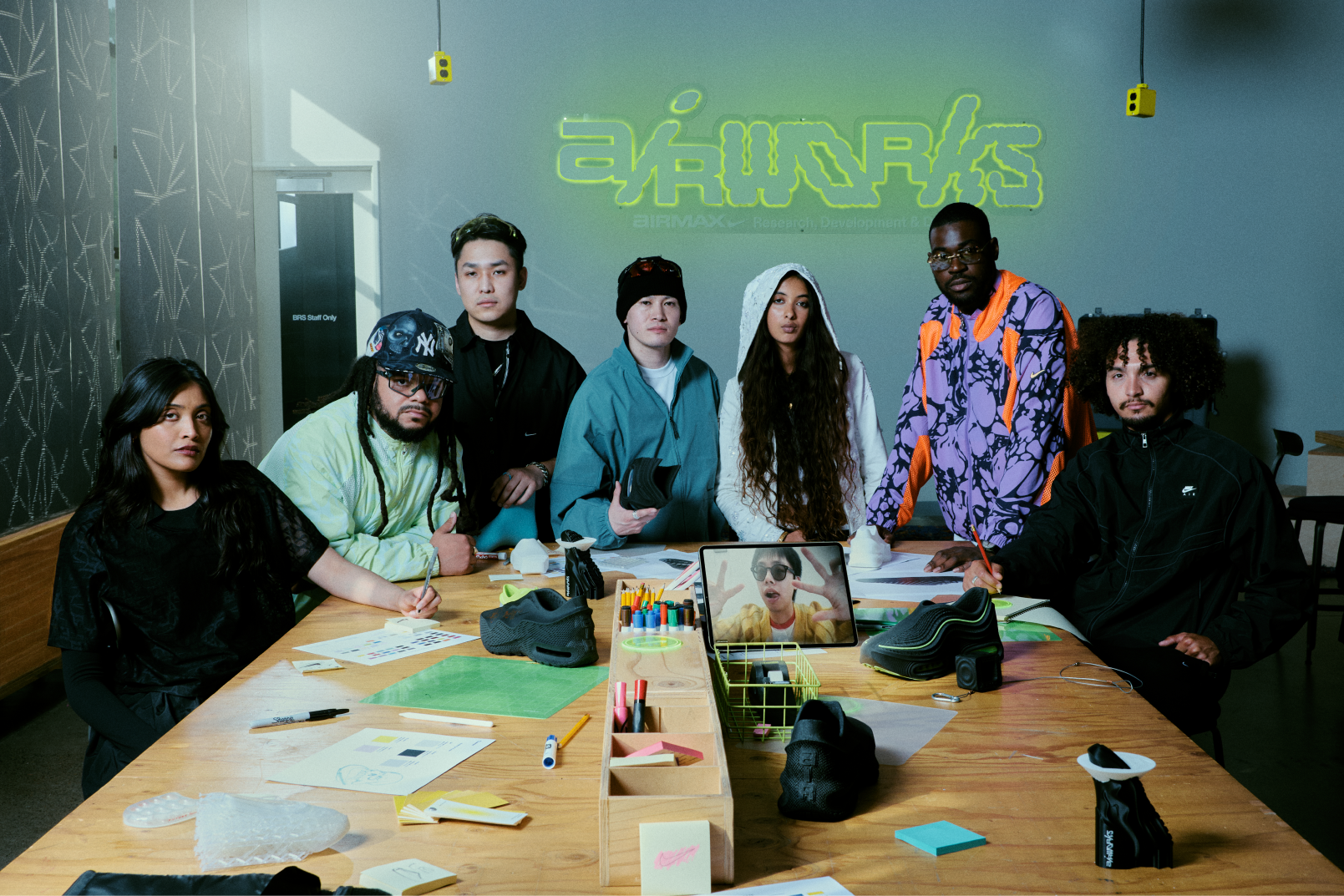


<h1 class="left">From within the beating heart of the city of Mumbai, India, moved by the people that pump vitality into its veins, from streets that criss-cross into one another, in busy barbershops, and atop forklifts that have become ever-present fixtures of the city, Diya Joukani has been taking India to the world and inviting the internet into a little piece of Diya’s duniya. The 25-year-old self-taught fashion designer wears her city on her back. In her pieces that combine traditional Indian embroidery and block-printing techniques with modern streetwear silhouettes, creative influences from the communities she is embedded within become visible. The ripple effect of her work is felt and echoed by cool girls around the world. Her clothes are sold out as they drop and her comment sections spill over. She moves the needle of the city’s youth culture. And in May 2026, she became part of a cohort of eight designers chosen from across Beijing, London, Los Angeles, Mumbai, New York, Paris, Shanghai, and Tokyo for Nike’s inaugural Air Works program to create new cultural expressions of Air Max.</h1>
<h1 class="centre">“I’m bringing my whole city with me and my culture. I’m the first Sindhi person to ever design an Air Max. I’m gonna represent,” Diya tells dirty.</h1>
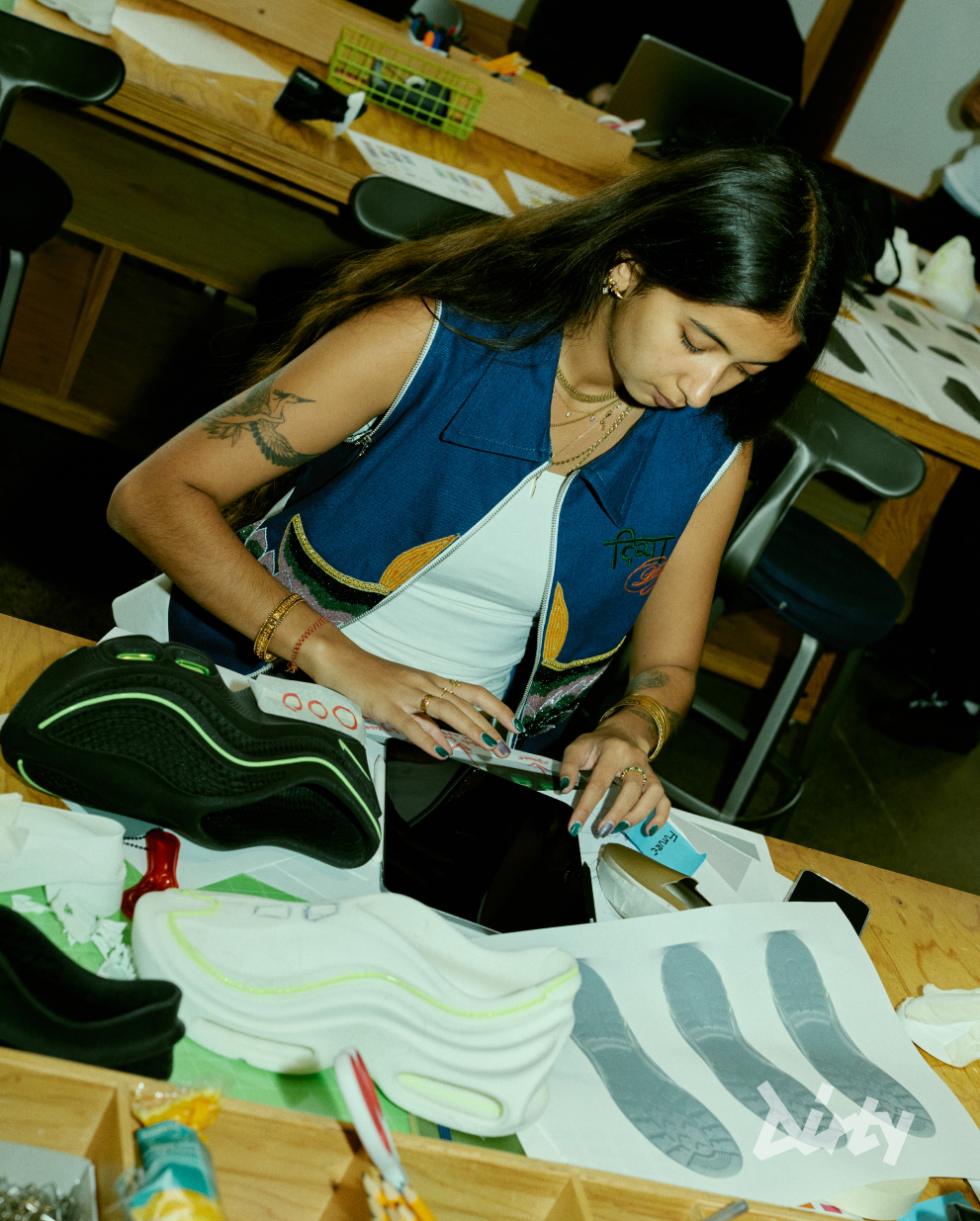
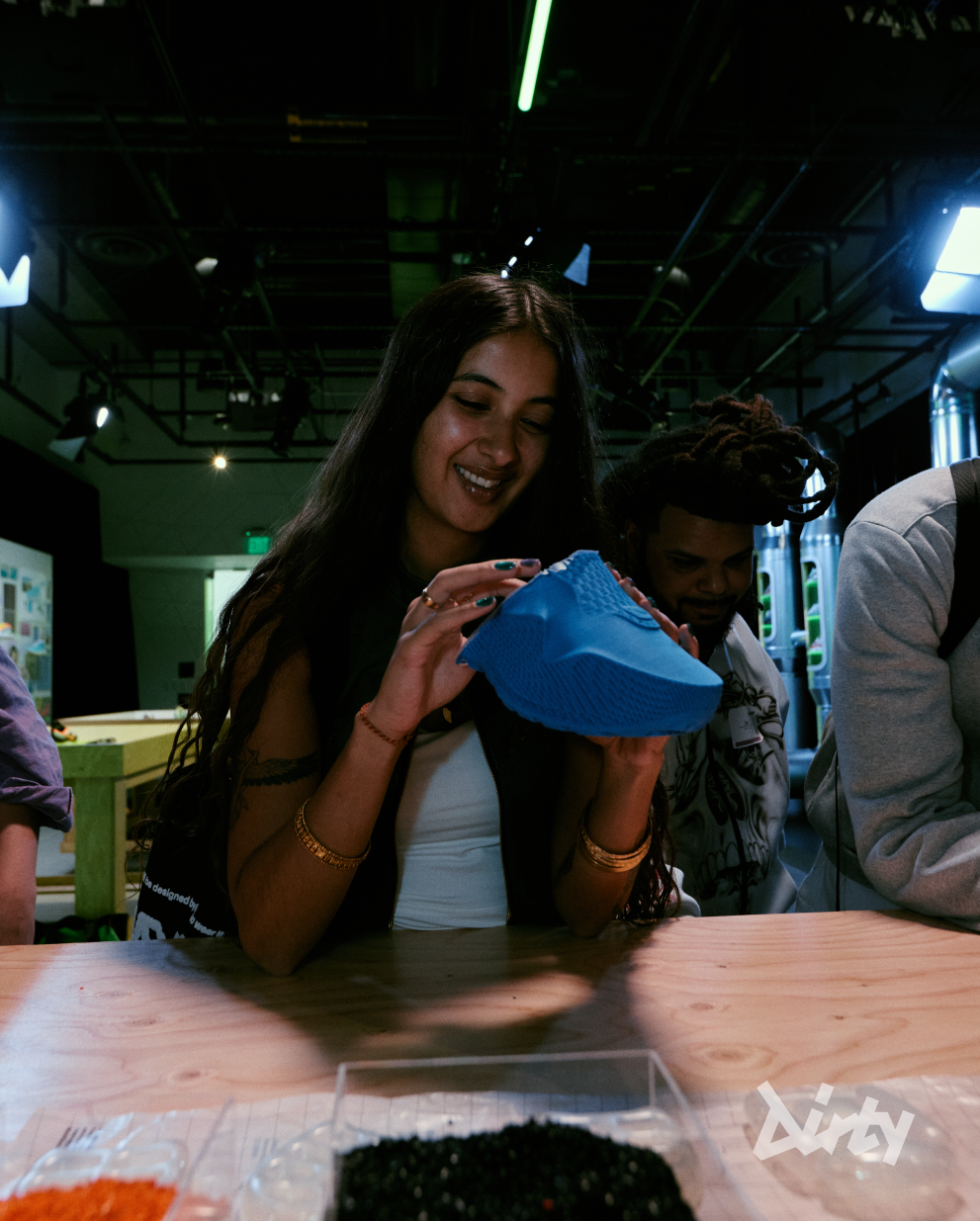
<h1 class="left">Nike’s first class of the Air Works program was in session between May 11 and May 14, 2026, and during this time, the cohort of young creatives worked with Nike’s engineers to develop distinctive 3D-printed Air Max styles, created in partnership with Zellerfeld. The program was conceptualized to imagine the future of Air Max, building on a heritage of 40 years of Air innovation, by inviting those who wear the shoe to co-create what it looks like. Each designer’s rendition of the Air Max design builds on their individual sensibilities and celebrates their communities from around the world. The goal ultimately is to envision the shoe for the next generation, for the kids who are alright and want a say in the cultures they shape. “The kids are calm. They’re inspired. The next generation is so talented. I’m proud,” Diya says, as she designs her version of Air Max for her beloved Mumbai and the young people of the city.</h1>
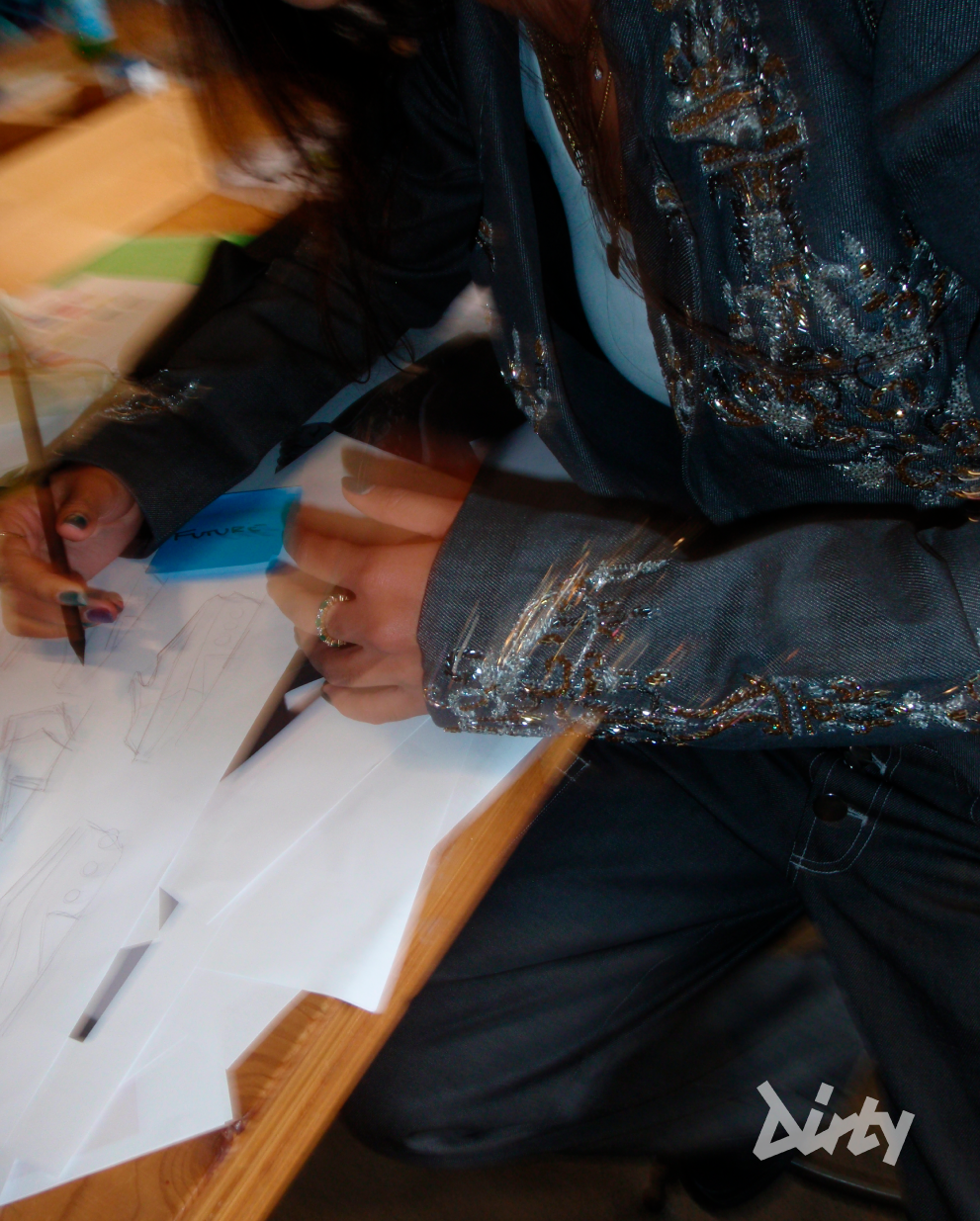
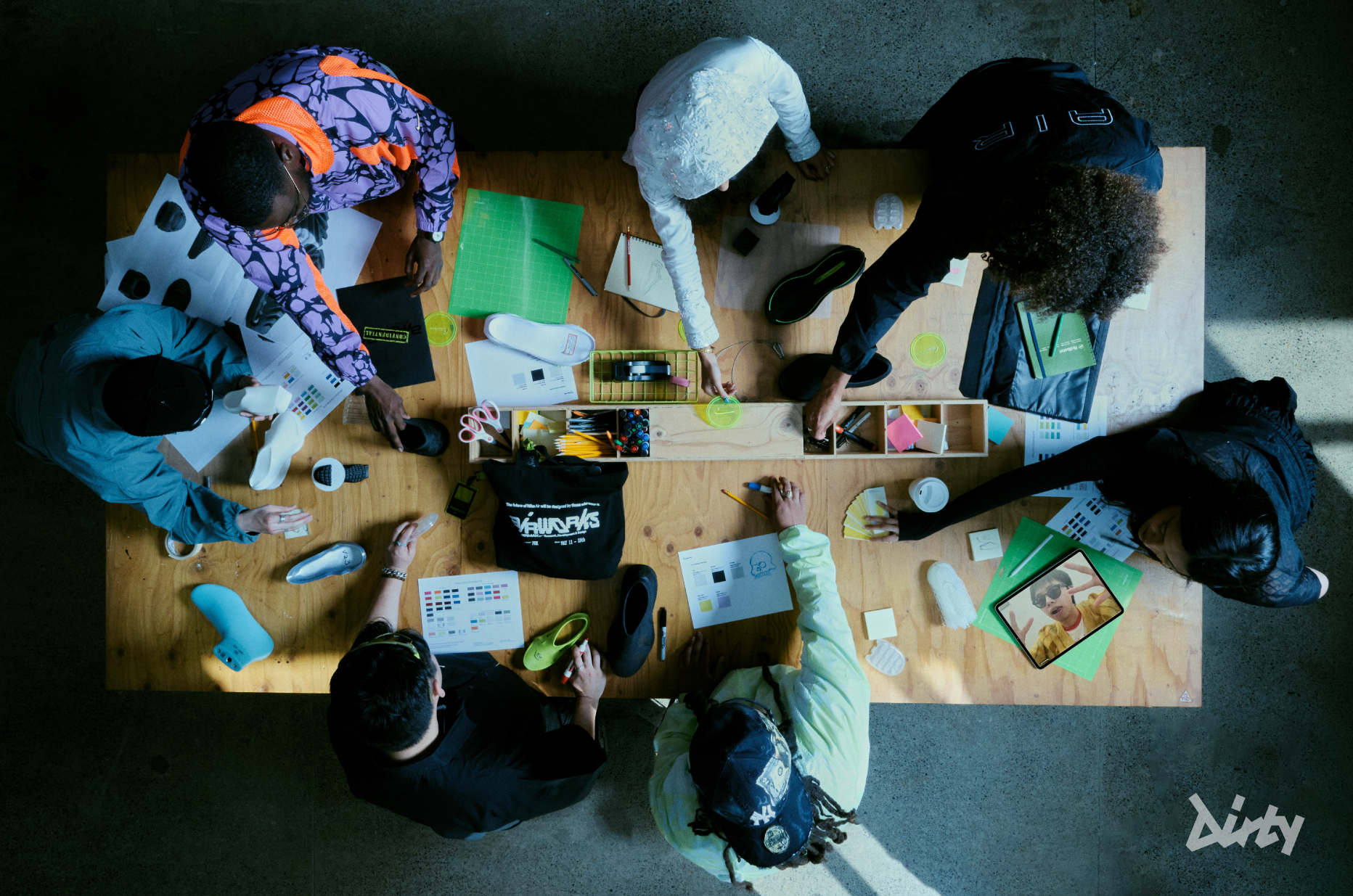
<h1 class="centre">As part of the program, the designers were paired with their mentors from Nike as well as external collaborators and were invited to visit Nike’s Air Manufacturing Innovation facility, the Department of Nike Archives, the Nike Sport Research Lab, Blue Ribbon Studio, and the Bowerman Footwear Lab as they worked on their design. “What’s been so exciting is that we’re able to work with collaborators in a way where not only their ideas, but what they’re actually drawing and creating with their own hands can show up in the final design. We’re able to capture and retain their vision, even their style of sketching, all the way through the process into 3D printing,” says Jake Scannapieco, Nike’s 3D Printer Design Expert.</h1>
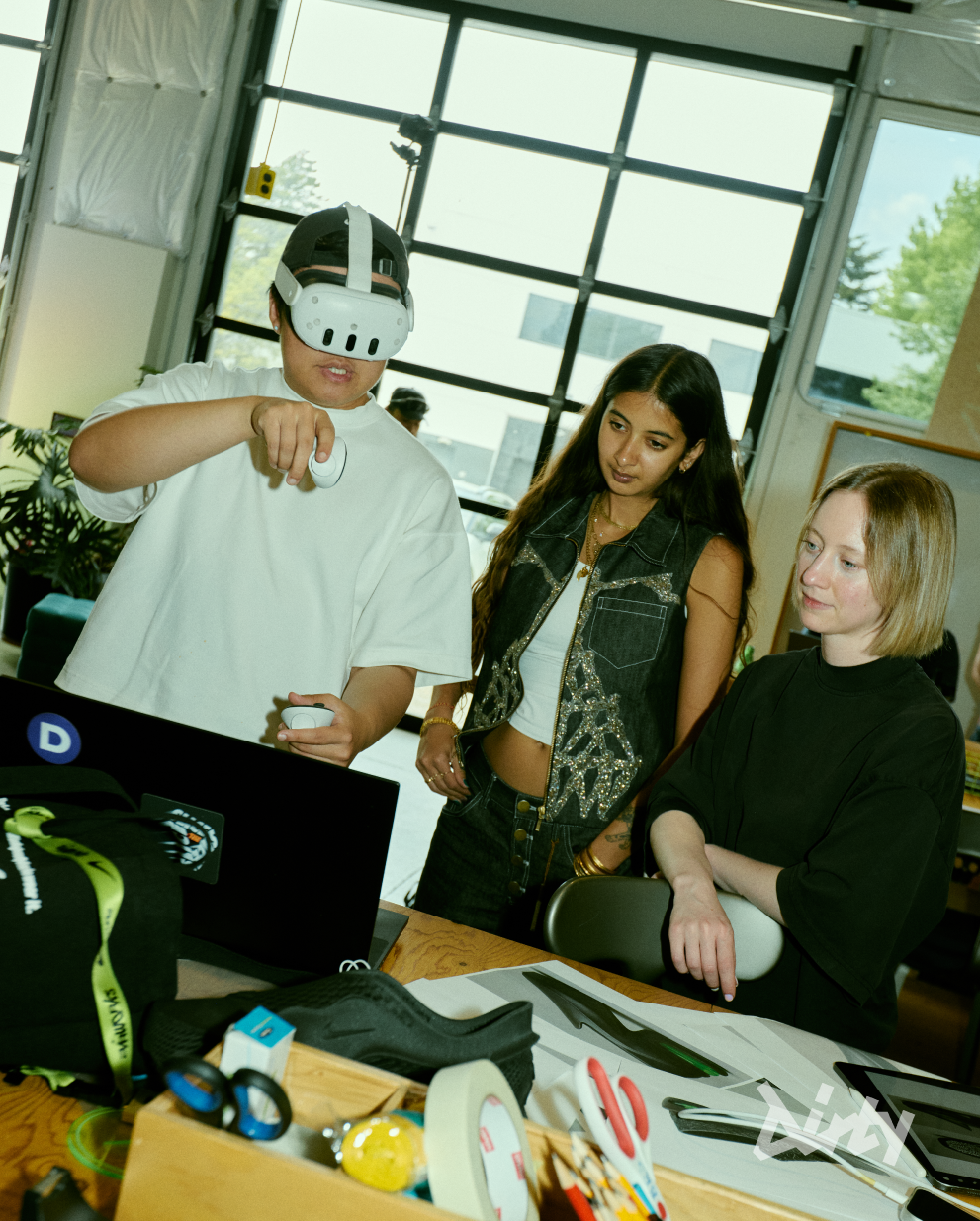
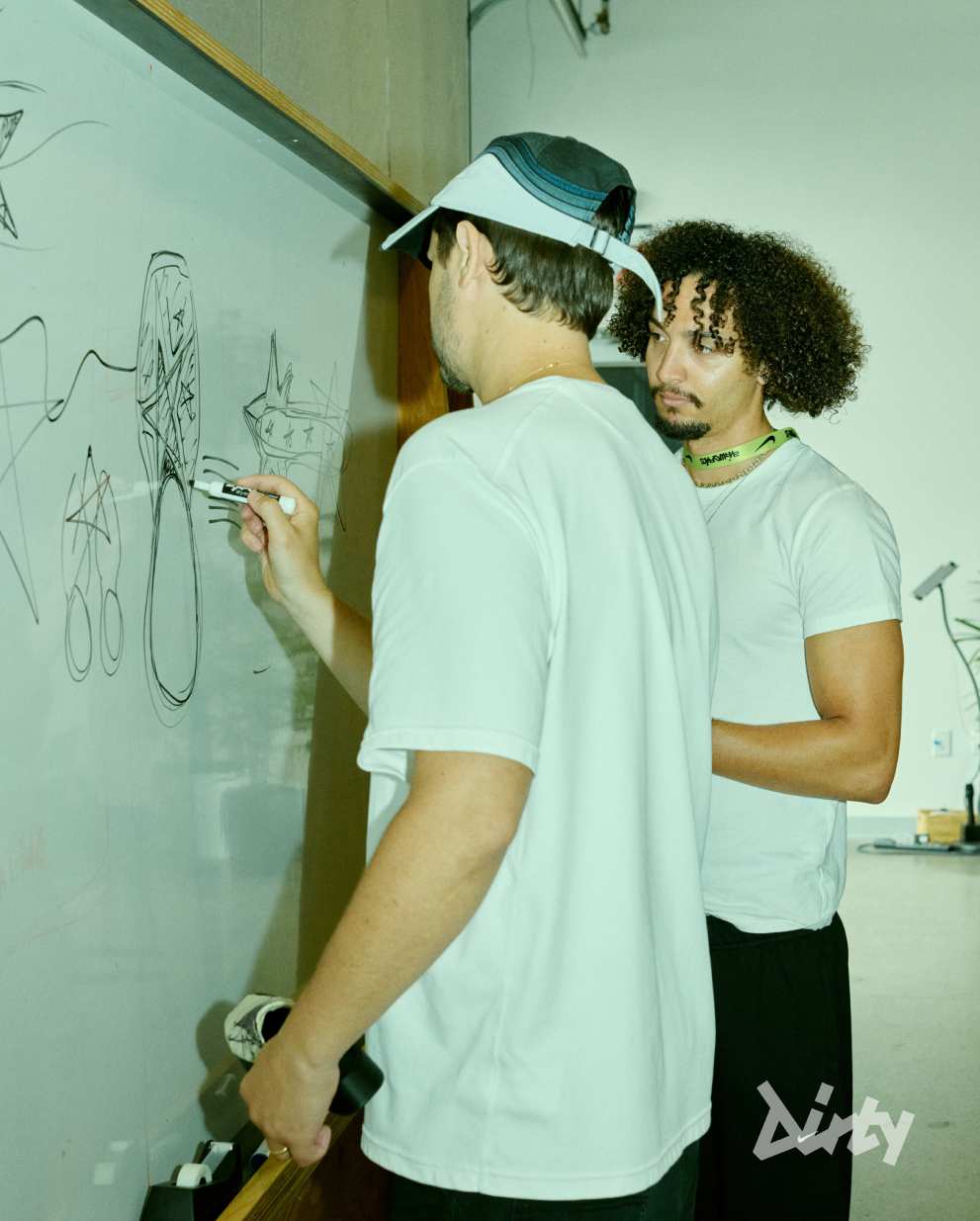
<h1 class="right">Translating the raw vision of the creators becomes an imperative part of the process. Diya’s designs are sketched by hand and translated as intricate embroidery patterns on her pieces. Her design process is fuelled by inspirations that strike on the go. “Normally, I have an idea in the middle of the night. I wake up and write it in my Notes app. If I’m feeling particularly inspired, I’ll even sketch it out,” she says while talking about her workflow. After that, she will go straight to the studio back home in Mumbai to work out the pattern. “Once the pattern is set I sketch the embroidery khakha [design]. These are mad intricate so it takes a minute. Then I chapo [paste] the embroidery khakha onto my cut denim piece using petrol and thread the pieces onto the khat [the embroidery table]. Embroidering each piece takes 3–5 days and then once that’s done it’s onto the machine for stitching.” Integrating her hands-on design methodology into the 3D printing process used to create the Air Max was a challenge, but one she was willing to take on. At Nike's Philip H. Knight Campus in Beaverton, Oregon, Diya spent her days intent on learning. “I don’t know nothing about making shoes or 3D design, so I’m hoping to find out, you know,” she remarks.</h1>
<h1 class="right">Being at the Nike campus for a week brought together a cross-pollination of ideas and an exchange of creative thought among the eight designers repping their cities. Diya Joukani hoped to share a little piece of India with her fellow creators, while also learning something—whether a story or a design technique—from each of their cultures. When asked which member of the cohort she is most inspired by, Diya shines the light on Yams from Paris. “I feel like his personality really shows through his designs. That’s something people tell me about my designs, so when I see it in other people I respect it a lot,” she tells dirty.</h1>
<h1 class="centre">Following the first edition of Air Works, each local designer will launch a limited-run, friends-and-family version of their shoe, celebrated within their own communities and cultures over the coming year, leading into Air Max Day 2027.</h1>
<h1 class="centre">For Diya, authenticity is what young people are craving today. “Everyone seems to be a rinsed version of each other. Just be yourself, man,” she tells dirty, staying true to the cool girl the world knows her to be. By entrusting the future of Air Max design to designers attuned to what people want to wear and what they see on themselves, Nike’s inaugural Air Works program signals a cultural shift. Andy Caine, Chief Innovation Officer at Nike says, “When our top athletes, kids in the street, and people at Complex all react to the shoe with excitement, you start to see the culture smiling, being excited again. This is where we lean forward, push into new spaces, and connect through a different approach and a different kind of product.”</h1>
<h1 class="centre">Diya’s version of Air Max is set to launch in November, continuing her pursuit to put India on the map. “The shoe is for my city, my people’s. I wanna see everyone wear it.”</h1>
<h1 class="full">From within the beating heart of the city of Mumbai, India, moved by the people that pump vitality into its veins, from streets that criss-cross into one another, in busy barbershops, and atop forklifts that have become ever-present fixtures of the city, Diya Joukani has been taking India to the world and inviting the internet into a little piece of Diya’s duniya. The 25-year-old self-taught fashion designer wears her city on her back. In her pieces that combine traditional Indian embroidery and block-printing techniques with modern streetwear silhouettes, creative influences from the communities she is embedded within become visible. The ripple effect of her work is felt and echoed by cool girls around the world. Her clothes are sold out as they drop and her comment sections spill over. She moves the needle of the city’s youth culture. And in May 2026, she became part of a cohort of eight designers chosen from across Beijing, London, Los Angeles, Mumbai, New York, Paris, Shanghai, and Tokyo for Nike’s inaugural Air Works program to create new cultural expressions of Air Max.</h1>
<h1 class="full">“I’m bringing my whole city with me and my culture. I’m the first Sindhi person to ever design an Air Max. I’m gonna represent,” Diya tells dirty.</h1>
<h1 class="full">Nike’s first class of the Air Works program was in session between May 11 and May 14, 2026, and during this time, the cohort of young creatives worked with Nike’s engineers to develop distinctive 3D-printed Air Max styles, created in partnership with Zellerfeld. The program was conceptualized to imagine the future of Air Max, building on a heritage of 40 years of Air innovation, by inviting those who wear the shoe to co-create what it looks like. Each designer’s rendition of the Air Max design builds on their individual sensibilities and celebrates their communities from around the world. The goal ultimately is to envision the shoe for the next generation, for the kids who are alright and want a say in the cultures they shape. “The kids are calm. They’re inspired. The next generation is so talented. I’m proud,” Diya says, as she designs her version of Air Max for her beloved Mumbai and the young people of the city.</h1>
<h1 class="full">As part of the program, the designers were paired with their mentors from Nike as well as external collaborators and were invited to visit Nike’s Air Manufacturing Innovation facility, the Department of Nike Archives, the Nike Sport Research Lab, Blue Ribbon Studio, and the Bowerman Footwear Lab as they worked on their design. “What’s been so exciting is that we’re able to work with collaborators in a way where not only their ideas, but what they’re actually drawing and creating with their own hands can show up in the final design. We’re able to capture and retain their vision, even their style of sketching, all the way through the process into 3D printing,” says Jake Scannapieco, Nike’s 3D Printer Design Expert.</h1>
<h1 class="full">Translating the raw vision of the creators becomes an imperative part of the process. Diya’s designs are sketched by hand and translated as intricate embroidery patterns on her pieces. Her design process is fuelled by inspirations that strike on the go. “Normally, I have an idea in the middle of the night. I wake up and write it in my Notes app. If I’m feeling particularly inspired, I’ll even sketch it out,” she says while talking about her workflow. After that, she will go straight to the studio back home in Mumbai to work out the pattern. “Once the pattern is set I sketch the embroidery khakha [design]. These are mad intricate so it takes a minute. Then I chapo [paste] the embroidery khakha onto my cut denim piece using petrol and thread the pieces onto the khat [the embroidery table]. Embroidering each piece takes 3–5 days and then once that’s done it’s onto the machine for stitching.” Integrating her hands-on design methodology into the 3D printing process used to create the Air Max was a challenge, but one she was willing to take on. At Nike's Philip H. Knight Campus in Beaverton, Oregon, Diya spent her days intent on learning. “I don’t know nothing about making shoes or 3D design, so I’m hoping to find out, you know,” she remarks.</h1>
<h1 class="full">Being at the Nike campus for a week brought together a cross-pollination of ideas and an exchange of creative thought among the eight designers repping their cities. Diya Joukani hoped to share a little piece of India with her fellow creators, while also learning something—whether a story or a design technique—from each of their cultures. When asked which member of the cohort she is most inspired by, Diya shines the light on Yams from Paris. “I feel like his personality really shows through his designs. That’s something people tell me about my designs, so when I see it in other people I respect it a lot,” she tells dirty.</h1>
<h1 class="full">Following the first edition of Air Works, each local designer will launch a limited-run, friends-and-family version of their shoe, celebrated within their own communities and cultures over the coming year, leading into Air Max Day 2027.</h1>
<h1 class="full">For Diya, authenticity is what young people are craving today. “Everyone seems to be a rinsed version of each other. Just be yourself, man,” she tells dirty, staying true to the cool girl the world knows her to be. By entrusting the future of Air Max design to designers attuned to what people want to wear and what they see on themselves, Nike’s inaugural Air Works program signals a cultural shift. Andy Caine, Chief Innovation Officer at Nike says, “When our top athletes, kids in the street, and people at Complex all react to the shoe with excitement, you start to see the culture smiling, being excited again. This is where we lean forward, push into new spaces, and connect through a different approach and a different kind of product.”</h1>
<h1 class="full">Diya’s version of Air Max is set to launch in November, continuing her pursuit to put India on the map. “The shoe is for my city, my people’s. I wanna see everyone wear it.”</h1>