


<h1 class="left">1. Kyoto City KYOCERA Museum of Art, Main Building, South Wing, 2F</h1>
<h1 class="left">Japan's oldest surviving public art museum, this 1928 Imperial Crown-style landmark is itself a work of architectural negotiation, built in a style that fuses Western symmetry with traditional Japanese rooflines and ornamental detail, funded by a coalition of Kansai corporations, private citizens, and members of the art world who believed Kyoto deserved a permanent home for art. After nearly a century of cultural life, it underwent a major renovation beginning in 2015, reopening in 2020 under its current name with additions by architects Jun Aoki and Tezzo Nishizawa who introduced contemporary elements while preserving the building's essential character. To the east, the museum overlooks a Japanese garden believed to have been designed by master gardener Jihei Ogawa VII, the Higashiyama Mountains rising beyond it, a view that has remained largely unchanged for a hundred years.</h1>

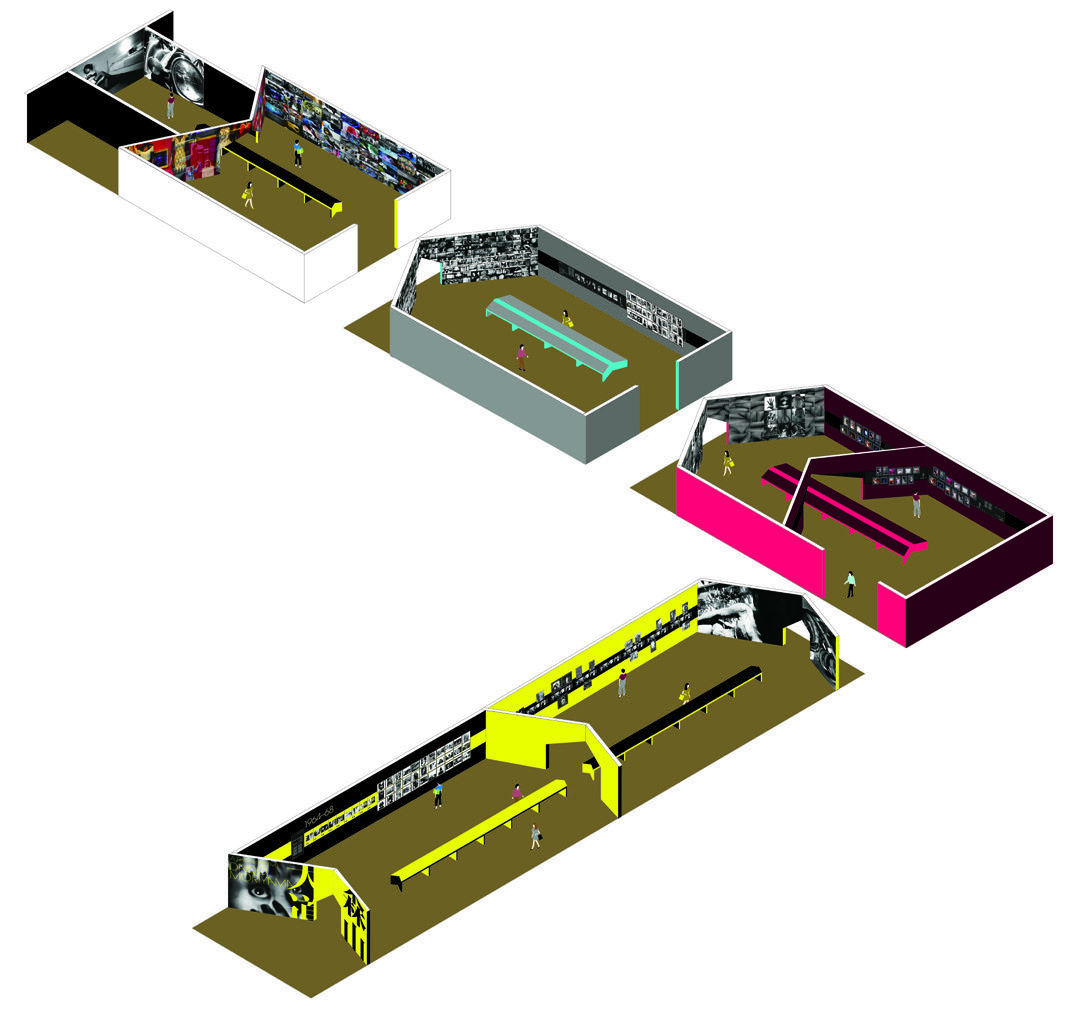
<h1 class="centre">This season the museum holds three exhibitions. The centerpiece is DAIDO MORIYAMA: A RETROSPECTIVE, a sweeping survey of one of photography's most restless innovators, a photographer who has spent his career dismantling photographic convention and reinventing himself across magazines, photobooks, and prints without ever settling into a single style. Scenographer Osamu Ouchi of nano/nano graphics designed four connected rooms on the second floor with viewing tables presenting Moriyama's work in printed form, walls arranged to carry visitors chronologically through his career, with a dual structure that means reaching the end leads back to the beginning, letting you experience the work moving either toward the present or back into the past.</h1>
<h1 class="right">Also on view: the first Japanese exhibition of ERNEST COLE's work, tracing Black life under apartheid South Africa across 15 themes drawn from his photobook House of Bondage. The exhibition design is deliberately confrontational: gates, fences, and narrow corridors installed throughout the space create a physical and psychological sense of constraint that mirrors the social repression Cole spent his life documenting.</h1>
<h1 class="right">And PIETER HUGO: What the Light Falls On, in collaboration with Magnum Photos as part of South Africa in Focus. Scenographers team raw row inc. designed a circular path through the room to evoke an endless cycle of life and death, with gently curving walls that guide visitors inward toward a quiet encounter with their own sense of time.</h1>


<h1 class="left">2. The Museum of Kyoto Annex</h1>
<h1 class="left">Sanjo Street was once the western terminus of the fabled Tokaido Road, the great highway connecting Kyoto to Edo, and for many years the bustling commercial heart of the city. At the turn of the 20th century, as Western-style buildings began transforming Kyoto's streetscape, the Kyoto Branch of the Bank of Japan rose here as an instant landmark: its striped facade of red brick alternating with white granite was unlike anything else on the street. Designed in 1906 by pioneering modernist architect Kingo Tatsuno and his apprentice Uheiji Nagano in the so-called "Tatsuno style" modelled on British 19th-century Queen Anne architecture, the building is a showcase of Meiji-era craftsmanship, from its artisanal masonry and straight roofline to the intricately worked ceiling woodwork within. When the commercial centre of Kyoto shifted to Karasuma and Shijo Streets in the Taisho era, Sanjo's heyday faded, and the bank eventually closed. Designated an Important Cultural Property, the building was renovated and reopened in 2011 as The Museum of Kyoto Annex, its grandeur intact and purpose renewed.</h1>

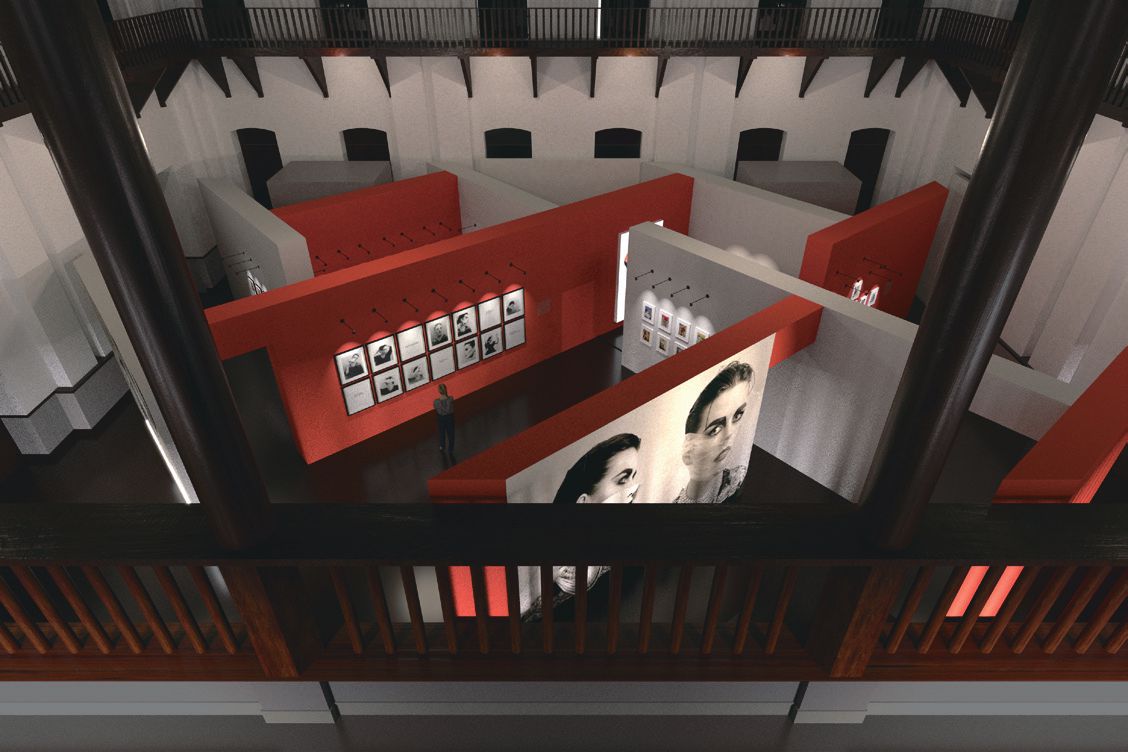
<h1 class="centre">Into this layered setting comes LINDER STERLING: GODDESS OF THE MIND, the British artist's first solo show in Japan. Scenographer Kentaro Ishida of KIAS designed freestanding painted walls that rise within the former bank's interior as if about to break free from the historic counter, deliberately set in tension with both the building's classical order and Kyoto's grid, formally echoing Linder's decades-long subversion of conventional gender norms. Approximately ninety works are organized by series across the walls, tracing her practice since the 1970s, with lighting and spacing carefully calibrated within the constraints of the protected building to allow her radical work to be experienced as one continuous whole.</h1>
<h1 class="left">3. Hachiku-an (Former Kawasaki Residence)</h1>
<h1 class="left">Down the street from the museum annex stands one of Kyoto's most precious surviving private residences. Completed in 1926 by cotton cloth merchant Risuke Inoue IV, the Kawasaki Family Residence, now known as Kurochiku Hachiku-an, is a designated Important Tangible Cultural Property of the City of Kyoto, and a rare and ambitious architectural hybrid. The Western-style building was designed by Goichi Takeda, considered the father of modern architecture in the Kansai region, while the tea ceremony rooms and Japanese-style spaces were entrusted to sukiya master Asajiro Uesaka. Frank Lloyd Wright's influence, fashionable during the Taisho Era, runs through it as well. The result is a sprawling 860-square-meter property: a two-story main building, two warehouses, a salon, and interiors that move fluidly between aesthetic worlds. In 2022, Kurochiku Corporation took possession of the residence with the explicit aim of preserving its historical value— a commitment that carries its own quiet poetry, since an ancestor of Kurochiku's current head was among the carpenters who helped build it a century ago.</h1>


<h1 class="left">The exhibition is PHOTO BOOK! PHOTO-BOOK! PHOTOBOOK! curated by Sean O'Toole is a browsable timeline of photobooks from 1945 to 2025, first shown at A4 Arts Foundation in 2022 and now carefully adapted to the spatial logic of Hachiku-an by The Curatorial Studio at A4 Arts Foundation. O'Toole's curatorial conviction is hands-on: "Books are not decorative objects; they are meant to be touched, their ideas engaged." The collection is laid across three long, low tables that invite visitors to sit and read facing the courtyard windows, natural light illuminating the pages. The tables are deliberately restrained in form so the books remain the primary focus — navigation handled through color-coded bookmarks and zabuton cushions marking three chronological sections of the timeline. A smaller adjacent room holds rare and multi-volume publications.</h1>
Takeshi%20Asano-KYOTOGRAPHIE2026.jpg)

<h1 class="centre">Also set within the traditional kura storehouse of Hachikuan, this exhibition presents the work of Fatma Hassona, The Eye of Gaza, through a deliberately simple spatial composition. In a dimly lit interior, the first floor features a slideshow of photographs Hassona took in Gaza. Capturing fragments of everyday life and the presence of people within the extraordinary conditions of war, these images form a rare record of realities that are often difficult to see from the outside. On the second floor, a single iPhone precariously suspended by a thin wire displays excerpts from online conversations between Hassona and filmmaker Sepideh Farsi during the making of the documentary Put Your Soul on Your Hand and Walk. The iPhone was the only means through which the two could communicate across distance and otherwise impassable Borders. Through these two different media – photography and dialogue – the exhibition reveals moments of connection across separation. Together they appear as a window linking Gaza with the outside world.</h1>
<h1 class="left">4. Kondaya Genbei Chikuin-no-Ma</h1>
<h1 class="left">Along Muromachi, Kyoto's historic kimono district, where textile wholesalers have traded for centuries, Kondaya Genbei has been a major obi sash maker for nearly 280 years. The machiya that houses the business is far more expansive than its street-facing entrance suggests: great beams, intricate joinery, a stone-floored entryway, and a tiny courtyard garden open into room after room of accumulated history. The Taisho-era refinements added by Shinto shrine carpenter Yoshibei Mikami give the space a heightened aesthetic sensibility, nowhere more so than in the Chikuin-no-Ma foyer, a room of warm wood and quiet presence. The current proprietor, 10th-generation Genbei Yamaguchi, began designing his own obi only recently, his practice inspired by a chance encounter at 27 with a thousand-year-old Buddhist monk's robe— patched, crumbling, irreplaceable, that convinced him of the urgency of preserving Japanese textile culture.</h1>
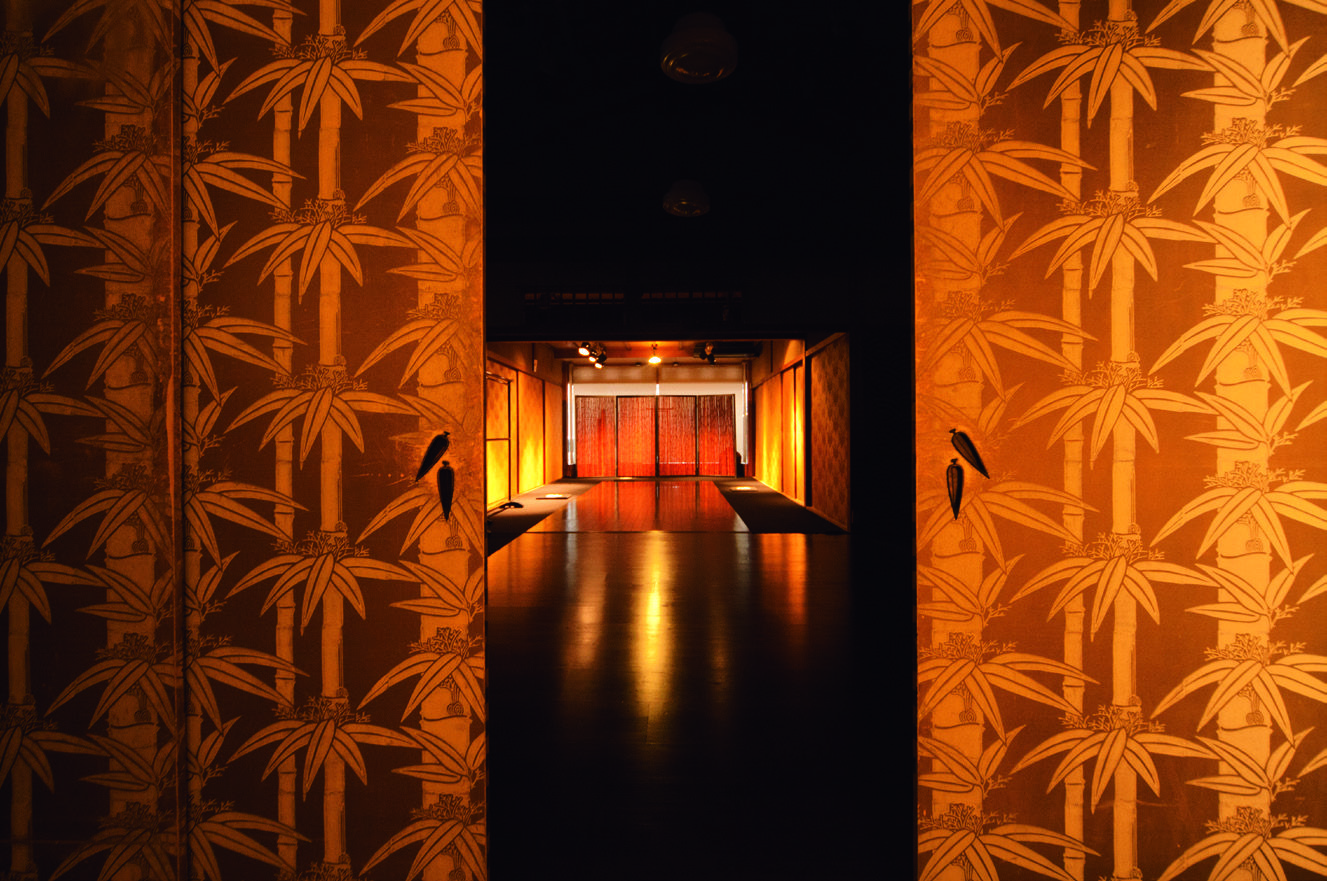
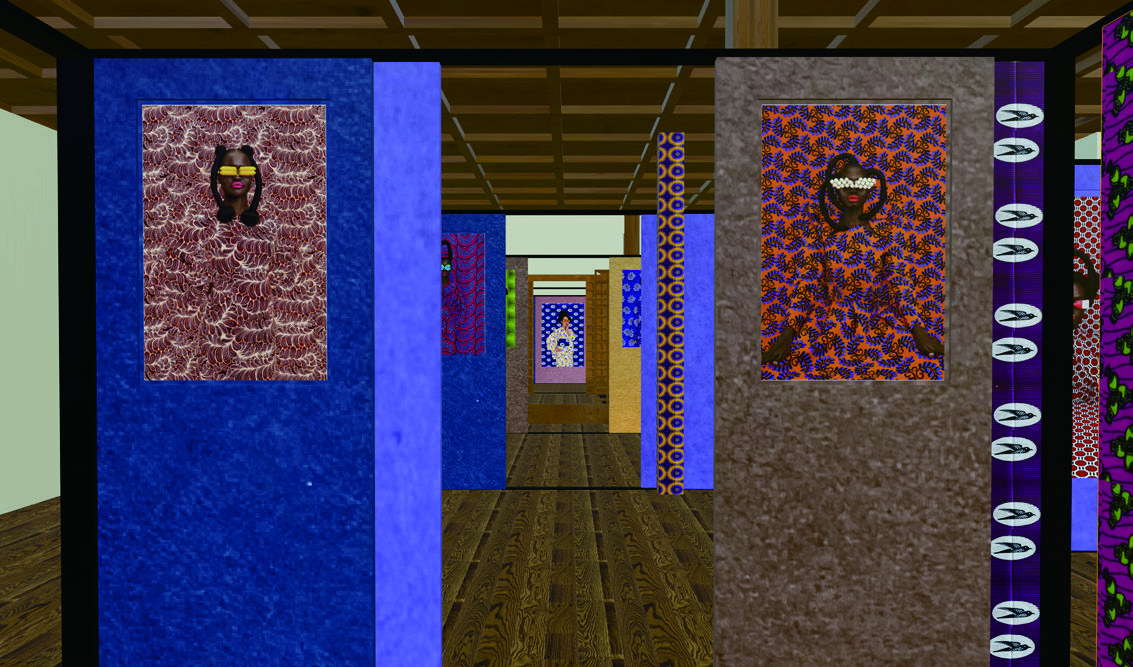
<h1 class="right">Into this space comes THANDIWE MURIU's CAMO, with scenography by Miho Odaka of APLUS DESIGNWORKS built around a single keyword the artist offered as her guiding concept: "bridge." Odaka responded by centering the sliding door, fundamental to Japanese spatial architecture, as the exhibition's organizing principle. Crucially, sliding doors don't fully divide a space; they create permeable boundaries that separate without severing. Here, wax prints — widely accepted as African textiles and central to Muriu's visual language — are reinterpreted as karakami decorative paper and used as partition elements throughout, layering space, textile, and image into a dialogue between Kenyan and Japanese visual cultures that could only emerge in this precise setting.</h1>
Takeshi%20Asano-KYOTOGRAPHIE2026.jpg)
<h1 class="left">5. Demachi Masugata Shopping Arcade & DELTA/KYOTOGRAPHIE Permanent Space</h1>
<h1 class="left">Nestled between the confluence of the Kamo and Takano Rivers, the so-called Kamogawa Delta and the Tadasu no Mori forest, a World Heritage Site to the east, with the Kyoto Imperial Palace a ten-minute walk to the west, the Demachi Masugata Shopping Arcade occupies a remarkably storied pocket of the city. The arcade itself is modest and human-scaled, just 40 shops end to end, but alive with the kind of specialty retailers and neighborhood particularity that Kyoto's more tourist-facing streets have long since traded away. In September 2020, KYOTOGRAPHIE opened its permanent art space DELTA here: a mixed-use gallery and café on the ground floor with accommodation above, conceived as a vibrant confluence of East and West, tradition and innovation, mainstream and underground— an experimental venue that takes its cues from the welcoming, open character of the neighborhood around it.</h1>

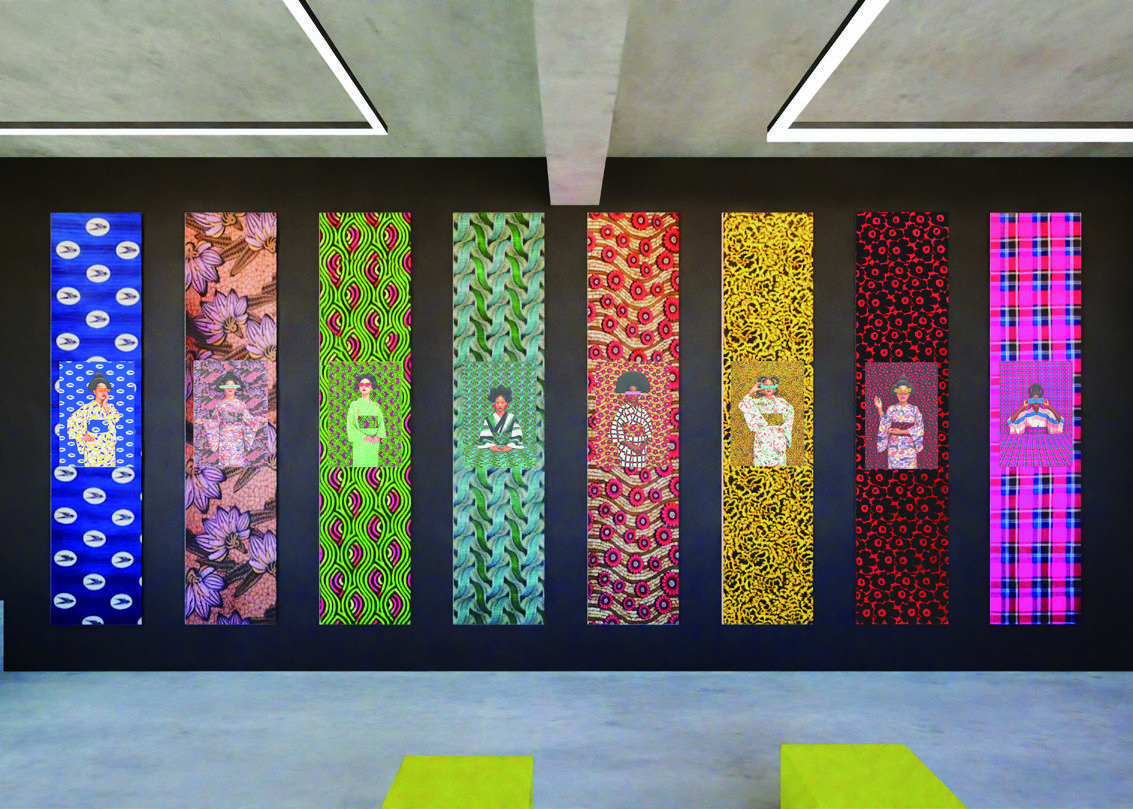
<h1 class="centre">A second body of work by THANDIWE MURIU, new pieces created during her Kyoto residency, is split across both spaces, with scenography by Moemi Hatasaki of TOBIUO ARCHITECTS. In the shopping arcade, Muriu's distinctive textiles hold their own against the visually dense backdrop of everyday commerce, the similarities and differences between her work and its setting generating new perspectives on both. At DELTA, the works are displayed side by side on the wall, inspired by traditional kimono obi arrangements, an invitation to look closely at each piece's individual character and the threads that connect them.</h1>
<h1 class="left">6. Yuuhisai Koudoukan</h1>
<h1 class="left">In a quiet residential neighbourhood west of the Kyoto Imperial Palace, a traditional gate stands as a subtle threshold to another world. Pass through it and follow a cobblestone alley and you arrive at Yuuhisai Koudoukan, a sukiya-style Japanese house cradled within a lush, moss-covered garden spanning approximately 1,815 square meters — a place of cultivated stillness that feels quietly removed from the city surrounding it. The site was originally founded in 1806 as an academy by Confucian scholar Minagawa Kien (1734–1807), a leading intellectual of the mid-Edo period and founder of kaibutsu-gaku, an original field of study exploring the relationship between names and things through phonetics and rhyme. A man of wide-ranging refinement, Kien is said to have gathered as many as 3,000 disciples, with prominent figures of Edo culture including Maruyama Okyo and Ito Jakuchu among those who frequented the academy. Damaged by fire at the end of the Edo period, the prototype of the current building was constructed during the Meiji era, with further renovations carried out in the Showa era. In 2009, when the building and garden were on the verge of demolition, they were saved through the efforts of a group of intellectuals and volunteers and revived under the name Yuuhisai Koudoukan — Yuuhisai being one of Minagawa's pen names. Maintained today with the help of volunteers, the garden moves through the seasons with quiet beauty. The site also houses two tea rooms: Yuukouan, named to commemorate the 100th birthday of Sen Genshitsu, Grand Master of the Urasenke school of tea ceremony, and Kyuukoan, a seven-mat replica of a tea room favoured by Sottakusai, eighth-generation head of the Omotesenke school.</h1>

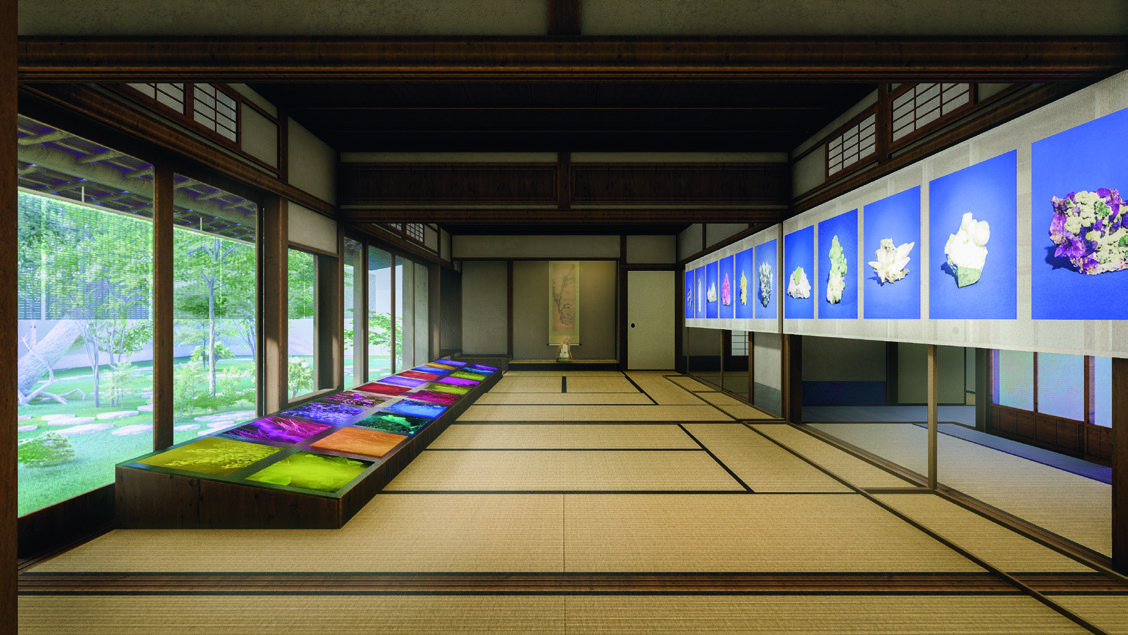
<h1 class="centre">Into this atmosphere of scholarly contemplation and refined restraint, scenographer Seiichiro Takeuchi of Seiichiro Takeuchi Architects has shaped a setting for The Scent of Light, an exhibition by French photographer Juliette Agnel that frames her practice as an exploration conducted through light. Following in the spirit of Kien's pursuit of truth, hanging scrolls embodying the philosophies of both Kien and French writer Roger Caillois are placed throughout the corridors and tokonoma recessed alcoves, acting as visual prompts for contemplation. In the shoin, Agnel's series Dahomey Spirit — channelling the magical atmosphere of sacred sites in Benin — is juxtaposed with Susceptibility of Rocks, in which she captures the subtle yet eloquent presence of mineral stones. A low reading stand and a shoji display wall decorated with stones arranged to resemble the portraits of ancient scholars draw Agnel's photographs into quiet dialogue with their surroundings. The exhibition culminates in a tea room, where a newly produced video work filmed on the island of Yakushima invites a moment of stillness and introspection.</h1>
<h1 class="left">7. ASPHODEL</h1>
<h1 class="left">Gion is a world unto itself. Kyoto's legendary geisha district, home to maiko and geiko who train for years in dance, music, and the arts of hospitality, was at its Edo-period peak said to house some 700 chaya teahouses. Among the top seven houses whose troupes were entitled to wear the red apron, the highest mark of distinction was Tondaya, the predecessor of today's Tomiyo. The chaya culture that has defined Gion for centuries continues here: traditional performing arts of the highest quality, hosted in an impeccably manicured setting of sheer elegance. Built directly beside Tomiyo's traditional architecture is ASPHODEL, a modern concrete gallery space conceived as a deliberate counterpoint rather than a continuation. As 9th-generation proprietress Naomi Ota put it: "We wanted a contrasting parallel, not a blend of old and contemporary." The juxtaposition is the point.</h1>
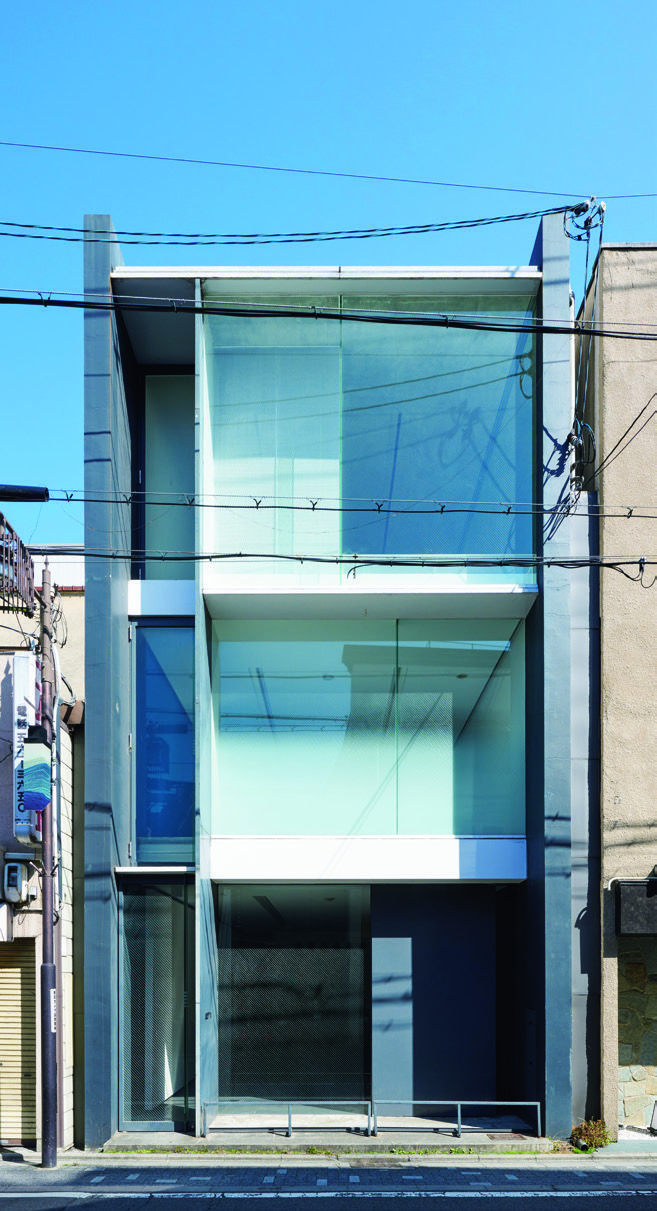

<h1 class="right">The exhibition is the work of SARI SHIBATA, linking two landscapes separated by continents: Reims in France and Nanto in Japan. Scenographer Miho Odaka of APLUS DESIGNWORKS designed the space around a ridgeline inspired by the mountainous landscape of Shibata's Toyama home, along which a woman's life unfolds from conception. A central "fountain" on the second floor, evoking the Zuisen-ji Temple near the artist's hometown of Inami, acts as a symbolic bridge between Reims and Nanto, reflecting the spirits and shared landscape elements that recur throughout Shibata's work. The entire space is void of color, clearing the field for the colors in the artwork to land with full force. The third and final floor opens into brightness and air; a space of renewal, of return from death back to life.</h1>
<h1 class="left">8. Jushin Kaikan</h1>
<h1 class="left">Commissioned in 1930 by Juemon Tashiro, a businessman, philanthropist, and devoted follower of the Otani branch of Shin Buddhism, to mark his 77th birthday, Jushin Kaikan was designed by architect Midori Takeuchi as a center for Buddhist study and doctrine. Tashiro's philanthropic spirit extended well beyond this building: he established a public interest foundation, founded a library, and ran a free medical clinic. The Kaikan has absorbed many lives in the near-century since— student dormitory, research institute, and for a time the editorial home of the Shinshu Seiten, the collected scriptures of Shin Buddhism. The dormitory officially closed in March 2021, and the building, now draped in ivy, has quietly reopened for special events. Throughout it all, the architecture has aged into something extraordinary: round windows, Art Deco detailing, and a graceful synthesis of Western and Eastern cultural influence that marks it as one of the notable modern architectural works of its era.</h1>
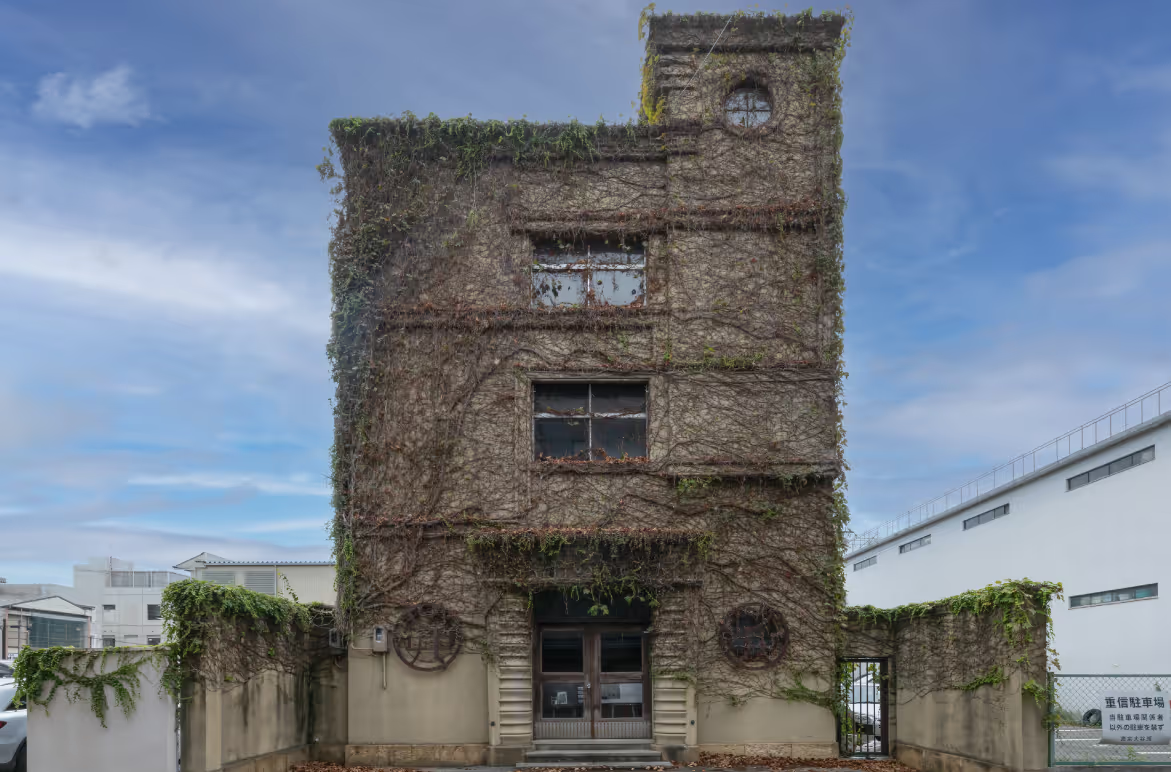
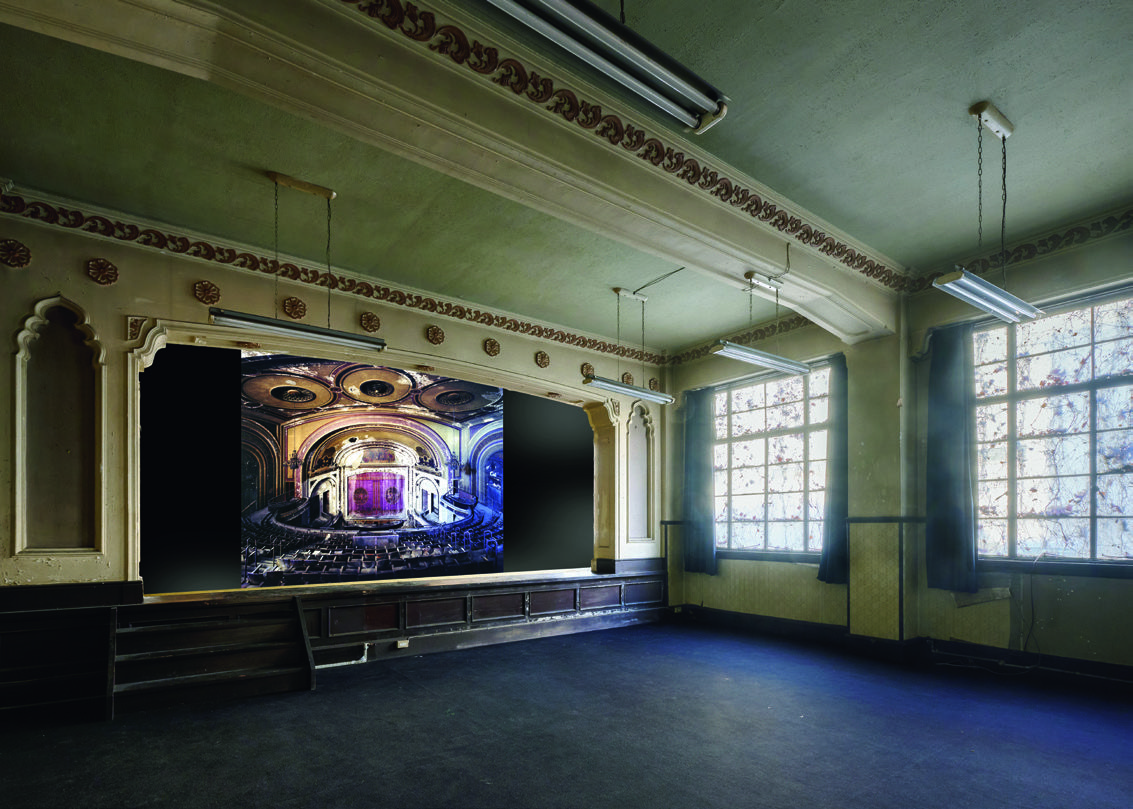
<h1 class="centre">The exhibition YVES MARCHAND & ROMAIN MEFFRE: THE SHAPE OF WHAT REMAINS was conceived to honor exactly that accumulated weight of time. Scenographer Shinsuke Tamaki designed the ground floor auditorium as a theatre room, with projected light drawn across the building's characteristic Art Deco elements. On the upper floors, floating walls that deliberately do not touch the floors, walls, or ceilings of the existing building create smaller exhibition spaces — a solution that allows the introduced structures and the artworks they carry to coexist with Jushin Kaikan's layered history without ever disrupting it.</h1>
<h1 class="left">9. Shimadai Gallery</h1>
<h1 class="left">Few Kyoto businesses carry history quite like Shimadai. Trading since 1608, over four centuries, the shinise began as a silk merchant before pivoting in the middle of the Edo period to sake wholesaling, a trade it conducted under the brand name "Shimadai" in partnership with a brewer in Itami, northwest of Osaka. The present building dates from 1883, reconstructed after a fire destroyed the original structure in the final years of the Edo period. It remains a prime example of Kyoto machiya architecture, divided between two wings of distinctly different character: a spacious, sunlit former silk trading salon to the west, and a heavy earthen-walled kura storehouse from the sake merchant era to the east — light and shadow, openness and enclosure, side by side. The name Shimadai itself refers to a traditional decorative bonsai arrangement modelled on the Taoist paradise of Mount Penglai — auspicious symbols of pine, bamboo, plum, crane, tortoise, and an old man and woman arranged to beckon good fortune. It is a name chosen for celebration, and it still fits.</h1>
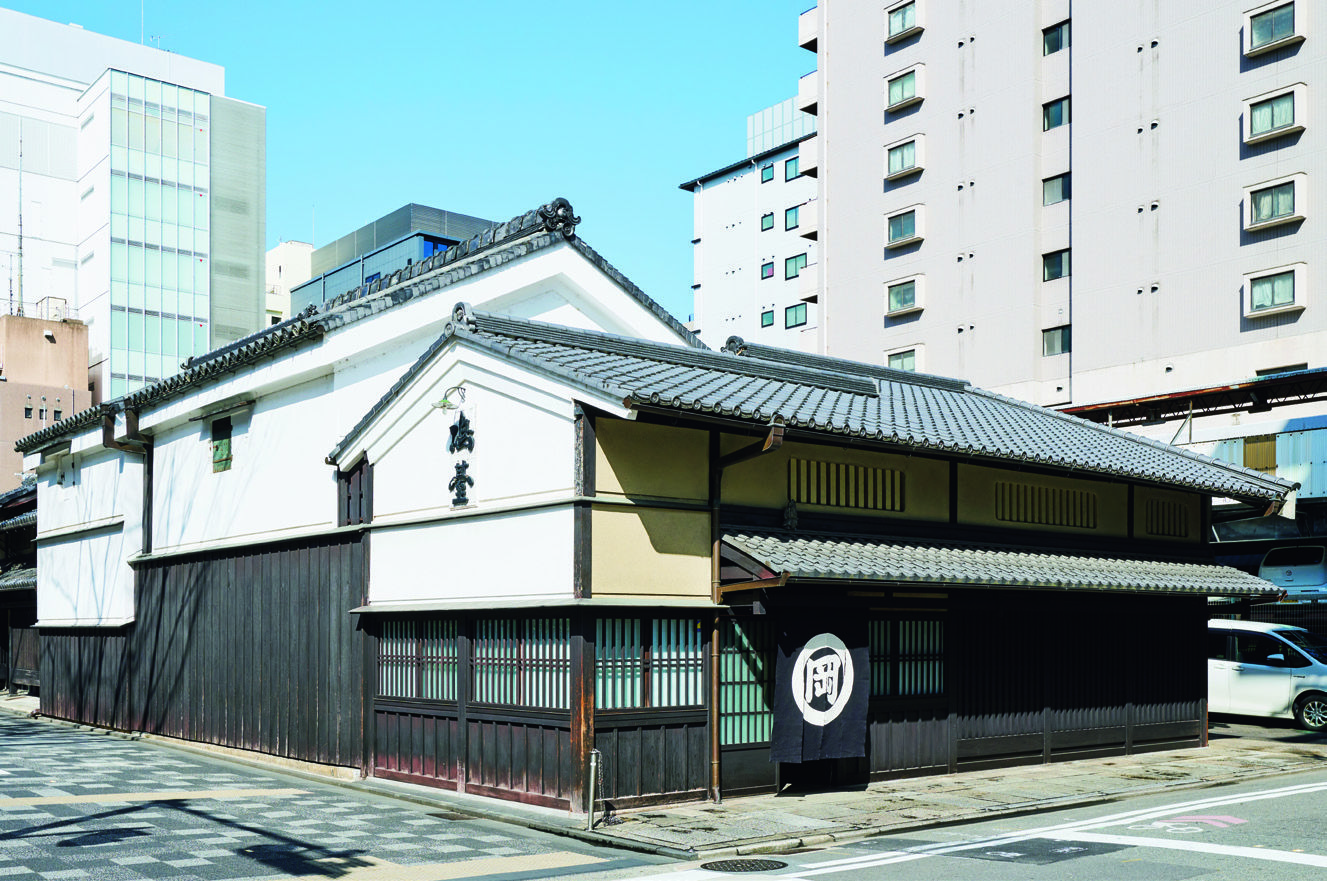
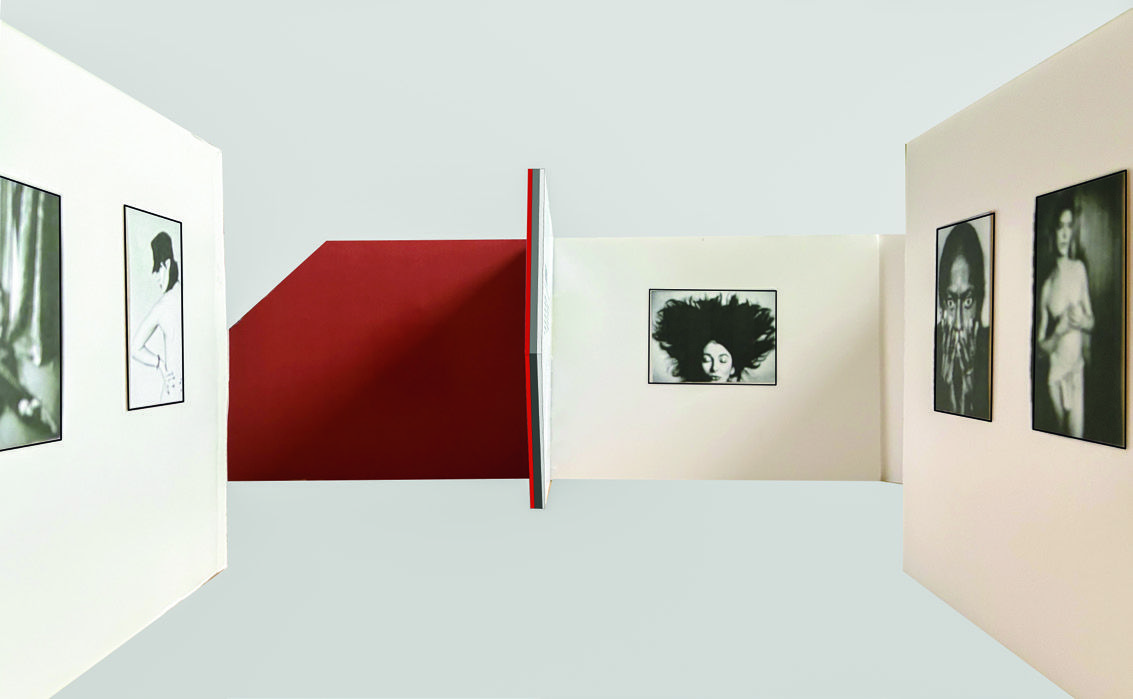
<h1 class="right">The exhibition is ANTON CORBIJN: PRESENCE, with scenography by Hiromitsu Konishi of miso shaped directly by his experience of visiting Corbijn's Amsterdam studio. Minimal but charged: grey walls, 70s rock playing from a vintage jukebox, the studio became the conceptual template for the gallery space. Grey walls define the sequence of Corbijn's work, their gradations marking transitions within his series. A wall cut at a 45-degree angle opens the space gently, softening what might otherwise feel oppressive, and the triangular piece removed in the process is repurposed as a display table for printed works, a quietly elegant reuse that gives the cut a second life.</h1>
<h1 class="left">10. Higashi Honganji O-genkan</h1>
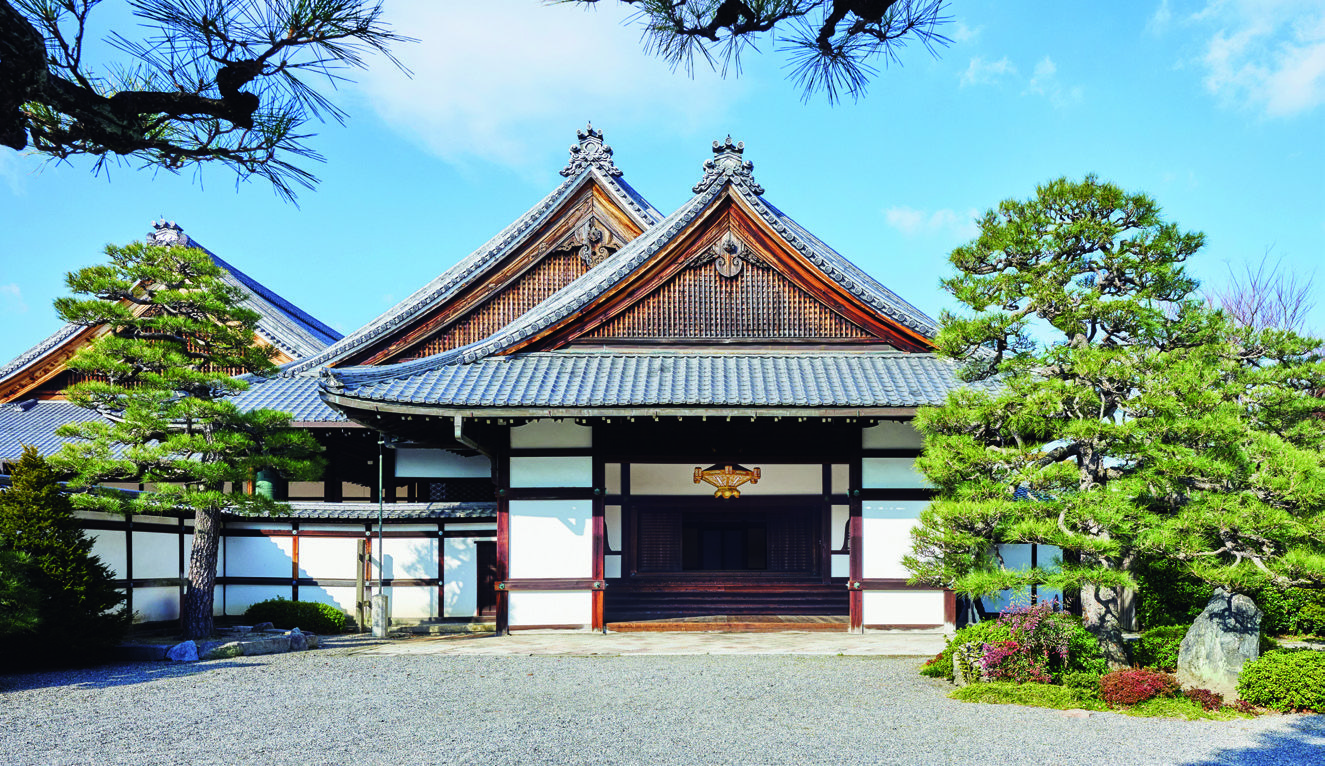
<h1 class="left">One of Kyoto's most spiritually significant sites, Higashi Honganji, formally known as Shinshu Honbyo, the head temple of the Shinshu Otani sect of Jodo Shinshu, draws visitors year-round to its vast, austere grounds. Its origins trace back to 1272, when a shrine housing a wooden statue of the sect's founder Shinran Shonin, carved faithfully in his likeness, was established at his burial site. Having survived four fires during the Edo period, most of the existing structures were rebuilt during the Meiji era. The O-genkan, completed in 1867, making it the oldest building on the current temple grounds, was among the first structures rebuilt after a devastating fire in 1864 triggered by the Hamaguri-gomon Incident. It remains in use today as the ceremonial entrance for important occasions. Covering approximately 450 square meters, it is distinguished by its traditional irimoya-zukuri architectural style, a striking roof of overlapping wave-shaped sangawara-buki tiles, and a grand ceremonial entrance exceeding ten metres in width. The decoration is deliberately modest, which only deepens the building's solemn, formal presence, its design marking a threshold into a time and space unlike anywhere else.</h1>
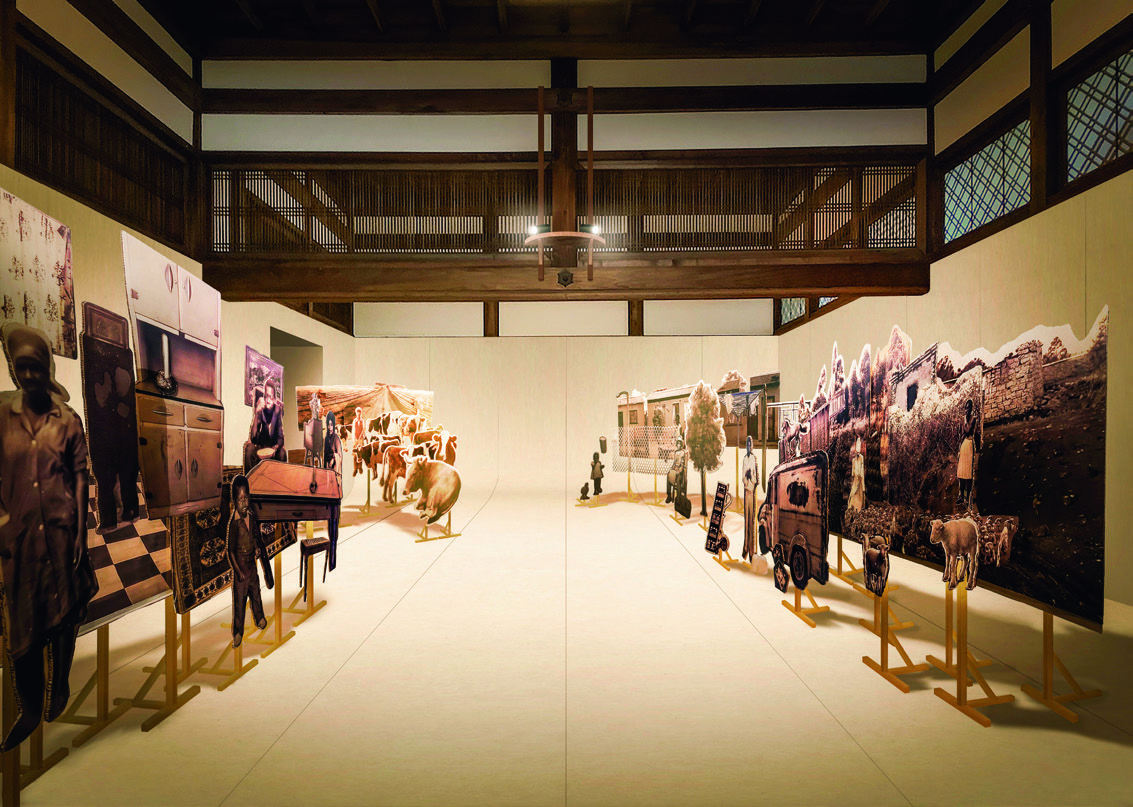
<h1 class="centre">Into this powerful setting, scenographer Hiromitsu Konishi of miso conceived a deliberate counterpoint: a delicate, feminine space that envelops LEBOHANG KGANYE's REHEARSAL OF MEMORY in quiet contrast to the temple's commanding presence. The entire exhibition space, floor to walls, is covered seamlessly in plain white paper, forming a gentle, continuous cocoon. Within it, light moves in complex ways, illuminating Kganye's artworks and casting shadows that draw out the textures and details of the surrounding space, allowing the work and the architecture to enhance each other's presence without either overpowering the other.</h1>
<h1 class="left">11. ygion</h1>
<h1 class="left">In the northwest corner of Gion, near the antique dealers of Shinmonzen Street, beside the Kamo River and the quietly flowing Shirakawa stream, sits one of the neighborhood's more unexpected recent arrivals. y gion occupies a building previously home to bars and clubs, renovated in 2017 into what its director Takuma Inoue calls a "creative emporium": a deliberately mixed space where music, art, cooking, and other disciplines are brought into contact, on the premise that interesting things emerge from their collision. "We want to rethink the reach of culture," Inoue has said. The space hosts everything from major events to intimate workshops, and its rooftop bar, overlooking the Kamo River in the classic Kyoto tradition of shakkei, or borrowed landscape, is reason enough to visit on its own terms. It is the kind of address that feels entirely of the moment while remaining deeply rooted in the particular character of its neighborhood.</h1>

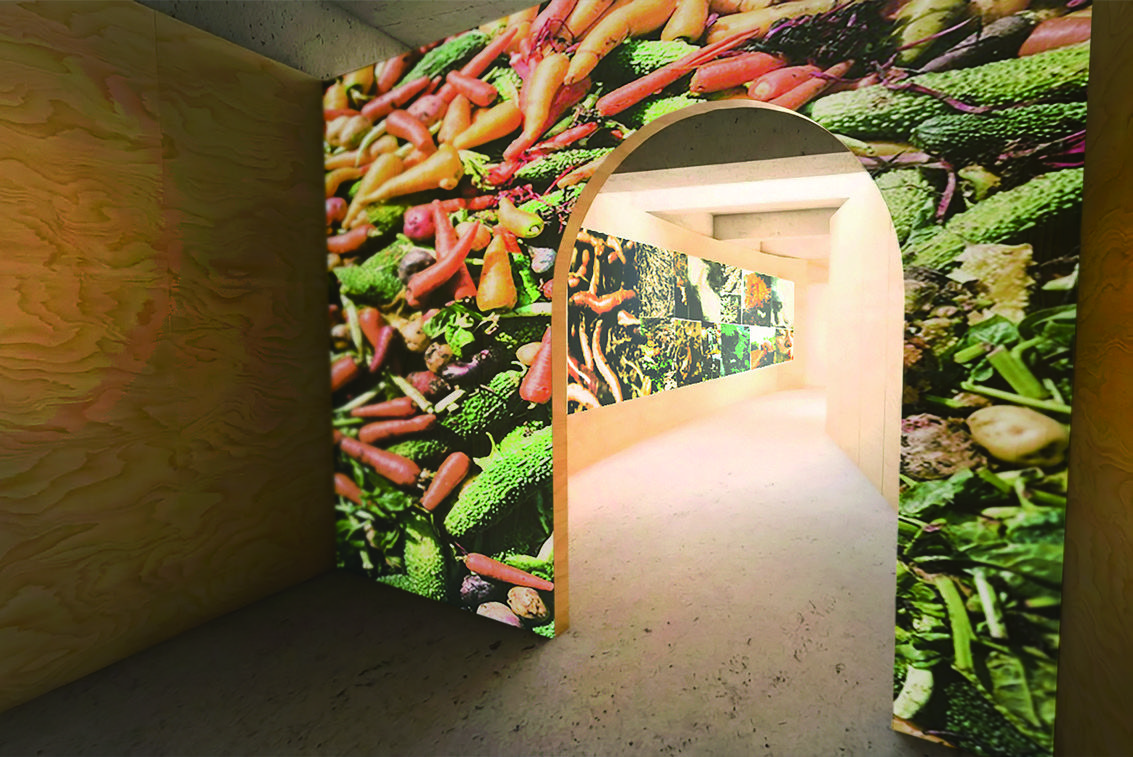
<h1 class="right">Into this powerful setting, scenographer Hiromitsu Konishi of miso conceived a deliberate counterpoint: a delicate, feminine space that envelops LEBOHANG KGANYE's REHEARSAL OF MEMORY in quiet contrast to the temple's commanding presence. The entire exhibition space, floor to walls, is covered seamlessly in plain white paper, forming a gentle, continuous cocoon. Within it, light moves in complex ways, illuminating Kganye's artworks and casting shadows that draw out the textures and details of the surrounding space, allowing the work and the architecture to enhance each other's presence without either overpowering the other.</h1>
<h1 class="left">12. Kondaya Genbei Kurogura</h1>
<h1 class="left">Tucked within the historic textile district of Kyoto, Kondaya Genbei is one of the city's larger and more characterful machiya shophouses, carrying the weight of over a century of craft heritage. Built over ten years by the 8th-generation proprietor and completed in 1919, the main building was constructed with Shinto shrine carpenter Yoshibei Mikami serving as master craftsman for the Taisho-era portions — an unusual collaboration that earned the house the nickname 'cypress wood shrine.' The kurogura, or black storehouse, sits at the rear of the property, reached through a central walkway. A renovation of an earlier structure, it surprises with strikingly modern touches: black plaster walls and an octagonal dome that create a beautiful tension between Japanese and Western sensibilities, standing in deliberate contrast to the more traditional Taisho-era main building. This spirit of innovation within tradition has long defined Kondaya, and the kurogura's openness to novel expression makes it a natural setting for contemporary art.</h1>

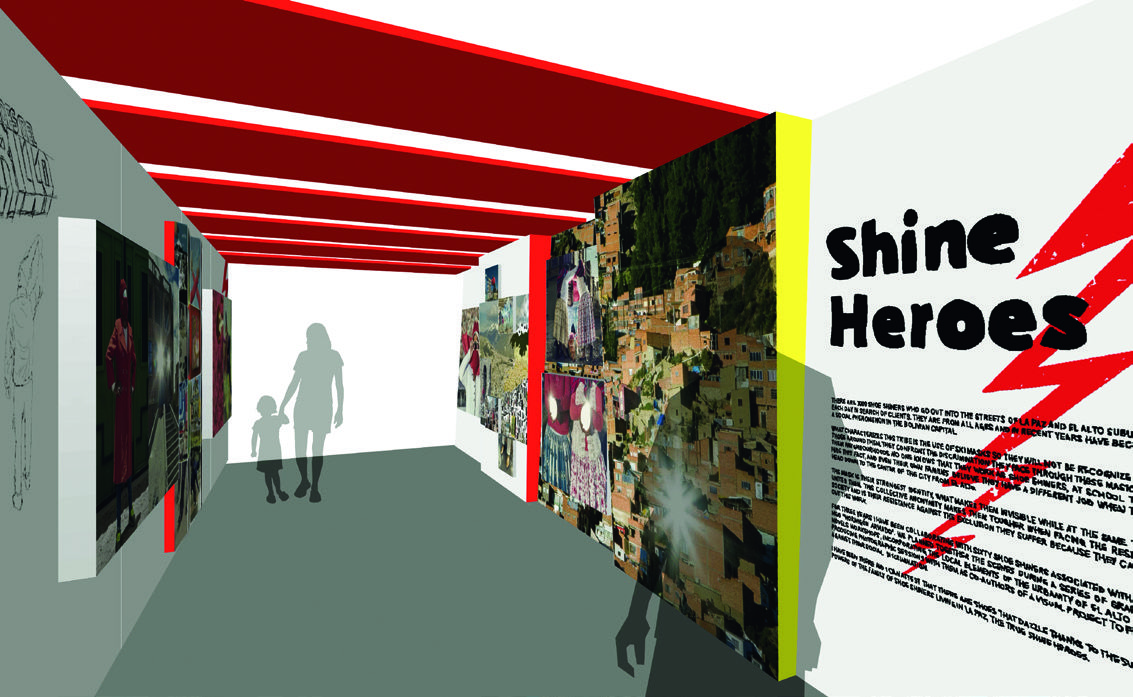
<h1 class="left">Into this layered and quietly theatrical space, scenographer Spinning Plates has shaped the setting for Shine Heroes, an installation by Uruguayan photographer Federico Estol. For the month-long duration of the exhibition, the kura is transformed into the Shine Heroes' Kyoto HQ, a base for collective storytelling in which Estol's visual rhythm is translated directly into architecture. The work unfolds across a sequence of subtly tilted panels, each image occupying its own architectural plane, drawing on the visual language of skewed panels in graphic storytelling to create a gentle spatial rhythm. Some images extend across two panels, forming larger background compositions that link the sequence and reinforce a sense of movement through the space. A second display offers a quieter counterpoint, with images arranged in a more open composition. The exhibition culminates in a circular room that surrounds visitors with the sights and sounds of the Shine Heroes' own self-produced animated short film.</h1>
<h1 class="left">Venue Photography: Takeshi Asano, Naoyuki Ogino</h1>
<h1 class="left">https://www.kyotographie.jp/en/</h1>
<h1 class="full">1. Kyoto City KYOCERA Museum of Art, Main Building, South Wing, 2F</h1>
<h1 class="full">Japan's oldest surviving public art museum, this 1928 Imperial Crown-style landmark is itself a work of architectural negotiation, built in a style that fuses Western symmetry with traditional Japanese rooflines and ornamental detail, funded by a coalition of Kansai corporations, private citizens, and members of the art world who believed Kyoto deserved a permanent home for art. After nearly a century of cultural life, it underwent a major renovation beginning in 2015, reopening in 2020 under its current name with additions by architects Jun Aoki and Tezzo Nishizawa who introduced contemporary elements while preserving the building's essential character. To the east, the museum overlooks a Japanese garden believed to have been designed by master gardener Jihei Ogawa VII, the Higashiyama Mountains rising beyond it, a view that has remained largely unchanged for a hundred years.</h1>
<h1 class="full">This season the museum holds three exhibitions. The centerpiece is DAIDO MORIYAMA: A RETROSPECTIVE, a sweeping survey of one of photography's most restless innovators, a photographer who has spent his career dismantling photographic convention and reinventing himself across magazines, photobooks, and prints without ever settling into a single style. Scenographer Osamu Ouchi of nano/nano graphics designed four connected rooms on the second floor with viewing tables presenting Moriyama's work in printed form, walls arranged to carry visitors chronologically through his career, with a dual structure that means reaching the end leads back to the beginning, letting you experience the work moving either toward the present or back into the past.</h1>
<h1 class="full">Also on view: the first Japanese exhibition of ERNEST COLE's work, tracing Black life under apartheid South Africa across 15 themes drawn from his photobook House of Bondage. The exhibition design is deliberately confrontational: gates, fences, and narrow corridors installed throughout the space create a physical and psychological sense of constraint that mirrors the social repression Cole spent his life documenting.</h1>
<h1 class="full">And PIETER HUGO: What the Light Falls On, in collaboration with Magnum Photos as part of South Africa in Focus. Scenographers team raw row inc. designed a circular path through the room to evoke an endless cycle of life and death, with gently curving walls that guide visitors inward toward a quiet encounter with their own sense of time.</h1>
<h1 class="full">2. The Museum of Kyoto Annex</h1>
<h1 class="full">Sanjo Street was once the western terminus of the fabled Tokaido Road, the great highway connecting Kyoto to Edo, and for many years the bustling commercial heart of the city. At the turn of the 20th century, as Western-style buildings began transforming Kyoto's streetscape, the Kyoto Branch of the Bank of Japan rose here as an instant landmark: its striped facade of red brick alternating with white granite was unlike anything else on the street. Designed in 1906 by pioneering modernist architect Kingo Tatsuno and his apprentice Uheiji Nagano in the so-called "Tatsuno style" modelled on British 19th-century Queen Anne architecture, the building is a showcase of Meiji-era craftsmanship, from its artisanal masonry and straight roofline to the intricately worked ceiling woodwork within. When the commercial centre of Kyoto shifted to Karasuma and Shijo Streets in the Taisho era, Sanjo's heyday faded, and the bank eventually closed. Designated an Important Cultural Property, the building was renovated and reopened in 2011 as The Museum of Kyoto Annex, its grandeur intact and purpose renewed.</h1>
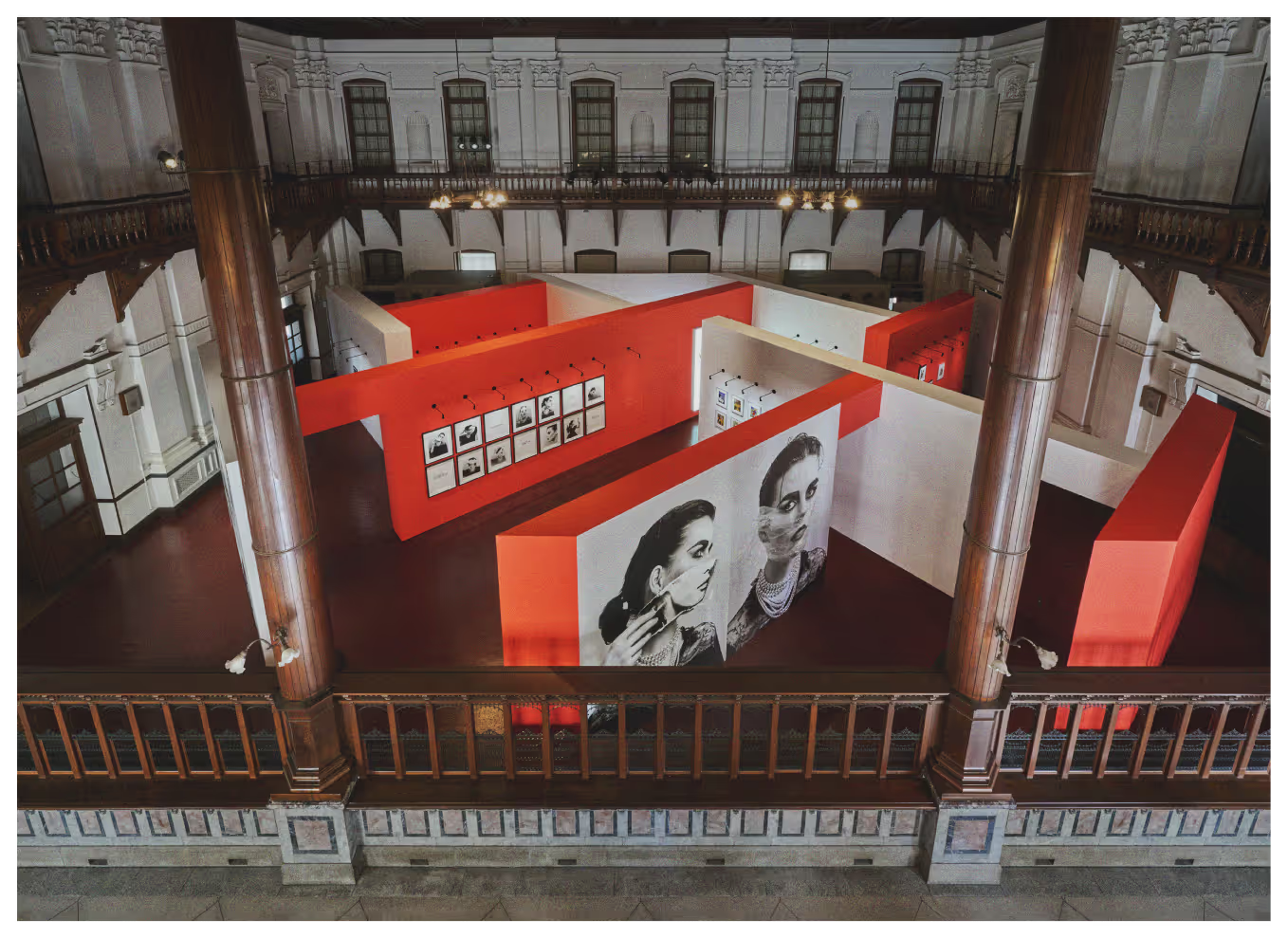
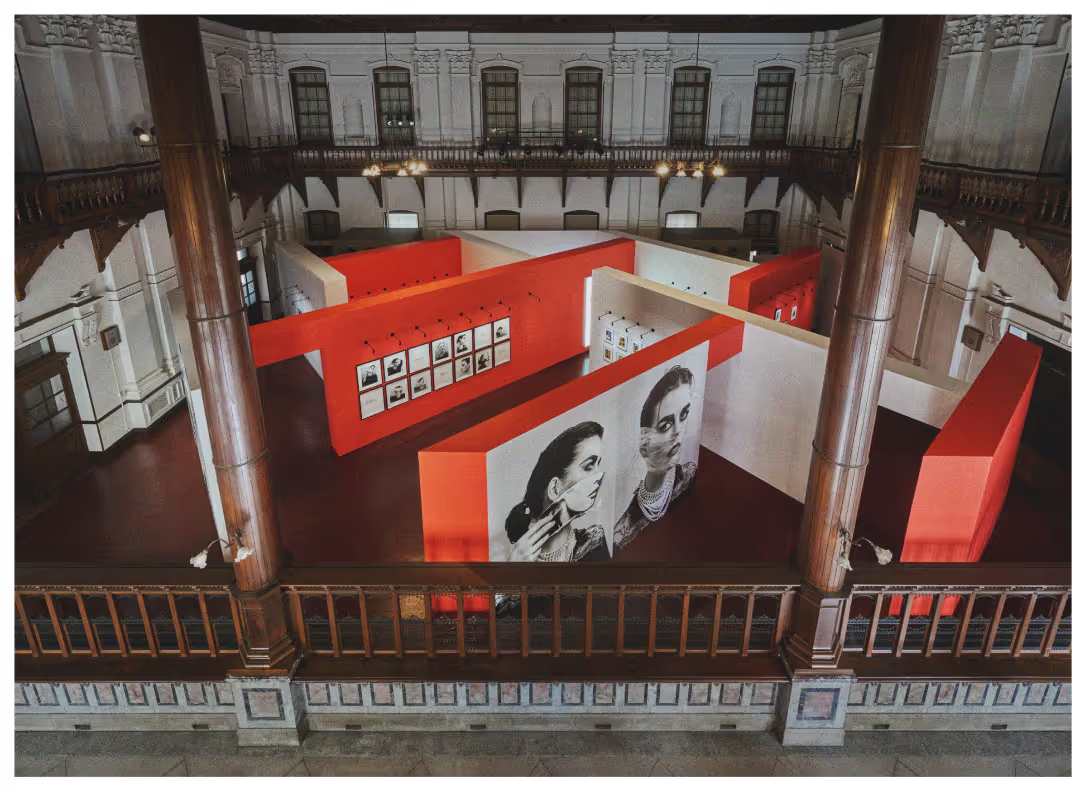
<h1 class="full">Into this layered setting comes LINDER STERLING: GODDESS OF THE MIND, the British artist's first solo show in Japan. Scenographer Kentaro Ishida of KIAS designed freestanding painted walls that rise within the former bank's interior as if about to break free from the historic counter, deliberately set in tension with both the building's classical order and Kyoto's grid, formally echoing Linder's decades-long subversion of conventional gender norms. Approximately ninety works are organized by series across the walls, tracing her practice since the 1970s, with lighting and spacing carefully calibrated within the constraints of the protected building to allow her radical work to be experienced as one continuous whole.</h1>
<h1 class="full">3. Hachiku-an (Former Kawasaki Residence)</h1>
<h1 class="full">Down the street from the museum annex stands one of Kyoto's most precious surviving private residences. Completed in 1926 by cotton cloth merchant Risuke Inoue IV, the Kawasaki Family Residence, now known as Kurochiku Hachiku-an, is a designated Important Tangible Cultural Property of the City of Kyoto, and a rare and ambitious architectural hybrid. The Western-style building was designed by Goichi Takeda, considered the father of modern architecture in the Kansai region, while the tea ceremony rooms and Japanese-style spaces were entrusted to sukiya master Asajiro Uesaka. Frank Lloyd Wright's influence, fashionable during the Taisho Era, runs through it as well. The result is a sprawling 860-square-meter property: a two-story main building, two warehouses, a salon, and interiors that move fluidly between aesthetic worlds. In 2022, Kurochiku Corporation took possession of the residence with the explicit aim of preserving its historical value— a commitment that carries its own quiet poetry, since an ancestor of Kurochiku's current head was among the carpenters who helped build it a century ago.</h1>
<h1 class="full">The exhibition is PHOTO BOOK! PHOTO-BOOK! PHOTOBOOK! curated by Sean O'Toole is a browsable timeline of photobooks from 1945 to 2025, first shown at A4 Arts Foundation in 2022 and now carefully adapted to the spatial logic of Hachiku-an by The Curatorial Studio at A4 Arts Foundation. O'Toole's curatorial conviction is hands-on: "Books are not decorative objects; they are meant to be touched, their ideas engaged." The collection is laid across three long, low tables that invite visitors to sit and read facing the courtyard windows, natural light illuminating the pages. The tables are deliberately restrained in form so the books remain the primary focus — navigation handled through color-coded bookmarks and zabuton cushions marking three chronological sections of the timeline. A smaller adjacent room holds rare and multi-volume publications.</h1>
<h1 class="full">Also set within the traditional kura storehouse of Hachikuan, this exhibition presents the work of Fatma Hassona, The Eye of Gaza, through a deliberately simple spatial composition. In a dimly lit interior, the first floor features a slideshow of photographs Hassona took in Gaza. Capturing fragments of everyday life and the presence of people within the extraordinary conditions of war, these images form a rare record of realities that are often difficult to see from the outside. On the second floor, a single iPhone precariously suspended by a thin wire displays excerpts from online conversations between Hassona and filmmaker Sepideh Farsi during the making of the documentary Put Your Soul on Your Hand and Walk. The iPhone was the only means through which the two could communicate across distance and otherwise impassable Borders. Through these two different media – photography and dialogue – the exhibition reveals moments of connection across separation. Together they appear as a window linking Gaza with the outside world.</h1>
<h1 class="full">4. Kondaya Genbei Chikuin-no-Ma</h1>
<h1 class="full">Along Muromachi, Kyoto's historic kimono district, where textile wholesalers have traded for centuries, Kondaya Genbei has been a major obi sash maker for nearly 280 years. The machiya that houses the business is far more expansive than its street-facing entrance suggests: great beams, intricate joinery, a stone-floored entryway, and a tiny courtyard garden open into room after room of accumulated history. The Taisho-era refinements added by Shinto shrine carpenter Yoshibei Mikami give the space a heightened aesthetic sensibility, nowhere more so than in the Chikuin-no-Ma foyer, a room of warm wood and quiet presence. The current proprietor, 10th-generation Genbei Yamaguchi, began designing his own obi only recently, his practice inspired by a chance encounter at 27 with a thousand-year-old Buddhist monk's robe— patched, crumbling, irreplaceable, that convinced him of the urgency of preserving Japanese textile culture.</h1>
<h1 class="full">Into this space comes THANDIWE MURIU's CAMO, with scenography by Miho Odaka of APLUS DESIGNWORKS built around a single keyword the artist offered as her guiding concept: "bridge." Odaka responded by centering the sliding door, fundamental to Japanese spatial architecture, as the exhibition's organizing principle. Crucially, sliding doors don't fully divide a space; they create permeable boundaries that separate without severing. Here, wax prints — widely accepted as African textiles and central to Muriu's visual language — are reinterpreted as karakami decorative paper and used as partition elements throughout, layering space, textile, and image into a dialogue between Kenyan and Japanese visual cultures that could only emerge in this precise setting.</h1>
<h1 class="full">5. Demachi Masugata Shopping Arcade & DELTA/KYOTOGRAPHIE Permanent Space</h1>
<h1 class="full">Nestled between the confluence of the Kamo and Takano Rivers, the so-called Kamogawa Delta and the Tadasu no Mori forest, a World Heritage Site to the east, with the Kyoto Imperial Palace a ten-minute walk to the west, the Demachi Masugata Shopping Arcade occupies a remarkably storied pocket of the city. The arcade itself is modest and human-scaled, just 40 shops end to end, but alive with the kind of specialty retailers and neighborhood particularity that Kyoto's more tourist-facing streets have long since traded away. In September 2020, KYOTOGRAPHIE opened its permanent art space DELTA here: a mixed-use gallery and café on the ground floor with accommodation above, conceived as a vibrant confluence of East and West, tradition and innovation, mainstream and underground— an experimental venue that takes its cues from the welcoming, open character of the neighborhood around it.</h1>
<h1 class="full">A second body of work by THANDIWE MURIU, new pieces created during her Kyoto residency, is split across both spaces, with scenography by Moemi Hatasaki of TOBIUO ARCHITECTS. In the shopping arcade, Muriu's distinctive textiles hold their own against the visually dense backdrop of everyday commerce, the similarities and differences between her work and its setting generating new perspectives on both. At DELTA, the works are displayed side by side on the wall, inspired by traditional kimono obi arrangements, an invitation to look closely at each piece's individual character and the threads that connect them.</h1>
<h1 class="full">6. Yuuhisai Koudoukan</h1>
<h1 class="full">In a quiet residential neighbourhood west of the Kyoto Imperial Palace, a traditional gate stands as a subtle threshold to another world. Pass through it and follow a cobblestone alley and you arrive at Yuuhisai Koudoukan, a sukiya-style Japanese house cradled within a lush, moss-covered garden spanning approximately 1,815 square meters — a place of cultivated stillness that feels quietly removed from the city surrounding it. The site was originally founded in 1806 as an academy by Confucian scholar Minagawa Kien (1734–1807), a leading intellectual of the mid-Edo period and founder of kaibutsu-gaku, an original field of study exploring the relationship between names and things through phonetics and rhyme. A man of wide-ranging refinement, Kien is said to have gathered as many as 3,000 disciples, with prominent figures of Edo culture including Maruyama Okyo and Ito Jakuchu among those who frequented the academy. Damaged by fire at the end of the Edo period, the prototype of the current building was constructed during the Meiji era, with further renovations carried out in the Showa era. In 2009, when the building and garden were on the verge of demolition, they were saved through the efforts of a group of intellectuals and volunteers and revived under the name Yuuhisai Koudoukan — Yuuhisai being one of Minagawa's pen names. Maintained today with the help of volunteers, the garden moves through the seasons with quiet beauty. The site also houses two tea rooms: Yuukouan, named to commemorate the 100th birthday of Sen Genshitsu, Grand Master of the Urasenke school of tea ceremony, and Kyuukoan, a seven-mat replica of a tea room favoured by Sottakusai, eighth-generation head of the Omotesenke school.</h1>
<h1 class="full">Into this atmosphere of scholarly contemplation and refined restraint, scenographer Seiichiro Takeuchi of Seiichiro Takeuchi Architects has shaped a setting for The Scent of Light, an exhibition by French photographer Juliette Agnel that frames her practice as an exploration conducted through light. Following in the spirit of Kien's pursuit of truth, hanging scrolls embodying the philosophies of both Kien and French writer Roger Caillois are placed throughout the corridors and tokonoma recessed alcoves, acting as visual prompts for contemplation. In the shoin, Agnel's series Dahomey Spirit — channelling the magical atmosphere of sacred sites in Benin — is juxtaposed with Susceptibility of Rocks, in which she captures the subtle yet eloquent presence of mineral stones. A low reading stand and a shoji display wall decorated with stones arranged to resemble the portraits of ancient scholars draw Agnel's photographs into quiet dialogue with their surroundings. The exhibition culminates in a tea room, where a newly produced video work filmed on the island of Yakushima invites a moment of stillness and introspection.</h1>
<h1 class="full">7. ASPHODEL</h1>
<h1 class="full">Gion is a world unto itself. Kyoto's legendary geisha district, home to maiko and geiko who train for years in dance, music, and the arts of hospitality, was at its Edo-period peak said to house some 700 chaya teahouses. Among the top seven houses whose troupes were entitled to wear the red apron, the highest mark of distinction was Tondaya, the predecessor of today's Tomiyo. The chaya culture that has defined Gion for centuries continues here: traditional performing arts of the highest quality, hosted in an impeccably manicured setting of sheer elegance. Built directly beside Tomiyo's traditional architecture is ASPHODEL, a modern concrete gallery space conceived as a deliberate counterpoint rather than a continuation. As 9th-generation proprietress Naomi Ota put it: "We wanted a contrasting parallel, not a blend of old and contemporary." The juxtaposition is the point.</h1>
<h1 class="full">The exhibition is the work of SARI SHIBATA, linking two landscapes separated by continents: Reims in France and Nanto in Japan. Scenographer Miho Odaka of APLUS DESIGNWORKS designed the space around a ridgeline inspired by the mountainous landscape of Shibata's Toyama home, along which a woman's life unfolds from conception. A central "fountain" on the second floor, evoking the Zuisen-ji Temple near the artist's hometown of Inami, acts as a symbolic bridge between Reims and Nanto, reflecting the spirits and shared landscape elements that recur throughout Shibata's work. The entire space is void of color, clearing the field for the colors in the artwork to land with full force. The third and final floor opens into brightness and air; a space of renewal, of return from death back to life.</h1>
<h1 class="full">8. Jushin Kaikan</h1>
<h1 class="full">Commissioned in 1930 by Juemon Tashiro, a businessman, philanthropist, and devoted follower of the Otani branch of Shin Buddhism, to mark his 77th birthday, Jushin Kaikan was designed by architect Midori Takeuchi as a center for Buddhist study and doctrine. Tashiro's philanthropic spirit extended well beyond this building: he established a public interest foundation, founded a library, and ran a free medical clinic. The Kaikan has absorbed many lives in the near-century since— student dormitory, research institute, and for a time the editorial home of the Shinshu Seiten, the collected scriptures of Shin Buddhism. The dormitory officially closed in March 2021, and the building, now draped in ivy, has quietly reopened for special events. Throughout it all, the architecture has aged into something extraordinary: round windows, Art Deco detailing, and a graceful synthesis of Western and Eastern cultural influence that marks it as one of the notable modern architectural works of its era.</h1>
<h1 class="full">The exhibition YVES MARCHAND & ROMAIN MEFFRE: THE SHAPE OF WHAT REMAINS was conceived to honor exactly that accumulated weight of time. Scenographer Shinsuke Tamaki designed the ground floor auditorium as a theatre room, with projected light drawn across the building's characteristic Art Deco elements. On the upper floors, floating walls that deliberately do not touch the floors, walls, or ceilings of the existing building create smaller exhibition spaces — a solution that allows the introduced structures and the artworks they carry to coexist with Jushin Kaikan's layered history without ever disrupting it.</h1>
<h1 class="full">9. Shimadai Gallery</h1>
<h1 class="full">Few Kyoto businesses carry history quite like Shimadai. Trading since 1608, over four centuries, the shinise began as a silk merchant before pivoting in the middle of the Edo period to sake wholesaling, a trade it conducted under the brand name "Shimadai" in partnership with a brewer in Itami, northwest of Osaka. The present building dates from 1883, reconstructed after a fire destroyed the original structure in the final years of the Edo period. It remains a prime example of Kyoto machiya architecture, divided between two wings of distinctly different character: a spacious, sunlit former silk trading salon to the west, and a heavy earthen-walled kura storehouse from the sake merchant era to the east — light and shadow, openness and enclosure, side by side. The name Shimadai itself refers to a traditional decorative bonsai arrangement modelled on the Taoist paradise of Mount Penglai — auspicious symbols of pine, bamboo, plum, crane, tortoise, and an old man and woman arranged to beckon good fortune. It is a name chosen for celebration, and it still fits.</h1>
<h1 class="full">The exhibition is ANTON CORBIJN: PRESENCE, with scenography by Hiromitsu Konishi of miso shaped directly by his experience of visiting Corbijn's Amsterdam studio. Minimal but charged: grey walls, 70s rock playing from a vintage jukebox, the studio became the conceptual template for the gallery space. Grey walls define the sequence of Corbijn's work, their gradations marking transitions within his series. A wall cut at a 45-degree angle opens the space gently, softening what might otherwise feel oppressive, and the triangular piece removed in the process is repurposed as a display table for printed works, a quietly elegant reuse that gives the cut a second life.</h1>
<h1 class="full">10. Higashi Honganji O-genkan</h1>
<h1 class="full">One of Kyoto's most spiritually significant sites, Higashi Honganji, formally known as Shinshu Honbyo, the head temple of the Shinshu Otani sect of Jodo Shinshu, draws visitors year-round to its vast, austere grounds. Its origins trace back to 1272, when a shrine housing a wooden statue of the sect's founder Shinran Shonin, carved faithfully in his likeness, was established at his burial site. Having survived four fires during the Edo period, most of the existing structures were rebuilt during the Meiji era. The O-genkan, completed in 1867, making it the oldest building on the current temple grounds, was among the first structures rebuilt after a devastating fire in 1864 triggered by the Hamaguri-gomon Incident. It remains in use today as the ceremonial entrance for important occasions. Covering approximately 450 square meters, it is distinguished by its traditional irimoya-zukuri architectural style, a striking roof of overlapping wave-shaped sangawara-buki tiles, and a grand ceremonial entrance exceeding ten metres in width. The decoration is deliberately modest, which only deepens the building's solemn, formal presence, its design marking a threshold into a time and space unlike anywhere else.</h1>
<h1 class="full">Into this powerful setting, scenographer Hiromitsu Konishi of miso conceived a deliberate counterpoint: a delicate, feminine space that envelops LEBOHANG KGANYE's REHEARSAL OF MEMORY in quiet contrast to the temple's commanding presence. The entire exhibition space, floor to walls, is covered seamlessly in plain white paper, forming a gentle, continuous cocoon. Within it, light moves in complex ways, illuminating Kganye's artworks and casting shadows that draw out the textures and details of the surrounding space, allowing the work and the architecture to enhance each other's presence without either overpowering the other.</h1>
<h1 class="full">11. ygion</h1>
<h1 class="full">In the northwest corner of Gion, near the antique dealers of Shinmonzen Street, beside the Kamo River and the quietly flowing Shirakawa stream, sits one of the neighborhood's more unexpected recent arrivals. y gion occupies a building previously home to bars and clubs, renovated in 2017 into what its director Takuma Inoue calls a "creative emporium": a deliberately mixed space where music, art, cooking, and other disciplines are brought into contact, on the premise that interesting things emerge from their collision. "We want to rethink the reach of culture," Inoue has said. The space hosts everything from major events to intimate workshops, and its rooftop bar, overlooking the Kamo River in the classic Kyoto tradition of shakkei, or borrowed landscape, is reason enough to visit on its own terms. It is the kind of address that feels entirely of the moment while remaining deeply rooted in the particular character of its neighborhood.</h1>
<h1 class="full">Into this powerful setting, scenographer Hiromitsu Konishi of miso conceived a deliberate counterpoint: a delicate, feminine space that envelops LEBOHANG KGANYE's REHEARSAL OF MEMORY in quiet contrast to the temple's commanding presence. The entire exhibition space, floor to walls, is covered seamlessly in plain white paper, forming a gentle, continuous cocoon. Within it, light moves in complex ways, illuminating Kganye's artworks and casting shadows that draw out the textures and details of the surrounding space, allowing the work and the architecture to enhance each other's presence without either overpowering the other.</h1>
<h1 class="full">12. Kondaya Genbei Kurogura</h1>
<h1 class="full">Tucked within the historic textile district of Kyoto, Kondaya Genbei is one of the city's larger and more characterful machiya shophouses, carrying the weight of over a century of craft heritage. Built over ten years by the 8th-generation proprietor and completed in 1919, the main building was constructed with Shinto shrine carpenter Yoshibei Mikami serving as master craftsman for the Taisho-era portions — an unusual collaboration that earned the house the nickname 'cypress wood shrine.' The kurogura, or black storehouse, sits at the rear of the property, reached through a central walkway. A renovation of an earlier structure, it surprises with strikingly modern touches: black plaster walls and an octagonal dome that create a beautiful tension between Japanese and Western sensibilities, standing in deliberate contrast to the more traditional Taisho-era main building. This spirit of innovation within tradition has long defined Kondaya, and the kurogura's openness to novel expression makes it a natural setting for contemporary art.</h1>
<h1 class="full">Into this layered and quietly theatrical space, scenographer Spinning Plates has shaped the setting for Shine Heroes, an installation by Uruguayan photographer Federico Estol. For the month-long duration of the exhibition, the kura is transformed into the Shine Heroes' Kyoto HQ, a base for collective storytelling in which Estol's visual rhythm is translated directly into architecture. The work unfolds across a sequence of subtly tilted panels, each image occupying its own architectural plane, drawing on the visual language of skewed panels in graphic storytelling to create a gentle spatial rhythm. Some images extend across two panels, forming larger background compositions that link the sequence and reinforce a sense of movement through the space. A second display offers a quieter counterpoint, with images arranged in a more open composition. The exhibition culminates in a circular room that surrounds visitors with the sights and sounds of the Shine Heroes' own self-produced animated short film.</h1>
<h1 class="full">Venue Photography: Takeshi Asano, Naoyuki Ogino</h1>
<h1 class="full">https://www.kyotographie.jp/en/</h1>