
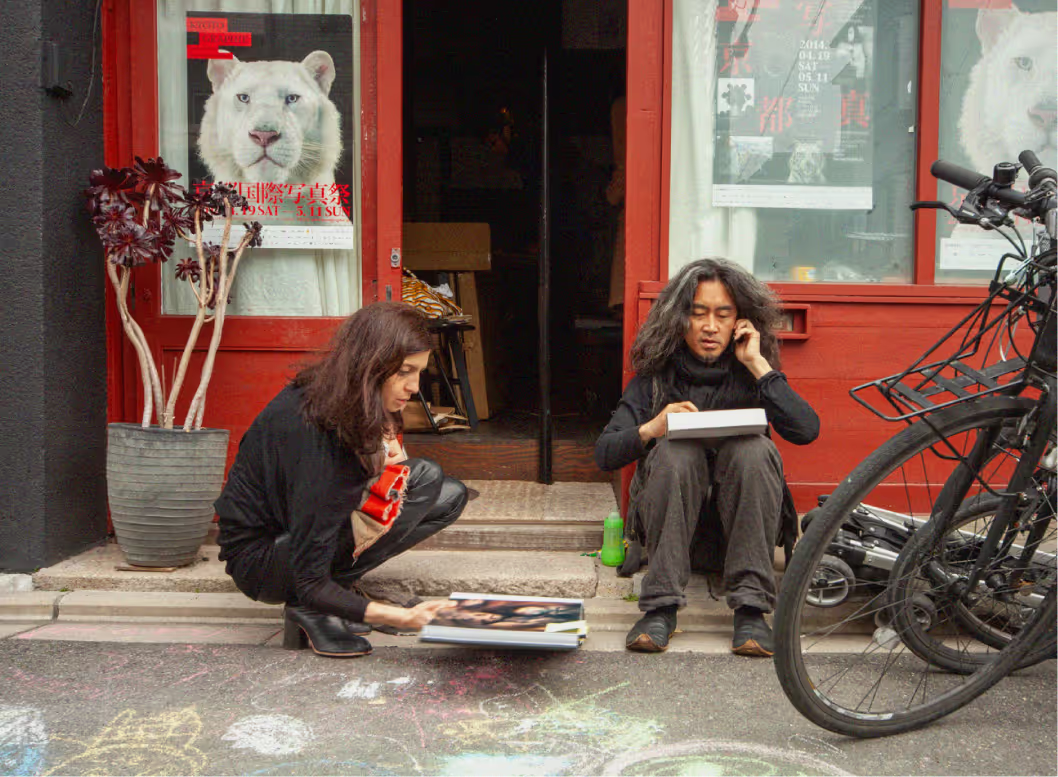

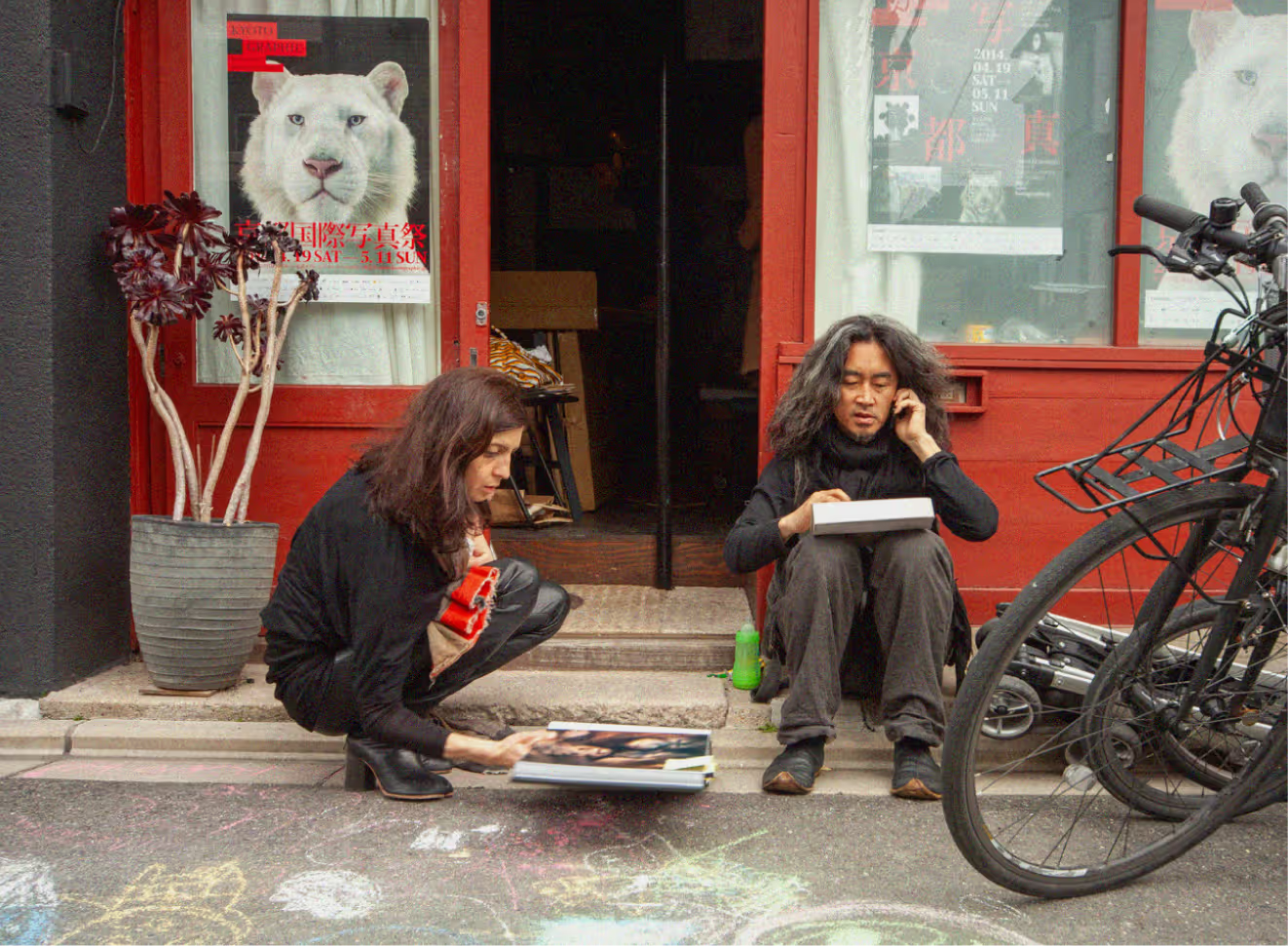
<h1 class="left">Each spring, the city of Kyoto undergoes a transformation. Townhouses, galleries, museums, and temples alike unfold into an immersive celebration of photography as part of the international photography festival, KYOTOGRAPHIE. Unconstrained by the limitations of the conventional exhibition, and with a mission to blur the lines between private and public, KYOTOGRAPHIE undertakes an approach to scenography crafted in collaboration with local architects and artisans, knocking down the restrictive walls of the museum to invite art into public spaces.</h1>
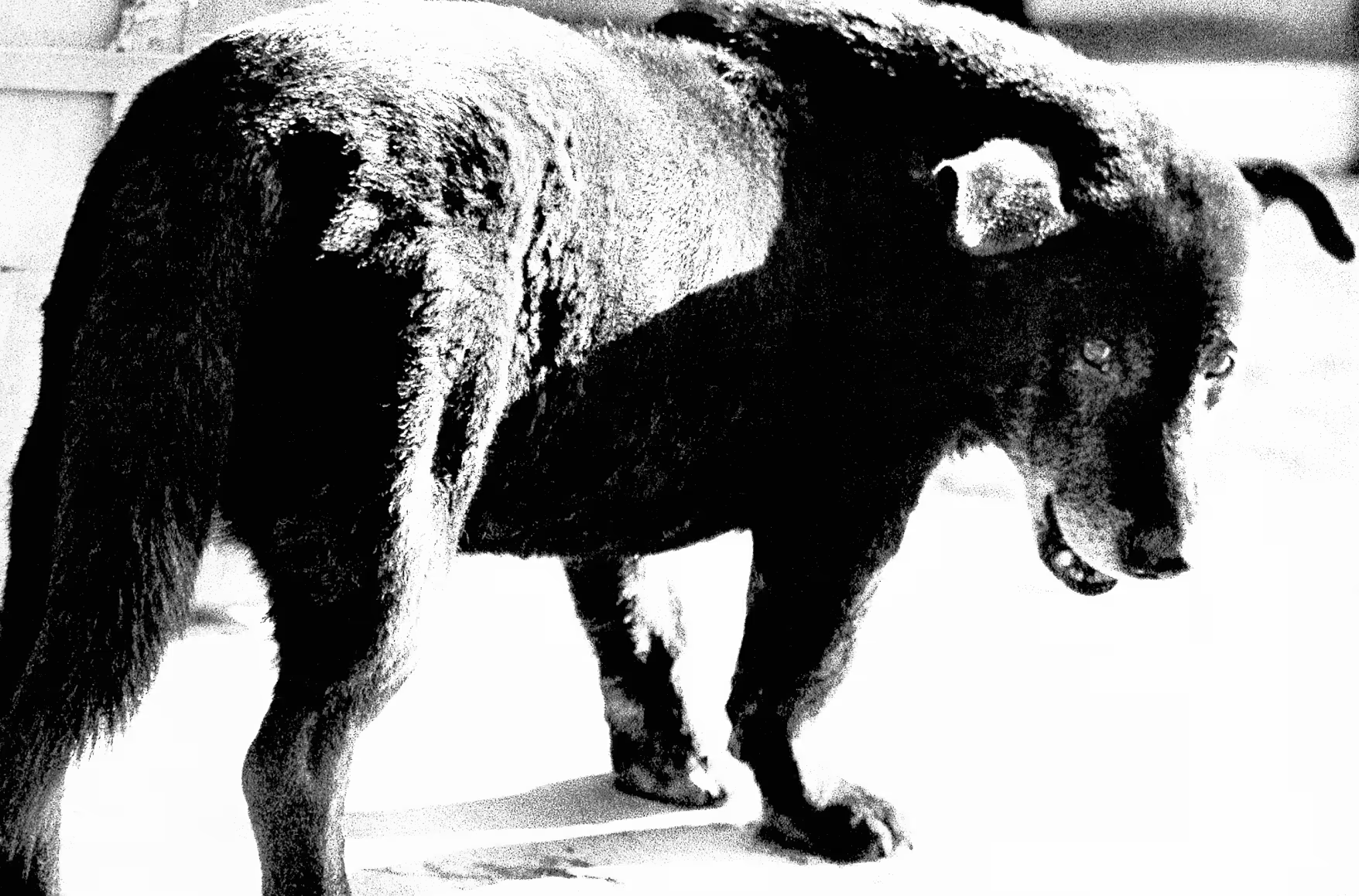
<h1 class="left">This year, as the festival celebrates its 14th edition, it poses a question of what really happens at the very edge— a place of uncertainty, of tension, but also of infinite, utter possibility. It is a question that is inherently present in the medium itself. Throughout history, photography has always existed on the fringes, hovering between document and art, truth and fiction. Now, with the dawn of new technologies and an overload of images, photography faces a new edge. Between the 184th of April and the 175th of May, KYOTOGRAPHIE will host exhibitions that seek to answer the question; including a retrospective on radical Japanese photographer Daido Moriyama's prolific career, Dutch portrait photographer Anton Corbijn's 50-year portrait archive of the world's greatest stars, and Kenyan photographer Thandiwe Muriu's latest body of work produced during her Kyoto residency.</h1>
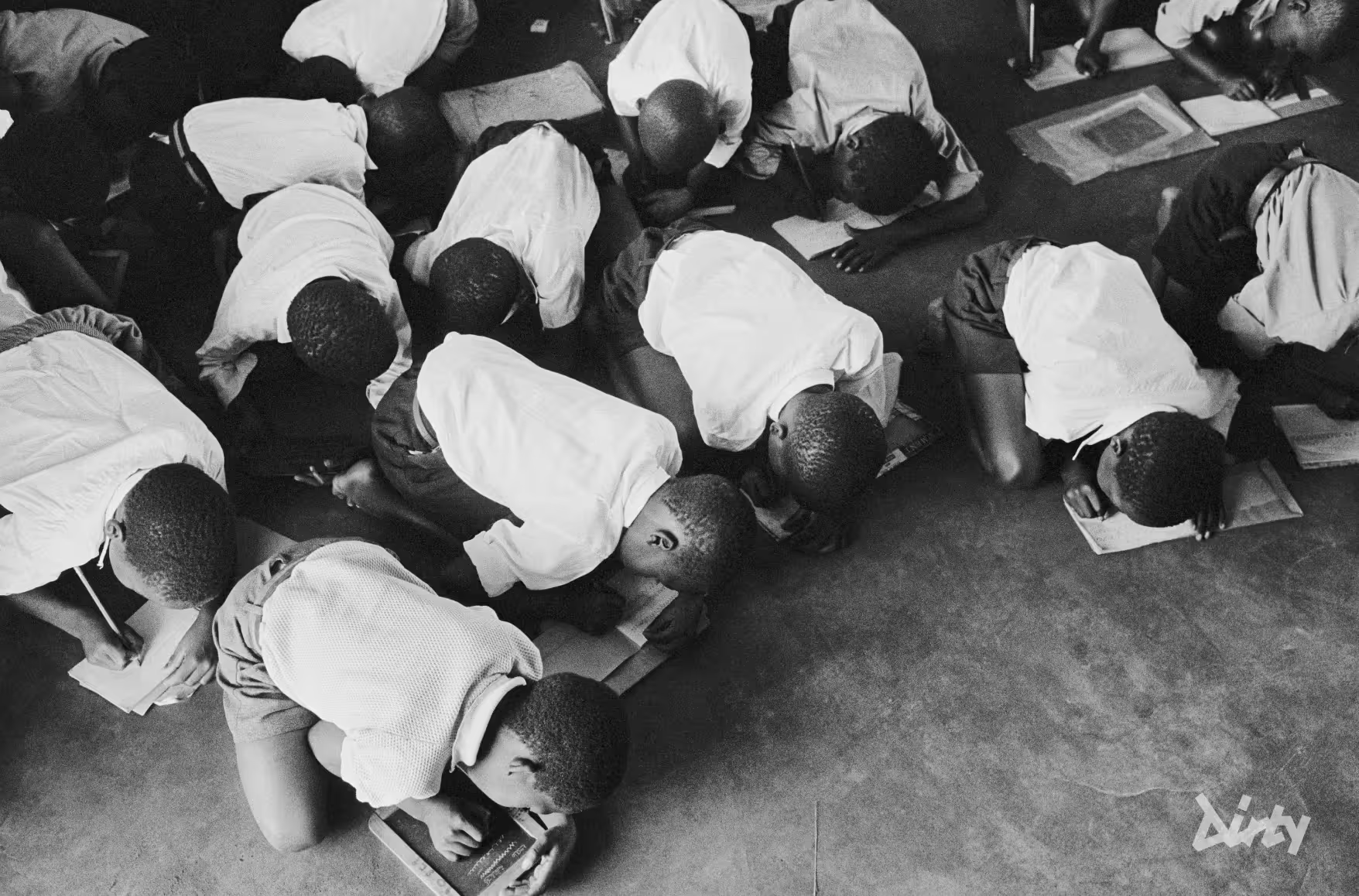
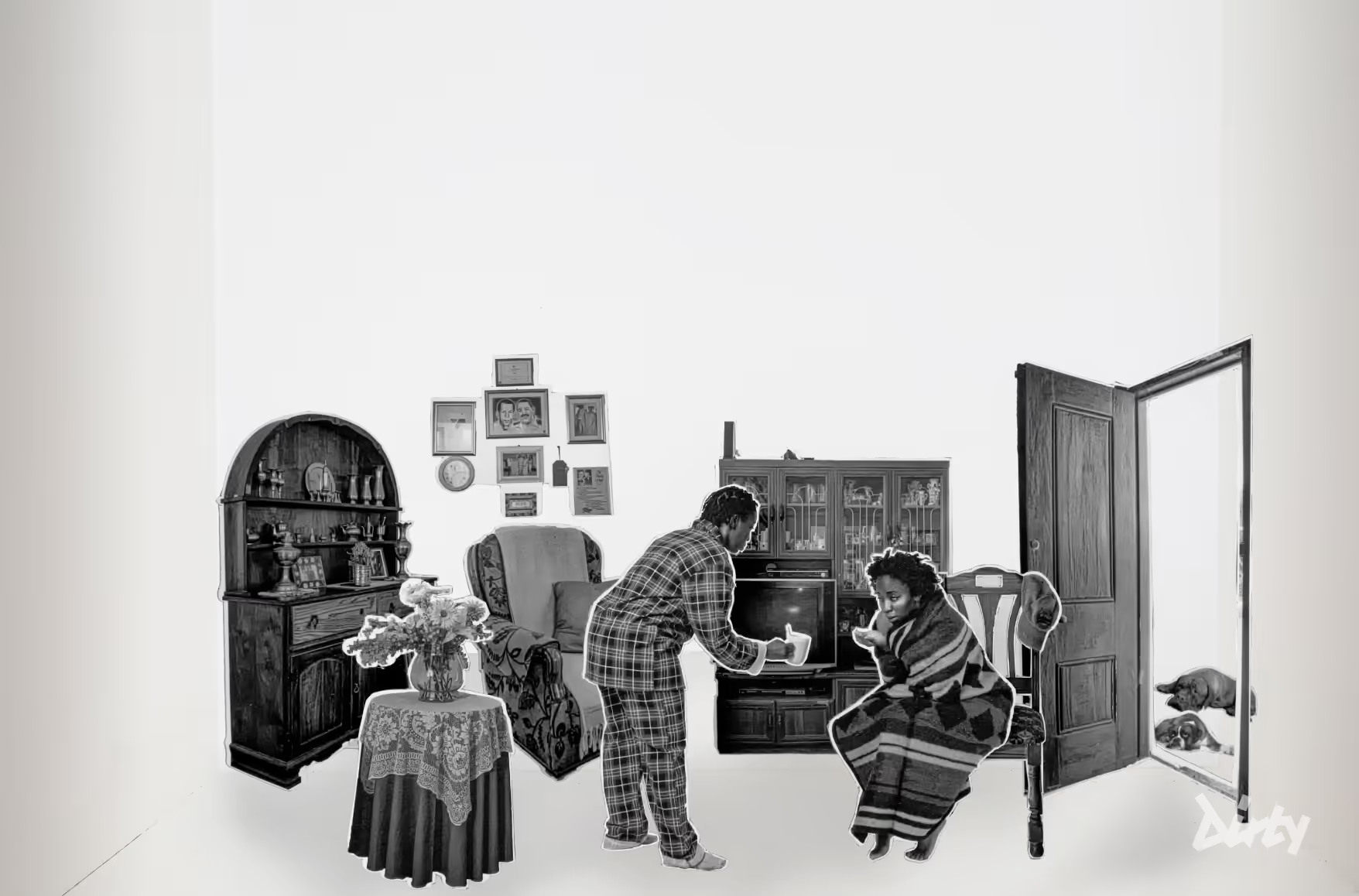
<h1 class="centre">This edition also turns its gaze toward South Africa, with three generations of South African photographers featuring in the program: Ernest Cole's searing document of life under apartheid, Pieter Hugo's wandering contemporary lens, and Lebohang Kganye's layered exploration of personal and political histories. Dr. Siyabulela Mandela, reflecting on the festival’s South Africa focus says, “What spaces like Kyotographie enable is a shift in what we might call “visual sovereignty ", the ability for South African artists to frame their own realities without being positioned primarily as subjects of external interpretation.” Unlike institutions that have historically curated African art within anthropological or developmental narratives, he tells dirty, this exchange "fosters horizontal relationships," creating room for South Africa to be seen not only through its history of struggle, but through its contemporary multiplicities, contradictions, and creative innovations. “This resonates with the ethos of Nelson Mandela, whose political vision emphasized justice, dignity, agency, and the right of people to tell their own stories,” he says.</h1>
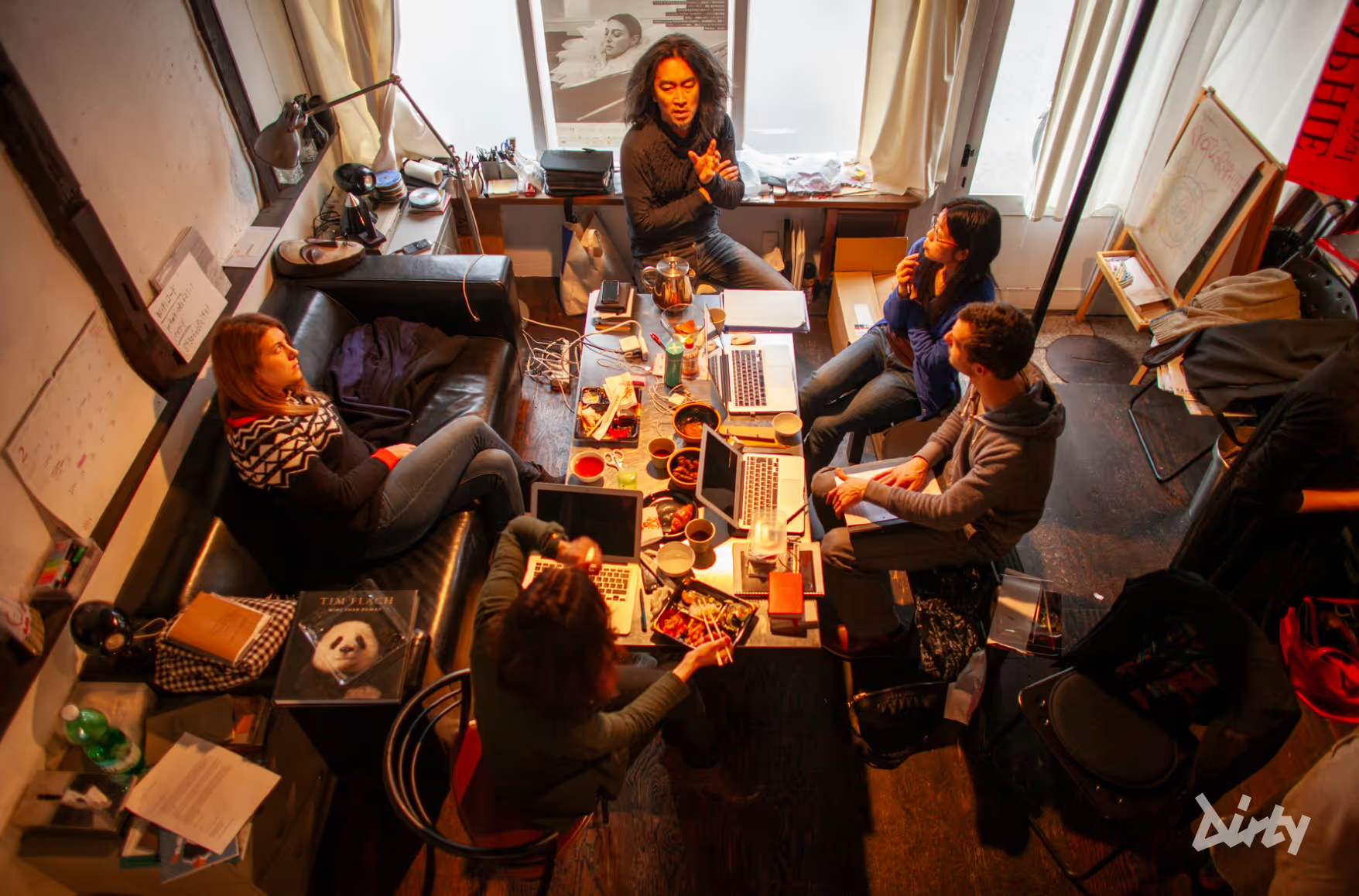
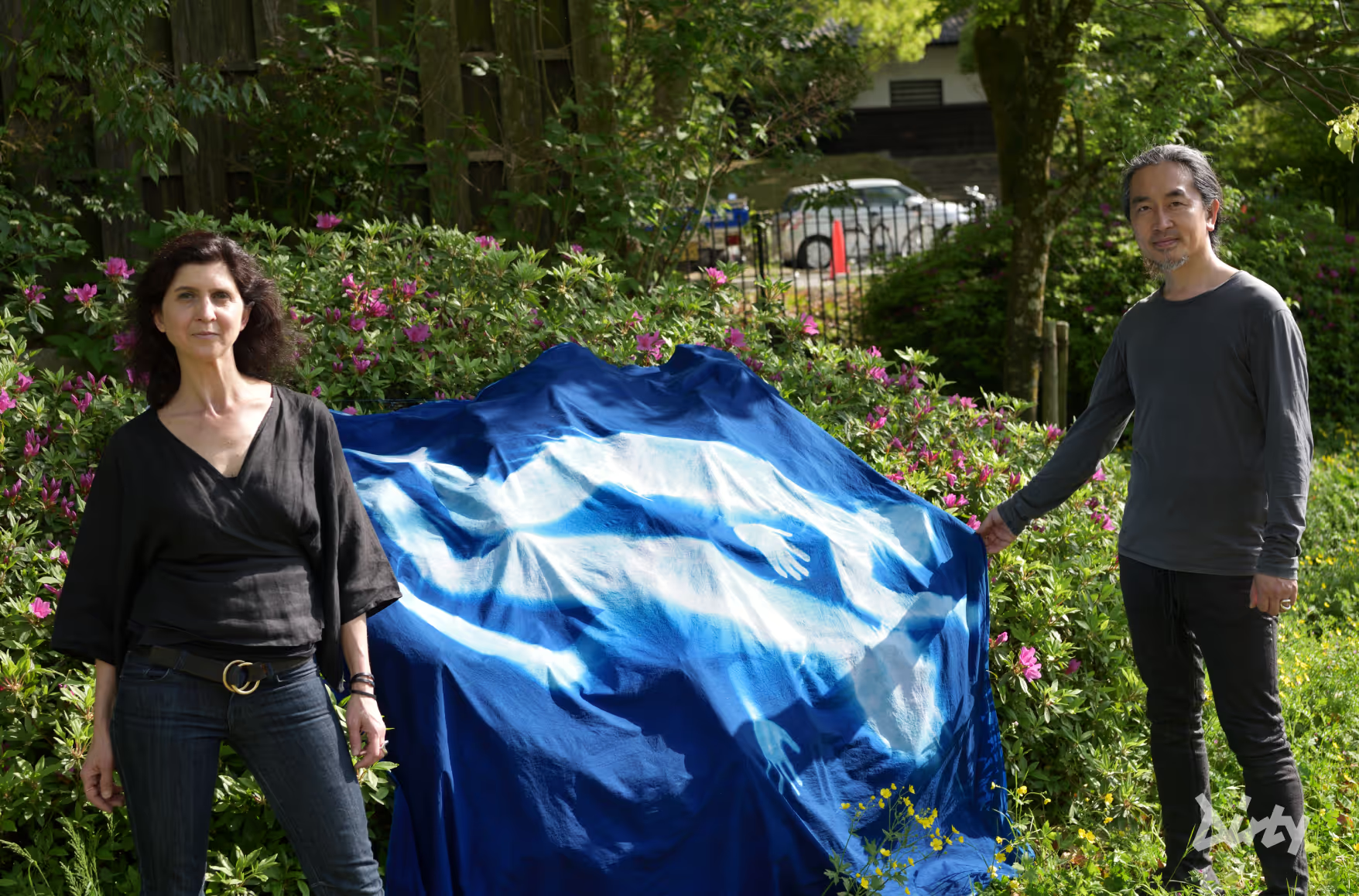
<h1 class="left">In the following conversation with the festival’s founders, Lucille Reyboz and Yusuke Nakanishi, they discuss the long-standing lineage of the festival, Kyoto as the centrestage for cultural transformation in Asia, and the futurity of image-making at the cusp of great upheaval.</h1>
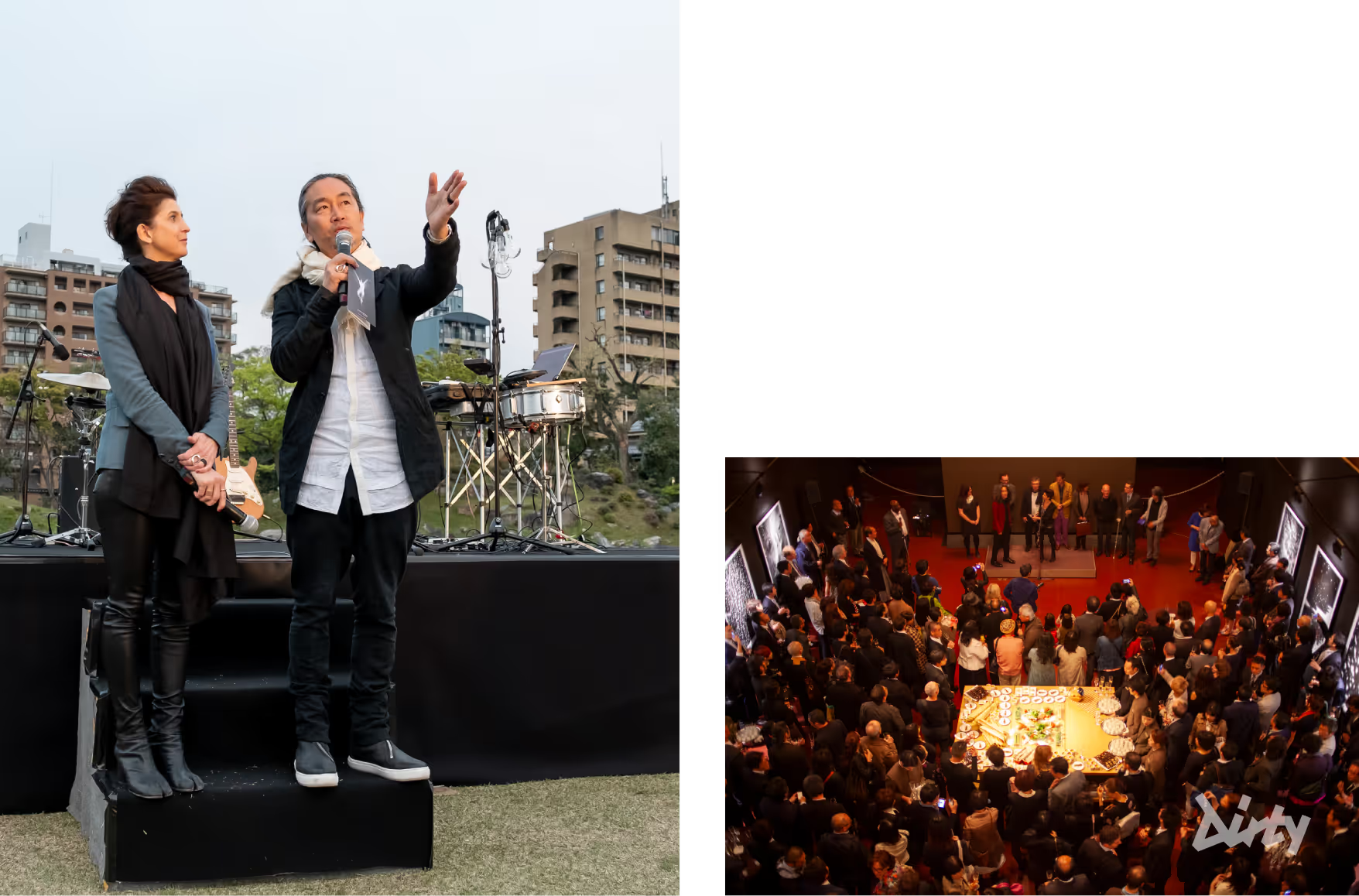
<h1 class="left">dirty: Why was the city of Kyoto chosen as the backdrop for Kyotographie?</h1>
<h1 class="left">Yusuke: The 2011 Tōhoku earthquake and the Fukushima nuclear power plant disaster changed everything for me. What shocked me most was not just the disaster itself, but how the Tokyo Electric Power Company and the media withheld information from the public. They didn't tell citizens how much radiation was coming, they didn't tell people to run. It reminded me of the Minamata pollution crisis in the 1950s and 60s, and I was devastated to realise that after more than half a century, the country still operated the same way. The electricity from Fukushima was being generated for Tokyo, not for the Fukushima people, that felt deeply unjust. I realized the dangers of everything being concentrated in Tokyo. So I left Tokyo and moved to Kyoto, where I met Lucille, and we started Kyotographie as an alternative medium: a festival where we could talk more openly about what's happening in the world.</h1>
<h1 class="left">Lucille: Tokyo, and everything concentrated there, felt like too much. We wanted to think about another kind of city, one more open to international relations, to connection, to a different pace. Kyoto made sense immediately. It's not enormous, but it's compact in the most extraordinary way— traditional culture, spirituality, innovation, and nature all in one place. And I'm convinced that if it weren't Kyoto, we wouldn't have succeeded. It’s such an attractive city also for our partners, we could get the support to continue for all these years. There's a magical aura Kyoto has. It's a dream for artists to exhibit here.</h1>
<h1 class="right">dirty: Can you talk about the overarching vision for Kyotographie that seems to be about blurring the lines between public and private, moving art from museums into public life.</h1>
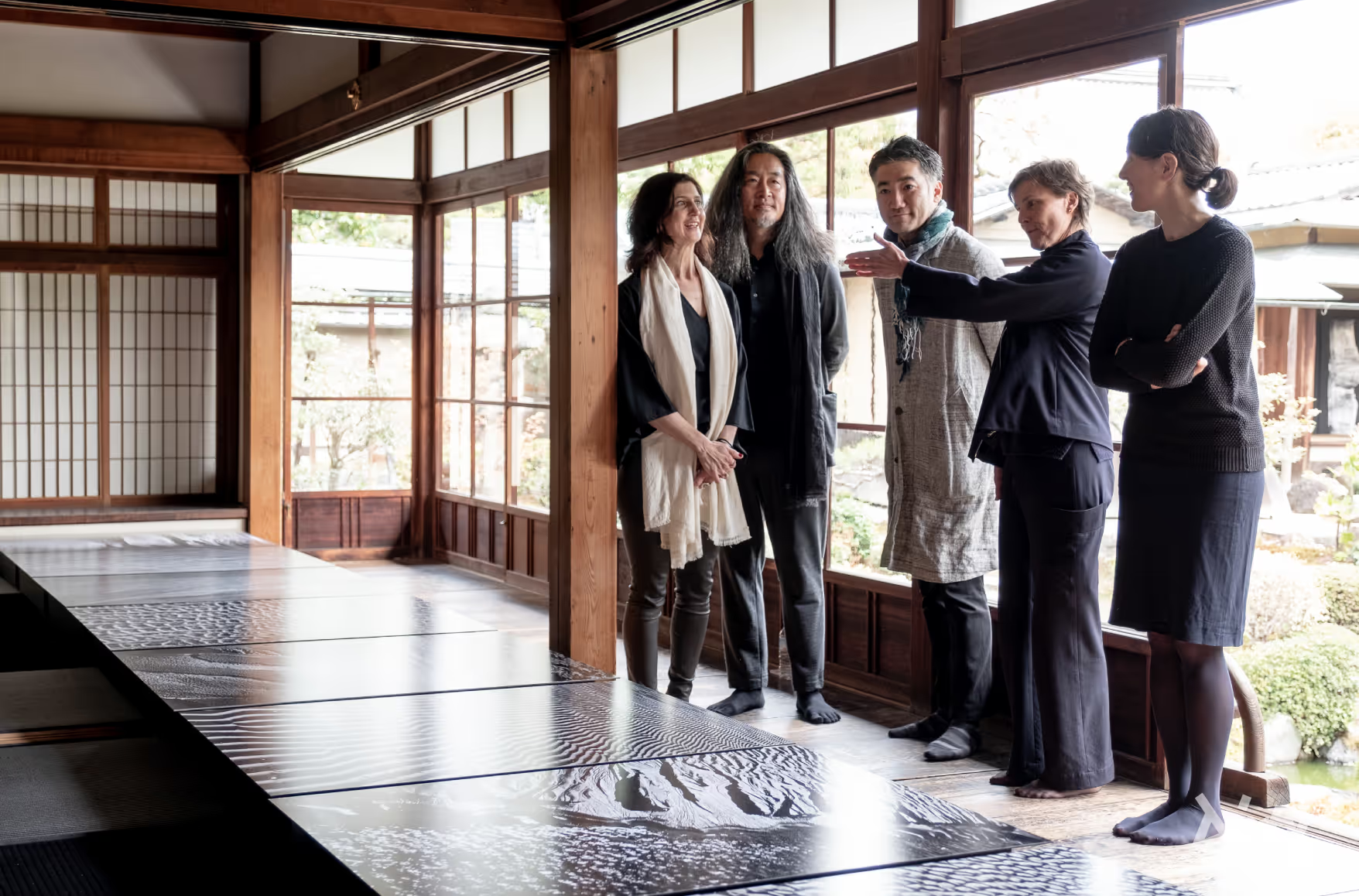
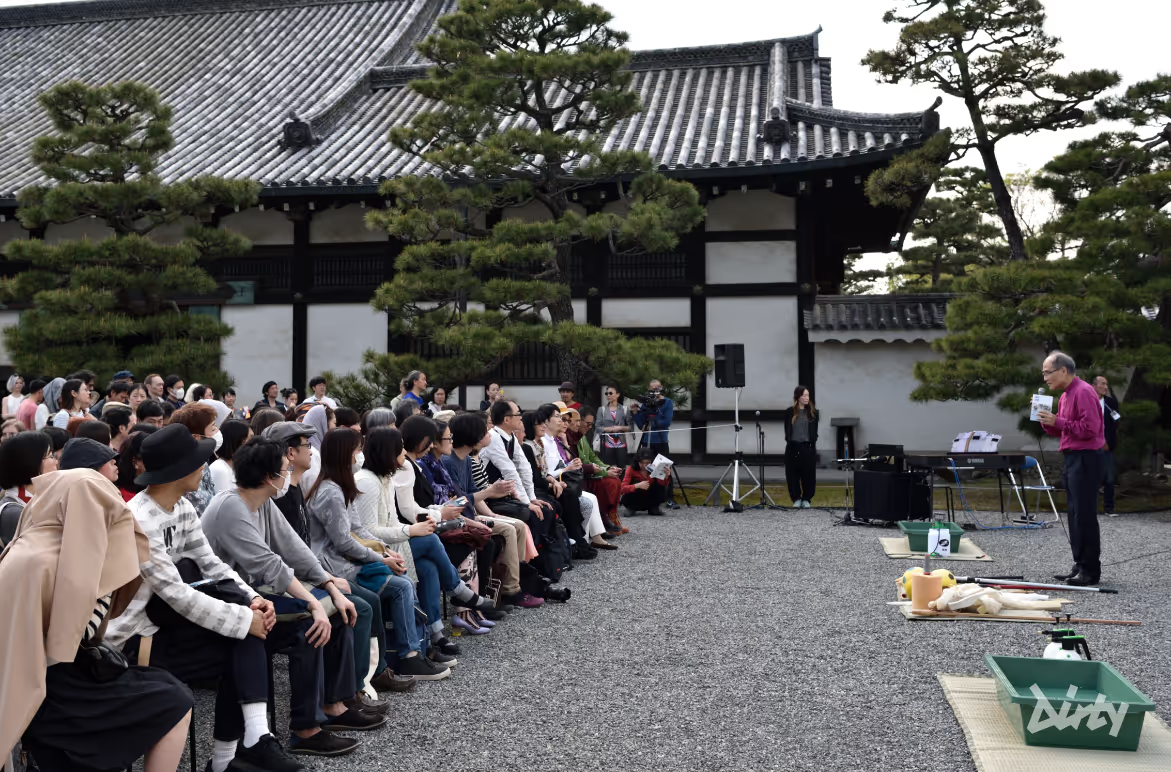
<h1 class="right">Lucille: We don't have a permanent space. We rent temples, private houses, traditional buildings, even the Shogun's Castle. That's what makes it different. Exhibiting inside a centuries-old temple or a family home is a completely different experience to a white cube gallery. And practically, it creates an economy for the city, rental income helps families maintain historic buildings and keeps these spaces alive.</h1>
<h1 class="right">Yusuke: Japan is very divided and sectorised. People who go to museums and galleries are a tiny community, mostly separate from the general public. By using temples and traditional spaces that Japanese people naturally visit, we opened a door for audiences who would never normally walk into an art exhibition. That was always the goal: to make art something you encounter in daily life, not something you have to seek out in a specialised space.</h1>
<h1 class="centre">dirty: How did Kyoto itself receive Kyotographie over the years?</h1>
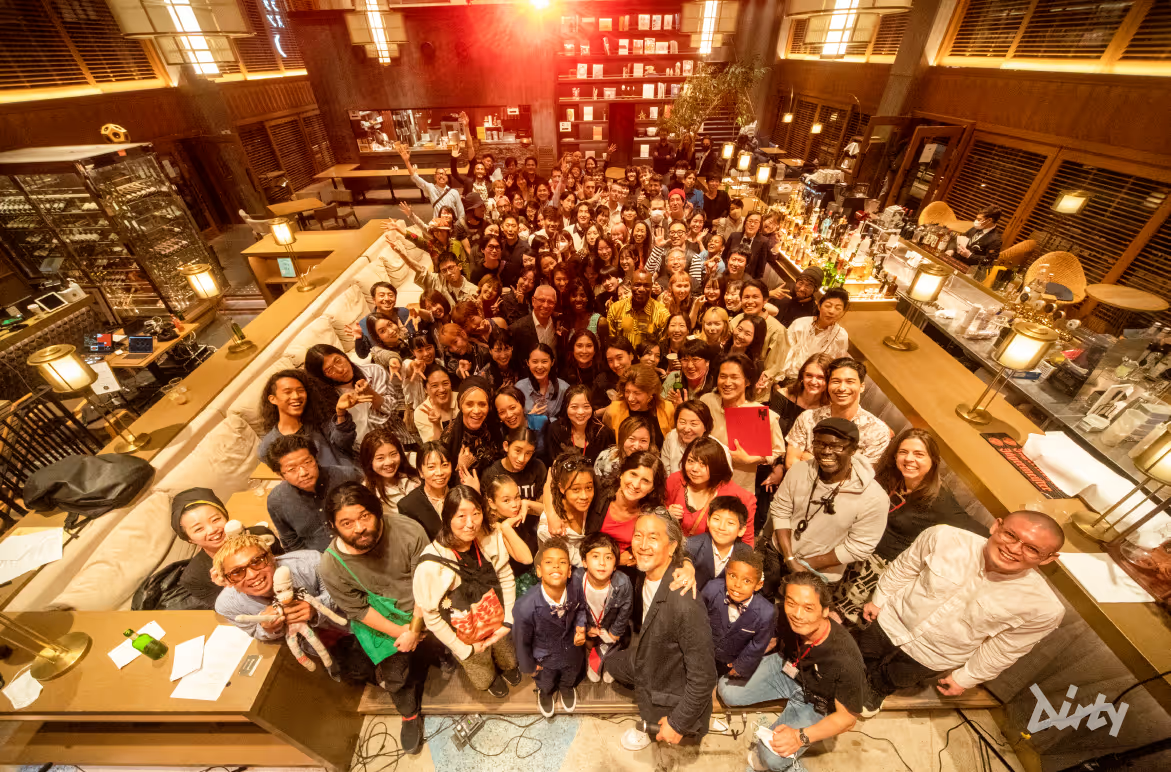
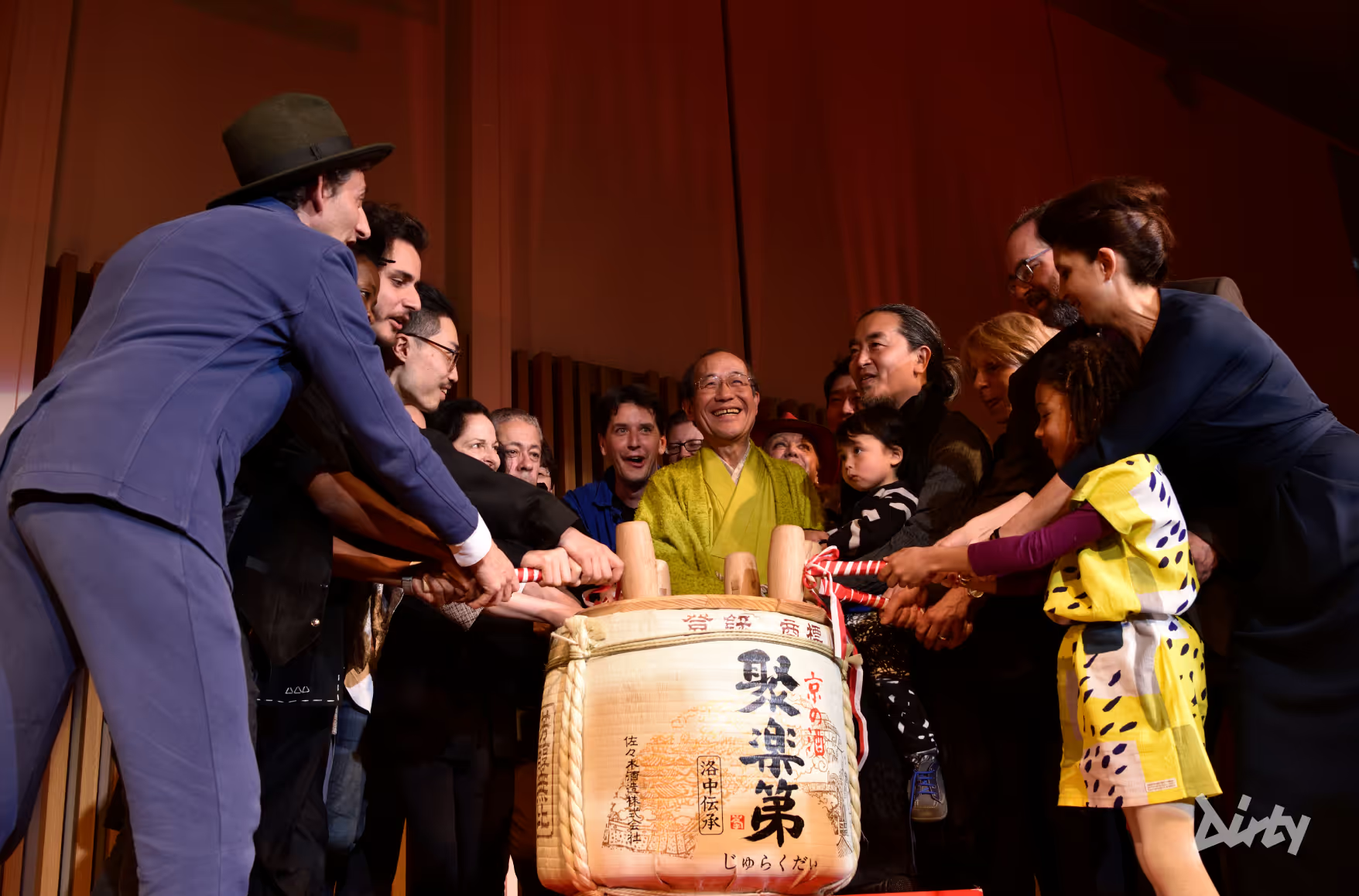
<h1 class="centre">Lucille: Slowly, and with scrutiny. It took some time. At the beginning, our audience was largely people from Tokyo, the art and fashion world, and international visitors. Kyoto people watched from a distance for a long time. They have very high standards; it's a city of excellence in craft, where practices have been refined over centuries. So we knew from the start that every detail of production had to be exceptional. Around the fifth edition, something shifted. People started waiting for us. And then, at our tenth edition, both the city and the prefecture gave us formal awards of recognition. One of our most touching moments was when a Kyoto local told us that Kyotographie was now part of the city's cultural life and not just a visiting event, but something that belongs here.</h1>
<h1 class="centre">Yusuke: Even during the pandemic, when everything was closed, we moved the festival from spring to autumn. Even though everything was closed at that time, the Nijo Castle opened its gates exclusively for our festival. That said a great deal. We are outsiders, and I think that helped. We never tried to become Kyoto people. We stayed strange, in the best sense. Kyoto has a long underground, cultural, history alongside its conservative tradition, and we found our place in that tension as challengers who the city could join without it being their own fault if something went wrong.</h1>
<h1 class="left">dirty: Lucille, you've spoken about shared cultural connections between Japan and the African continent. How does that show up in the exhibitions?</h1>
<h1 class="left">Lucille: From the very first edition, I wanted to show African artists. There's been a trend over the last several years to focus on Africa, but these artists had always been there, it was the gallery world that was slow to catch up. We believed deeply in the talent there. An artist like Prince Gyasi from Ghana was working entirely with an iPhone, posting his work online— the visual intelligence was extraordinary. Five years ago, we formalised this with a residency programme for younger African artists, inviting them to Japan to create entirely new bodies of work.</h1>
<h1 class="left">What the residency confirmed for me was something I had long felt: there is a very real connection between Japan and Africa, particularly West Africa, rooted in animism, in spirituality, in a kind of deep relationship with the world that exists beyond the rational. Japan has remained remarkably preserved in its traditional beliefs while simultaneously developing into a hyper-modern society. When African artists arrive here, I watch them connect so quickly, so naturally, as if they are speaking the same language. We invite them for ten days, and within that time something iconic often emerges. It's genuinely moving to witness.</h1>
<h1 class="right">dirty: How do you curate your network of artists?</h1>
<h1 class="right">Lucille: We begin with the theme. That comes first, and it almost imposes itself on us from the state of the world. From there, we build a kind of story, opening different chapters through the invitation of different artists. We're very deliberate about mixing experimental photographers alongside portrait photographers, artists working at the boundaries of the medium alongside more documentary voices. The goal is an eclectic programme that creates a door for any kind of audience, while still having an underlying coherence.</h1>
<h1 class="right">Yusuke: We are always looking for a new point of view. Art, and photography especially, is still very much controlled by Western countries. So we actively look to Asia, Africa, Latin America, for voices that haven't been absorbed into that framework yet. The most exciting discovery recently has been from India. After we gave a prize to an Indian artist a few years ago, and he spoke about Kyotographie within his community, we've been receiving applications of remarkable quality from young Indian photographers. The work is genuinely fresh; not following a trend, but something very real and original.</h1>
<h1 class="centre">dirty: Let's talk about this year's theme: Edge. Why was this chosen as the theme? What happens at the edge?</h1>
<h1 class="centre">Lucille: At the edge, we hope for rebirth. That's our deepest hope. But we also feel, all of us, globally, that we are genuinely at an edge right now: politically, in Europe, in the US, in Japan where we've just had elections moving toward the far right; environmentally; personally. It felt urgent and honest to name that. But the theme works on two levels simultaneously. In the wider world, we are all teetering at a precipice. And in photography itself, we are at a real edge as the medium is transforming so profoundly, with AI, with installation, with the way artists are refusing the old definitions of what a photograph can be. An artist like Lebohang Kganye from South Africa uses photography in a way that could equally be called painting. So this edition, maybe more than any before, is about how free and versatile and alive the medium actually is.</h1>
<h1 class="centre">Yusuke: Edge can mean danger, but it can also mean fashion, challenge, the new. We wanted to hold both meanings at once. And we hope that by standing at the edge, we create the conditions for change in a good direction.</h1>
<h1 class="left">dirty: Is photography ritualistic? What makes a good photograph?</h1>
<h1 class="left">Lucille: What catches our attention is always a very fresh visual sensibility, something genuine, not following a movement or a trend. When we look at a body of work and understand the world better for having seen it, when we see new realities through it. For me, that's the measure.</h1>
<h1 class="left">Yusuke: It's always about point of view. A new point of view, that's what we're always searching for. Art that makes you see something you hadn't seen before.</h1>
<h1 class="centre">dirty: What is the future of image-making?</h1>
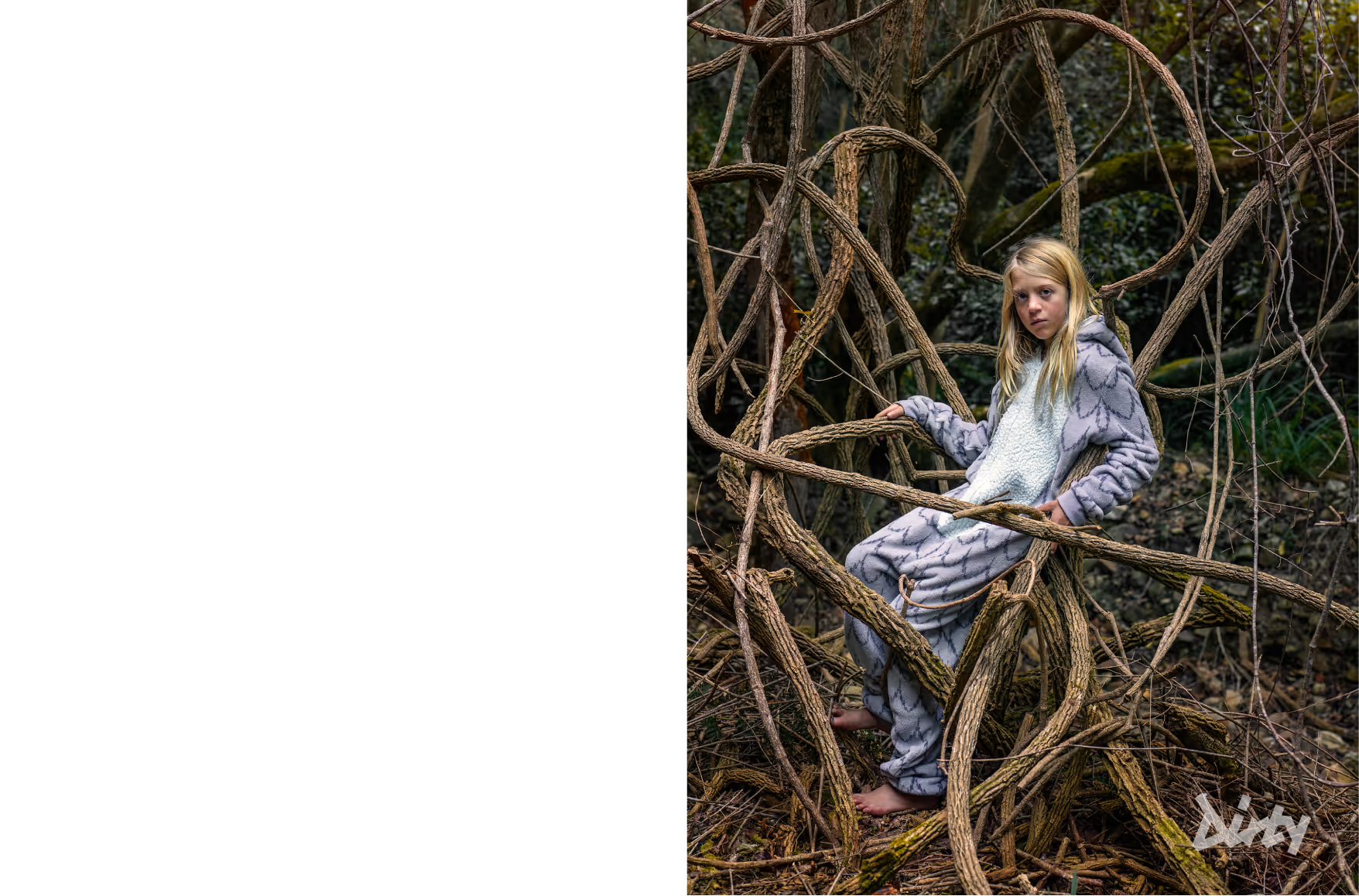
<h1 class="centre">Yusuke: This year, for the first time, we included work made with AI. We refused for a long time, but we felt the time had come, not just to show it, but to create a genuine conversation about what AI can and cannot be in art. We have to stay open. We cannot refuse any form of expression. Our programme has always been built on diversity, on opening many doors. That's how people encounter something they've never seen before, and that's what we keep doing.</h1>
<h1 class="centre">Lucille: I think we have to be conscious about new tools. I remember when we first introduced the idea to show artists using AI, some people in our team stood up and said, “No, we are a photo festival, we cannot show that.” But I personally disagree with that. I remember when digital cameras arrived, I experienced a big change which was very scary at the time. Digital introduced new challenges and changed how we took images; it was cheaper so we could shoot more. And then came the iPhone, which allowed anyone to produce images easily and sometimes beautifully. And the news photographer became fragilized because of this. Each time, we worried, and each time the medium survived and deepened. I believe AI will have limits. More importantly, I think it will force practitioners, the ones who are truly living with this medium, to push their practice further. Mixed media is also developing a lot. I’m quite excited to see what will come out of this.</h1>
<h1 class="centre">And there's real cause for hope in the community itself. Photographers are networking and supporting each other more than ever. There's a particularly moving wave of female Japanese photographers who are using the medium to speak things they couldn't otherwise say, to process personal situations, to survive. For our tenth anniversary, we devoted an entire programme to ten emerging Japanese female artists. Photography has always been more than art; it's a survival tool, a way to share realities across borders. That doesn't go away.</h1>
<h1 class="left">dirty: If Kyotographie exists at an edge itself, where do you hope it moves next?</h1>
<h1 class="left">Lucille: Every year we are on the edge.</h1>
<h1 class="left">Yusuke: Socially, politically, we're constantly talking about taboos in Japan, constantly questioning ourselves, constantly trying to rebirth the festival and challenge something new.</h1>
<h1 class="left">Lucille: I don't think a festival can survive any other way. A festival should constantly question itself and challenge things. Personally, I think the most interesting things are created exactly in these moments of being on the edge, in your own life, in your work, in the world. It's in moments of fragility where you have to reinvent yourself. We're not scared of it. We're welcoming it.</h1>
<h1 class="left">https://www.kyotographie.jp/en/</h1>
<h1 class="full">Each spring, the city of Kyoto undergoes a transformation. Townhouses, galleries, museums, and temples alike unfold into an immersive celebration of photography as part of the international photography festival, KYOTOGRAPHIE. Unconstrained by the limitations of the conventional exhibition, and with a mission to blur the lines between private and public, KYOTOGRAPHIE undertakes an approach to scenography crafted in collaboration with local architects and artisans, knocking down the restrictive walls of the museum to invite art into public spaces.</h1>
<h1 class="full">This year, as the festival celebrates its 14th edition, it poses a question of what really happens at the very edge— a place of uncertainty, of tension, but also of infinite, utter possibility. It is a question that is inherently present in the medium itself. Throughout history, photography has always existed on the fringes, hovering between document and art, truth and fiction. Now, with the dawn of new technologies and an overload of images, photography faces a new edge. Between the 184th of April and the 175th of May, KYOTOGRAPHIE will host exhibitions that seek to answer the question; including a retrospective on radical Japanese photographer Daido Moriyama's prolific career, Dutch portrait photographer Anton Corbijn's 50-year portrait archive of the world's greatest stars, and Kenyan photographer Thandiwe Muriu's latest body of work produced during her Kyoto residency.</h1>
<h1 class="full">This edition also turns its gaze toward South Africa, with three generations of South African photographers featuring in the program: Ernest Cole's searing document of life under apartheid, Pieter Hugo's wandering contemporary lens, and Lebohang Kganye's layered exploration of personal and political histories. Dr. Siyabulela Mandela, reflecting on the festival’s South Africa focus says, “What spaces like Kyotographie enable is a shift in what we might call “visual sovereignty ", the ability for South African artists to frame their own realities without being positioned primarily as subjects of external interpretation.” Unlike institutions that have historically curated African art within anthropological or developmental narratives, he tells dirty, this exchange "fosters horizontal relationships," creating room for South Africa to be seen not only through its history of struggle, but through its contemporary multiplicities, contradictions, and creative innovations. “This resonates with the ethos of Nelson Mandela, whose political vision emphasized justice, dignity, agency, and the right of people to tell their own stories,” he says.</h1>
<h1 class="full">In the following conversation with the festival’s founders, Lucille Reyboz and Yusuke Nakanishi, they discuss the long-standing lineage of the festival, Kyoto as the centrestage for cultural transformation in Asia, and the futurity of image-making at the cusp of great upheaval.</h1>
<h1 class="full">dirty: Why was the city of Kyoto chosen as the backdrop for Kyotographie?</h1>
<h1 class="full">Yusuke: The 2011 Tōhoku earthquake and the Fukushima nuclear power plant disaster changed everything for me. What shocked me most was not just the disaster itself, but how the Tokyo Electric Power Company and the media withheld information from the public. They didn't tell citizens how much radiation was coming, they didn't tell people to run. It reminded me of the Minamata pollution crisis in the 1950s and 60s, and I was devastated to realise that after more than half a century, the country still operated the same way. The electricity from Fukushima was being generated for Tokyo, not for the Fukushima people, that felt deeply unjust. I realized the dangers of everything being concentrated in Tokyo. So I left Tokyo and moved to Kyoto, where I met Lucille, and we started Kyotographie as an alternative medium: a festival where we could talk more openly about what's happening in the world.</h1>
<h1 class="full">Lucille: Tokyo, and everything concentrated there, felt like too much. We wanted to think about another kind of city, one more open to international relations, to connection, to a different pace. Kyoto made sense immediately. It's not enormous, but it's compact in the most extraordinary way— traditional culture, spirituality, innovation, and nature all in one place. And I'm convinced that if it weren't Kyoto, we wouldn't have succeeded. It’s such an attractive city also for our partners, we could get the support to continue for all these years. There's a magical aura Kyoto has. It's a dream for artists to exhibit here.</h1>
<h1 class="full">dirty: Can you talk about the overarching vision for Kyotographie that seems to be about blurring the lines between public and private, moving art from museums into public life.</h1>
<h1 class="full">Lucille: We don't have a permanent space. We rent temples, private houses, traditional buildings, even the Shogun's Castle. That's what makes it different. Exhibiting inside a centuries-old temple or a family home is a completely different experience to a white cube gallery. And practically, it creates an economy for the city, rental income helps families maintain historic buildings and keeps these spaces alive.</h1>
<h1 class="full">Yusuke: Japan is very divided and sectorised. People who go to museums and galleries are a tiny community, mostly separate from the general public. By using temples and traditional spaces that Japanese people naturally visit, we opened a door for audiences who would never normally walk into an art exhibition. That was always the goal: to make art something you encounter in daily life, not something you have to seek out in a specialised space.</h1>
<h1 class="full">dirty: How did Kyoto itself receive Kyotographie over the years?</h1>
<h1 class="full">Lucille: Slowly, and with scrutiny. It took some time. At the beginning, our audience was largely people from Tokyo, the art and fashion world, and international visitors. Kyoto people watched from a distance for a long time. They have very high standards; it's a city of excellence in craft, where practices have been refined over centuries. So we knew from the start that every detail of production had to be exceptional. Around the fifth edition, something shifted. People started waiting for us. And then, at our tenth edition, both the city and the prefecture gave us formal awards of recognition. One of our most touching moments was when a Kyoto local told us that Kyotographie was now part of the city's cultural life and not just a visiting event, but something that belongs here.</h1>
<h1 class="full">Yusuke: Even during the pandemic, when everything was closed, we moved the festival from spring to autumn. Even though everything was closed at that time, the Nijo Castle opened its gates exclusively for our festival. That said a great deal. We are outsiders, and I think that helped. We never tried to become Kyoto people. We stayed strange, in the best sense. Kyoto has a long underground, cultural, history alongside its conservative tradition, and we found our place in that tension as challengers who the city could join without it being their own fault if something went wrong.</h1>
<h1 class="full">dirty: Lucille, you've spoken about shared cultural connections between Japan and the African continent. How does that show up in the exhibitions?</h1>
<h1 class="full">Lucille: From the very first edition, I wanted to show African artists. There's been a trend over the last several years to focus on Africa, but these artists had always been there, it was the gallery world that was slow to catch up. We believed deeply in the talent there. An artist like Prince Gyasi from Ghana was working entirely with an iPhone, posting his work online— the visual intelligence was extraordinary. Five years ago, we formalised this with a residency programme for younger African artists, inviting them to Japan to create entirely new bodies of work.</h1>
<h1 class="full">What the residency confirmed for me was something I had long felt: there is a very real connection between Japan and Africa, particularly West Africa, rooted in animism, in spirituality, in a kind of deep relationship with the world that exists beyond the rational. Japan has remained remarkably preserved in its traditional beliefs while simultaneously developing into a hyper-modern society. When African artists arrive here, I watch them connect so quickly, so naturally, as if they are speaking the same language. We invite them for ten days, and within that time something iconic often emerges. It's genuinely moving to witness.</h1>
<h1 class="full">dirty: How do you curate your network of artists?</h1>
<h1 class="full">Lucille: We begin with the theme. That comes first, and it almost imposes itself on us from the state of the world. From there, we build a kind of story, opening different chapters through the invitation of different artists. We're very deliberate about mixing experimental photographers alongside portrait photographers, artists working at the boundaries of the medium alongside more documentary voices. The goal is an eclectic programme that creates a door for any kind of audience, while still having an underlying coherence.</h1>
<h1 class="full">Yusuke: We are always looking for a new point of view. Art, and photography especially, is still very much controlled by Western countries. So we actively look to Asia, Africa, Latin America, for voices that haven't been absorbed into that framework yet. The most exciting discovery recently has been from India. After we gave a prize to an Indian artist a few years ago, and he spoke about Kyotographie within his community, we've been receiving applications of remarkable quality from young Indian photographers. The work is genuinely fresh; not following a trend, but something very real and original.</h1>
<h1 class="full">dirty: Let's talk about this year's theme: Edge. Why was this chosen as the theme? What happens at the edge?</h1>
<h1 class="full">Lucille: At the edge, we hope for rebirth. That's our deepest hope. But we also feel, all of us, globally, that we are genuinely at an edge right now: politically, in Europe, in the US, in Japan where we've just had elections moving toward the far right; environmentally; personally. It felt urgent and honest to name that. But the theme works on two levels simultaneously. In the wider world, we are all teetering at a precipice. And in photography itself, we are at a real edge as the medium is transforming so profoundly, with AI, with installation, with the way artists are refusing the old definitions of what a photograph can be. An artist like Lebohang Kganye from South Africa uses photography in a way that could equally be called painting. So this edition, maybe more than any before, is about how free and versatile and alive the medium actually is.</h1>
<h1 class="full">Yusuke: Edge can mean danger, but it can also mean fashion, challenge, the new. We wanted to hold both meanings at once. And we hope that by standing at the edge, we create the conditions for change in a good direction.</h1>
<h1 class="full">dirty: Is photography ritualistic? What makes a good photograph?</h1>
<h1 class="full">Lucille: What catches our attention is always a very fresh visual sensibility, something genuine, not following a movement or a trend. When we look at a body of work and understand the world better for having seen it, when we see new realities through it. For me, that's the measure.</h1>
<h1 class="full">Yusuke: It's always about point of view. A new point of view, that's what we're always searching for. Art that makes you see something you hadn't seen before.</h1>
<h1 class="full">dirty: What is the future of image-making?</h1>
<h1 class="full">Yusuke: This year, for the first time, we included work made with AI. We refused for a long time, but we felt the time had come, not just to show it, but to create a genuine conversation about what AI can and cannot be in art. We have to stay open. We cannot refuse any form of expression. Our programme has always been built on diversity, on opening many doors. That's how people encounter something they've never seen before, and that's what we keep doing.</h1>
<h1 class="full">Lucille: I think we have to be conscious about new tools. I remember when we first introduced the idea to show artists using AI, some people in our team stood up and said, “No, we are a photo festival, we cannot show that.” But I personally disagree with that. I remember when digital cameras arrived, I experienced a big change which was very scary at the time. Digital introduced new challenges and changed how we took images; it was cheaper so we could shoot more. And then came the iPhone, which allowed anyone to produce images easily and sometimes beautifully. And the news photographer became fragilized because of this. Each time, we worried, and each time the medium survived and deepened. I believe AI will have limits. More importantly, I think it will force practitioners, the ones who are truly living with this medium, to push their practice further. Mixed media is also developing a lot. I’m quite excited to see what will come out of this.</h1>
<h1 class="full">And there's real cause for hope in the community itself. Photographers are networking and supporting each other more than ever. There's a particularly moving wave of female Japanese photographers who are using the medium to speak things they couldn't otherwise say, to process personal situations, to survive. For our tenth anniversary, we devoted an entire programme to ten emerging Japanese female artists. Photography has always been more than art; it's a survival tool, a way to share realities across borders. That doesn't go away.</h1>
<h1 class="full">dirty: If Kyotographie exists at an edge itself, where do you hope it moves next?</h1>
<h1 class="full">Lucille: Every year we are on the edge.</h1>
<h1 class="full">Yusuke: Socially, politically, we're constantly talking about taboos in Japan, constantly questioning ourselves, constantly trying to rebirth the festival and challenge something new.</h1>
<h1 class="full">Lucille: I don't think a festival can survive any other way. A festival should constantly question itself and challenge things. Personally, I think the most interesting things are created exactly in these moments of being on the edge, in your own life, in your work, in the world. It's in moments of fragility where you have to reinvent yourself. We're not scared of it. We're welcoming it.</h1>
<h1 class="full">https://www.kyotographie.jp/en/</h1>