


<h1 class="left">If you've been following Comme des Garçons Parfums for any stretch of time, you'll know that Christian Astuguevieille didn't do perfume the way everyone else does perfume. So when To Vetiver arrives as the last perfume he made before his passing in February 2026, it feels right that it isn't a bottle with a vetiver note tucked quietly into the dry-down. It is, as the name suggests, an entire dedication. A love letter written in grass and resin and smoke.</h1>
<h1 class="left">The launch dropped first on May 6th at the Fondazione Dries van Noten's shop in Venice, timed to the opening of the Biennale — a choice that feels so CDG it practically writes itself. Art city, ancient water, a perfume that traces its ingredients back to some of the oldest civilisations on record. The name vetiver itself is etched into the Bhagavad Gita; myrrh turns up in Mesopotamian tablets from Akkadia and Sumeria. There's something quietly audacious about launching something this steeped in antiquity at the most contemporary of cultural gatherings.</h1>
<h1 class="left">Composed by Antoine Maisondieu — the nose behind the formula — To Vetiver opens with Black Pepper Absolute and White Thyme Oil from Spain, both punchy and angular, before the heart arrives: Vetiver Oil and Opoponax, an aromatic resin historically used in sacred fumigations. The base settles into Ambrofix, Musk, and Myrrh Resinoid. On paper it reads like a roster of ingredients your grandmother's temple would recognise. On skin, the effect is something rawer — earthy without being muddy, woody-spicy without tipping into the kind of vetiver that fills airport duty-frees. Familiar enough to place, strange enough to keep you guessing.</h1>
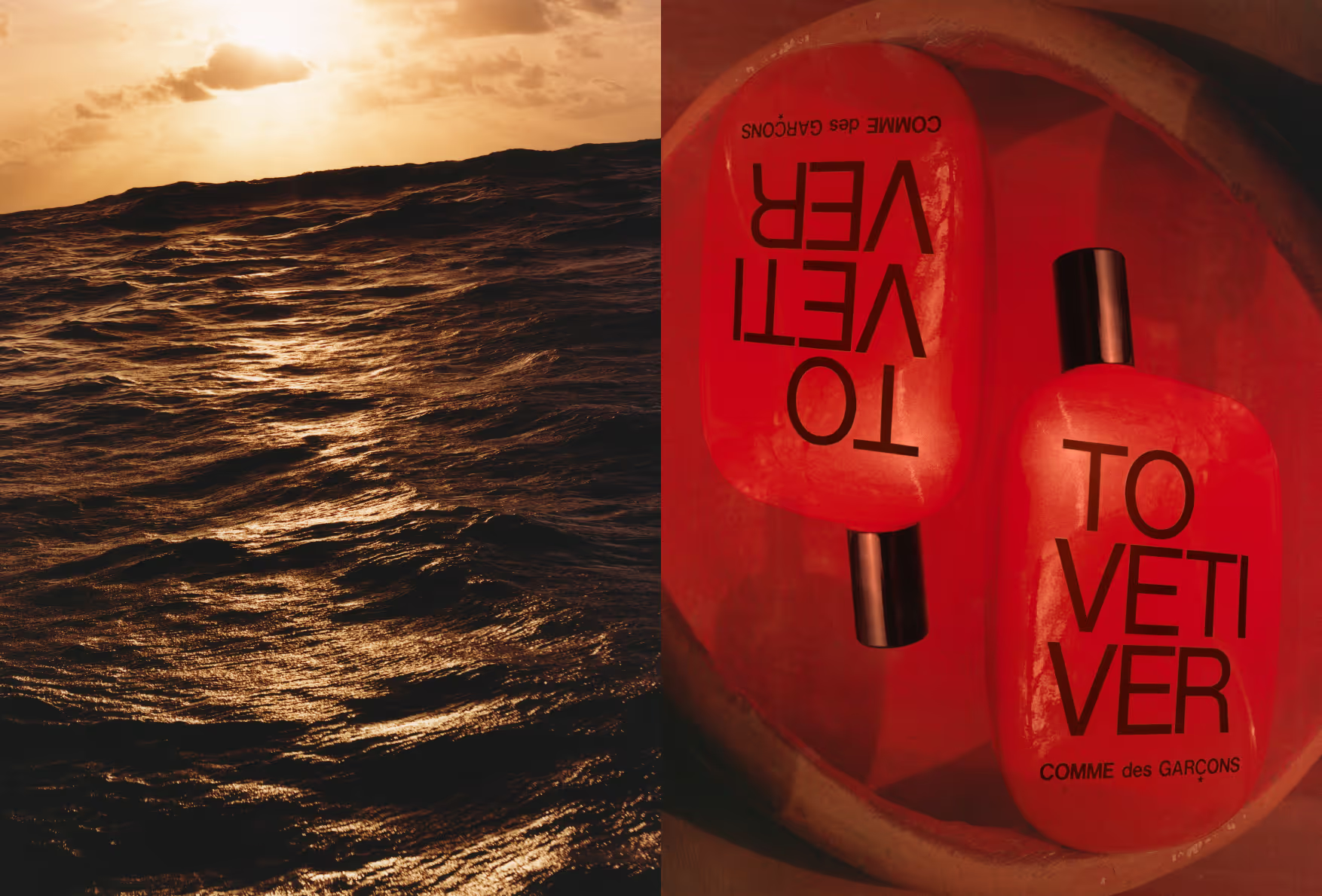
<h1 class="left">Then there's the bottle — the classic CDG flat form, this time in red. Not the green that vetiver almost always gets. Just red, quietly making its point.</h1>

<h1 class="left">What makes this a departure — and why it's worth paying attention to — is that To Vetiver is a genuinely sincere perfume from a house that built its reputation on deliberate strangeness. When we covered CDG's 30th anniversary and the launch of Odeur 10, we were talking about hydrogen peroxide and bleach as olfactory inspiration, about disrupting the categories of pleasant and unpleasant entirely. Astuguevieille's whole thing is that he's not interested in the conventional idea of what smells good. So to watch him turn, with total earnestness, and say this ingredient — this ancient, unremarkable grass — deserves everything we have, is its own kind of radical act.</h1>
<h1 class="left">It's also deeply personal. To Vetiver is rooted in Astuguevieille's long-standing obsession with the ingredient — a creative director making something because he simply loves the thing, not because the market demanded it. Vetiver, honoured, in every layer.</h1>
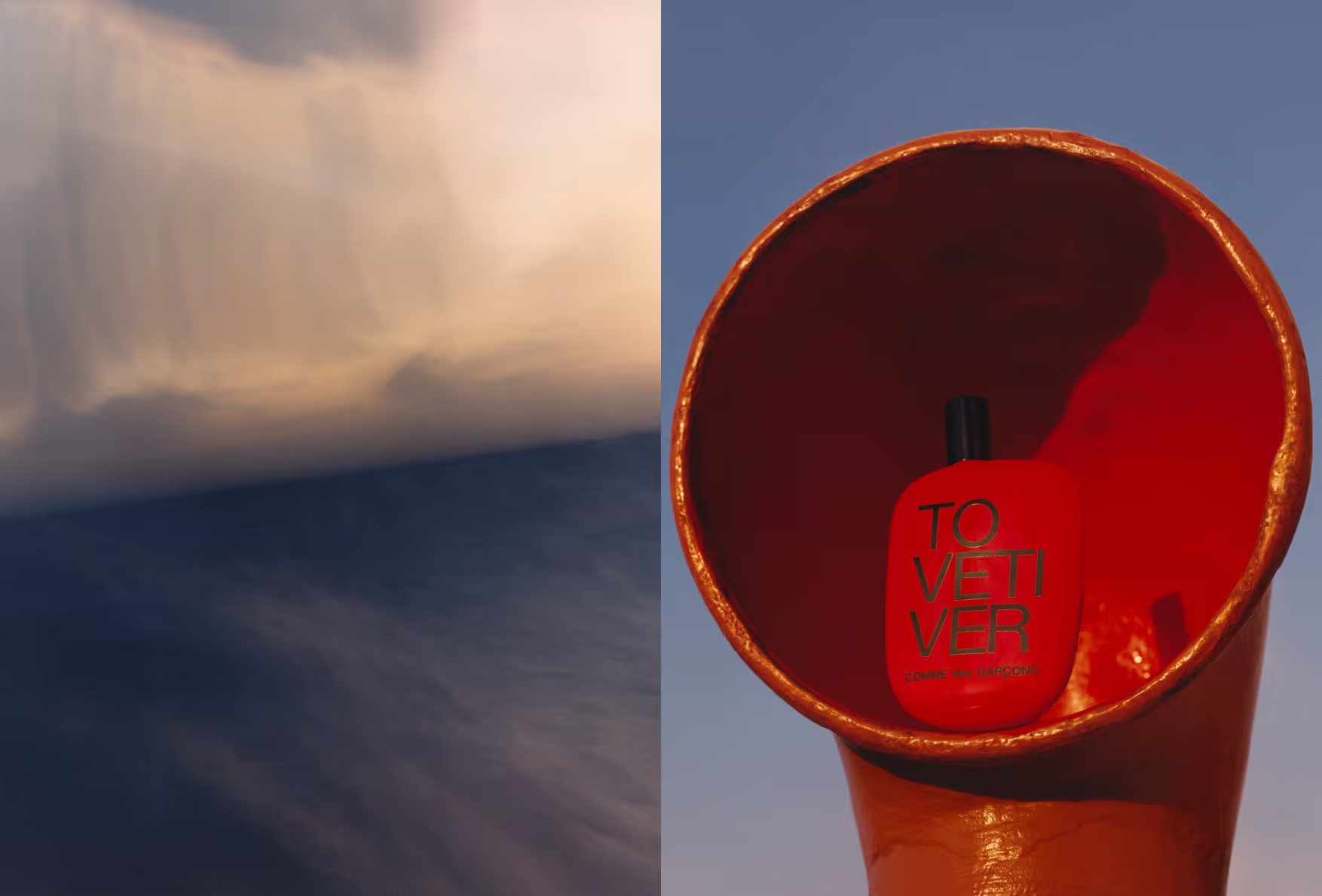
<h1 class="left">Photographer: Jamie Hawkesworth, Creative Direction: Ronnie Cooke Newhouse and Karl Bolander</h1>
<h1 class="full">If you've been following Comme des Garçons Parfums for any stretch of time, you'll know that Christian Astuguevieille didn't do perfume the way everyone else does perfume. So when To Vetiver arrives as the last perfume he made before his passing in February 2026, it feels right that it isn't a bottle with a vetiver note tucked quietly into the dry-down. It is, as the name suggests, an entire dedication. A love letter written in grass and resin and smoke.</h1>
<h1 class="full">The launch dropped first on May 6th at the Fondazione Dries van Noten's shop in Venice, timed to the opening of the Biennale — a choice that feels so CDG it practically writes itself. Art city, ancient water, a perfume that traces its ingredients back to some of the oldest civilisations on record. The name vetiver itself is etched into the Bhagavad Gita; myrrh turns up in Mesopotamian tablets from Akkadia and Sumeria. There's something quietly audacious about launching something this steeped in antiquity at the most contemporary of cultural gatherings.</h1>
<h1 class="full">Composed by Antoine Maisondieu — the nose behind the formula — To Vetiver opens with Black Pepper Absolute and White Thyme Oil from Spain, both punchy and angular, before the heart arrives: Vetiver Oil and Opoponax, an aromatic resin historically used in sacred fumigations. The base settles into Ambrofix, Musk, and Myrrh Resinoid. On paper it reads like a roster of ingredients your grandmother's temple would recognise. On skin, the effect is something rawer — earthy without being muddy, woody-spicy without tipping into the kind of vetiver that fills airport duty-frees. Familiar enough to place, strange enough to keep you guessing.</h1>
<h1 class="full">Then there's the bottle — the classic CDG flat form, this time in red. Not the green that vetiver almost always gets. Just red, quietly making its point.</h1>
<h1 class="full">What makes this a departure — and why it's worth paying attention to — is that To Vetiver is a genuinely sincere perfume from a house that built its reputation on deliberate strangeness. When we covered CDG's 30th anniversary and the launch of Odeur 10, we were talking about hydrogen peroxide and bleach as olfactory inspiration, about disrupting the categories of pleasant and unpleasant entirely. Astuguevieille's whole thing is that he's not interested in the conventional idea of what smells good. So to watch him turn, with total earnestness, and say this ingredient — this ancient, unremarkable grass — deserves everything we have, is its own kind of radical act.</h1>
<h1 class="full">It's also deeply personal. To Vetiver is rooted in Astuguevieille's long-standing obsession with the ingredient — a creative director making something because he simply loves the thing, not because the market demanded it. Vetiver, honoured, in every layer.</h1>
<h1 class="full">Photographer: Jamie Hawkesworth, Creative Direction: Ronnie Cooke Newhouse and Karl Bolander</h1>