


<h1 class="centre">“Look at Kanye West,” Garv Taneja, known as Chaar Diwaari, tells me while eating baida roti. He’s woken up late and the night ahead is a long and arduous one. He keeps apologising because he keeps cutting the interview, trying to get his friend to come to his house in West Delhi from Gurugram. They have a track to work on which is long overdue. The said friend’s mother, it seems, won’t let him step out because it is late. “So, Kanye has intellectualised music for himself. Music is like sex; if you intellectualise it, you can’t go anywhere. It’s a bit like falling in love with a girl—if you put her on a very high pedestal in your mind, you won’t even be able to talk to her. How will you have a boner if you think so much?”</h1>
<h1 class="centre">Diwaari is many things. Of course, he raps, composes, dances his ass out. His lyrics are laced with themes of betrayal, of frustration. Some cute teen angst here, some cute self-flagellation there. His four-track debut EP, released in 2022, was called TERI MAIYAT KE GANE. The songs are exactly what you think they sound like. He fuses hip-hop with gruff electronic music samples and psychedelic dubstep. But then he is a barstool poet too, or at least he tries to be. He can talk about his crushing self-imposter syndrome and his dream to make it even big in the same sentence. One of his breakout tracks “LOVESEXDHOKA!!!” was composed for Dibakar Banerjee’s Love Sex Aur Dhokha 2. Banerjee rejected it. He felt bad but realised soon that he wasn’t too big a shot to accepted just like that.</h1>
<h1 class="right">Most of his other songs, though, make up for it, even by his own unforgiving standards. The first time I heard “Farebi”, for which he collaborated with Raftaar, was on an otherwise torturous Uber ride through the mundane stretches of Greater Noida last year. It was an odd choice for the driver who was well into his late fifties. Just a few days before the ride, there had been reports of carjackers in the area. “When you play these songs on full volume in these streets,” the driver had told me, “the carjackers know that we are not innocent middle-class family members.” </h1>
<h1 class="centre">The same song that keeps carjackers away is also played on repeat in school corridors and maybe even in musty bedrooms. The music video for “Farebi” is a fever-logic parable about a man who gets replaced by a better-looking copy of himself mid-gig and nobody notices the swap. The other man, the copy, takes away everything in the process: the fame, his girl, his money. One of the comments on YouTube from a year ago, by @Xavier3000, trains a deeper lens into it: “Does this mean that Chaar Diwaari is kinda overwhelmed by the immediate fame he got through “Jhaag”? And he is going through a kinda imposter syndrome?”</h1>
<h1 class="right">Diwaari doesn’t believe he can cut across generations. His music, for all its wildness, is tailored to listeners barely out of their teens—and it shows in the way he lives and talks. We chat late at night, but then he only ever wakes late, gobbles a late meal, and, after the baida roti feast, asks if it’s okay to go wash his hands. “If I start taking myself seriously,” he says, “I’ll never be able to do anything.”</h1>
<h1 class="right">He has tried taking himself seriously, though, often with mixed results. In our interview, he uses the word “nuanced” at least thrice; he confesses to dropping Easter eggs in his music videos that perhaps no one but he noticed. “I realised it's not me,” he says. It might have to do with the days he spent at the True School of Music in Karjat, near Mumbai. He has said his time there was equal parts fun and useless, and it doesn’t take a genius to trace his disgust for anything that smells of pretension back to it—he was surrounded, he says, by “jazz ke chode.” “Most of my colleagues would like the ‘complex’ music I’d make, but when I released ‘Jhaag’ they found it too simple, too clear. I asked myself, how bad could it really be?”</h1>
<h1 class="centre">In hindsight, Diwaari thinks it’s a “great song,” one that isn’t hiding behind any layered musical gymnastics—just a dafli on loop and a brief shehnai sample. “It’s nothing that I have ever heard,” he says of his own track.</h1>
<h1 class="centre"> For Diwaari, all the fame, games, and just the act of making music itself came wrapped in the silver foil of the syndrome. He still cannot square how, for someone who grew up just another boy, he was able to perform, sing, and make money from it. Surely, there had to be a catch? “I was frazzled and then, of course, I made a few stupid decisions in my personal life too,” he says. “No matter how hard you try, these things do get to your head. One day you feel like mai puri duniya ki gaand faad dunga, and then you feel like you don’t deserve any of it. So, both these things happen simultaneously. These feelings never go away, but making a song about them helps; just like making a song about anything does.”</h1>
<h1 class="centre"> If the melancholy wasn’t enough, I spot a poster of Guru Dutt’s Pyaasa (1957) in his room. Diwaari believes that there can’t be any Indian filmmaker currently who isn’t influenced by the film. It is Diwaari’s “comfort film even though it’s not very comfortable to watch.” He remembers every dialogue, the lighting in every scene. One can see the appeal. It is too romantic. The myth of the falling artist, the unemployed artist, pining, always pining. He is single now after a long relationship that ended recently. “Now that I don’t have that fixed routine of someone asking you how your day was, you end up asking those questions to yourself. That can be scary. It can push you to ask a lot of yourself. Is the purpose of life just marriage and children?” </h1>
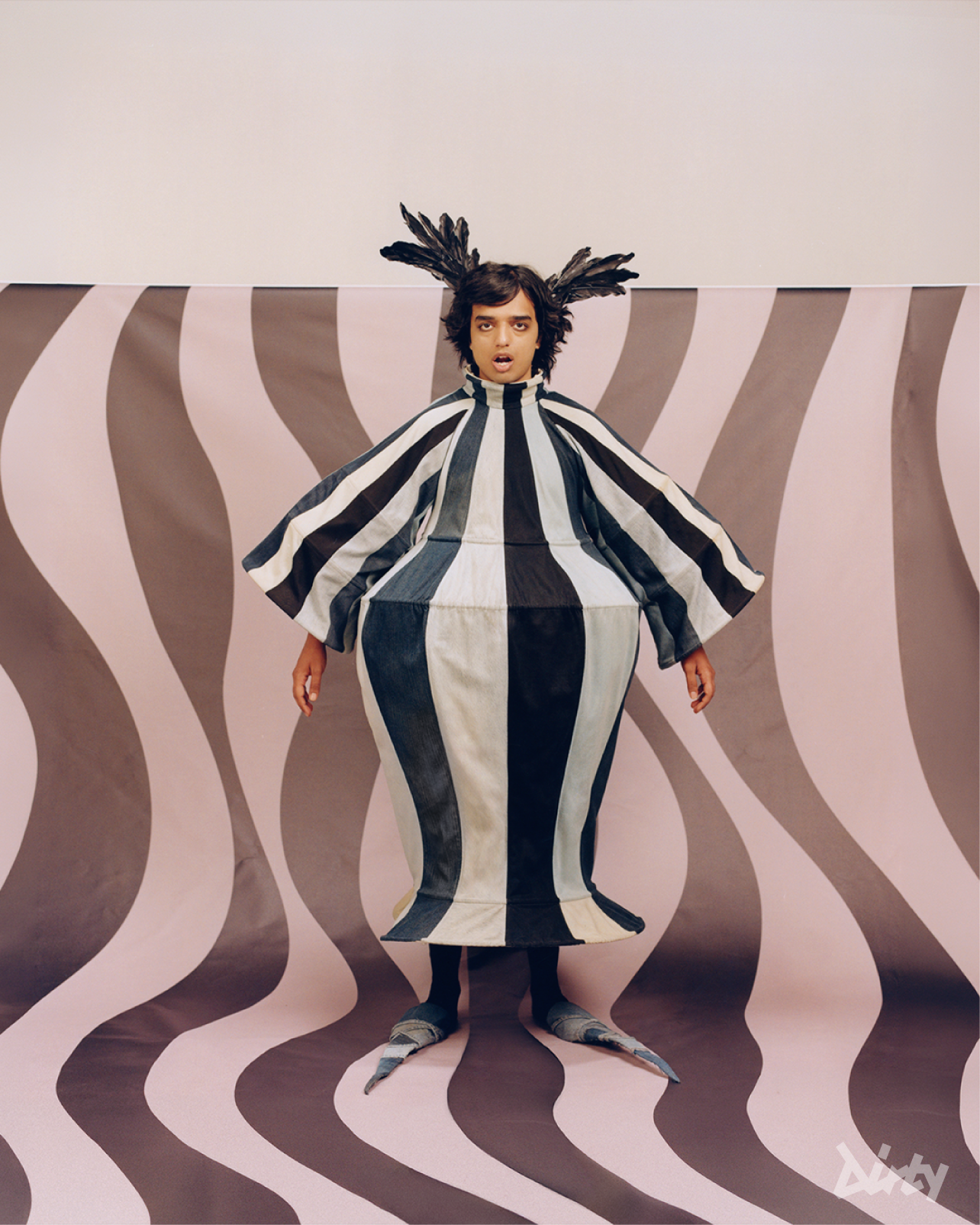
<h1 class="centre"> Diwaari would like to be self-aware. His music certainly is. He is always going bonkers in his music videos—testing the limits of his own sanity. It helps that his songs are so finely produced, no room for slackness there. At the end of our chat, Diwaari is still waiting for his friend from Gurugram to make it. Guru Dutt watches over him with equal parts indignation and hope. The baida roti is over. But Chaar Diwaari is still hungry. </h1>
<h1 class="left"> Editor: Kshitij Kankaria </h1>
<h1 class="left"> Photographer: Rid Burman </h1>
<h1 class="left"> Stylist: Ruhani Singh </h1>
<h1 class="left"> Set designer: Risha Shetty </h1>
<h1 class="left"> Makeup: Richelle Fernandes </h1>
<h1 class="left"> Hair: Abhishek Indu </h1>
<h1 class="left"> Assistant stylist: Deepti Soste</h1>
<h1 class="left"> Art Director: Rishika Sikder </h1>
<h1 class="left"> Creative Producer: Saif Zaki </h1>
<h1 class="left"> Producer: Imran Khatri Productions </h1>
<h1 class="left"> Assistant Stylist: Preeti Aparna Venkatesh</h1>
<h1 class="left"> Manager: Aqib, Hiren Thakkar</h1>
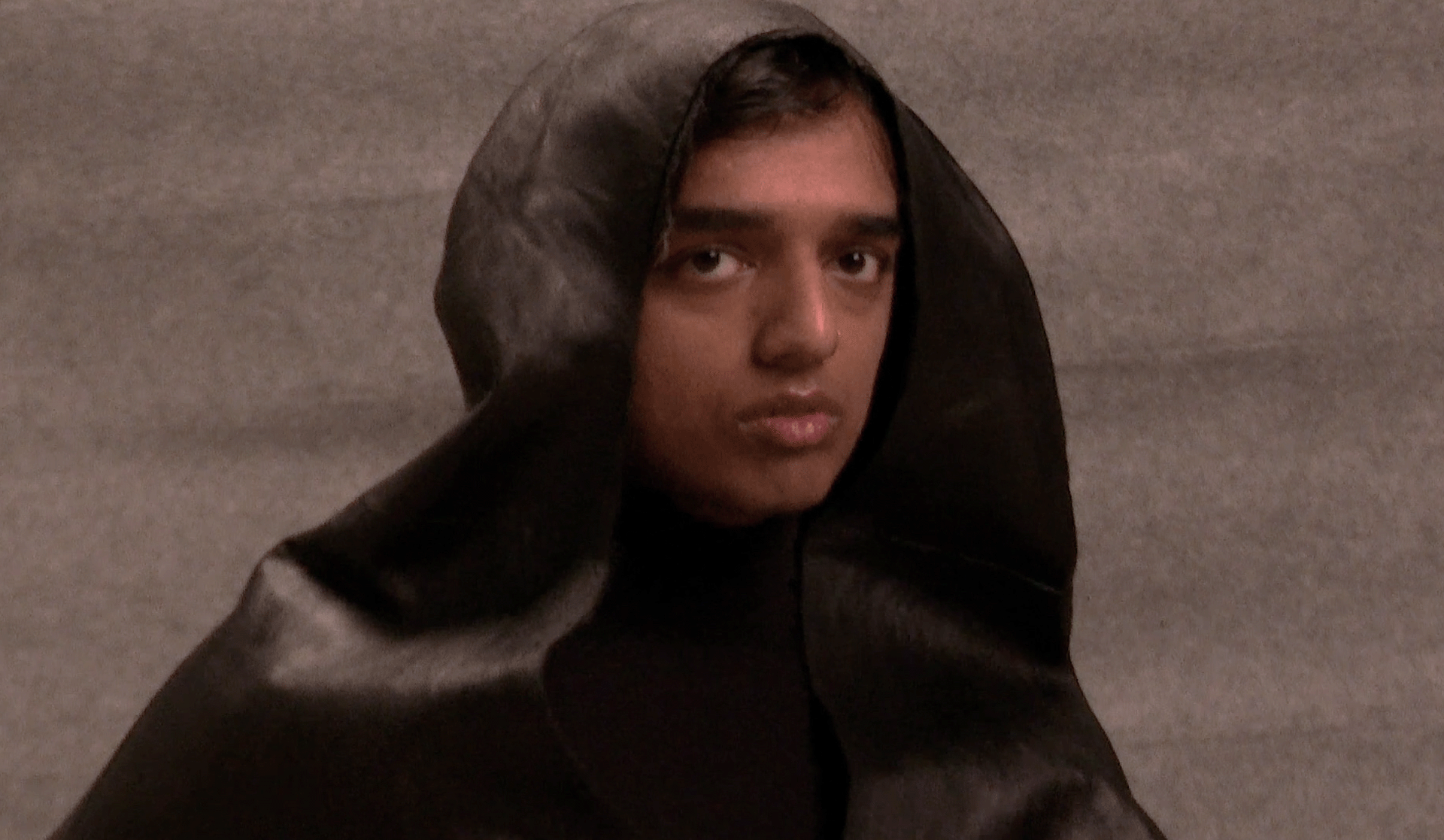
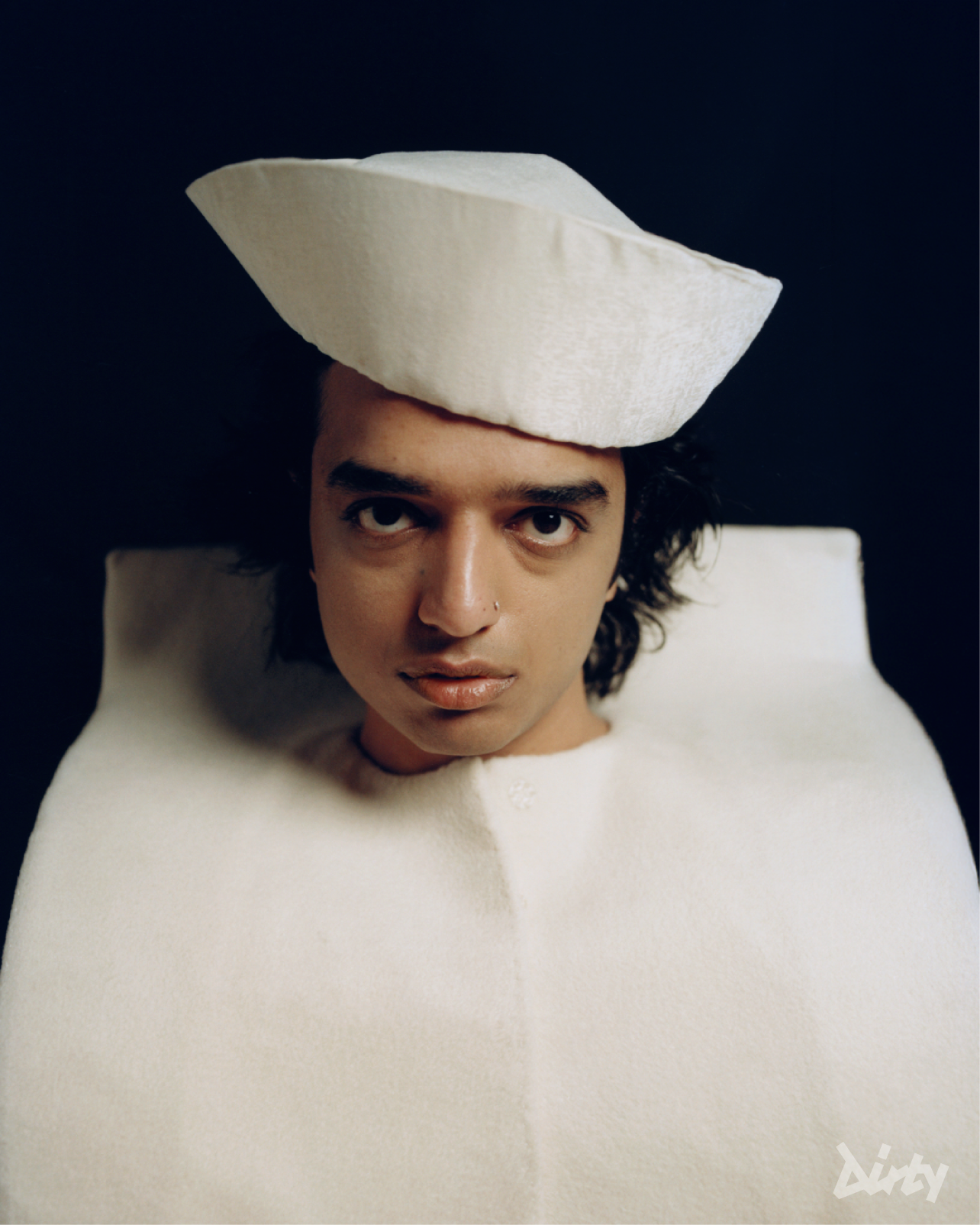
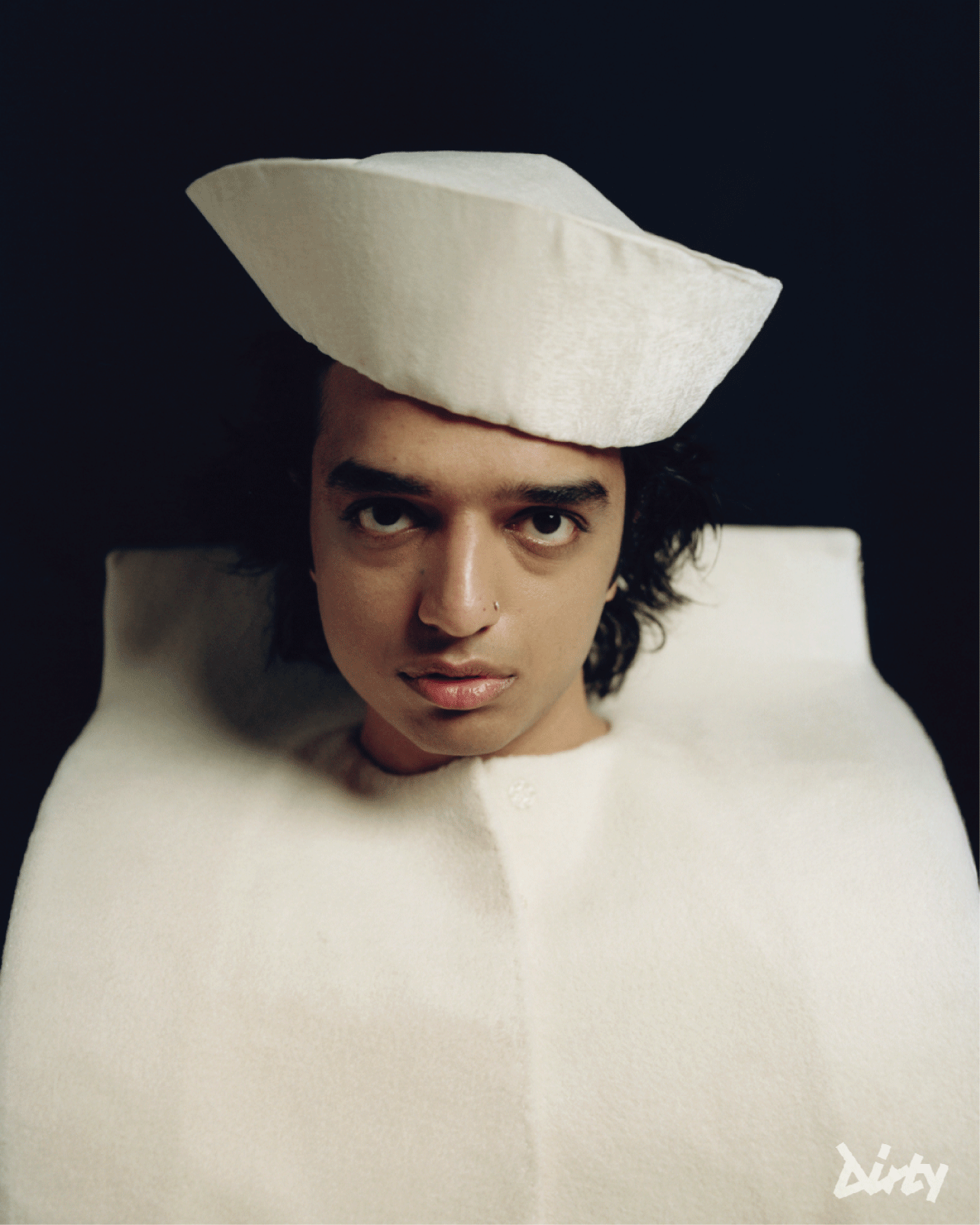
<h1 class="left"> On Chaar Diwaari: Custom cap by Pramod, Top by Bloni</h1>
<h1 class="full">“Look at Kanye West,” Garv Taneja, known as Chaar Diwaari, tells me while eating baida roti. He’s woken up late and the night ahead is a long and arduous one. He keeps apologising because he keeps cutting the interview, trying to get his friend to come to his house in West Delhi from Gurugram. They have a track to work on which is long overdue. The said friend’s mother, it seems, won’t let him step out because it is late. “So, Kanye has intellectualised music for himself. Music is like sex; if you intellectualise it, you can’t go anywhere. It’s a bit like falling in love with a girl—if you put her on a very high pedestal in your mind, you won’t even be able to talk to her. How will you have a boner if you think so much?”</h1>
<h1 class="full">Diwaari is many things. Of course, he raps, composes, dances his ass out. His lyrics are laced with themes of betrayal, of frustration. Some cute teen angst here, some cute self-flagellation there. His four-track debut EP, released in 2022, was called TERI MAIYAT KE GANE. The songs are exactly what you think they sound like. He fuses hip-hop with gruff electronic music samples and psychedelic dubstep. But then he is a barstool poet too, or at least he tries to be. He can talk about his crushing self-imposter syndrome and his dream to make it even big in the same sentence. One of his breakout tracks “LOVESEXDHOKA!!!” was composed for Dibakar Banerjee’s Love Sex Aur Dhokha 2. Banerjee rejected it. He felt bad but realised soon that he wasn’t too big a shot to accepted just like that.</h1>
<h1 class="full">Most of his other songs, though, make up for it, even by his own unforgiving standards. The first time I heard “Farebi”, for which he collaborated with Raftaar, was on an otherwise torturous Uber ride through the mundane stretches of Greater Noida last year. It was an odd choice for the driver who was well into his late fifties. Just a few days before the ride, there had been reports of carjackers in the area. “When you play these songs on full volume in these streets,” the driver had told me, “the carjackers know that we are not innocent middle-class family members.” </h1>
<h1 class="full">The same song that keeps carjackers away is also played on repeat in school corridors and maybe even in musty bedrooms. The music video for “Farebi” is a fever-logic parable about a man who gets replaced by a better-looking copy of himself mid-gig and nobody notices the swap. The other man, the copy, takes away everything in the process: the fame, his girl, his money. One of the comments on YouTube from a year ago, by @Xavier3000, trains a deeper lens into it: “Does this mean that Chaar Diwaari is kinda overwhelmed by the immediate fame he got through “Jhaag”? And he is going through a kinda imposter syndrome?”</h1>
<h1 class="full">Diwaari doesn’t believe he can cut across generations. His music, for all its wildness, is tailored to listeners barely out of their teens—and it shows in the way he lives and talks. We chat late at night, but then he only ever wakes late, gobbles a late meal, and, after the baida roti feast, asks if it’s okay to go wash his hands. “If I start taking myself seriously,” he says, “I’ll never be able to do anything.” </h1>
<h1 class="full">He has tried taking himself seriously, though, often with mixed results. In our interview, he uses the word “nuanced” at least thrice; he confesses to dropping Easter eggs in his music videos that perhaps no one but he noticed. “I realised it's not me,” he says. It might have to do with the days he spent at the True School of Music in Karjat, near Mumbai. He has said his time there was equal parts fun and useless, and it doesn’t take a genius to trace his disgust for anything that smells of pretension back to it—he was surrounded, he says, by “jazz ke chode.” “Most of my colleagues would like the ‘complex’ music I’d make, but when I released ‘Jhaag’ they found it too simple, too clear. I asked myself, how bad could it really be?”</h1>
<h1 class="full">In hindsight, Diwaari thinks it’s a “great song,” one that isn’t hiding behind any layered musical gymnastics—just a dafli on loop and a brief shehnai sample. “It’s nothing that I have ever heard,” he says of his own track. </h1>
<h1 class="full"> For Diwaari, all the fame, games, and just the act of making music itself came wrapped in the silver foil of the syndrome. He still cannot square how, for someone who grew up just another boy, he was able to perform, sing, and make money from it. Surely, there had to be a catch? “I was frazzled and then, of course, I made a few stupid decisions in my personal life too,” he says. “No matter how hard you try, these things do get to your head. One day you feel like mai puri duniya ki gaand faad dunga, and then you feel like you don’t deserve any of it. So, both these things happen simultaneously. These feelings never go away, but making a song about them helps; just like making a song about anything does.”</h1>
<h1 class="full"> If the melancholy wasn’t enough, I spot a poster of Guru Dutt’s Pyaasa (1957) in his room. Diwaari believes that there can’t be any Indian filmmaker currently who isn’t influenced by the film. It is Diwaari’s “comfort film even though it’s not very comfortable to watch.” He remembers every dialogue, the lighting in every scene. One can see the appeal. It is too romantic. The myth of the falling artist, the unemployed artist, pining, always pining. He is single now after a long relationship that ended recently. “Now that I don’t have that fixed routine of someone asking you how your day was, you end up asking those questions to yourself. That can be scary. It can push you to ask a lot of yourself. Is the purpose of life just marriage and children?” </h1>
<h1 class="full"> Diwaari would like to be self-aware. His music certainly is. He is always going bonkers in his music videos—testing the limits of his own sanity. It helps that his songs are so finely produced, no room for slackness there. At the end of our chat, Diwaari is still waiting for his friend from Gurugram to make it. Guru Dutt watches over him with equal parts indignation and hope. The baida roti is over. But Chaar Diwaari is still hungry. </h1>
<h1 class="full"> Editor: Kshitij Kankaria </h1>
<h1 class="full"> Photographer: Rid Burman </h1>
<h1 class="full"> Stylist: Ruhani Singh </h1>
<h1 class="full"> Set designer: Risha Shetty </h1>
<h1 class="full"> Makeup: Richelle Fernandes </h1>
<h1 class="full"> Hair: Abhishek Indu </h1>
<h1 class="full"> Assistant stylist: Deepti Soste</h1>
<h1 class="full"> Art Director: Rishika Sikder </h1>
<h1 class="full"> Creative Producer: Saif Zaki </h1>
<h1 class="full"> Producer: Imran Khatri Productions </h1>
<h1 class="full"> Assistant Stylist: Preeti Aparna Venkatesh</h1>
<h1 class="full"> Manager: Aqib, Hiren Thakkar</h1>
<h1 class="full"> On Chaar Diwaari: Custom cap by Pramod, Top by Bloni</h1>