

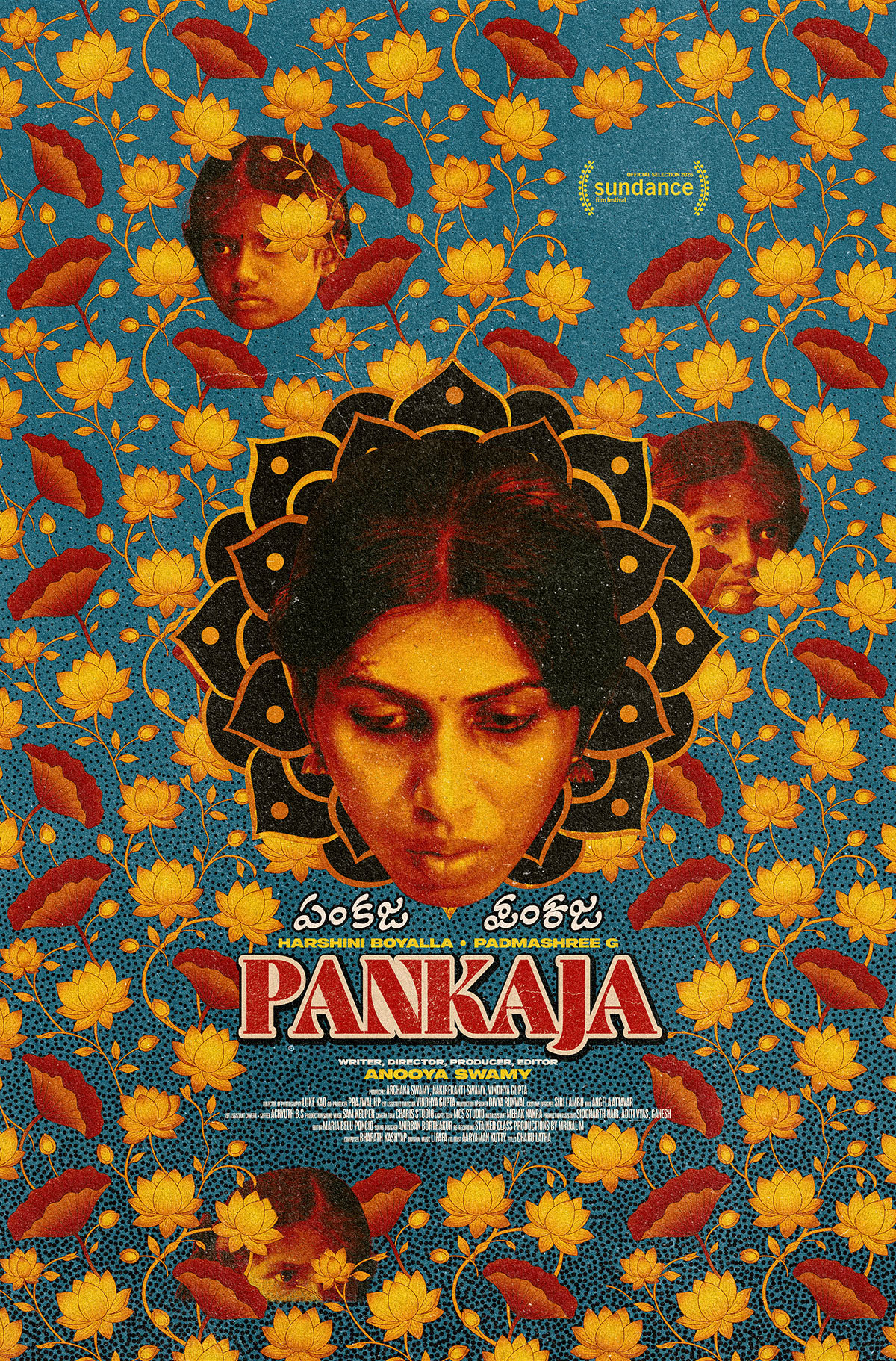
Pankaja first took root in Anooya Swamy’s mind while on a phone call with her mother, from halfway across the world. Swamy, who is originally from Bangalore and now based in New York, was viewing a sand-mining exhibition where she encountered stories of labourers who move away from their homes in search of work, and build temporary homes for the relationships they become entangled in, far away from their families. Her conversations with her mother took her back to when the two of them spent time in each other’s company, isolated from the world within the walls of her childhood home, while her father was away in search of informal work, toiling to liberate the family from their circumstances.
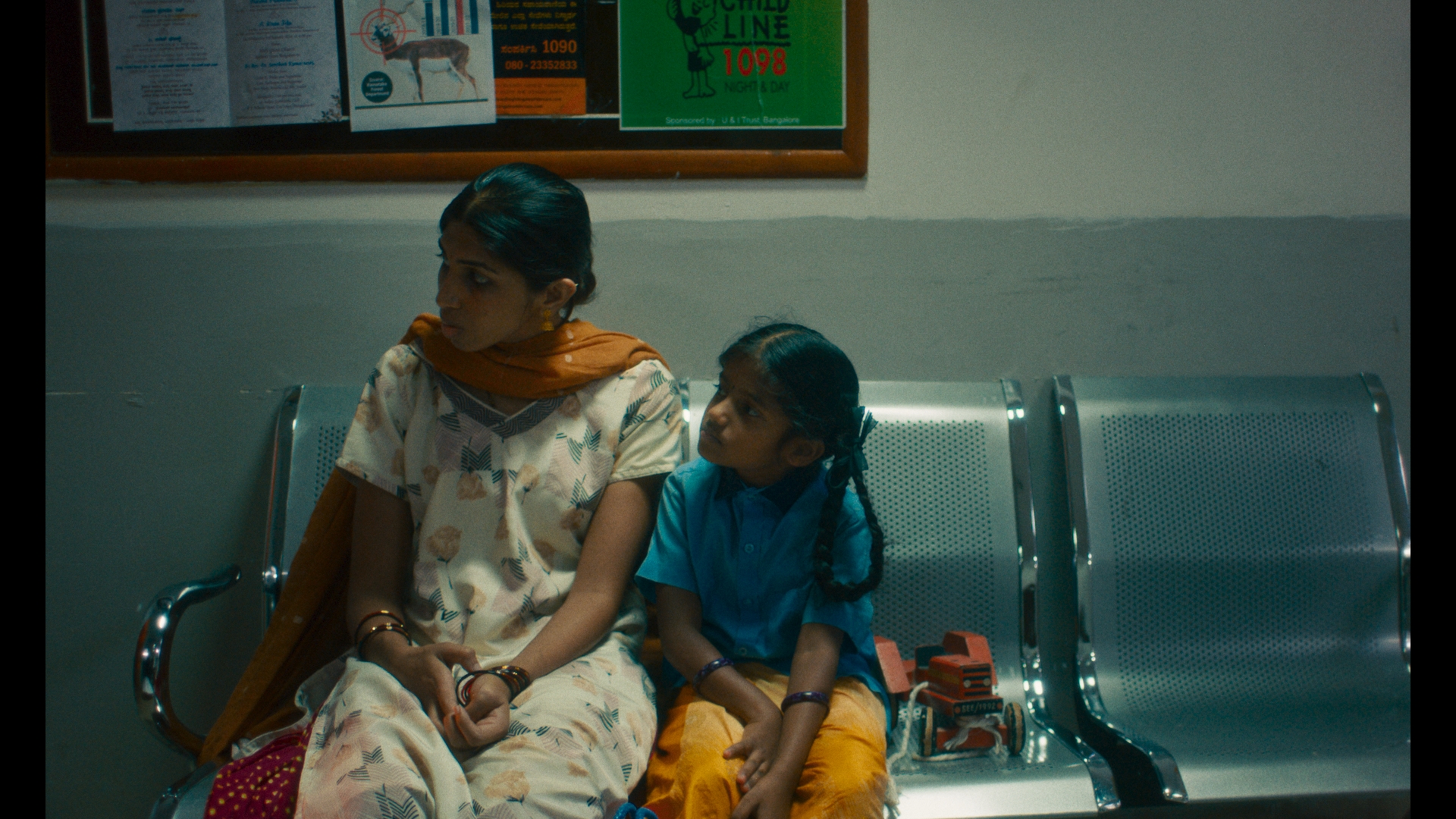
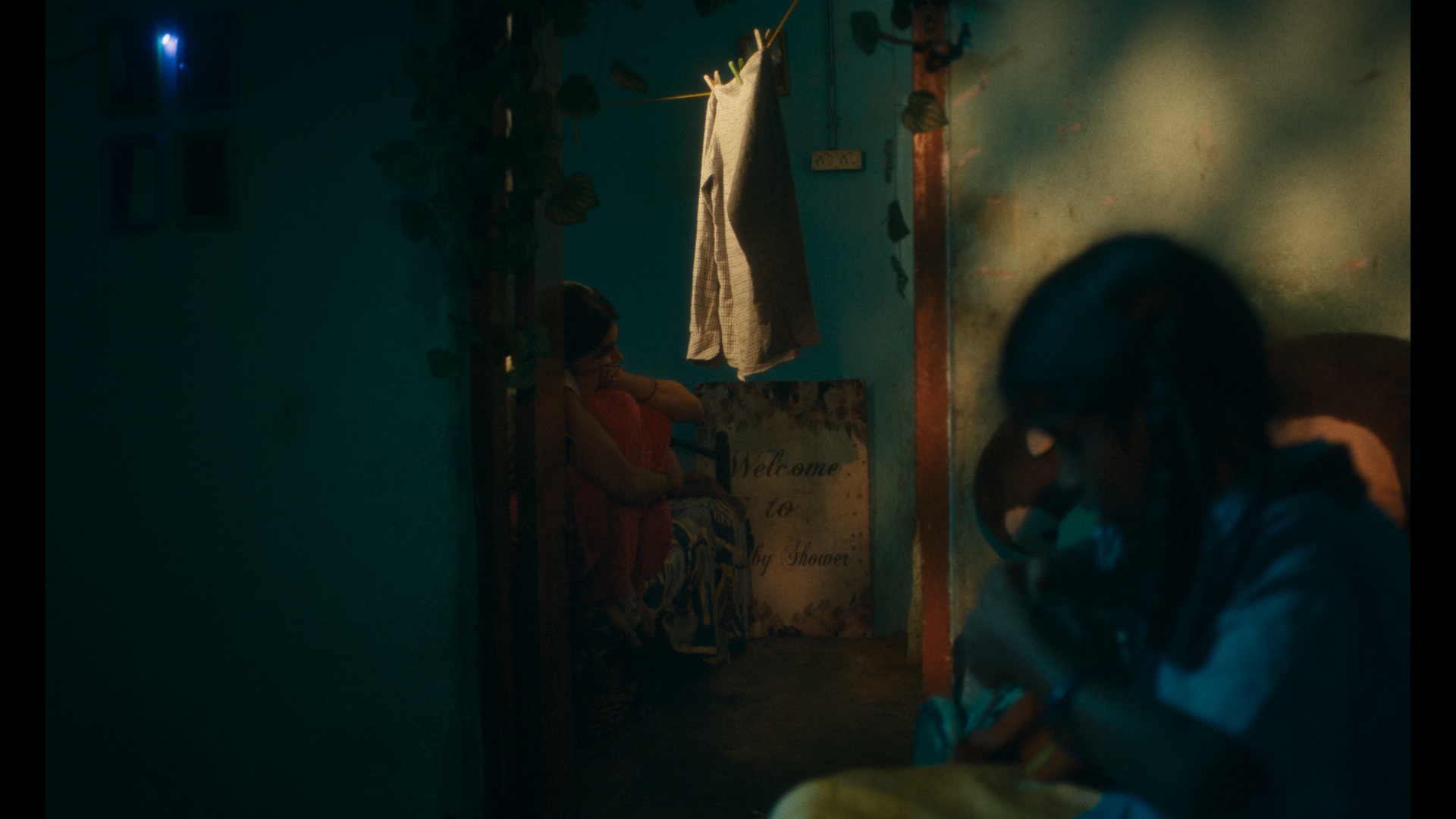
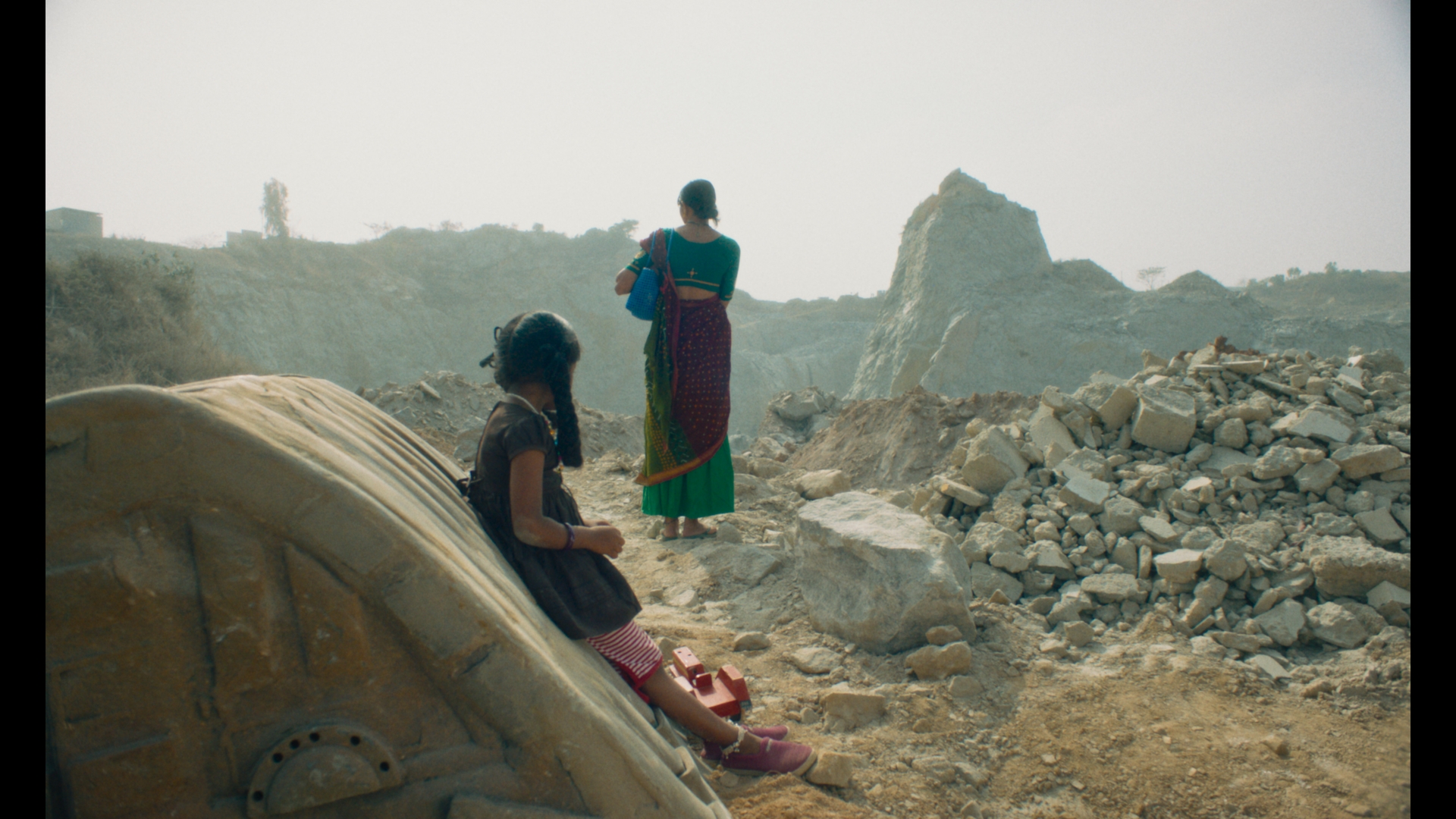
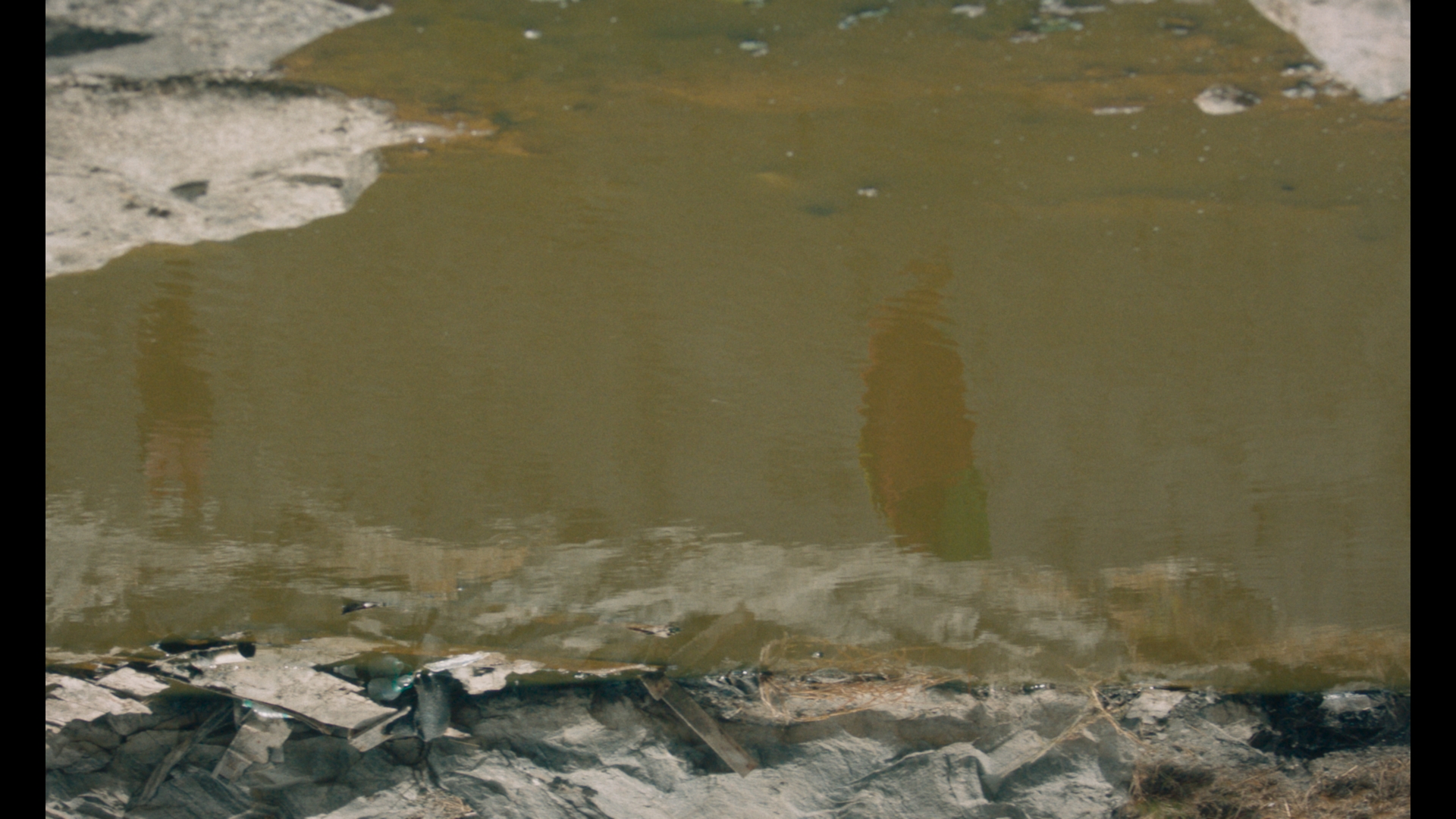
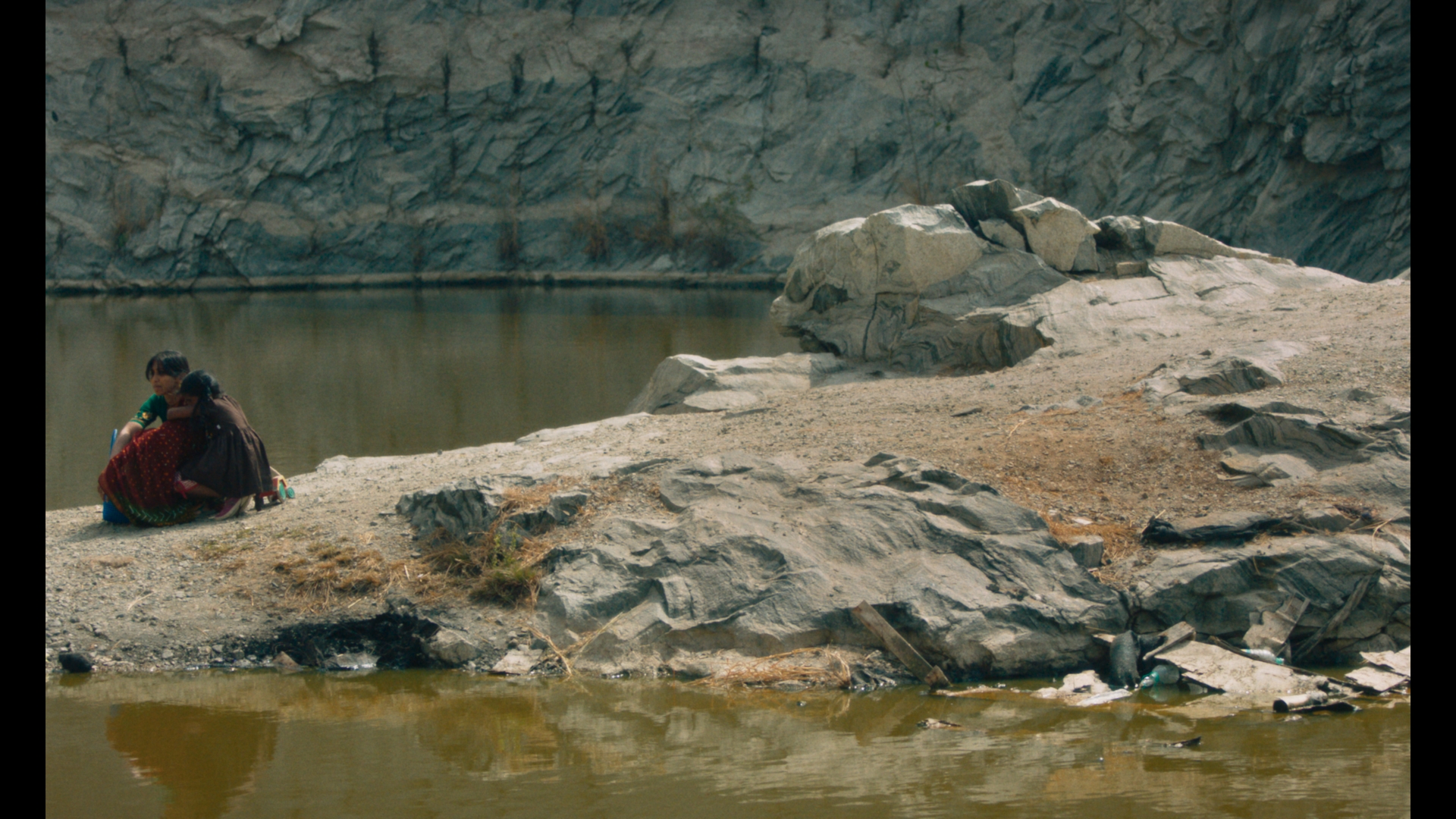
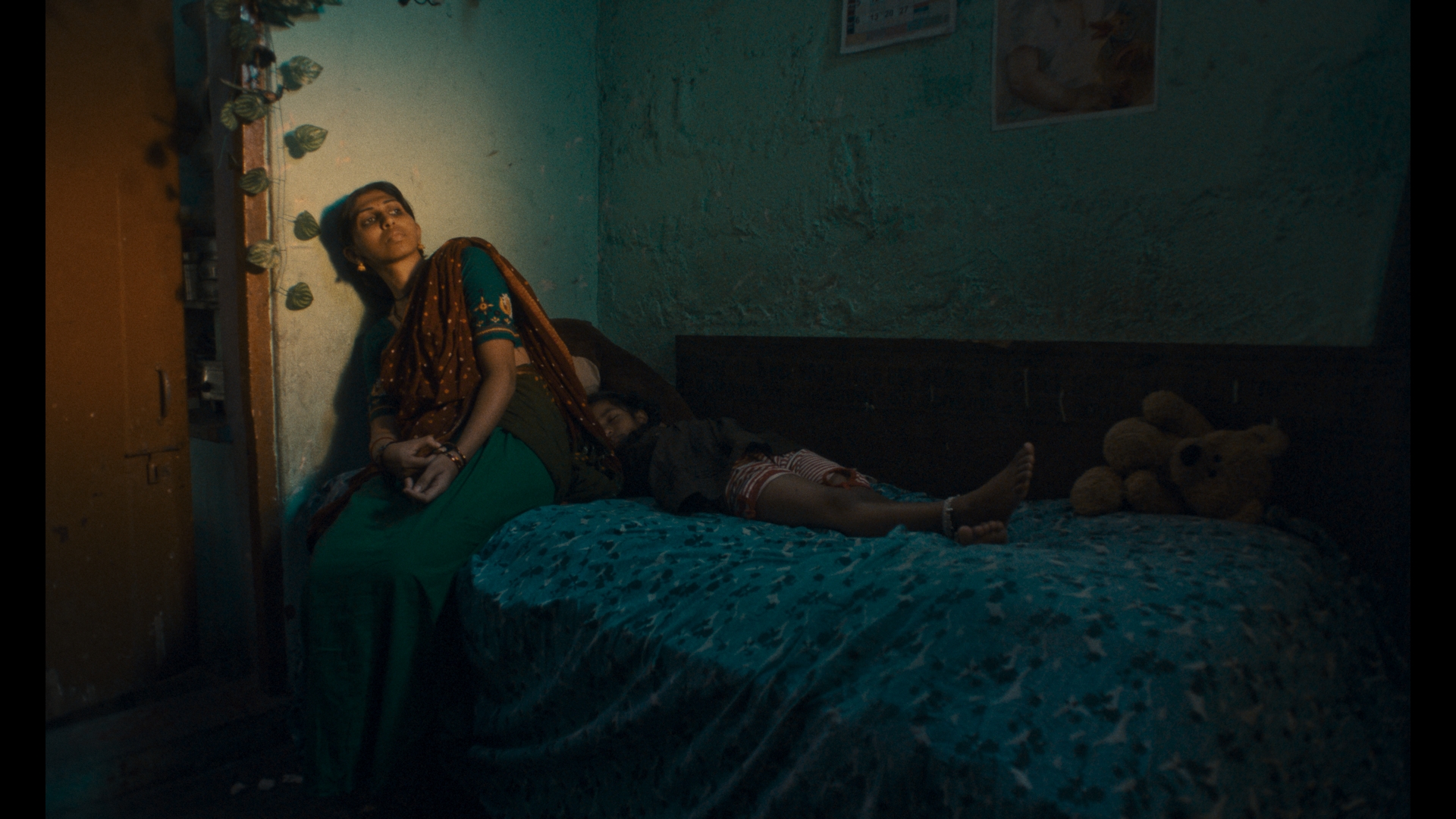
Swamy’s debut narrative film is autofictional; it deliberates on the invisible cost of human labour by asking what happens to the women and children left behind. In her tender story, Swamy plucks threads from her own past, which she knows is “not so far back that I can be nostalgic about it,” and weaves them into a strained portrait of loss and hope, allowing elements of her own life to emerge beneath the surface without demanding the viewer's sympathy. The heaviness that lies at the centre of the film is offset by humour constructed through characterisation. Each frame is delightfully, carefully curated to narrativise the bittersweet tension that lingers, like a leaking ceiling, within the blue walls of Pankaja’s home. As mother and daughter move through a world that treats them with indifference and a lack of empathy, you find yourself rooting for some form of redemption in the 14-minute game of seek.
The film (made with a slim production budget of $5000), premiered at the 2026 Sundance Film Festival, and went on to become a wildcard entry and a festival favourite, winning Best Live Action Short at the Raindance Film Festival and securing a place among the Academy Award-qualifying shorts. dirty caught up with Anooya Swamy shortly after her film received a month-long theatrical release at IFC in New York, to chat about the making of her debut film and the people who inhabit its world.
dirty: To begin with, tell me how the idea behind Pankaja came about.
Anooya: I first wanted to write a film about my dad, but a much more fictionalized version. While working on bringing it to life, I realized it was a pretty big-budget film that I didn’t have the money for, because I wanted a sea of politicians and all of that. Then I went back to film school [NYU Tisch School of the Arts] and scrapped it, and a professor, Barbara Schock, said, “Why don’t you just make a movie about your mother?” I had kind of done it for a directing exercise already. In the first year we made a four-minute film on 16 millimeter. I was thinking about how my mom takes my clothes and wears them like they’re her own. Then for the second-year film, they said, “This film is going to change your life, it’s going to Sundance, it’s going to Cannes, you have to dig deeper.”
It was October, and I had to leave in November to shoot in India. I thought, if there’s one thing I know like the back of my hand, it’s my mother and our story. When my parents eloped, they moved from Nalgonda, a town near Hyderabad in Telangana, to Bangalore. They didn’t speak any Kannada, and they knew one other Telugu couple. They lived near HSR in Agara, and that’s how we ended up in the Agara city slums. The three of us lived in a house maybe half, maybe a quarter, of a room like this one. We slept side by side, with me right in between them, until we moved somewhere nearby. We started in that slum. My actor, who plays the role of Lalli, is from the same street I grew up in, which was crazy.
My dad would be gone every day, so I hung out with my mom a lot, while she was trying to get food or learning to cook. She says that I had separation anxiety when my brother was born. I didn’t have a concept of my father. It was both of us, and then my brother was there. So I thought, let me really think about my relationship with her, and how we were two peas in a pod. She was in her early to late twenties… and she soon became a little frenzied. But I went back far enough that she was innocent and I looked up to her. That’s the basis of the relationship between the two in the movie.
dirty: That’s so beautiful. How did you intend to recreate that relationship through the actors in your film? What were you looking for while casting Pankaja and Lalli?
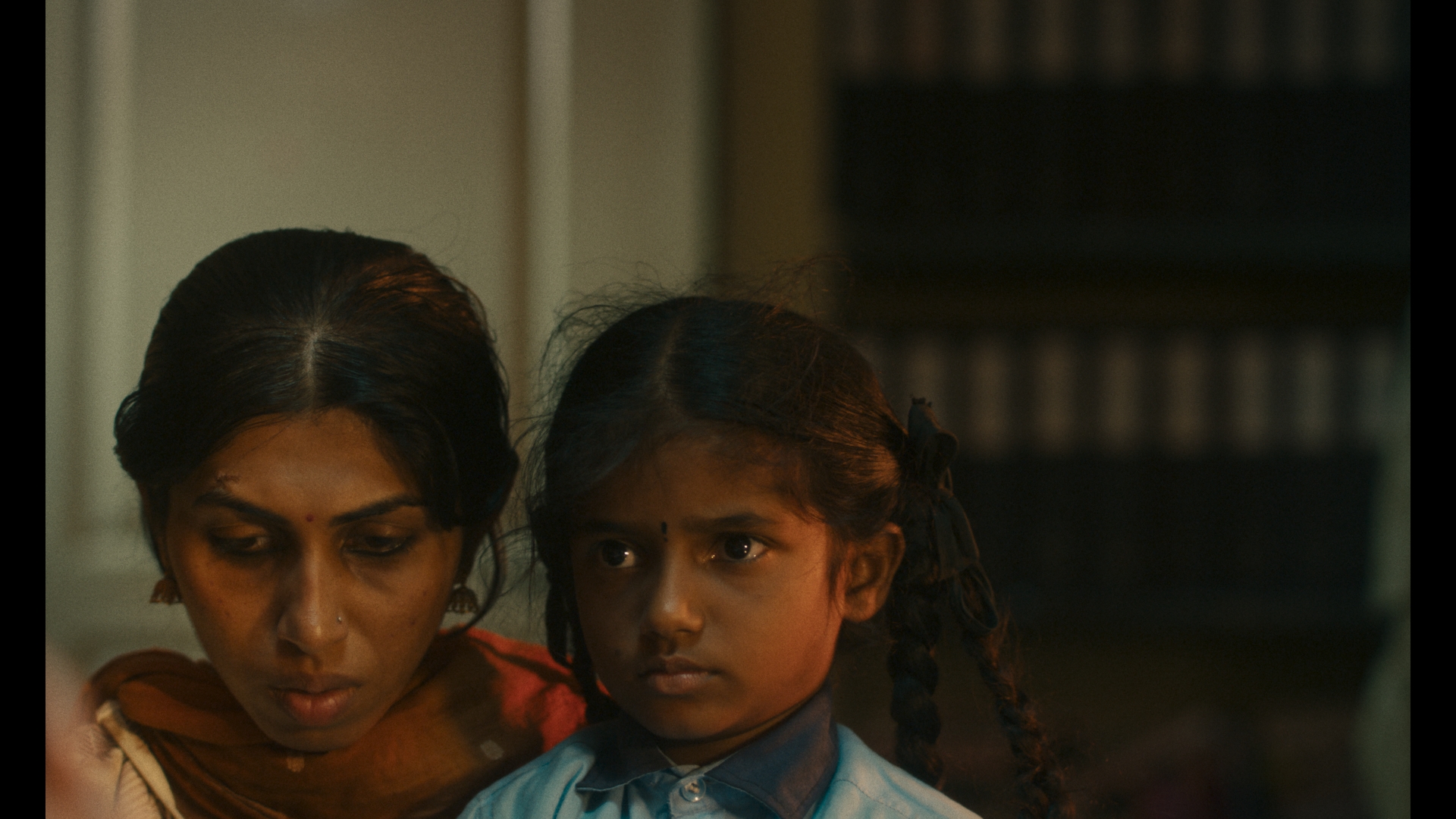
Anooya: I love interesting faces. I fall for people who look undeniably different, and Harshini [the actor who plays Pankaja] was like that. She has such a striking face. Prajwal, one of my co-producers, was really rooting for her. I auditioned a few Kannada film actors, and they were fine, but more conventional-looking, and I thought maybe I needed that. But it didn’t hit with anybody else. Harshini was busy doing theatre, but she always checked in and sent more tapes when I asked. I like people who give a fuck, and I had to give a fuck, because I needed to make this movie. I was writing every day, up until day one of the shoot. I realized she was a creative person, not an actor who just takes notes, so I discussed the story with her and took her with me to the place where I grew up.
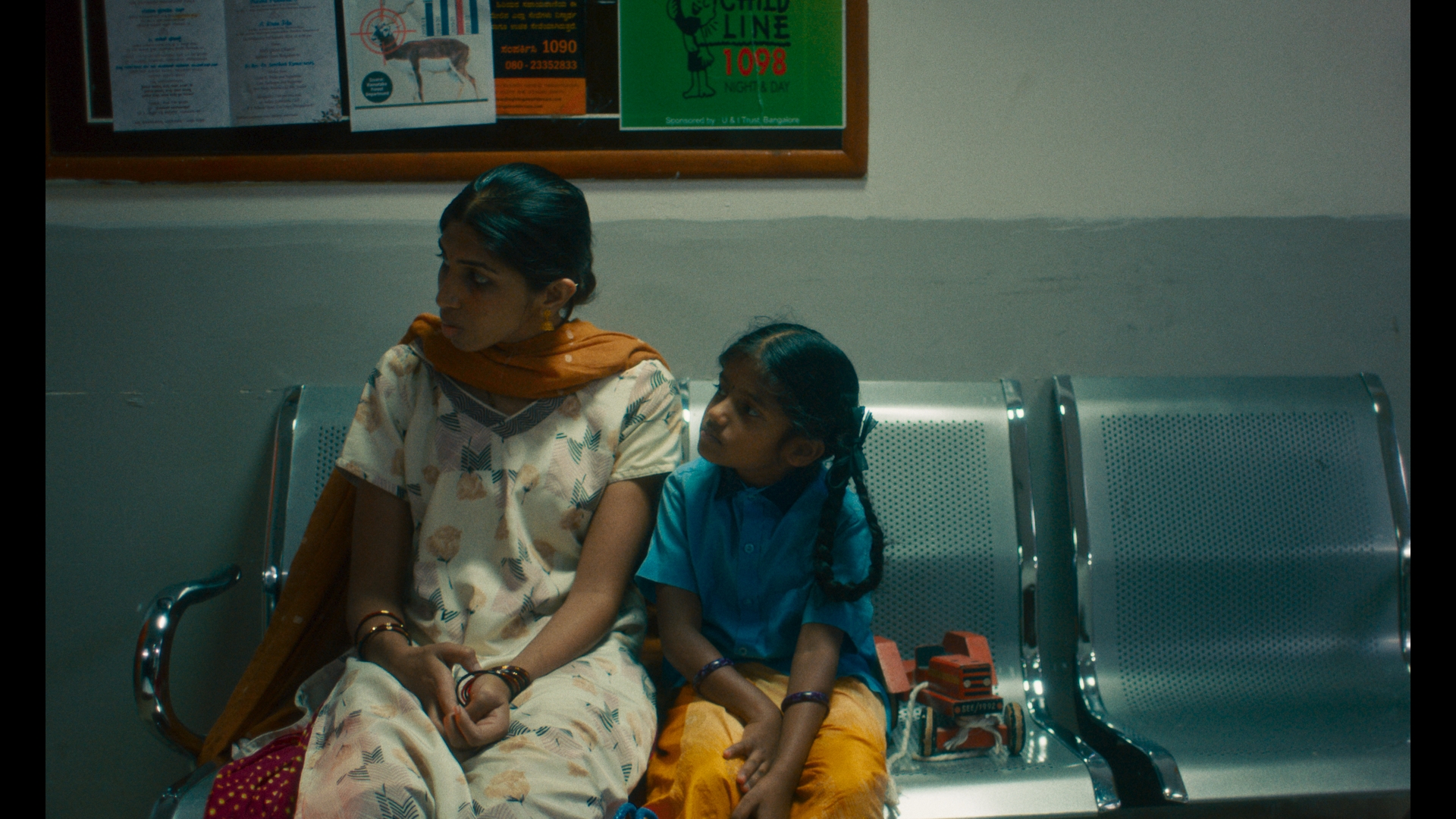
With Lalli, we went to the Agara government school near my house and visited every class. Me in my broken Kannada, I went around saying, “We’re making a movie, who wants to come act?” We liked a few kids, and she was one of them. Then she came up to me and said, “I want to do this, but I’m not available later because I have to go to my grandma’s house, so if you want to do this, now’s the time.” I thought, okay, she’s already giving me directions, she’s the one. I think I got her at the right moment: kids are either too innocent, so they’re shy, or too aware, so they’re self-conscious. She was right in the middle. And she lived on the same street my mom refuses to go to now, because it reminds her of when we were dirt poor. So during the shoot, my mom came to other locations but never to Agara.
dirty: How did that make you feel when you were in the midst of shooting?
Anooya: Honestly, I was so stressed. I thought, what am I doing, indulging in my past? It’s not so far back that I can be nostalgic. I really thought I was hurting her, and I had to ask her about it. In the beginning she asked, “Why are you making this? What’s the point?” We had a lot of conversations. And I wondered, am I doing this because I’m in film school? Would I make this if I weren’t studying art in an institution? Am I doing this weird artist-and-trauma thing?
Then, while making it, I realized that wasn’t even my lens. I was surprising myself as we made the film, because my actors were really the ones finding the story. I’ll have the story written, then it changes because two new people are involved, and then they run the show. I’m not Fincher, making you hit a line thirty times. I don’t know, I’m a woman, I guess. It’s way more “we’re all in it.” I was watching a lot of movies, so I was more inspired by everything I watched and the people around me, less by “this is my vision outside of camera.” I know what my shots were, but performance-wise I let them do more.
dirty: Did the story evolve a lot from your first draft, or did you have a solid idea of what you were going for?
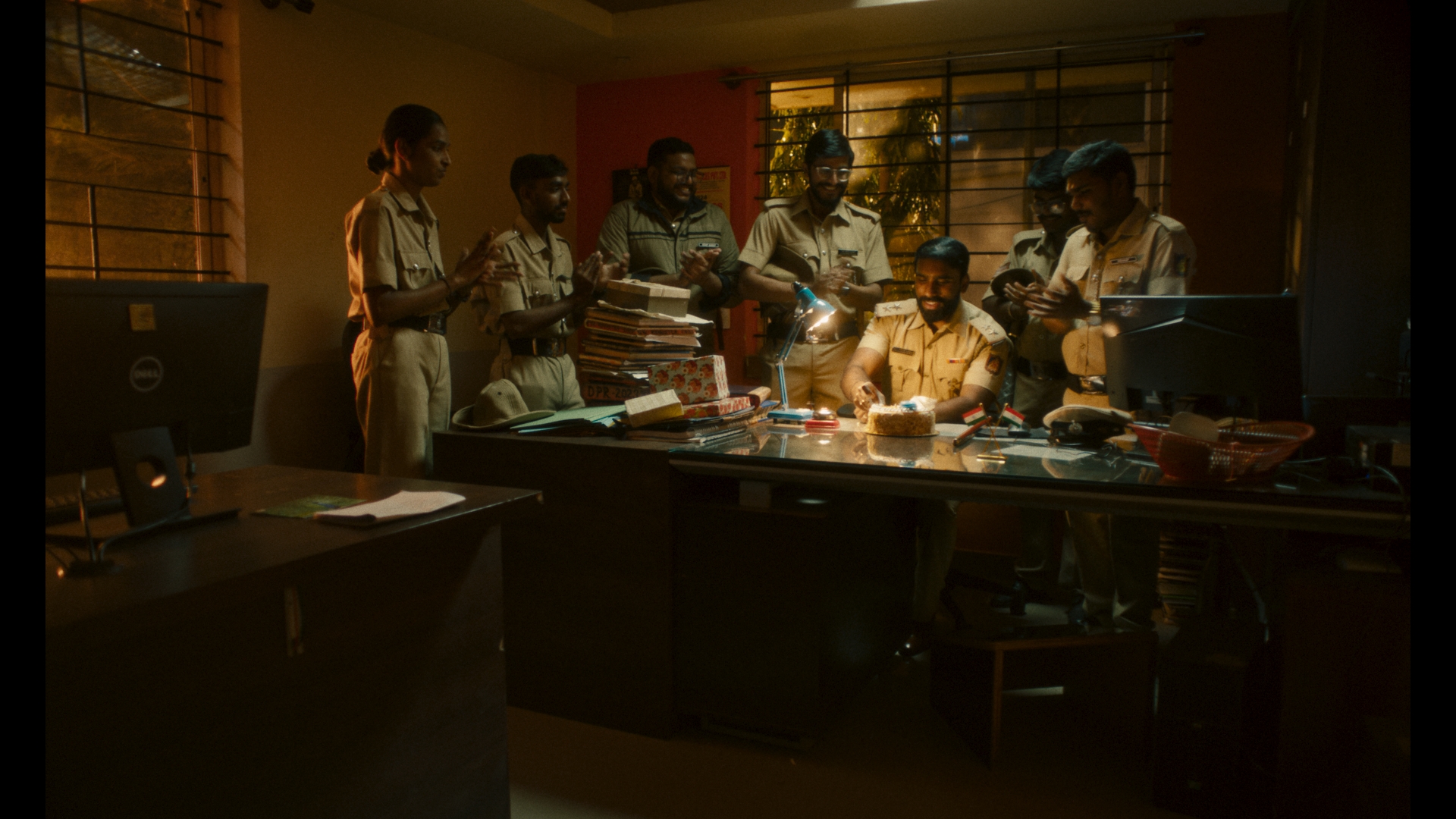
Anooya: It changed a lot, but not in terms of what happens in the story. We stripped a lot. I wanted more weird pop-culture shit happening. It’s very Twilight Zone, Atlanta. I was trying to do the most; creating these empathetic yet caricature-esque personas with the police officers. Oh, and the game at the end. That was all Lalli. She was like, let’s play a game. It was such a beautiful moment, and I thought, I have to put this in the movie. I’m just open to things, and things happen. Shit happens to me all the time, and I’m like, okay, put it in.
dirty: You spoke about Twilight Zone and Atlanta. What else was on the mood board while you were thinking about Pankaja?
Anooya: Burning, Lee Chang-dong. I love Lee Chang-dong. He was big for me. I was watching a lot of Korean cinema. Their filmmaking really looks at human behavior. It’s not psychological like Nolan, and even French cinema can be a little indulgent in feeling. Korean cinema is weird: they treat humans almost like animals in the way they dissect their stories, and there’s poetry in it. Taste of Cherry was a big inspiration for the searching, the looking aspect. I picked that up from Kiarostami’s work. His other film, Where Is the Friend’s House?, is about a little boy at a school where they’re very strict about homework. His friend accidentally takes his notebook, and the boy will get in trouble the next day if he doesn’t finish his homework, so he ventures out to find his friend’s house, which he’s never been to, asking around. That was big for me. Color-wise, Super Deluxe. I had never seen colors like that. I thought, that’s how I grew up: blue walls, orange walls! I just watch movies and pick things up from them.
dirty: Can you tell us more about the colour palette you chose? The colour blue almost acts like a character in the film.
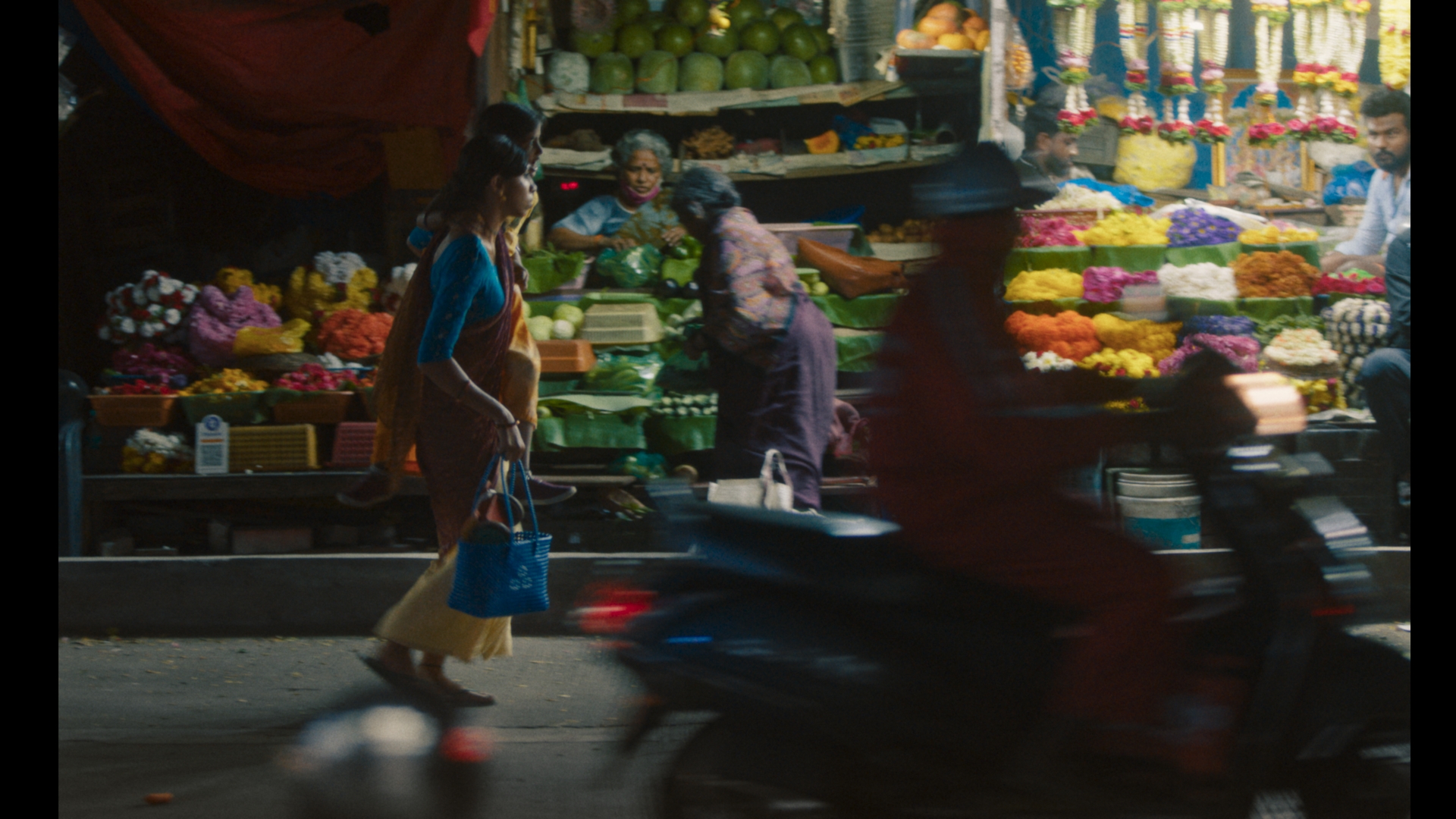
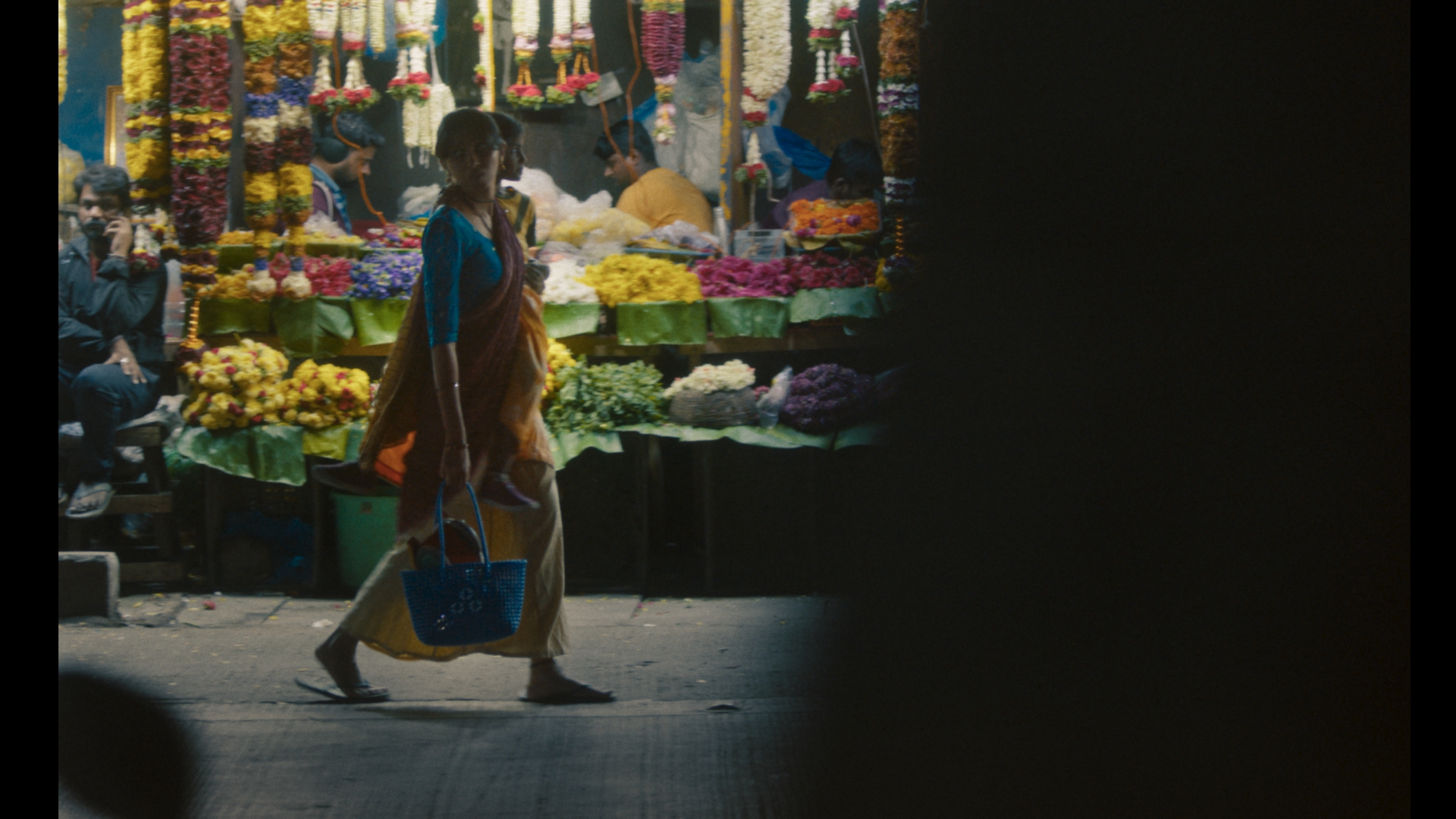
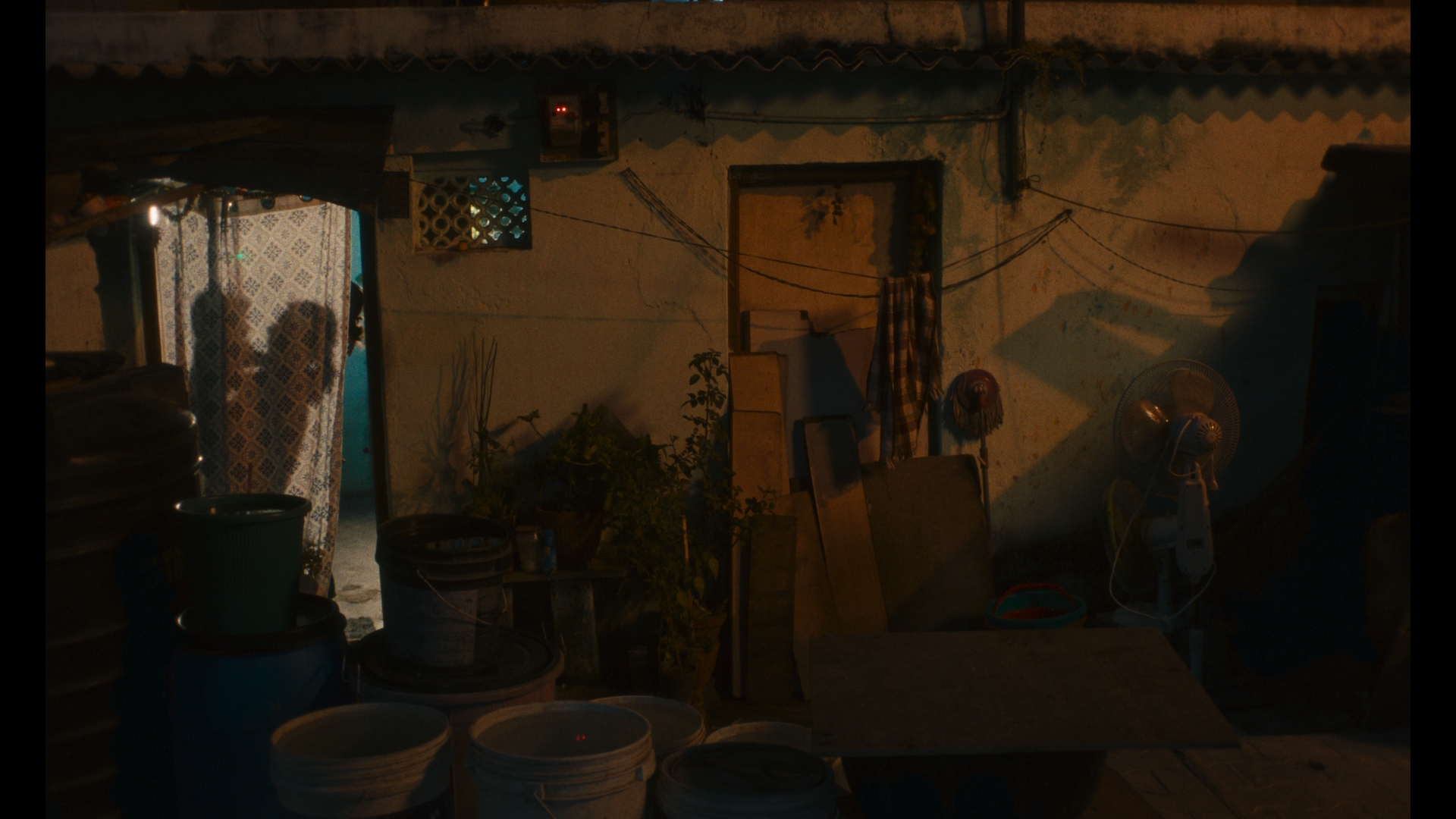
Anooya: Colour was the most important part of the image for me from day one. I knew I wanted a saturated image. The people and the relationships are quite elevated and heightened; and you know this too — when you’re in the city slums, the colours are still bright and vibrant. That was my childhood, so much of that I’ve carried into our new home in Bangalore now, and my wall is yellow. The colour blue was important to me, like any other Ambedkarite I know. We’d often refer to the blue we wanted as that shade, in the prep and in my pitch decks. Harshini and I wear mostly blue to the screenings too. My friend Anirudh, from Cinema of Excess, wrote a whole song about the colour, called “Thing About the Colour Blue” that I listened to often while writing the film.
dirty: What sort of movies did you grow up watching?
Anooya: Not “good” movies. I grew up watching Bollywood films. I remember watching Om Shanti Om at an 11 a.m. show in Hyderabad. We heard that there was an actor from Bangalore in a movie with Shah Rukh Khan, and I wanted to see it. But I grew up watching Telugu movies because my mom loved them, mostly in single screens. That’s how we watched movies: we’d sit on the stairs because the show was booked out, and we’d buy tickets in black. After a few years, my dad, who was a journalist, made a friend who ran PVR Forum, so we went to PVR. But it was always regional. Until my first proper boyfriend said, “You haven’t seen Pulp Fiction? You haven’t seen Fight Club? What the fuck?” I got hate for not knowing these movies, and I started watching them because I wanted to be a cool girlfriend. Then I really started watching good movies at NYU. I listened to music more, and to way cooler artists from all around the world, more than I watched movies. I also watched a lot of TV.
dirty: I see. You were also saying that your dad acts in the film?
Anooya: This guy is crazy. He was an actor and a dancer before he met my mom. He is not classically trained, he just had music in his body. He’s made a whole feature about a struggling actor, shot on VHS, I think, or some kind of tech like that. The actor goes to a city and fails, so he comes back to his village and marries the love of his life. But he went from being a skeptical artist to saying “I’m not an artist.” A lot of fathers of daughters came to him and said, “You’re making my daughters dance in front of all these men.” It would be Independence Day dances, and they said, “You’re whoring out my daughters.” He said, “I have a daughter, and I would never want to feel like that,” and he gave it up.
dirty: What were your parents’ reaction to watching the film for the first time?
Anooya: My dad filmed our whole Sundance premiere. He was adamant: don’t get me a badge as a producer, I want to be an actor. He can’t wait to act in the next thing. He loves it, and my mom loves it, which is so cute. I know what my family looks like to the outside world, and it’s small. The outside world is still whoever’s on my Instagram, perhaps. But it literally changed our lives. This small short film,13, 14 minutes long, has my family healing, and it’s all happening because we made a piece of art together.
For me, this is also part of figuring out what kind of artist I am. It’s either you go into your shell of making, isolated, and you create a practice, or you publish and you’re in the light, hearing people’s thoughts on it. For filmmakers especially, it’s often “we don’t really talk about it, it’s our little thing, and that’s good.” Not so cool if you’re indulging in the red carpet of it all. It’s weird to stand in front of a cardboard backdrop and smile. But my family loves it, and it helps me remember we thought about all of these things growing up. I always wanted to act and do things in front of a camera. I was never a behind-the-camera person. I was a performer from the start. You have to be a performer in some way to be behind the camera, because that’s how you know best what you want in front of it.
dirty: How did it all take off with Pankaja? How did film school at NYU and the Sundance fellowship impact the kind of filmmaker you are?
Anooya: I’m pro film school if you’ve never made a film before and you can figure out how to afford it. I don’t think you need it if you can’t. I was able to do it because I had a scholarship and didn’t have to worry about tuition. If I were in debt right now…
But NYU was everything. I met Spike Lee because of NYU. I have a little Instagram diary that no one follows, and I don’t follow anybody there. I started it when I was 15 or 16. The year before COVID, I got the bootleg MasterClass and watched Spike’s after a bad day. The photo I have is of me under a blanket, with the blanket around my laptop, watching Spike. I think my caption was something like, “It’s good to be home.” And now I’m working with Spike, and the trajectory is crazy…
dirty: You’ve come such a long way! Tell me more about the Sundance experience, and all the premieres you’ve had so far.
Anooya: I love Sundance as an institution. They give you a real privilege because a lot of people want it. They’re giving the film a month-long theatrical run at the IFC Center in New York. My birthday was the last day it was playing, and then it was extended to like October 2. Sundance really helped me get press. My favorite premieres so far: we went to Locarno, we showed at the Academy screenings, and I got to show this film in countries I didn’t even know existed. We’ve toured about 30 film festivals all over the world, mostly in Europe. I’m hoping this film gets on a platform I respect, one that respects its filmmakers.
dirty: I also know you’re building a theater in Bangalore…
Anooya: Yes! It’s about to be lit. It’s going to be called The Interval, because we have intervals in our movies. The idea is to play films I’ve had the privilege and access to, and to bring to India the filmmakers I’ve had access to, and talk about craft. We’re making art like nobody else: visual arts, film, internet, print. That’s exciting to me. Everyone’s figuring out how to be an artist. And we only go to the mall to watch movies. I want to make a regular theater where we watch films that have been restored with a lot of money by other people, and bring those films here. We want vending machines with DVDs, a film lab in the basement, and a commissary with food and drinks, with the interval as the communal space connecting everything. We have big, big ideas for it.
dirty: That’s a lot of projects in the works. Lastly, Pankaja is now Academy-qualified. How are you feeling?
Anooya: I don’t want to peak in high school. This is my “don’t peak in high school” moment. But it’s crazy. We won Raindance in June, which qualified us. About 200 films get qualified, and I think five get nominated. Then we won awards at two other Academy-qualifying festivals, Palm Springs and HollyShorts. That means our film is now on the Academy’s portal, people are watching, and they vote. Whoever gets the most votes gets shortlisted. So I’m trying to get people who happen to be voters to watch my film, except we don’t know who the voters are. I’m hoping everybody who reads this potentially is a voter. Once we get shortlisted, there’s another round of “make this win,” and hopefully we then win an Oscar or something.
dirty: We’re rooting for you!
Anooya: Film school people hate the Oscars. They’re like, oh, validation. But validation is validation, and validation from the Academy is, come on… I’m from the streets. We’re not going to hate the show. I just found out a classmate of mine spent $170,000 on a short film. I made Pankaja for five or six grand.
dirty: How did you fund Pankaja?
Anooya: My own money, my mother’s money. And I can successfully say I’ve made more money than I’ve spent, which is a blessing. I don’t think people get that. Now I need to make another film, and I like making things cheap, unless it’s a film about rich people and more rich people are putting money in. On some White Lotus shit. Otherwise I’m spending my own money or finding the money.
dirty: What do you hope for people to feel when watching the film?
Anooya: I just want this to be the beginning of people watching my work. I don’t want to create art in pessimism, I know whom I’m representing and which parts of myself I am bringing to this film. We made this film with people of the communities in it. I’m not so interested in stating that things are bad, I rather create narratives of what comes after that realisation.
dirty: What’s next? What work are you looking forward to in the future?
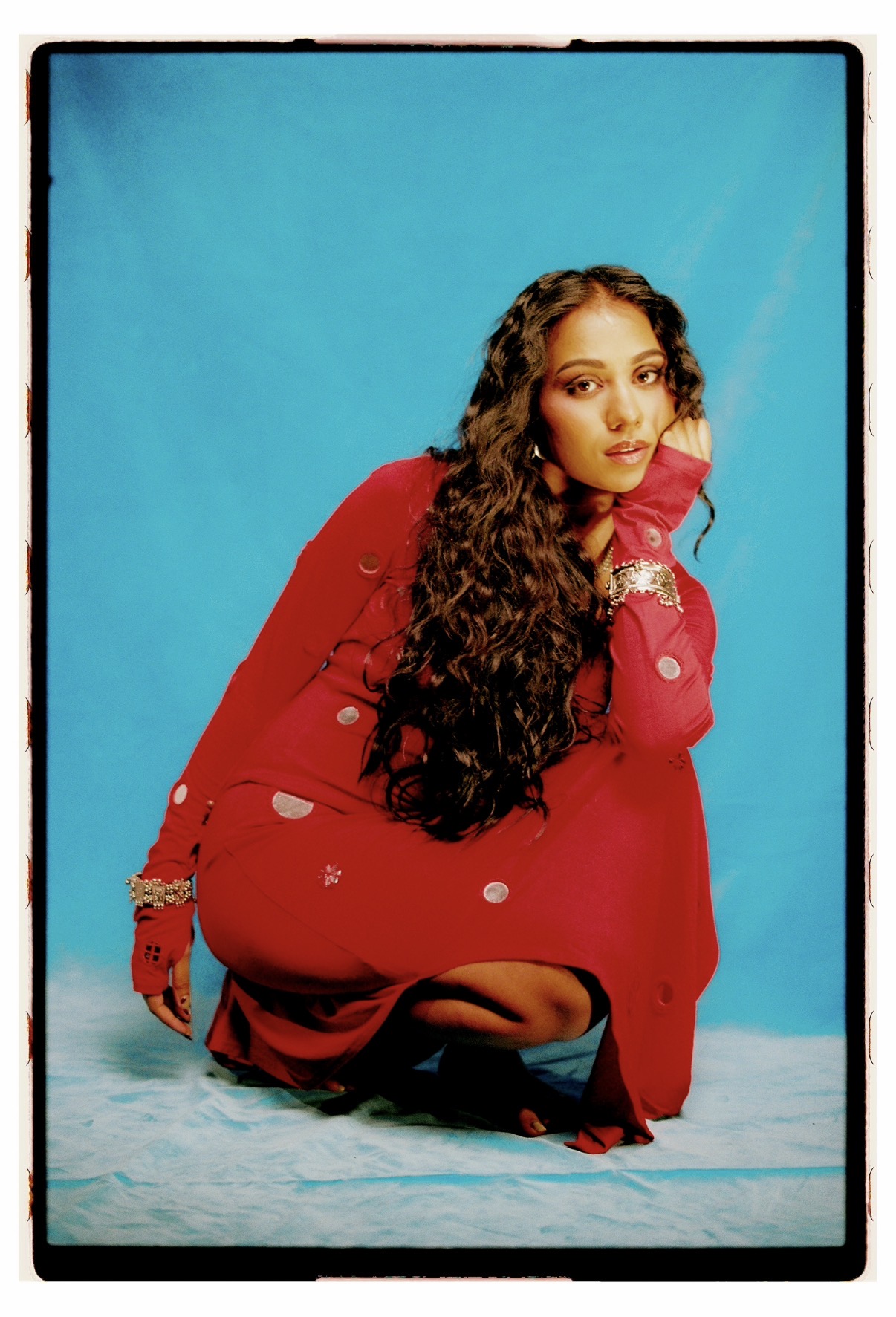
Anooya: In December I’m coming to India, and I’m trying to see if music people have money. I want to do some music videos. Ruchika Sachdeva [founder of Bodice] made the clothes I wore at Sundance. She sent them to me, so I want to do fashion films for her clothes, and hopefully they have a budget. We also just got funded to do an experimental short that I’m going to shoot on film. I need to figure out how to make this, well, not a career, exactly. I just want it to give me money while I make. The minute we say “we need to make this a career,” it becomes, I don’t know, weird. I want it to be more a practice and less of a career because then all I’m chasing is some sort of “success.”
Pankaja first took root in Anooya Swamy’s mind while on a phone call with her mother, from halfway across the world. Swamy, who is originally from Bangalore and now based in New York, was viewing a sand-mining exhibition where she encountered stories of labourers who move away from their homes in search of work, and build temporary homes for the relationships they become entangled in, far away from their families. Her conversations with her mother took her back to when the two of them spent time in each other’s company, isolated from the world within the walls of her childhood home, while her father was away in search of informal work, toiling to liberate the family from their circumstances.
Swamy’s debut narrative film is autofictional; it deliberates on the invisible cost of human labour by asking what happens to the women and children left behind. In her tender story, Swamy plucks threads from her own past, which she knows is “not so far back that I can be nostalgic about it,” and weaves them into a strained portrait of loss and hope, allowing elements of her own life to emerge beneath the surface without demanding the viewer's sympathy. The heaviness that lies at the centre of the film is offset by humour constructed through characterisation. Each frame is delightfully, carefully curated to narrativise the bittersweet tension that lingers, like a leaking ceiling, within the blue walls of Pankaja’s home. As mother and daughter move through a world that treats them with indifference and a lack of empathy, you find yourself rooting for some form of redemption in the 14-minute game of seek.
The film (made with a slim production budget of $5000), premiered at the 2026 Sundance Film Festival, and went on to become a wildcard entry and a festival favourite, winning Best Live Action Short at the Raindance Film Festival and securing a place among the Academy Award-qualifying shorts. dirty caught up with Anooya Swamy shortly after her film received a month-long theatrical release at IFC in New York, to chat about the making of her debut film and the people who inhabit its world.
dirty: To begin with, tell me how the idea behind Pankaja came about.
Anooya: I first wanted to write a film about my dad, but a much more fictionalized version. While working on bringing it to life, I realized it was a pretty big-budget film that I didn’t have the money for, because I wanted a sea of politicians and all of that. Then I went back to film school [NYU Tisch School of the Arts] and scrapped it, and a professor, Barbara Schock, said, “Why don’t you just make a movie about your mother?” I had kind of done it for a directing exercise already. In the first year we made a four-minute film on 16 millimeter. I was thinking about how my mom takes my clothes and wears them like they’re her own. Then for the second-year film, they said, “This film is going to change your life, it’s going to Sundance, it’s going to Cannes, you have to dig deeper.”
It was October, and I had to leave in November to shoot in India. I thought, if there’s one thing I know like the back of my hand, it’s my mother and our story. When my parents eloped, they moved from Nalgonda, a town near Hyderabad in Telangana, to Bangalore. They didn’t speak any Kannada, and they knew one other Telugu couple. They lived near HSR in Agara, and that’s how we ended up in the Agara city slums. The three of us lived in a house maybe half, maybe a quarter, of a room like this one. We slept side by side, with me right in between them, until we moved somewhere nearby. We started in that slum. My actor, who plays the role of Lalli, is from the same street I grew up in, which was crazy.
My dad would be gone every day, so I hung out with my mom a lot, while she was trying to get food or learning to cook. She says that I had separation anxiety when my brother was born. I didn’t have a concept of my father. It was both of us, and then my brother was there. So I thought, let me really think about my relationship with her, and how we were two peas in a pod. She was in her early to late twenties… and she soon became a little frenzied. But I went back far enough that she was innocent and I looked up to her. That’s the basis of the relationship between the two in the movie.
dirty: That’s so beautiful. How did you intend to recreate that relationship through the actors in your film? What were you looking for while casting Pankaja and Lalli?
Anooya: I love interesting faces. I fall for people who look undeniably different, and Harshini [the actor who plays Pankaja] was like that. She has such a striking face. Prajwal, one of my co-producers, was really rooting for her. I auditioned a few Kannada film actors, and they were fine, but more conventional-looking, and I thought maybe I needed that. But it didn’t hit with anybody else. Harshini was busy doing theatre, but she always checked in and sent more tapes when I asked. I like people who give a fuck, and I had to give a fuck, because I needed to make this movie. I was writing every day, up until day one of the shoot. I realized she was a creative person, not an actor who just takes notes, so I discussed the story with her and took her with me to the place where I grew up.
With Lalli, we went to the Agara government school near my house and visited every class. Me in my broken Kannada, I went around saying, “We’re making a movie, who wants to come act?” We liked a few kids, and she was one of them. Then she came up to me and said, “I want to do this, but I’m not available later because I have to go to my grandma’s house, so if you want to do this, now’s the time.” I thought, okay, she’s already giving me directions, she’s the one. I think I got her at the right moment: kids are either too innocent, so they’re shy, or too aware, so they’re self-conscious. She was right in the middle. And she lived on the same street my mom refuses to go to now, because it reminds her of when we were dirt poor. So during the shoot, my mom came to other locations but never to Agara.
dirty: How did that make you feel when you were in the midst of shooting?
Anooya: Honestly, I was so stressed. I thought, what am I doing, indulging in my past? It’s not so far back that I can be nostalgic. I really thought I was hurting her, and I had to ask her about it. In the beginning she asked, “Why are you making this? What’s the point?” We had a lot of conversations. And I wondered, am I doing this because I’m in film school? Would I make this if I weren’t studying art in an institution? Am I doing this weird artist-and-trauma thing?
Then, while making it, I realized that wasn’t even my lens. I was surprising myself as we made the film, because my actors were really the ones finding the story. I’ll have the story written, then it changes because two new people are involved, and then they run the show. I’m not Fincher, making you hit a line thirty times. I don’t know, I’m a woman, I guess. It’s way more “we’re all in it.” I was watching a lot of movies, so I was more inspired by everything I watched and the people around me, less by “this is my vision outside of camera.” I know what my shots were, but performance-wise I let them do more.
dirty: Did the story evolve a lot from your first draft, or did you have a solid idea of what you were going for?
Anooya: It changed a lot, but not in terms of what happens in the story. We stripped a lot. I wanted more weird pop-culture shit happening. It’s very Twilight Zone, Atlanta. I was trying to do the most; creating these empathetic yet caricature-esque personas with the police officers. Oh, and the game at the end. That was all Lalli. She was like, let’s play a game. It was such a beautiful moment, and I thought, I have to put this in the movie. I’m just open to things, and things happen. Shit happens to me all the time, and I’m like, okay, put it in.
dirty: You spoke about Twilight Zone and Atlanta. What else was on the mood board while you were thinking about Pankaja?
Anooya: Burning, Lee Chang-dong. I love Lee Chang-dong. He was big for me. I was watching a lot of Korean cinema. Their filmmaking really looks at human behavior. It’s not psychological like Nolan, and even French cinema can be a little indulgent in feeling. Korean cinema is weird: they treat humans almost like animals in the way they dissect their stories, and there’s poetry in it. Taste of Cherry was a big inspiration for the searching, the looking aspect. I picked that up from Kiarostami’s work. His other film, Where Is the Friend’s House?, is about a little boy at a school where they’re very strict about homework. His friend accidentally takes his notebook, and the boy will get in trouble the next day if he doesn’t finish his homework, so he ventures out to find his friend’s house, which he’s never been to, asking around. That was big for me. Color-wise, Super Deluxe. I had never seen colors like that. I thought, that’s how I grew up: blue walls, orange walls! I just watch movies and pick things up from them.
dirty: Can you tell us more about the colour palette you chose? The colour blue almost acts like a character in the film.
Anooya: Colour was the most important part of the image for me from day one. I knew I wanted a saturated image. The people and the relationships are quite elevated and heightened; and you know this too — when you’re in the city slums, the colours are still bright and vibrant. That was my childhood, so much of that I’ve carried into our new home in Bangalore now, and my wall is yellow. The colour blue was important to me, like any other Ambedkarite I know. We’d often refer to the blue we wanted as that shade, in the prep and in my pitch decks. Harshini and I wear mostly blue to the screenings too. My friend Anirudh, from Cinema of Excess, wrote a whole song about the colour, called “Thing About the Colour Blue” that I listened to often while writing the film.
dirty: What sort of movies did you grow up watching?
Anooya: Not “good” movies. I grew up watching Bollywood films. I remember watching Om Shanti Om at an 11 a.m. show in Hyderabad. We heard that there was an actor from Bangalore in a movie with Shah Rukh Khan, and I wanted to see it. But I grew up watching Telugu movies because my mom loved them, mostly in single screens. That’s how we watched movies: we’d sit on the stairs because the show was booked out, and we’d buy tickets in black. After a few years, my dad, who was a journalist, made a friend who ran PVR Forum, so we went to PVR. But it was always regional. Until my first proper boyfriend said, “You haven’t seen Pulp Fiction? You haven’t seen Fight Club? What the fuck?” I got hate for not knowing these movies, and I started watching them because I wanted to be a cool girlfriend. Then I really started watching good movies at NYU. I listened to music more, and to way cooler artists from all around the world, more than I watched movies. I also watched a lot of TV.
dirty: I see. You were also saying that your dad acts in the film?
Anooya: This guy is crazy. He was an actor and a dancer before he met my mom. He is not classically trained, he just had music in his body. He’s made a whole feature about a struggling actor, shot on VHS, I think, or some kind of tech like that. The actor goes to a city and fails, so he comes back to his village and marries the love of his life. But he went from being a skeptical artist to saying “I’m not an artist.” A lot of fathers of daughters came to him and said, “You’re making my daughters dance in front of all these men.” It would be Independence Day dances, and they said, “You’re whoring out my daughters.” He said, “I have a daughter, and I would never want to feel like that,” and he gave it up.
dirty: What were your parents’ reaction to watching the film for the first time?
Anooya: My dad filmed our whole Sundance premiere. He was adamant: don’t get me a badge as a producer, I want to be an actor. He can’t wait to act in the next thing. He loves it, and my mom loves it, which is so cute. I know what my family looks like to the outside world, and it’s small. The outside world is still whoever’s on my Instagram, perhaps. But it literally changed our lives. This small short film,13, 14 minutes long, has my family healing, and it’s all happening because we made a piece of art together.
For me, this is also part of figuring out what kind of artist I am. It’s either you go into your shell of making, isolated, and you create a practice, or you publish and you’re in the light, hearing people’s thoughts on it. For filmmakers especially, it’s often “we don’t really talk about it, it’s our little thing, and that’s good.” Not so cool if you’re indulging in the red carpet of it all. It’s weird to stand in front of a cardboard backdrop and smile. But my family loves it, and it helps me remember we thought about all of these things growing up. I always wanted to act and do things in front of a camera. I was never a behind-the-camera person. I was a performer from the start. You have to be a performer in some way to be behind the camera, because that’s how you know best what you want in front of it.
dirty: How did it all take off with Pankaja? How did film school at NYU and the Sundance fellowship impact the kind of filmmaker you are?
Anooya: I’m pro film school if you’ve never made a film before and you can figure out how to afford it. I don’t think you need it if you can’t. I was able to do it because I had a scholarship and didn’t have to worry about tuition. If I were in debt right now…
But NYU was everything. I met Spike Lee because of NYU. I have a little Instagram diary that no one follows, and I don’t follow anybody there. I started it when I was 15 or 16. The year before COVID, I got the bootleg MasterClass and watched Spike’s after a bad day. The photo I have is of me under a blanket, with the blanket around my laptop, watching Spike. I think my caption was something like, “It’s good to be home.” And now I’m working with Spike, and the trajectory is crazy…
dirty: You’ve come such a long way! Tell me more about the Sundance experience, and all the premieres you’ve had so far.
Anooya: I love Sundance as an institution. They give you a real privilege because a lot of people want it. They’re giving the film a month-long theatrical run at the IFC Center in New York. My birthday was the last day it was playing, and then it was extended to like October 2. Sundance really helped me get press. My favorite premieres so far: we went to Locarno, we showed at the Academy screenings, and I got to show this film in countries I didn’t even know existed. We’ve toured about 30 film festivals all over the world, mostly in Europe. I’m hoping this film gets on a platform I respect, one that respects its filmmakers.
dirty: I also know you’re building a theater in Bangalore…
Anooya: Yes! It’s about to be lit. It’s going to be called The Interval, because we have intervals in our movies. The idea is to play films I’ve had the privilege and access to, and to bring to India the filmmakers I’ve had access to, and talk about craft. We’re making art like nobody else: visual arts, film, internet, print. That’s exciting to me. Everyone’s figuring out how to be an artist. And we only go to the mall to watch movies. I want to make a regular theater where we watch films that have been restored with a lot of money by other people, and bring those films here. We want vending machines with DVDs, a film lab in the basement, and a commissary with food and drinks, with the interval as the communal space connecting everything. We have big, big ideas for it.
dirty: That’s a lot of projects in the works. Lastly, Pankaja is now Academy-qualified. How are you feeling?
Anooya: I don’t want to peak in high school. This is my “don’t peak in high school” moment. But it’s crazy. We won Raindance in June, which qualified us. About 200 films get qualified, and I think five get nominated. Then we won awards at two other Academy-qualifying festivals, Palm Springs and HollyShorts. That means our film is now on the Academy’s portal, people are watching, and they vote. Whoever gets the most votes gets shortlisted. So I’m trying to get people who happen to be voters to watch my film, except we don’t know who the voters are. I’m hoping everybody who reads this potentially is a voter. Once we get shortlisted, there’s another round of “make this win,” and hopefully we then win an Oscar or something.
dirty: We’re rooting for you!
Anooya: Film school people hate the Oscars. They’re like, oh, validation. But validation is validation, and validation from the Academy is, come on… I’m from the streets. We’re not going to hate the show. I just found out a classmate of mine spent $170,000 on a short film. I made Pankaja for five or six grand.
dirty: How did you fund Pankaja?
Anooya: My own money, my mother’s money. And I can successfully say I’ve made more money than I’ve spent, which is a blessing. I don’t think people get that. Now I need to make another film, and I like making things cheap, unless it’s a film about rich people and more rich people are putting money in. On some White Lotus shit. Otherwise I’m spending my own money or finding the money.
dirty: What do you hope for people to feel when watching the film?
Anooya: I just want this to be the beginning of people watching my work. I don’t want to create art in pessimism, I know whom I’m representing and which parts of myself I am bringing to this film. We made this film with people of the communities in it. I’m not so interested in stating that things are bad, I rather create narratives of what comes after that realisation.
dirty: What’s next? What work are you looking forward to in the future?
Anooya: In December I’m coming to India, and I’m trying to see if music people have money. I want to do some music videos. Ruchika Sachdeva [founder of Bodice] made the clothes I wore at Sundance. She sent them to me, so I want to do fashion films for her clothes, and hopefully they have a budget. We also just got funded to do an experimental short that I’m going to shoot on film. I need to figure out how to make this, well, not a career, exactly. I just want it to give me money while I make. The minute we say “we need to make this a career,” it becomes, I don’t know, weird. I want it to be more a practice and less of a career because then all I’m chasing is some sort of “success.”